
Strain names are not dose instructions
"Golden Teacher is gentle." "Penis Envy is always twice as strong." "Blue bruising means potency." "Lemon tek doubles the dose." Mushroom potency myths spread because people want simple rules. Unfortunately, psilocybin potency is variable enough that simple rules can mislead people into taking more than they intended.
This guide is for harm reduction. It is not a dosing recommendation, cultivation instruction, or encouragement to use illegal substances. If you are exploring legal services, use provider screening and regulated product information rather than strain lore.
Related LearnShrooms pages: Strains, dose-response guide, dosage guide, and COA literacy.
Myth 1: the strain name tells you the dose
Strain names can be useful for culture, cultivation history, and rough expectations, but they do not reliably tell you how much psilocybin or psilocin is in a particular dried sample. Potency depends on genetics, substrate, growth conditions, maturity, handling, drying, storage, and sample variation within the same flush.
Even if a variety has a reputation for potency, the product in front of you may not match the reputation. The only way to know analyte content is testing.
Myth 2: visual bruising proves potency
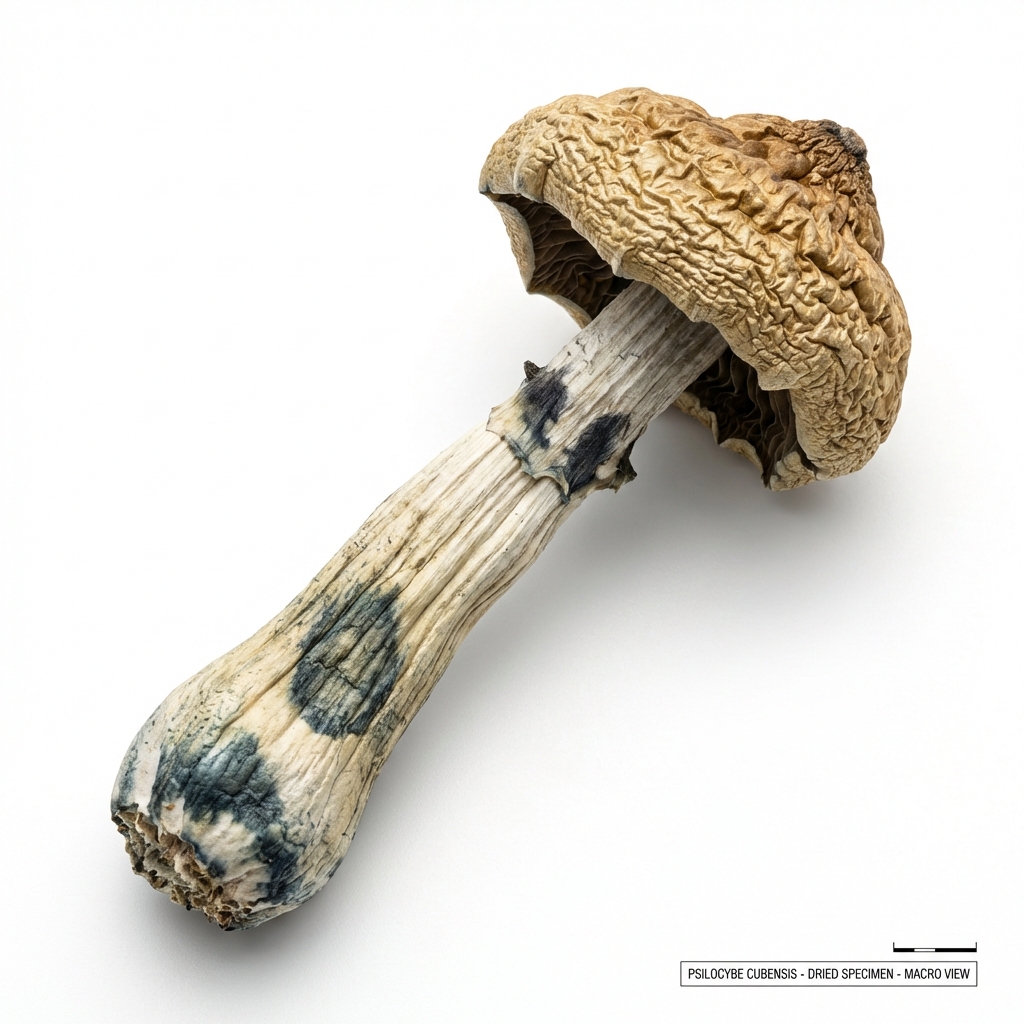
Blue bruising is associated with oxidation chemistry involving psilocybin-related compounds, but the amount of bruising is not a precise potency meter. Handling, tissue damage, species, moisture, and age can all affect appearance. A heavily bruised mushroom is not automatically high potency, and a less dramatic sample is not automatically weak.
Do not dose by color.
Myth 3: fresh and dried weights convert perfectly
People often use a rough fresh-to-dry conversion, but water content varies. Fresh mushrooms are mostly water, yet the exact ratio can shift by species, harvest stage, drying method, and storage. Dried material can also degrade over time if exposed to heat, oxygen, light, or moisture.
This is why regulated products and clinical research often use measured analytes rather than casual household conversions.

Myth 4: "microdose" has one meaning
Microdose is a social term more than a scientific standard. Some products use the word for very small measured psilocybin amounts. Some use it for dried mushroom material. Some use it for non-psilocybin functional mushrooms. Some use it for Amanita or mystery blends.
Ask: microdose of what, measured how, by whom, and with what lab result?
Myth 5: lemon tek makes dose math simple
Acidic preparation may change onset speed, nausea, or subjective intensity for some people. But it does not make a weak sample safe or a strong sample predictable. Faster onset can make an experience feel more intense because there is less time to adjust psychologically.
If someone uses lemon tek to compensate for uncertainty, they may be increasing uncertainty.

Myth 6: one person's trip report predicts yours
Trip reports are useful for empathy, not dose calibration. Set, setting, sleep, food, medication, trauma history, anxiety, body size, expectations, tolerance, and context all matter. Two people can take the same tested dose and have very different experiences.
That is especially important for people with PTSD, bipolar-spectrum risk, panic disorder, medication changes, or recent grief. Potency is not only chemistry; it is chemistry meeting a nervous system.
What testing can and cannot do
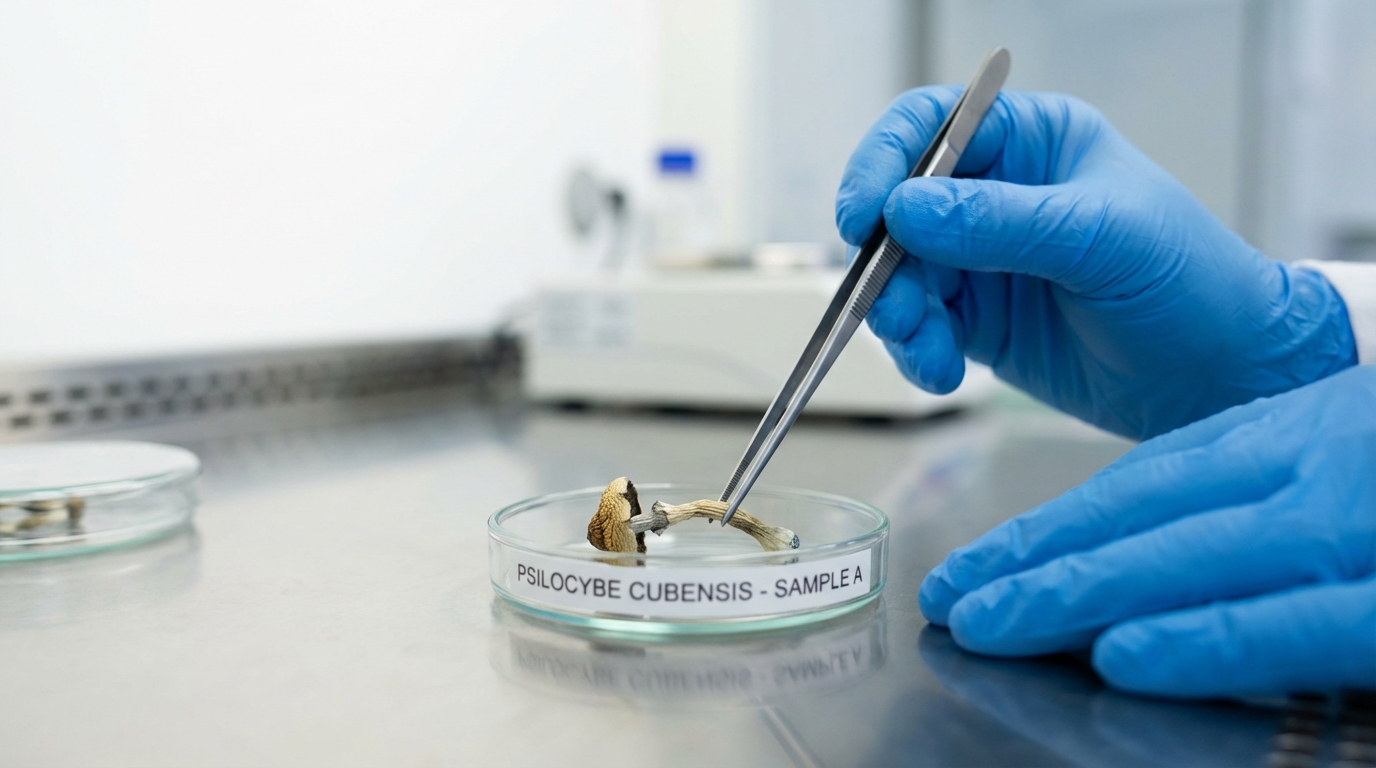
Testing can estimate psilocybin, psilocin, and sometimes related tryptamines. It can also check contaminants if the lab panel includes them. Testing cannot guarantee your psychological response, legal safety, facilitator quality, or medical suitability.
A COA is a tool, not permission. Read it with the COA literacy guide.
Safer thinking for legal settings
In legal service settings, ask:
- Is the product tested?
- What active compounds are listed?
- What is the serving size?
- How is the dose selected?
- What is the maximum allowed dose?
- How are sensitive clients screened?
- Can the session proceed with a lower dose or no dose if screening changes?
In unregulated settings, risk increases because product identity, dose, medical screening, emergency planning, and legal status are less clear.
Potency myths often become social pressure
Be careful around language like:
- "That is barely a dose."
- "Everyone can handle this strain."
- "You need a heroic dose."
- "If you do not feel it, take more."
- "This batch is weak, trust me."
- "It is natural, so it is safe."
Social pressure plus uncertain potency is a bad safety combination. You can always decide not to take more. You cannot untake what you already swallowed.
Bottom line
Strain names, bruising, trip reports, and folklore can be part of mushroom culture, but they should not be treated as lab data. When consequences matter, testing, screening, legality, support, and conservative decision-making matter more than a catchy strain name.