Why Music Is a Co-Therapist in Psilocybin Sessions
The Johns Hopkins psilocybin playlist is not background music. It is a carefully designed therapeutic intervention — a co-therapist that actively shapes the arc of a session, provides emotional scaffolding, and guides inner experience through distinct phases of the psilocybin journey.
What the Research Shows
Music under psilocybin is more emotionally potent, more personally meaningful, and more capable of guiding internal imagery than in ordinary consciousness. Clinical research has consistently found:
- Participants who are emotionally moved by the music during a session have stronger mystical experiences
- Mystical experience strength is the best predictor of therapeutic benefit across all conditions (depression, addiction, anxiety, PTSD)
- Music that generates emotional release — particularly cathartic sadness — correlates with more complete processing of difficult material
Music that makes you feel something during a psilocybin session appears to help you heal. This is not incidental.

The Hopkins Playlist Structure
The Hopkins playlist follows the pharmacological arc of psilocybin:
Onset (0–1 hour): Gentle instrumental music. Eases the transition into the altered state without distraction.
Rising (1–2 hours): Emotionally complex orchestral works. Supports deepening and emotional opening.
Peak (2–4 hours): The most intense selections — sacred, choral, world music designed to support surrender and release.
Descent (4–5 hours): Lighter and more ambient. Supports return toward ordinary consciousness.
Return (5–6 hours): Gentle, grounding — acoustic or simple orchestral.
The playlist is available on Spotify under "Music for Psilocybin (Johns Hopkins)."
How to Design Your Own Playlist
Length: 6–7 hours. Most experiences from dosing to return last 5–6 hours; extra prevents uncomfortable silence.
Instrumental or limited vocals: Lyrics create narrative that may distract from inner experience, especially at the peak.
Dynamic arc: The playlist should build and release tension in ways that support emotional processing — not flat ambient background.
No jarring transitions: Abrupt changes in style or volume break the interior experience. Smooth transitions matter.
Test it sober: Listen before the session. No surprises.
No shuffle: The arc is intentional.
Mendel Kaelen's Work
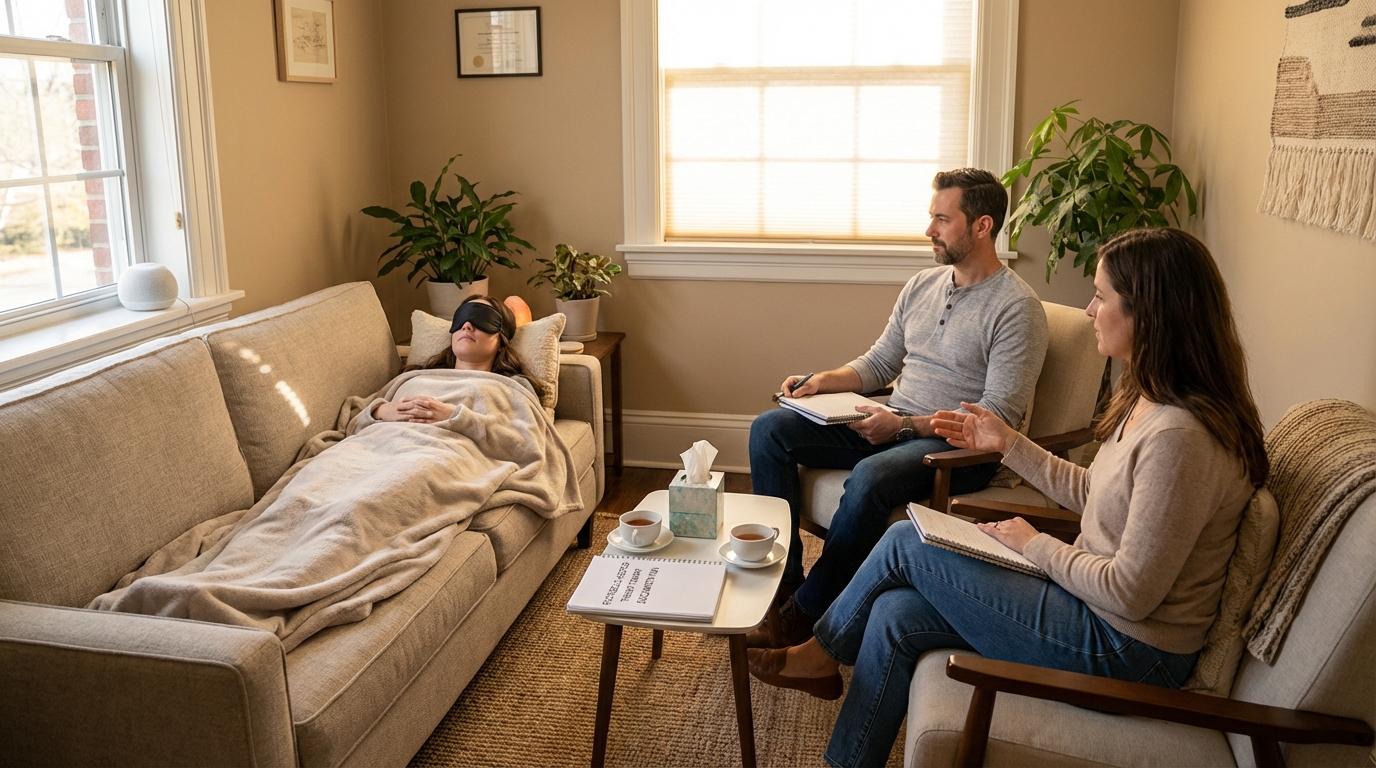
The most rigorous academic work on music in psychedelic therapy comes from Mendel Kaelen, who spent his PhD at Imperial College researching exactly this question. His work established the mechanistic basis for why music matters — and led to Wavepaths, a platform designed to deliver AI-adaptive therapeutic music for psychedelic sessions. For practitioners designing protocols, Kaelen's thesis is essential reading.