
Psilocybin Pharmacology: From Ingestion to Experience
Understanding how psilocybin works pharmacologically — from ingestion through metabolism to receptor binding to brain-wide effects — helps make sense of why clinical protocols are designed the way they are, why some people respond differently than others, and what integration work is actually leveraging.
Step 1: Ingestion and Gastrointestinal Absorption
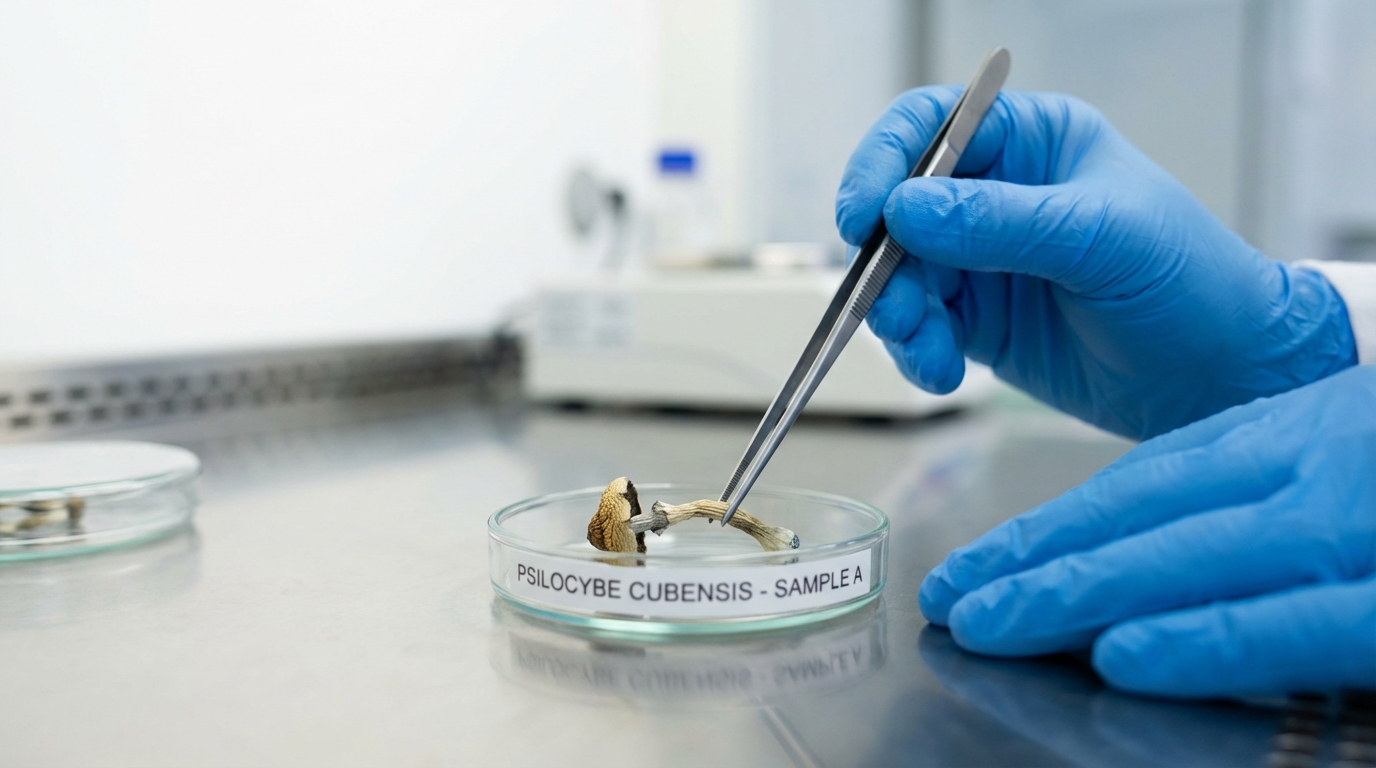
Psilocybin (4-phosphoryloxy-N,N-dimethyltryptamine) is the prodrug form of psilocin. It is a phosphate ester — a tryptamine molecule with a phosphate group attached. This phosphate group is what makes psilocybin itself pharmacologically inactive. The experience comes from what psilocybin becomes.
After ingestion, psilocybin is absorbed through the gastrointestinal tract. Absorption speed varies with:
- Stomach contents: Empty stomach produces faster and often more complete absorption (hence the recommendation to fast before sessions)
- Preparation: Tea preparation removes much of the chitin/fiber, producing faster absorption
- Lemon tek: Acid pre-converts some psilocybin to psilocin before ingestion, accelerating onset
Typical onset after ingestion of dried mushrooms: 30–90 minutes.
Step 2: Conversion to Psilocin
The phosphate group is rapidly cleaved in the body by alkaline phosphatases — enzymes present primarily in the intestinal wall, liver, and blood. The result is psilocin (4-hydroxy-N,N-dimethyltryptamine), which is the active compound.
Psilocin is structurally nearly identical to serotonin (5-hydroxytryptamine) — differing primarily in the 4-hydroxy position (vs. 5-hydroxy in serotonin) and the dimethyl group. This structural similarity to serotonin is why psilocin binds so effectively to serotonin receptors.
Step 3: Serotonin 2A Receptor Binding
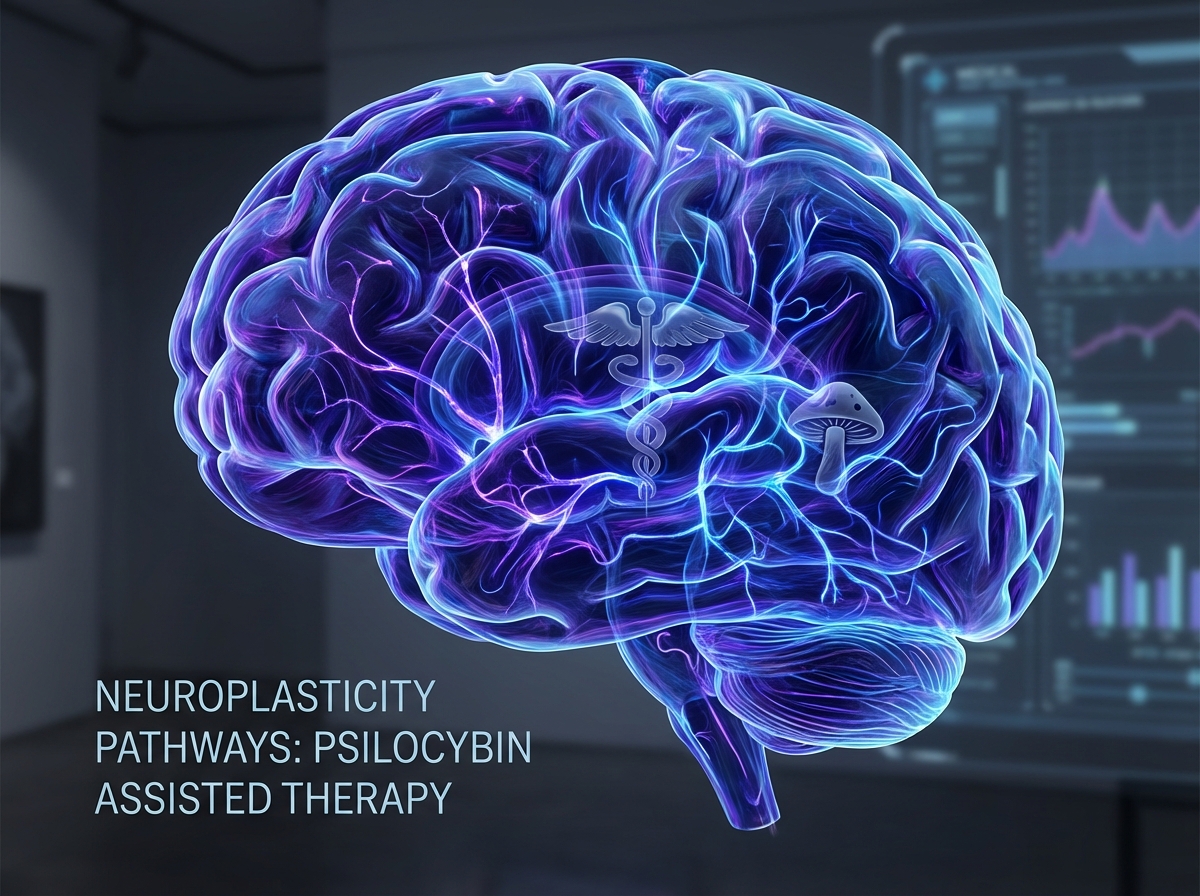
Psilocin's primary therapeutic and psychedelic mechanism is agonism at the serotonin 2A receptor (5-HT2A). The 5-HT2A receptor is concentrated in the cortex — particularly the prefrontal cortex, the orbitofrontal cortex, and the default mode network (DMN) hub regions.
What 5-HT2A activation does at the cellular level:
- Activates Gq protein signaling cascades
- Produces IP3 and DAG (secondary messengers)
- Triggers downstream BDNF release and synaptic plasticity
- Increases cortical pyramidal neuron excitability
At the network level, the result is:
- Disruption of the default mode network's normal coherent oscillations
- Increased entropy (randomness/complexity) of brain signals
- Cross-network communication between normally segregated networks
- Reduced top-down predictive signaling (the brain becomes less reliant on its prior predictions, more open to raw sensory input)
Step 4: Brain-Wide Effects — The Psychedelic State
The convergent result of psilocin's receptor binding is the psychedelic state. Key neurophysiological correlates:
Default mode network suppression: The DMN — the network active during self-referential thought, mind-wandering, and narrative construction — shows reduced activity and reduced internal coherence. This is the neural correlate of the reduced ego and altered sense of self reported during psychedelic experiences.
Increased entropy: Brain signal complexity (as measured by EEG/MEG entropy) increases under psilocybin. More complex, less predictable brain signals correspond to the richness and novelty of psychedelic experience.
Cross-network connectivity: Brain regions that normally operate in isolated functional networks begin communicating. Visual cortex connects to auditory cortex; memory networks connect to sensory networks. This produces synesthesia, unusual associations, and the "mind-expanding" quality.
Thalamic gating changes: Psilocybin appears to alter the thalamic gating mechanism that normally filters sensory input. More unfiltered sensory information reaches consciousness — which is experienced as perceptual enhancement and intensity.
Step 5: Metabolism and Elimination
Psilocin is metabolized primarily by monoamine oxidase (MAO) and other enzymes. It is glucuronidated (conjugated to glucuronic acid) in the liver for excretion.
Half-life: Psilocin's plasma half-life is approximately 1–2 hours. This is why psilocybin effects begin to fade at 3–4 hours.
Metabolite excretion: Psilocin and its metabolites are excreted primarily in urine. Psilocybin's water solubility means it does not bioaccumulate in fat tissue — unlike cannabis (lipophilic), it clears relatively quickly.

Step 6: The Plasticity Window
After psilocin has been metabolized and eliminated, a period of enhanced neuroplasticity follows. Psilocybin reliably increases BDNF (Brain-Derived Neurotrophic Factor) and promotes dendritic spine growth in the prefrontal cortex.
Duration: Enhanced plasticity is measurable for 24–48 hours; the functional benefits of this window may extend 2–4 weeks.
Clinical implication: The neuroplasticity window is why integration therapy in the days and weeks after a session is particularly potent. The brain is structurally more capable of new learning during this period — new associations, new behavioral patterns, and new relational habits take hold more readily.
Interactions and Variations
SSRIs: Chronic SSRI use downregulates 5-HT2A receptors. Reduced receptor density means psilocin has fewer targets — substantially blunting the response. This is why many protocols recommend SSRI tapering (under medical supervision) before psilocybin treatment.
MAOIs: Inhibit psilocin metabolism, significantly extending and intensifying effects. Dangerous combination without careful dose adjustment.
CYP2D6 genetics: Psilocybin metabolism involves CYP2D6. Poor metabolizers may have prolonged psilocin exposure and more intense effects at the same dose.