
Psilocybin for Addiction Treatment: What the Research Shows in 2026
Psilocybin has shown striking results in early clinical trials for addiction — results that outperform most existing pharmacological treatments for both alcohol and nicotine dependence. This page reviews the current evidence, the proposed mechanism, and what this means for people with addictions in 2026.
The Research Overview
Smoking Cessation (Johns Hopkins)
The most cited psilocybin addiction study remains Matthew Johnson's 2014 open-label pilot (n=15, published in Psychopharmacology). Results:
- 80% abstinence rate at 6 months following 2–3 psilocybin sessions with cognitive behavioral therapy
- 67% abstinence at 12-month follow-up
- For comparison: best pharmacotherapy (varenicline/Chantix) shows ~35% at 6 months; nicotine replacement ~15–25%
A follow-up randomized controlled trial is ongoing. Phase 2 data is expected 2026–2027.
Alcohol Use Disorder (NYU, 2022)
The landmark NYU study by Michael Bogenschutz (n=93, published in JAMA Psychiatry) is the first Phase 2 RCT for psilocybin-assisted treatment of alcohol use disorder:
- 83% reduction in heavy drinking days in psilocybin group vs. 51% in placebo-enhanced therapy group
- Effect was large, durable through 8 months follow-up
- No serious adverse events
This is the strongest randomized evidence to date for psilocybin in any addiction indication.

Opioid Use Disorder
Earlier stage. Case reports and small pilot data suggest psilocybin reduces opioid craving and withdrawal distress. No Phase 2 RCT data yet. Academic sites (Johns Hopkins, UCSF) have initiated trials.
Cocaine Use Disorder
Similarly early. Preclinical data and small case series. UCSF and NYU have ongoing Phase 1/2 studies.
How Psilocybin Might Help Addiction
No definitive mechanism has been established, but several converging hypotheses:
Default Mode Network reset: The DMN is associated with rigid self-referential thinking — the "I am an addict" and "I need this substance" patterns that maintain compulsive use. Psilocybin reliably suppresses the DMN, which may temporarily dissolve these self-reinforcing patterns.
Increased cognitive flexibility: Psilocybin-induced brain entropy (increased cross-network connectivity) may make habitual thinking patterns more fluid and accessible to change.
Meaningful experience effect: Mystical-type experiences correlate strongly with outcomes in addiction trials. Matthew Johnson found that the intensity of the mystical experience during the psilocybin session was the strongest predictor of smoking cessation success at 12 months. Similar effects have been found in alcohol data. The experience appears to confer a kind of perspective shift that makes the addictive substance feel less necessary.
Post-session neuroplasticity window: BDNF elevation and synaptic plasticity for 2–4 weeks post-session may make behavioral change (therapy, lifestyle changes) more effective during this period.
The Role of Therapy
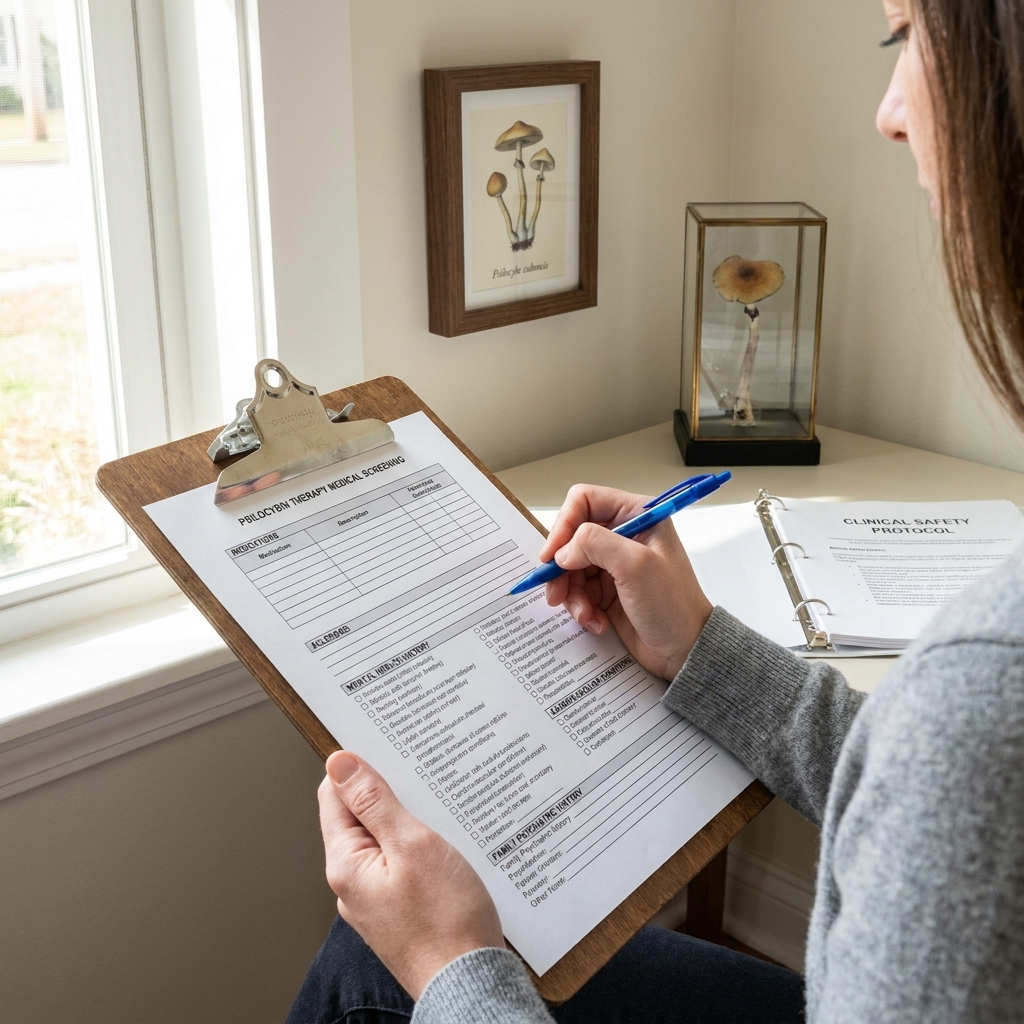
Psilocybin for addiction is not a standalone treatment in any established protocol — it is combined with therapeutic support before and after each session. The therapy provides:
- Preparation: understanding the experience, setting intentions, harm reduction
- Integration: processing the experience, building on insights, making behavioral changes
Without this therapeutic container, the psilocybin effect on addiction is likely to be reduced. This is partly why the striking outcomes from trials are difficult to achieve in unstructured recreational use.
Comparison to Existing Treatments
| Treatment | Indication | Abstinence/Response at 6 months | |---|---|---| | Psilocybin (Hopkins) | Smoking | ~80% | | Varenicline (Chantix) | Smoking | ~35% | | Naltrexone | Alcohol | ~40–50% reduced heavy drinking | | Psilocybin (NYU) | Alcohol | ~83% reduced heavy drinking | | Buprenorphine | Opioids | Ongoing daily medication required | | Methadone | Opioids | Ongoing daily medication required |
The psilocybin numbers are striking — but reflect small n, open-label, or single Phase 2 RCT data with highly selected participants and intensive therapy contexts. These are not yet generalizable to real-world clinical practice.
Current Access for Addiction Treatment
Clinical trials: The most reliable access point. ClinicalTrials.gov has active psilocybin addiction trials that provide free treatment in exchange for participation. Eligible conditions and locations vary.
Oregon service centers: Legal access without diagnosis requirement. Some facilitators have addiction-specific training. Integration of addiction-focused therapy alongside the session is possible but not guaranteed.
Colorado healing centers: Similar to Oregon in broad structure, but current access depends on 2025-era licensing, local permissions, provider availability, and screening.
Underground therapy: Illegal in most jurisdictions, unregulated, variable safety. Not recommended — but a reality that many people with addiction access.
Practical Considerations
Withdrawal risk: Do not enter a psilocybin session during active alcohol or benzodiazepine withdrawal — these carry seizure risk and psilocybin does not substitute for GABA-ergic suppression. Medically supervised detox first.
Opioid-in-withdrawal interaction: Psilocybin does not treat opioid withdrawal symptoms and should not be substituted for medically appropriate withdrawal management.
Motivation and timing: The Hopkins data suggests that readiness and genuine motivation to quit are important predictors of outcome. Psilocybin is not a magic override for ambivalence.
Resources
- ClinicalTrials.gov: Search "psilocybin smoking", "psilocybin alcohol use disorder", "psilocybin opioid"
- Johns Hopkins Psychedelic Research Unit: hopkinspsychedelic.org — addiction research program
- NYU Langone Psychedelic Medicine Program: Search "NYU psilocybin alcohol" for study information
- SMART Recovery: smartrecovery.org — integration-compatible secular addiction support