Psilocybin's Safety Profile: What 20 Years of Research Shows
Researchers consistently describe psilocybin as physiologically safe. The popular framing — "one of the safest substances on the Nutt scale" — is accurate but incomplete. This guide provides a full accounting of what the safety evidence shows, including where risks do exist.
Physiological Safety: The Strong Evidence
No lethal dose established in humans: No confirmed human fatality from psilocybin toxicity has been reported in the scientific literature. Animal LD50 studies (the dose that kills 50% of test animals) suggest that a human would need to consume approximately 1,000 times a therapeutic dose to approach potentially fatal toxicity — an amount that is physically impossible to eat in mushroom form.
No organ toxicity: Psilocybin does not damage the liver, kidneys, heart, or brain at therapeutic or recreational doses. This distinguishes it from alcohol, acetaminophen, and many other legal substances.
No addiction: Psilocybin does not produce physical dependence, withdrawal syndrome, or compulsive use patterns. Tolerance develops rapidly and makes frequent use self-limiting. Multiple studies have found psilocybin reduces addictive behavior toward other substances.
Nutt scale ranking: A 2010 study by David Nutt et al. in The Lancet ranked 20 substances by overall harm (to self and others). Psilocybin ranked last (least harmful) — behind alcohol, tobacco, cannabis, and nearly all controlled substances.

Cardiovascular Effects: Real but Usually Manageable
Psilocybin does have cardiovascular effects that matter for specific populations:
Acute effects: Blood pressure and heart rate increase during peak psilocybin effects. These increases are typically moderate (10-20% above baseline) and self-limited.
Clinical exclusion criteria: People with severe cardiovascular disease, uncontrolled hypertension, or arrhythmias are excluded from clinical trials. This is not purely precautionary — cardiac events during stimulant-level cardiovascular activation are theoretically possible in this population. The evidence base is not large enough to quantify the risk precisely.
Practical implication: People with existing heart conditions should consult a physician before psilocybin use. The risk is not zero.
Psychological Risks: The Nuanced Picture
The most significant risks from psilocybin are psychological, not physiological:
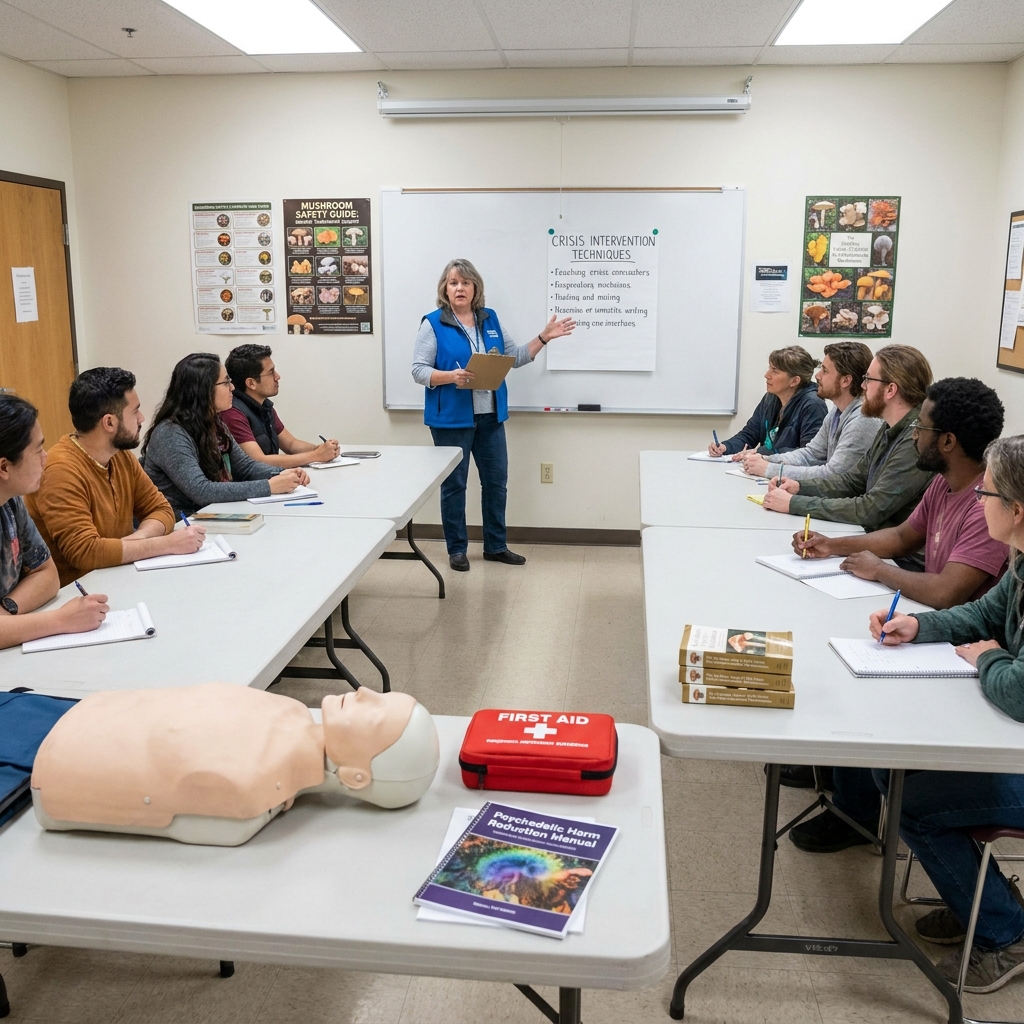
Acute psychological distress: Anxiety, panic, and fear are common during psilocybin sessions at some frequency and in some populations. In clinical settings with adequate preparation and support, serious adverse events are rare. In uncontrolled settings, they are more common and can include dangerous behavior (falling, wandering, traffic accidents) during acute disorientation.
Persisting Perception Disorder (HPPD): A small percentage of psychedelic users develop persistent visual disturbances (flashbacks, visual snow, trails) after use. The prevalence with psilocybin specifically is estimated at <1% in the clinical trial literature, though may be higher with recreational use. The condition is distressing and treatment is limited.
Psychiatric destabilization: The most important clinical contraindication. People with personal history of psychosis, schizophrenia, or bipolar I disorder — or first-degree family members with schizophrenia — have elevated risk of psychiatric destabilization from psilocybin. Clinical trials exclude this population. This is an evidence-based exclusion, not bureaucratic caution.
Population-Level Data
Nutt et al. 2010 harm ranking: When researchers ranked substances by both harm to self and harm to others, psilocybin scored the lowest of any substance measured — including cannabis, ketamine, LSD, and all controlled substances. Alcohol scored highest.
Emergency room presentation data: Population surveys and emergency room data show that psilocybin-related ER visits are typically due to acute psychological distress (anxiety, paranoia), accidental trauma during disorientation, or polysubstance use — not physiological toxicity. Psilocybin misidentification (eating Galerina instead of psilocybin mushrooms) is a genuine and serious risk in the wild-collected context.
Hopkins adverse event data: Clinical trials at Hopkins and NYU systematically track adverse events. The most common: transient anxiety during sessions (common, expected, and manageable). Serious adverse events requiring medical intervention have been extremely rare in controlled settings.
The Important Caveats
"Safe" doesn't mean "no risks": The physiological safety profile is exceptional. The psychological risk profile is more significant and population-dependent. For the wrong populations (contraindicated psychiatric conditions, high-dose uncontrolled settings, no support), psilocybin carries real risks.
Context matters enormously: The safety record from clinical trials is achieved with careful screening, preparation, facilitation, and integration support. Recreational use without these supports produces a different risk profile.
Interactions can be serious: SSRIs blunt effects (moderate concern); MAOIs can cause dangerous potentiation (serious concern); lithium combined with psilocybin has been associated with seizures (contraindication). Drug interactions are not zero.
Mushroom misidentification is a separate risk category: When people are harmed by "magic mushrooms," misidentification is often the cause — Galerina marginata (lethal) can be confused with psilocybin species by inexperienced foragers. This is not a psilocybin toxicity issue, but it is a real harm in the wild-foraging context.

Summary
Psilocybin has one of the most favorable safety profiles of any psychoactive substance by conventional pharmacological measures. The risks that exist are primarily:
- Psychological distress during sessions — manageable with preparation and support
- Contraindicated populations (psychosis history, cardiovascular disease) where risks are elevated
- Drug interactions with specific medications
- Context — uncontrolled settings substantially increase psychological risk
- Mushroom misidentification in wild-foraged contexts
The honest safety assessment: very safe for healthy adults in supported settings; specific significant risks for contraindicated populations and unsupported use.