
Oregon Psilocybin Services: Two Years In
Oregon's Measure 109 created the first licensed psilocybin service center framework in the United States. The program became operational in mid-2023. As of spring 2026, it has been running for nearly three years — enough time to evaluate what's actually working, what isn't, and what the rest of the country can learn from it.
This is an honest assessment, not a promotional one.
What the Program Actually Is
Measure 109 created a framework for:
- Psilocybin service centers — licensed physical locations where clients receive psilocybin sessions
- Licensed facilitators — individuals who complete state-approved training and pass licensing requirements
- Manufacturers — licensed growers and producers of psilocybin for service center use
- The Oregon Psilocybin Services (OPS) — the state body within Oregon Health Authority overseeing licensing, enforcement, and rulemaking
Critical features of the Oregon framework:
- No diagnosis required: Any Oregon adult (21+) can access services — unlike clinical trials, there's no TRD or cancer diagnosis prerequisite
- No insurance coverage: All costs are out-of-pocket
- No take-home product: Psilocybin is consumed only at licensed facilities, under facilitator supervision
- Measure 110 context: Oregon simultaneously decriminalized personal possession of all drugs, reducing enforcement pressure on the legal program
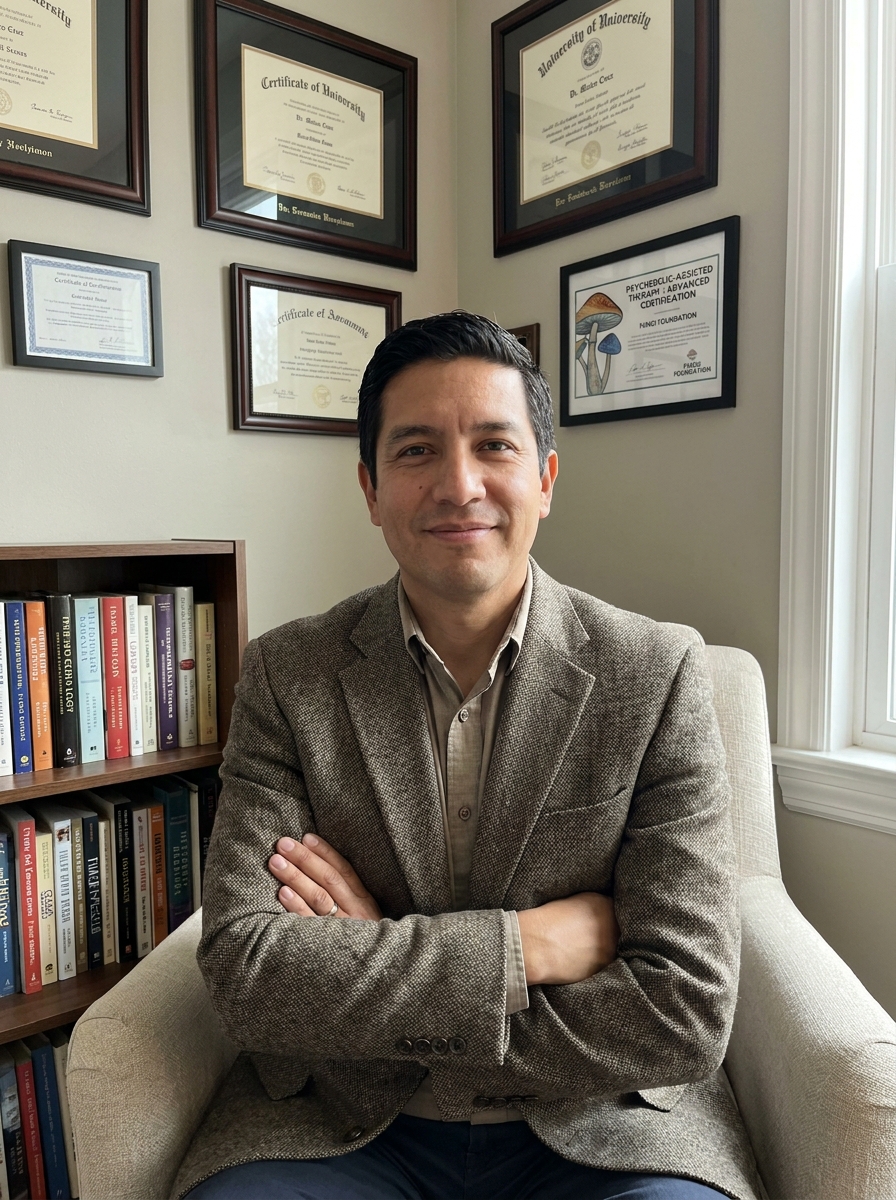
Who Is Actually Getting Access?
This is the most important and most uncomfortable question about the Oregon program.
The Cost Reality
A complete Oregon psilocybin experience typically costs:
| Component | Cost Range | |-----------|------------| | Preparation sessions (2–3) | $150–$400/session | | Psilocybin session (6–8 hours) | $800–$2,000 | | Integration sessions (2–3) | $150–$400/session | | Total typical range | $1,500–$3,500+ |
This places Oregon psilocybin therapy firmly out of reach for most Americans. The median US household income is approximately $74,000/year. A $2,000+ self-pay mental health treatment is accessible to an affluent minority.
Who is actually attending: Anecdotal facilitator reports and early OPS data suggest the client population skews heavily toward:
- Educated professionals, average age 35–55
- Primarily white clients
- Those with disposable income or savings
- Some people who have traveled from out of state specifically for access
This is not the population most harmed by the mental health crisis. It's not veterans with limited VA resources, people with severe treatment-resistant conditions and no savings, or underserved rural communities. Equity is the Oregon program's most significant unresolved challenge.

The Geographic Reality
As of early 2026, licensed service centers are concentrated in:
- Portland metro area
- Bend/Central Oregon
- Eugene
- A small number of rural sites
Eastern Oregon and much of rural Oregon have limited or no nearby licensed access. For rural Oregonians, accessing the program often requires significant travel.
What's Working

The Safety Record
In nearly three years of operation, there have been no reported deaths attributable to licensed psilocybin use. There have been some adverse events — primarily psychological distress requiring longer facilitator support, and a small number of incidents requiring transport to emergency services for evaluation.
The safety record is significantly better than critics predicted and comparable to the clinical trial data on adverse events. The facilitator training requirements and mandatory preparation sessions appear to be functioning as intended.
Facilitator Quality
Oregon's facilitator training requirement — a substantial multi-hundred-hour program — has produced a licensed facilitator community that is, broadly speaking, well-prepared. Facilitator feedback consistently emphasizes that the training is adequate to manage most session scenarios.
There are currently over 400 licensed facilitators in Oregon, with more completing training regularly.
Demand
The program is not suffering from lack of demand. Licensed service centers report strong booking rates and waitlists. The limiting factor is supply (service center capacity and facilitator availability), not demand.
Policy Model
Oregon has created a detailed regulatory framework that other states are studying as a model. Colorado's Proposition 122 explicitly built on Oregon's experience, with implementation moving through rulemaking, facilitator licensing, and regulated business licensing in 2024-2025. Minnesota, California, and other states with active legislation have referenced Oregon's OPS framework.
What Isn't Working
Equity
As described above: the program is not reaching populations most in need. The Oregon Psilocybin Services program has acknowledged this and has convened an equity advisory committee, but structural solutions — insurance coverage, sliding scale mandates, grant programs — remain aspirational rather than operational.
Cost of Goods
The legal supply chain for psilocybin adds cost at every regulated step. Licensed manufacturers face significant compliance costs. Service centers face rent, staffing, and licensing costs. The result: legal psilocybin is significantly more expensive per session than it needs to be pharmacologically. The economics of regulated psychedelic therapy remain challenging.
Documentation and Outcome Tracking
Oregon does not currently have a mandated outcome tracking system. There is no centralized data on client outcomes, which means the state cannot demonstrate (or fail to demonstrate) population-level therapeutic benefit. Clinical researchers have advocated strongly for mandatory outcome collection; the OPS has moved slowly.
Marketing Restrictions
OPS rules significantly restrict how service centers can market their offerings — limiting claims about therapeutic outcomes to avoid violating state advertising standards and federal law. This creates challenges for service centers to differentiate themselves and for clients to understand what they're purchasing.
The Insurance Question
No major US insurance carrier currently covers Oregon psilocybin services. This is not surprising for a service with no FDA approval, but it is the most significant structural barrier to broad access.
Advocates are pursuing several paths:
- State legislation mandating insurance coverage for licensed psilocybin services (introduced but not yet passed)
- Federal FDA approval (COMPASS NDA) as the pathway to insurance coverage via standard drug reimbursement
- Medicaid coverage advocacy (long-term; requires federal action)
Insurance coverage is probably 3–7 years away under optimistic scenarios.
Lessons for Other States
States watching Oregon should note:
- Access equity must be designed in, not added later: Sliding scale requirements, geographic distribution requirements, and insurance mandates are harder to add after a framework is established.
- Outcome data collection is essential: Oregon's inability to demonstrate population-level outcomes weakens its advocacy position and slows research.
- The safety record is encouraging: Three years of operation without a major safety incident validates the harm reduction model of supervised, prepared psilocybin use.
- The regulatory burden is real: The cost of compliance is passed on to clients. Lighter-touch regulation in appropriate areas would reduce access barriers without compromising safety.
- Demand exists: The concern that legal psilocybin therapy wouldn't find a market has been thoroughly disproved.
The Bottom Line
Oregon's psilocybin program is a genuine, operational success — with significant asterisks. The safety profile is excellent. The demand is real. The regulatory framework works. But the program is currently serving a relatively affluent, relatively privileged subset of the population who could benefit from it.
The path forward requires solving the equity problem. That means insurance coverage, sliding scale requirements, or other access-expanding mechanisms. Until that's solved, Oregon psilocybin therapy is an important proof of concept that hasn't yet reached its full potential as a public health intervention.