Psilocybin Integration Resources: A Complete 2026 Directory
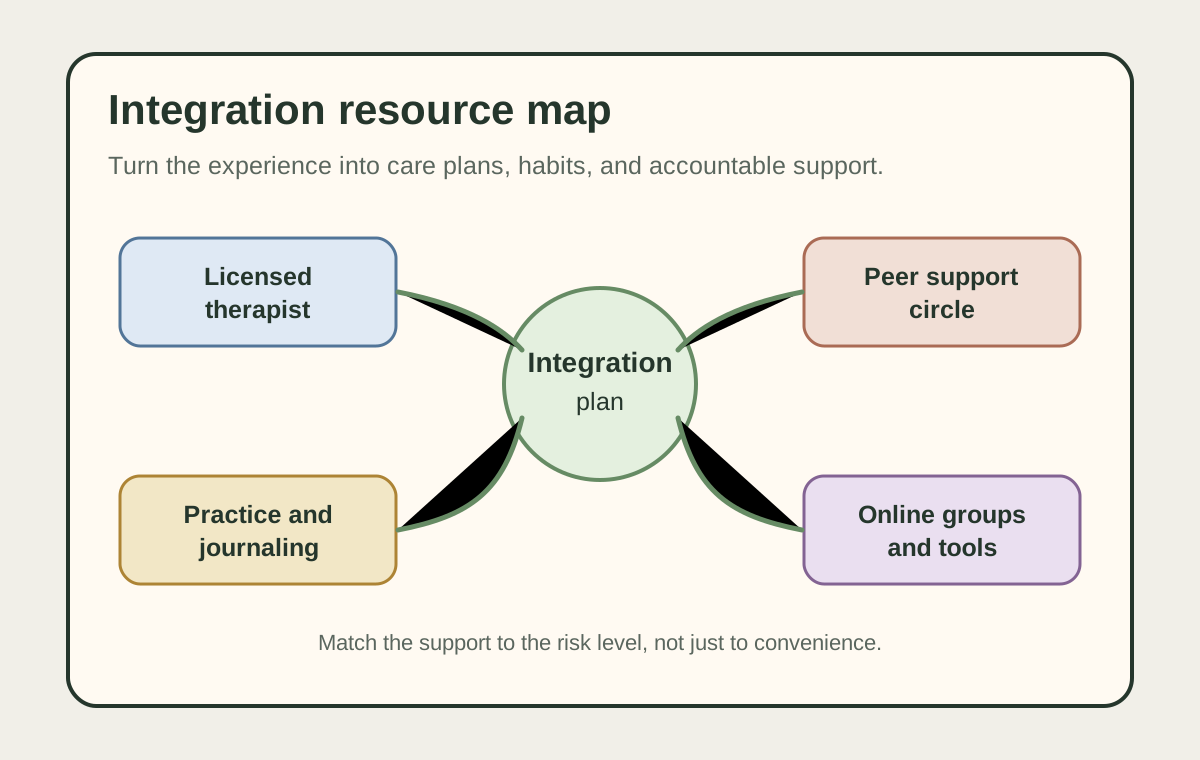
Integration is the work of translating the psilocybin experience into lasting change. It requires support — from professionals, from community, from tools, and from sustained personal practice. This directory covers the major integration resource categories and how to access them.
Integration Therapists and Practitioners
Integration therapy is different from traditional psychotherapy in that the therapist understands and works explicitly with psychedelic experience — rather than pathologizing or ignoring it. Finding a psychedelic-informed therapist is the most important integration resource for most people.
Directories:
- Psychedelic Support Directory (psychedelic.support): The largest US directory of psychedelic-informed therapists. Filter by state, specialty, and insurance.
- MAPS Therapist Directory: Therapists trained in MAPS protocols for MDMA-assisted therapy; many also work with psilocybin integration.
- Spiritual Emergence Network: Directory focusing on practitioners who work with non-ordinary states including psychedelic experience.
- Alma and Zencare: General therapy directories with "psychedelic integration" as a filterable specialty in major metropolitan areas.
What to look for in an integration therapist:
- Explicitly states experience with psychedelic integration (not just openness to it)
- Licensed mental health professional (LCSW, MFT, LPC, PhD, PsyD, MD/DO)
- Does not pathologize the experience or treat it as a problem to manage
- Has their own experience with the territory — through therapy, training, or personal experience

Peer Support and Integration Circles
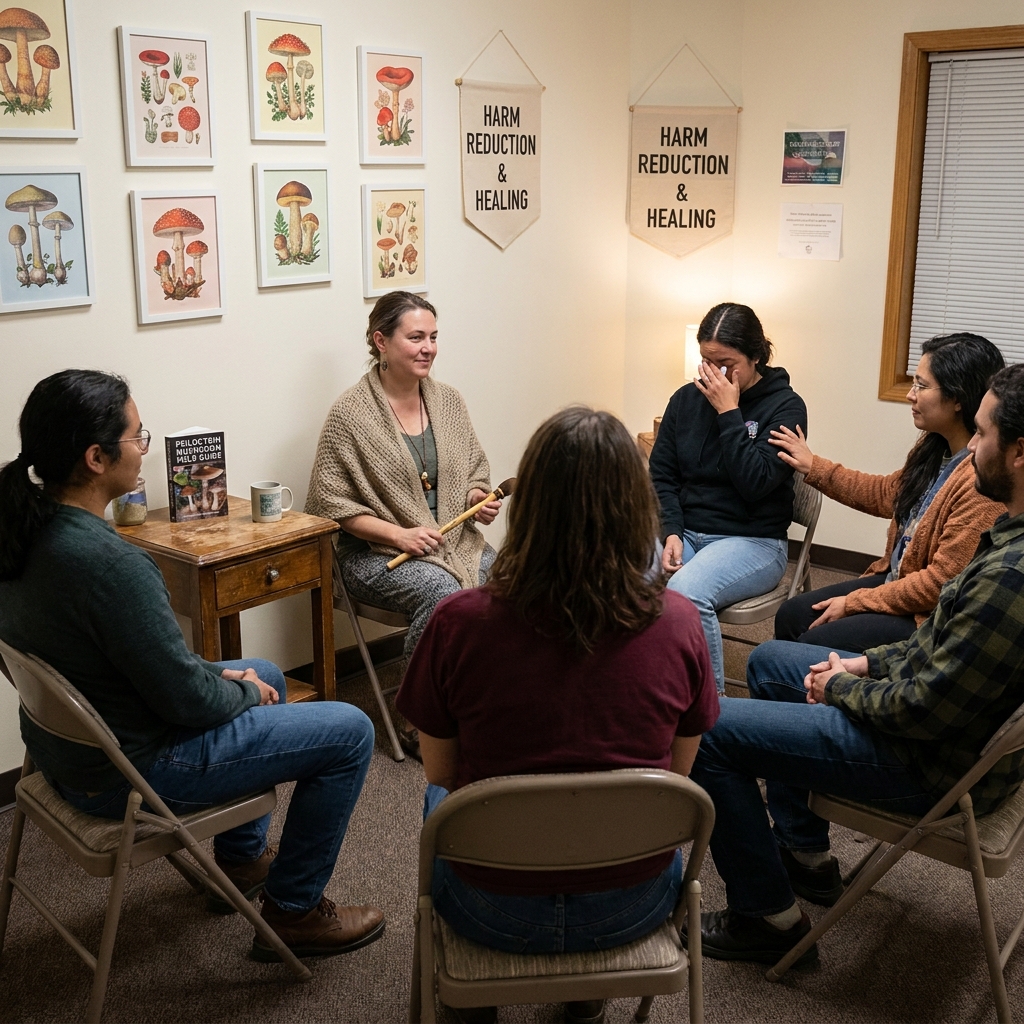
Community-based integration support can be as valuable as professional therapy for many people. The shared experience of others who have done this work removes isolation and provides perspective.
Psychedelic Integration Circles: Community gatherings (in-person and online) where people share and process psychedelic experiences in peer-supported group format.
- Zendo Project facilitates integration circles and trained facilitator networks
- Many cities have informal circles — search "psychedelic integration circle [city]"
- Being There Project maintains a directory of integration circles
Fireside Project: 62-FIRESIDE (62-347-3733). Peer support line for use during or after difficult experiences. Free. Available nights and weekends. One of the most important harm reduction resources in the field.
Integration Facebook groups and Discord servers: Large online communities where people share integration experiences, ask questions, and support each other. Quality varies; look for moderated groups with clear norms.
Digital Tools and Apps
Erowid Integration Forum: Long-running online community; large historical archive of experience reports and integration discussions.
Wavepaths: Music platform designed for psychedelic therapy; useful for music-assisted integration practices.
Reflectly, Day One, and other journaling apps: Journaling is among the most-cited effective integration practices. Any journaling tool works; what matters is the habit.
Headspace, Insight Timer, Waking Up: Meditation apps that support the contemplative practices most associated with sustained integration.

Books on Integration
- Françoise Bourzat, Consciousness Medicine: The most practical book on integration — not mystical, not clinical, but genuinely useful. Covers preparation, the session, and integration in detail.
- Gabor Maté, The Myth of Normal: Essential context for understanding the relational and developmental roots of conditions psilocybin addresses.
- Michael Pollan, How to Change Your Mind: Accessible entry point to the entire field; includes integration discussion.
- Nick Jikomes and others, Psychedelic Therapy: A Clinician's Guide: Professional text covering integration from a clinical perspective.
- Tara Brach, Radical Compassion: Practices directly applicable to integrating difficult material — self-compassion, RAIN (Recognize, Allow, Investigate, Nurture).
Online Education and Courses
MAPS Harm Reduction Guides: Free, downloadable harm reduction guides including integration frameworks.
Third Wave Academy: Paul Austin's online education platform covering microdosing, macrodosing, and integration courses.
Psychedelics Today: Online community and education platform with integration courses taught by licensed practitioners.
California Institute of Integral Studies (CIIS): Certificate program in psychedelic-assisted therapies — professional level training but the courses are accessible to interested non-professionals.
Practices That Support Integration
Research and clinical observation consistently identify several practices as most supportive of integration:
Journaling: 10–20 minutes of unstructured writing immediately after a session and regularly in the following weeks. Not to analyze — to extrude.
Movement: Yoga, walking in nature, swimming, any embodied movement that helps process somatic material.
Creative practice: Drawing, music, writing, ceramics — any form of creative expression that gives form to what emerged.
Meditation and contemplative practice: Sitting with what arose, non-judgmentally, over time. Most integration practitioners recommend establishing or deepening a meditation practice alongside psychedelic work.
Social connection: Talking with trusted people about what you experienced, what changed, what's different. The relational dimension of integration is underrated.
Therapy sessions: Scheduled within the first week post-session, while neuroplasticity is highest.