
Oregon Created a New Profession
When Oregon voters passed Measure 109 in November 2020, they did not simply legalize psilocybin — they created a licensed profession that did not previously exist. The psilocybin service facilitator is distinct from a therapist, a nurse, and a guide. The role was defined by the Oregon Health Authority (OHA) through a two-year rulemaking process that concluded in 2022, and the first licensed facilitators began working with clients in 2023.
As of 2026, there are roughly 700 licensed facilitators in Oregon, with more in the pipeline. Understanding how they are trained is essential context for anyone considering an Oregon psilocybin session.
The 160-Hour Training Requirement
Oregon law requires all facilitator applicants to complete a minimum of 160 hours of approved training from an OHA-licensed training program. Those 160 hours are divided into three categories:
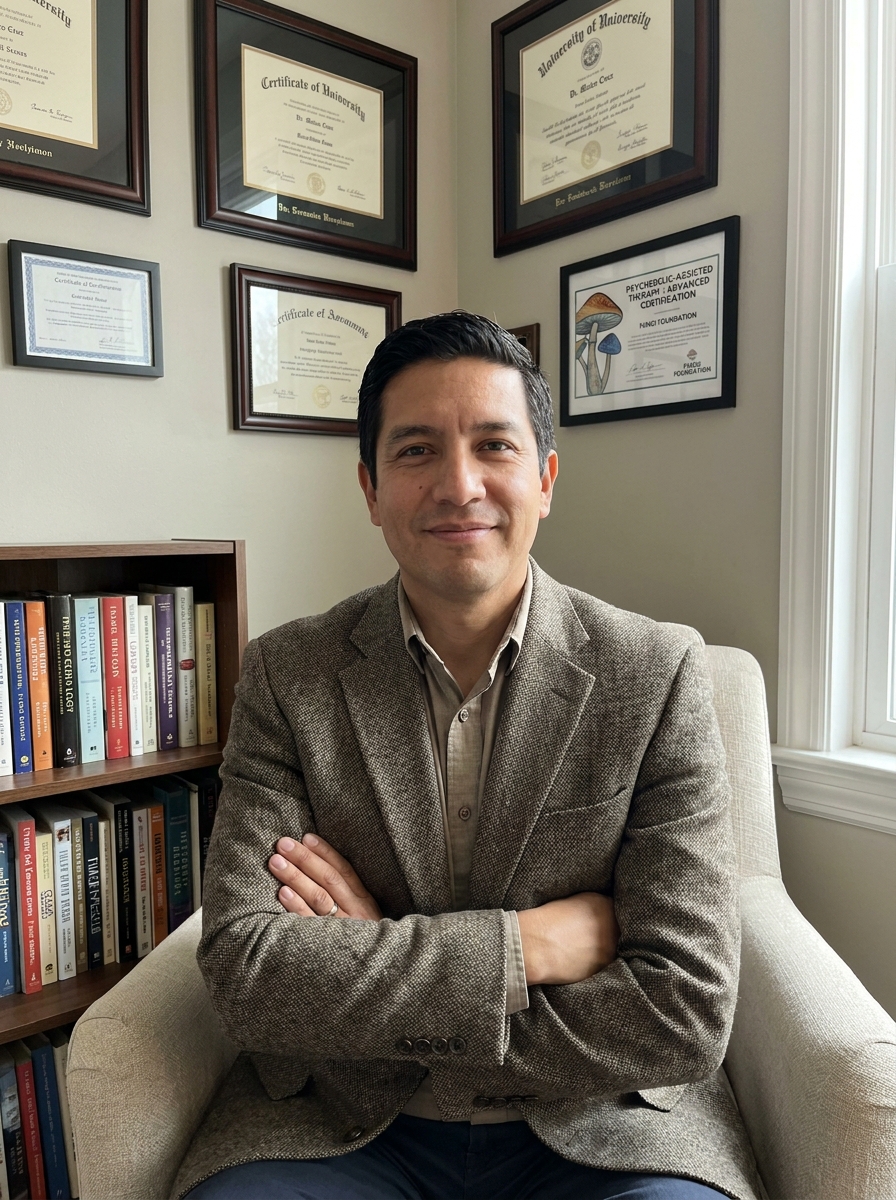
Didactic instruction (roughly 70 hours) covers psilocybin pharmacology, the neuroscience of how psilocybin affects the brain, the history and cultural context of psilocybin use, medical screening protocols, contraindications, and an introduction to trauma-informed care. Trainees study the psychological models most commonly used to frame the session experience — including elements of transpersonal psychology, acceptance-based frameworks, and non-directive facilitation.
Supervised practicum (roughly 70 hours) involves hands-on experience. Trainees observe experienced facilitators, assist during sessions, and eventually lead their own sessions under supervision. Oregon distinguishes between observer hours, assistant hours, and lead hours. The supervised component requires direct exposure to actual client sessions — not simulations.
Preparation and integration training (roughly 20 hours) focuses on the work that happens before and after the psilocybin session itself. Oregon's model emphasizes that the eight-hour session day is embedded in a larger arc: preparation sessions help the client set intentions, address medical screening, and understand what to expect; integration sessions help the client process and apply insights after the experience.

Who Offers Approved Training
OHA-approved training programs are offered by a mix of organizations — academic institutions, psychedelic-specialized nonprofits, and purpose-built professional schools. As of 2026, notable programs include:
- InnerTrek (Portland, Oregon) — one of the first OHA-approved programs, offering cohort-based training over several months
- Synthesis Institute — European roots, US expansion following Measure 109
- CIIS (California Institute of Integral Studies) — long-standing program in psychedelic-assisted therapies now offering Oregon-specific facilitator tracks
- Naropa University and several other graduate programs integrating facilitator training into existing mental health curricula
Training costs range from $8,000 to $20,000 depending on format and institution. Some programs offer sliding scale or scholarship options. This is a significant barrier for candidates from lower-income or underrepresented backgrounds — an access and diversity concern that OHA has acknowledged but not yet resolved.
Licensing Requirements Beyond Training
Completing 160 hours of training is necessary but not sufficient for licensure. Applicants must also:
- Pass a background check (disqualifying offenses are defined by OHA rule)
- Pass a jurisprudence exam covering Oregon law and professional ethics
- Demonstrate current certification in first aid and cardiopulmonary resuscitation
- Submit proof of completed training from an OHA-approved program
- Pay a licensure fee (currently $500 for initial licensure, $250 for renewal)
Licenses are renewed every two years and require 20 hours of continuing education per renewal cycle. OHA has the authority to suspend or revoke licenses for ethical violations, criminal conduct, or failure to meet continuing education requirements.
What Facilitators Are Not Allowed to Do
Oregon's framework is explicit about scope limitations. Psilocybin facilitators are not mental health therapists — they cannot diagnose conditions, prescribe or recommend medications, or provide ongoing therapeutic treatment. If a client discloses a mental health crisis unrelated to the session, the facilitator's role is to support safety and facilitate access to appropriate care, not to provide clinical intervention.
Facilitators also cannot conduct sessions outside of a licensed service center. All psilocybin sessions must take place at an OHA-licensed facility, which has its own separate licensing track covering the physical space, screening protocols, product sourcing, and record-keeping.
The Training Debate
Some practitioners argue that 160 hours is insufficient preparation for a role that involves holding space for profound, sometimes destabilizing psychological experiences. Therapists who have spent years in clinical training often express concern about facilitators lacking the background to recognize and appropriately respond to acute mental health crises that can emerge during sessions.
Proponents of the current model argue that a shorter, accessible training path was intentional — that requiring clinical licensure as a prerequisite would recreate the access barriers that have long kept psychedelic therapy available only to the wealthy.
This tension is likely to drive regulatory evolution. OHA conducts ongoing reviews of the facilitator training requirements and is expected to revise standards as the program matures and data on client outcomes accumulates.