Psilocybin Screening: Who Qualifies, Who Doesn't, and Why It Matters
Psilocybin has an outstanding safety record when used in appropriately screened populations. The key phrase is "appropriately screened." A small but meaningful subset of the population has risk factors that make psilocybin use potentially harmful. Understanding these risk factors — and what the screening process is designed to find — is essential for anyone considering psilocybin therapy or informally.
Why Screening Matters
Unlike most conventional medications, psilocybin's risks are primarily psychological rather than physiological. The compound itself has essentially no organ toxicity at clinical doses. But it powerfully alters consciousness in ways that can trigger or exacerbate certain psychiatric conditions, particularly in people with genetic vulnerability to psychosis.
The clinical screening process exists to identify these individuals and protect them from unnecessary harm.
Absolute Contraindications
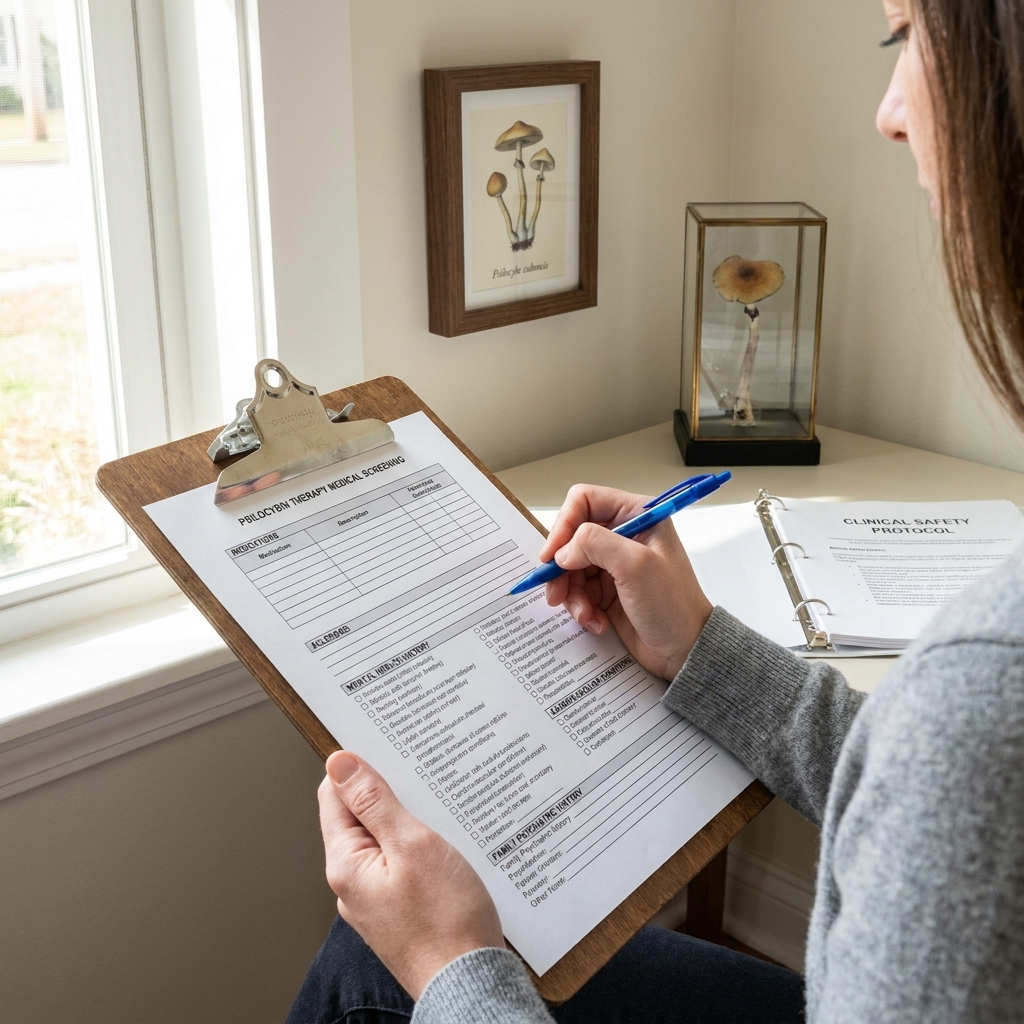
Personal history of psychosis or schizophrenia spectrum disorder: Anyone who has experienced a psychotic episode — including drug-induced psychosis, brief psychotic disorder, or episodes involving loss of reality testing — should not use psilocybin. The serotonin 2A agonism that produces the psychedelic state can trigger or worsen psychotic symptoms. This risk has been documented in case reports and is taken seriously by all reputable clinical programs.
First-degree family history of schizophrenia: A parent or sibling with schizophrenia indicates elevated genetic vulnerability. This is a significant risk factor — most rigorous clinical programs treat it as an exclusion criterion or require careful psychiatric evaluation.
Bipolar I disorder with manic episodes: Psilocybin can trigger manic episodes in people with bipolar I. Bipolar II is handled on a case-by-case basis by different programs.
Current lithium use: The combination of psilocybin with lithium has been associated with seizures. This is a clear pharmacological interaction that makes the combination dangerous regardless of the dose of either substance.
Important Relative Contraindications
SSRI/SNRI use: SSRIs blunt psilocybin response via 5-HT2A downregulation — the drug won't work as expected. More importantly, patients should not stop SSRIs without medical supervision to restore psilocybin sensitivity. Never discontinue psychiatric medications without physician guidance.
Cardiovascular disease or uncontrolled hypertension: Psilocybin increases heart rate and blood pressure during the session. For healthy adults this is not significant, but in patients with cardiovascular pathology, it warrants medical clearance.
Severe ongoing suicidality: Psilocybin in an acutely suicidal person may temporarily worsen distress before the therapeutic benefit emerges. Most programs require psychological stabilization before proceeding.
Pregnancy: No safety data exists. The precautionary principle applies.
Severe personality disorder with unstable reality testing: Borderline personality disorder with active dissociation, or other conditions involving impaired reality contact, requires careful clinical evaluation.
What the Clinical Screening Process Includes
Oregon service centers and research trials typically include:
- Psychiatric interview: Current mental health status, full diagnostic history
- Medical history: Cardiovascular, neurological, hepatic history; current medications
- Family psychiatric history: Particularly first-degree relatives with psychotic disorders
- Substance use assessment: Current and past use, history of substance use disorder
- Psychological readiness assessment: Capacity for voluntary, informed participation
The screening process is protective, not a judgment. Being screened out of a particular program doesn't mean psilocybin will never be appropriate — it may mean the timing or context is wrong.
Self-Screening for Informal Use
For people considering informal use outside of clinical programs, the same risk factors apply. The absence of a formal screening process makes self-knowledge more important, not less. If you have any of the above risk factors — particularly personal or family history of psychosis, current lithium use, or bipolar I — consult with a psychiatrist before using psilocybin. This is not bureaucratic caution; it is based on documented cases of serious harm in vulnerable individuals.

Who Qualifies: The Safe Population
Most adults without the above risk factors can use psilocybin relatively safely. The population most clearly suited for psilocybin therapy:
- Adults with depression, anxiety, or addiction who have not found adequate relief from conventional treatments
- Adults facing existential distress from serious illness
- Adults seeking personal growth or spiritual development
- Adults with stable mental health who have done preparation work and have appropriate support
The safety record in this population, across multiple clinical trials and many thousands of informal uses, is excellent. The risks are real but identifiable and avoidable with appropriate screening.