
Psilocybin for Depression: Understanding the Clinical Trial Landscape in 2026
Psilocybin for depression is the most developed clinical indication in the entire psychedelic medicine field. Multiple Phase 2 trials have been completed, one Phase 3 dataset exists (COMPASS), and the FDA review process is underway. This guide explains what the clinical trials have shown, what they haven't shown, and what FDA approval would mean.
The Evidence Landscape
Phase 2 Trials (Multiple)
Johns Hopkins Phase 2 (2020, n=24): Major depressive disorder in adults who were not on antidepressants at time of treatment. Results:
- 71% showed clinically significant response at 4 weeks
- 54% in remission (HAM-D score ≤7) at 4 weeks
- 54% maintained response at 12-month follow-up
- Effect sizes substantially larger than SSRI trial benchmarks
Published in JAMA Psychiatry — one of the most widely covered psilocybin papers.
Imperial College London (2021, n=59): The first direct comparison of psilocybin vs. an approved antidepressant (escitalopram/Lexapro). Design:
- Psilocybin 25mg (2 doses) + daily placebo pill vs. escitalopram + psilocybin placebo (very low dose)
- 6 weeks of treatment
Results: Escitalopram and psilocybin were equivalent on the primary outcome (HAM-D depression scale). Psilocybin showed significant advantages on most secondary measures including emotional blunting, social connectedness, meaning/purpose, and wellbeing. Published in NEJM.
Important limitation: The Imperial trial was not blinded — participants knew or could guess which group they were in. This is an acknowledged limitation in all psilocybin trials.
COMPASS Pathways Phase 2b (2022, n=233)
The largest psilocybin trial ever conducted at time of publication. Compared 25mg, 10mg, and 1mg (control dose) of synthetic psilocybin in patients with treatment-resistant depression.
Primary endpoint: The 25mg group showed significant reduction in MADRS depression score at 3 weeks vs. 1mg control.
- 29.1% achieved remission in 25mg group vs. 7.6% in 1mg group at 3 weeks
- Durable effect: 24% in 25mg maintained response at 12 weeks (vs. 10% in 1mg)
The NDA submission: Based on this Phase 2b data and Phase 3 trials now in progress, COMPASS submitted a New Drug Application in late 2025. FDA review is ongoing.

What "Treatment-Resistant Depression" Means
Most psilocybin depression trials enroll patients with treatment-resistant depression (TRD) — defined as:
- Current moderate-to-severe major depressive episode
- Inadequate response to at least 2 different antidepressant treatments of adequate dose and duration
TRD affects approximately 30% of people with major depression — roughly 9 million Americans. Existing options for TRD are limited: ECT (electroconvulsive therapy), ketamine/esketamine, MAOIs. None is ideal. This is why TRD is the target indication for first-line psilocybin approval.
Phase 3 Trials (Ongoing in 2026)
COMPASS's Phase 3 trial program is ongoing. The FDA will review the combined Phase 2b + Phase 3 data.
Additional ongoing trials:
- Usona Institute Phase 3: Major depressive disorder (not limited to TRD), with synthetic psilocybin. Designed as a non-profit trial without the commercial patent concerns that have surrounded COMPASS.
- NYU / Hopkins multi-site: Additional Phase 2 and Phase 3 development ongoing for MDD.
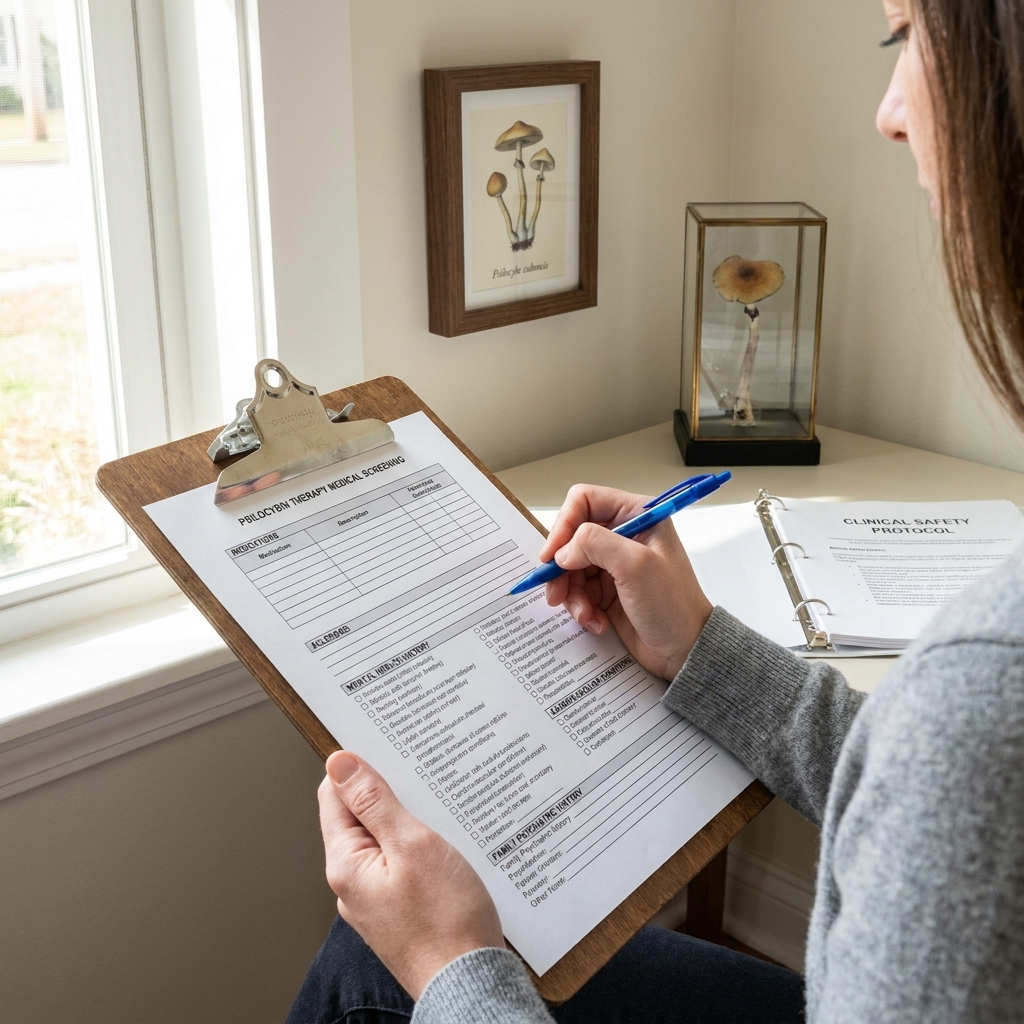
What FDA Approval Would and Would Not Mean
If FDA approves psilocybin for TRD:
- Psilocybin would be rescheduled from Schedule I to Schedule II (or potentially a new category)
- Licensed psychiatrists could prescribe it in certified clinical settings
- Insurance coverage would become possible (no guarantee — depends on payer decisions)
- Clinical training and certification programs would be required for providers
- The current DIY and underground access model would shift toward medical gatekeeping
What it would NOT mean:
- It would not legalize personal use or purchase outside medical settings
- It would not affect Oregon or Colorado's service center model (state regulatory, not FDA-regulated)
- It would not immediately create widespread access — the infrastructure (certified clinics, trained providers) takes years to build
- It would not prevent ongoing federal control of non-medical use
The COMPASS Controversy
COMPASS Pathways has been controversial in the psychedelic community for several reasons:
- Patent activity: COMPASS has filed patents on aspects of the therapeutic protocol (therapist training, specific session room design) and on synthesis processes. Critics argue this "evergreening" could restrict access and benefit sharing.
- Investor backing: COMPASS is backed by Peter Thiel and other venture capital investors. Some in the community are concerned about profit motive shaping the therapeutic model.
- Response: COMPASS argues that pharmaceutical-grade clinical development requires substantial investment that only venture capital can provide, and that FDA approval — however it's achieved — benefits all patients with TRD.
The controversy is ongoing and worth understanding for anyone following the field.
Usona Institute: The Non-Profit Alternative
The Usona Institute is a medical research nonprofit (unlike COMPASS) developing psilocybin for major depressive disorder. Usona received its own Breakthrough Therapy designation from the FDA and is pursuing approval for MDD — a broader indication than COMPASS's TRD focus.
Usona's model specifically avoids broad patent claims on therapeutic protocols, attempting to create an open-access knowledge base. If both COMPASS and Usona achieve approval, there will be at least two approved psilocybin formulations — one commercially driven, one non-profit.
Access for People with Depression Right Now
Clinical trials: The most reliable access for research participants. ClinicalTrials.gov, search "psilocybin depression."
Oregon service centers: Legal supervised access without diagnosis requirement. Many clients access service centers specifically for depression.
Colorado healing centers: Similar to Oregon in broad structure, with regulated access dependent on current licensing, local permissions, provider availability, and screening.
Resources
- Griffiths et al. (2020): Hopkins Phase 2 MDD trial — available free on JAMA Psychiatry
- COMPASS Pathways: compasspathways.com — Phase 3 progress updates
- Usona Institute: usonainstitute.org — nonprofit psilocybin development
- NAMI: nami.org — depression resources and clinical trial navigation
- ClinicalTrials.gov: Search "psilocybin major depressive disorder"