
Panaeolus cyanescens (Blue Meanie): Potency, Cultivation, and Identification
Panaeolus cyanescens (colloquially "Blue Meanie" or "Pan cyan") is a separate genus from Psilocybe but is among the most potent psychoactive mushrooms accessible to cultivators. With alkaloid content typically 2–3x higher than average Psilocybe cubensis, it demands dose adjustment and a different cultivation approach than most growers are accustomed to.
Potency: The Real Numbers
HPLC testing across multiple Pan cyan samples shows average total tryptamine content of 2.5–3.5% by dry weight. For comparison:
| Species | Average Psilocybin % | |---------|---------------------| | P. cubensis (average) | 0.5–0.9% | | P. cubensis (high-potency, e.g. PE) | 1.2–1.5% | | Panaeolus cyanescens | 2.5–3.5% |
The practical implication: If your standard P. cubensis dose is 3g, start with 1–1.5g of Pan cyan. The experience character is also different — more body-loaded, faster onset, shorter duration than cubensis.
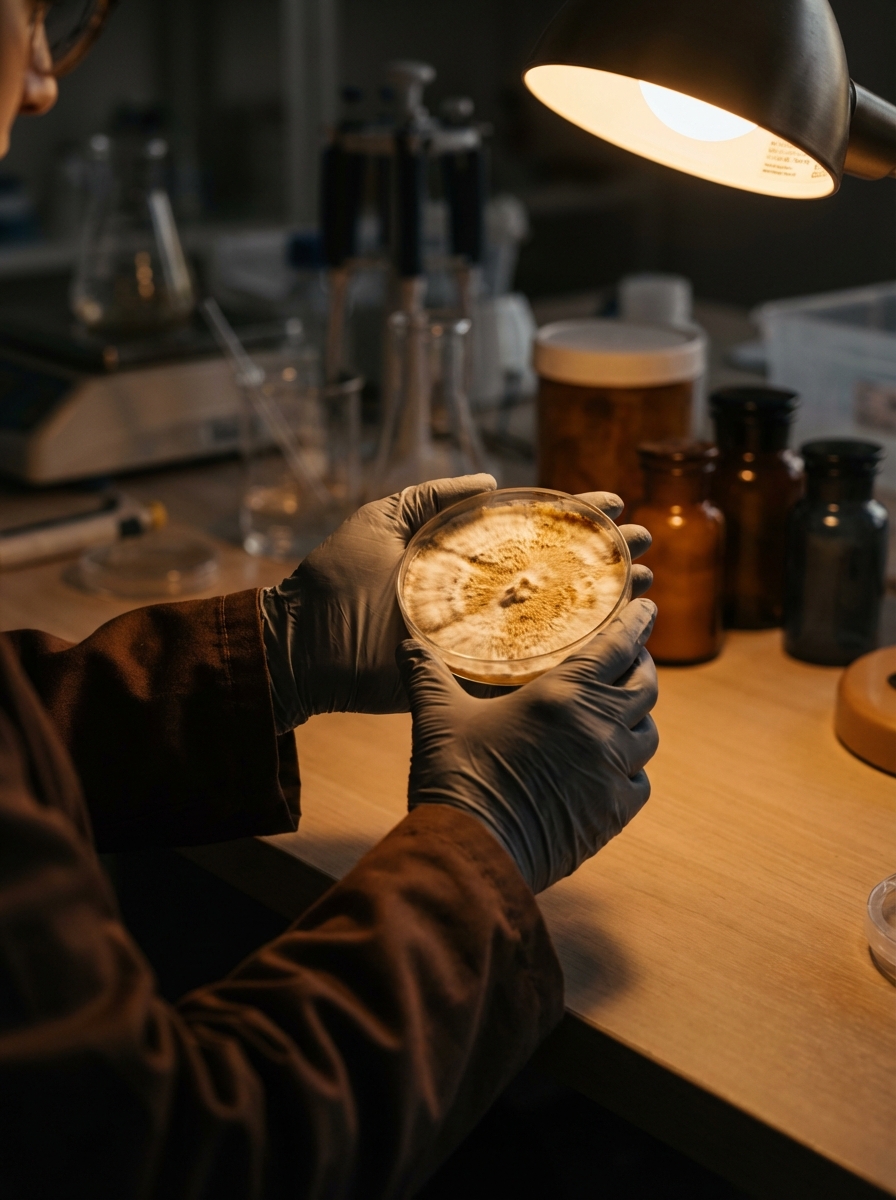
Identification
Pan cyan is a dung-loving species. Wild specimens:
Cap: 1–4cm; tan to gray-brown when fresh; paler when dry; hygrophanous; smooth; often with a broad umbo Gills: Initially gray, becoming mottled black-gray as spores mature Stem: 7–15cm; slender; brittle; pale to gray; prone to bluing when handled Spore print: Jet black (not purple-brown like Psilocybe)
The jet black spore print is the most important distinguishing feature from Psilocybe species. The substrate (dung or dung-enriched soil in tropical settings) is also characteristic.
Confusion warning: "Blue Meanie" as a common name is also applied to some potent P. cubensis strains. Pan cyanescens is the species; Blue Meanie cubensis is an unrelated cultivated strain.
Natural Distribution
Found in subtropical and tropical regions: Hawaii, Gulf Coast US, Florida, Caribbean, Central America, tropical Asia, Australia (particularly Queensland). Also occurs in warm regions of Europe and Africa.
In the US, wild populations are found on horse dung and cattle dung in Hawaii and the Gulf Coast. Hawaii populations are frequently reported on hiking trails near horse stables.
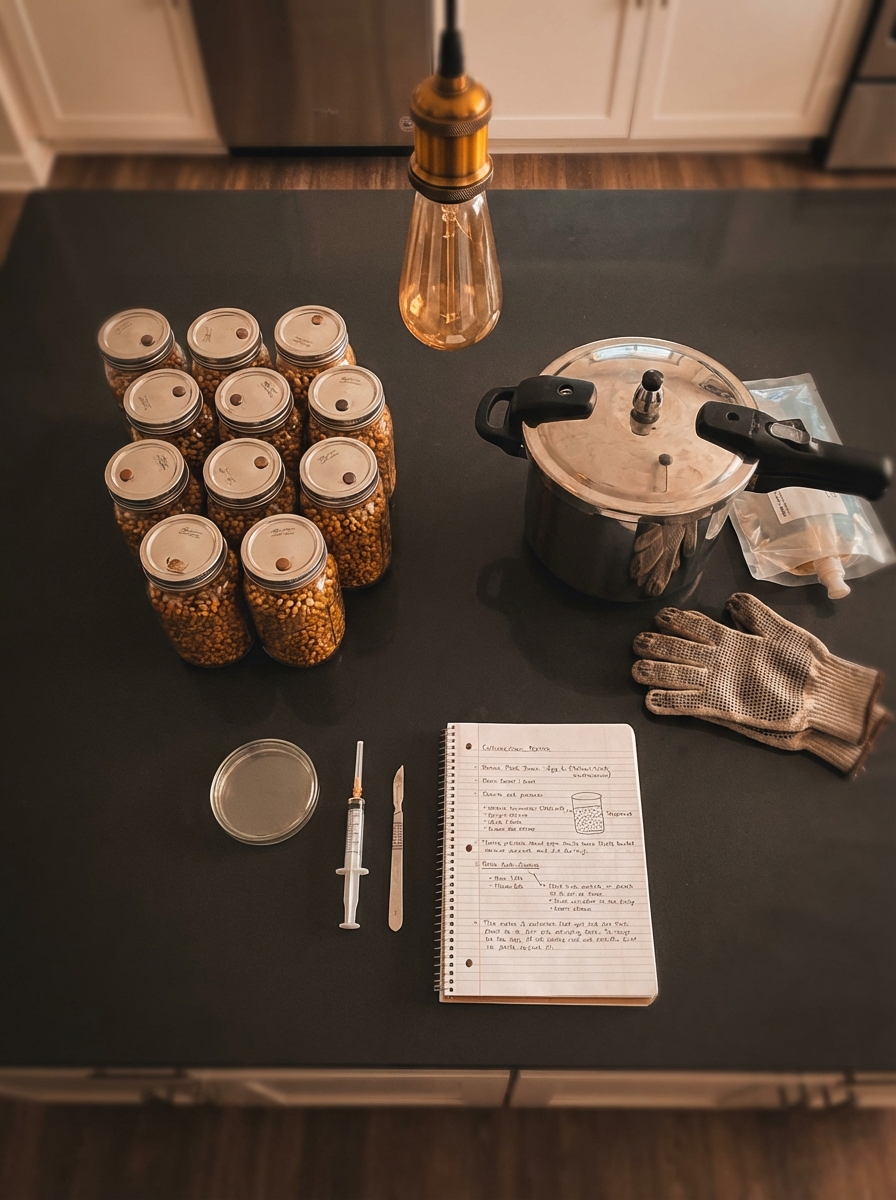
Cultivation Differences from P. cubensis
Pan cyan is considered an intermediate cultivation challenge:
Substrate preference: Dung-based. Well-composted horse or cattle manure is the preferred substrate. Coco coir blends that work well for cubensis produce inferior results for Pan cyan. Manure:vermiculite mixes (4:1) are commonly used.
Temperature: Prefers warm temperatures — 75–82°F for colonization and fruiting. More temperature-sensitive than cubensis.
Colonization speed: Slower than cubensis — 3–6 weeks for full substrate colonization.
Contamination sensitivity: More susceptible to contamination than cubensis. Sterile technique is critical. Pan cyan is not as forgiving of beginner mistakes.
Fruiting bodies: Smaller and more delicate than cubensis. Tend to ripen and autodigest (liquefy) faster. Harvest timing is critical — harvest when the veil begins to crack, before it tears fully.
Flush production: 1–3 flushes typical; fewer than most cubensis strains.
Spore and Culture Availability
Pan cyan spore availability is more limited than cubensis. Reputable US vendors who specifically stock Pan cyan: Sporeworks (if regional shipping allows), several international vendors. Verify that you're purchasing Panaeolus cyanescens specifically, not a cubensis variety sharing the Blue Meanie name.
Who Should Grow Pan cyan
Experienced P. cubensis cultivators who want to develop their skills further. Not a beginner strain. Cultivators who want to explore potency differences and are prepared to adjust dosage accordingly. The cultivation challenge is educational and the result is a distinctly different experience profile from cubensis.