What Is Psilocybin? A Complete Guide for 2026
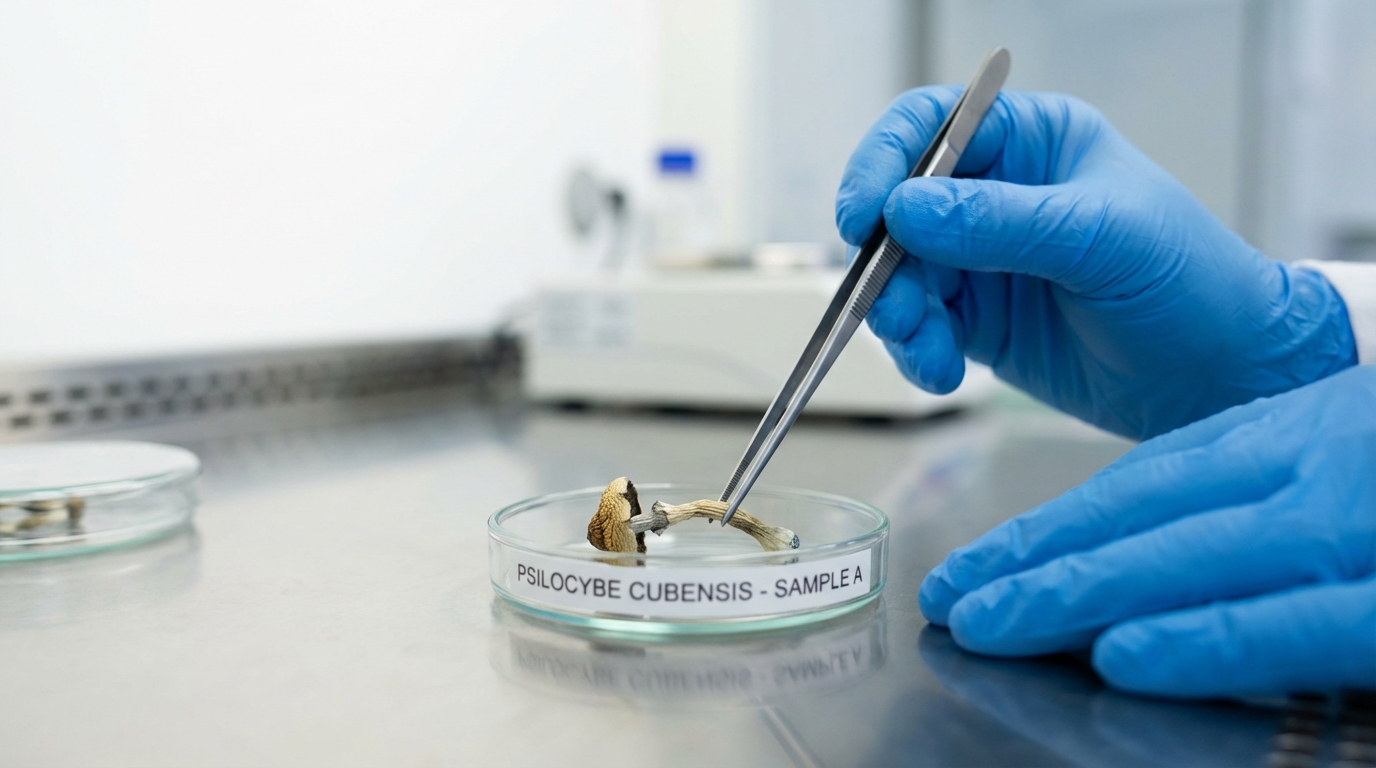
Psilocybin is the primary psychoactive compound in "magic mushrooms" — a naturally occurring tryptamine alkaloid produced by over 200 species of fungi. It has been used for ceremonial and therapeutic purposes for thousands of years, studied intensively in the 1950s–1960s, suppressed for 40 years, and is now at the center of the fastest-growing area in psychiatric medicine. This guide covers what it is, how it works, what the research shows, and what's legal in 2026.
The Chemistry
Psilocybin (4-phosphoryloxy-N,N-dimethyltryptamine) is a phosphorylated prodrug. When ingested, an enzyme called alkaline phosphatase converts psilocybin to psilocin — the active compound that crosses the blood-brain barrier.
Psilocin is structurally similar to serotonin (5-hydroxytryptamine) and acts primarily as an agonist at 5-HT2A serotonin receptors concentrated in the prefrontal cortex. This receptor activity is responsible for the psychedelic effects.
Psilocybin also produces smaller amounts of related alkaloids:
- Baeocystin (N-methyl-4-phosphoryloxytryptamine) — related compound, potentially bioactive
- Norbaeocystin — lower-potency related compound
- Aeruginascin — found in some species; may modulate effects
The blue staining that occurs when psilocybin mushrooms are handled or damaged is caused by psilocin oxidizing to form blue/green quinones. It's the visual signature of psilocybin content.
How It Feels: The Subjective Experience
At typical doses (1–3g dried mushroom), psilocybin produces:
- Visual effects: Enhanced color saturation, geometric patterns with eyes closed, mild visual movement at moderate doses, full visionary states at high doses
- Perceptual changes: Time distortion, synesthesia (mixing of senses), altered sense of space
- Emotional effects: Emotional openness, sometimes intense positive emotion (awe, love, gratitude), sometimes challenging emotional content (fear, grief, confrontation with difficult material)
- Cognitive effects: Unusual associations between ideas, dissolution of normal mental categories, sense of profound meaning or significance
- Physical effects: Mild nausea on onset (usually brief), pupil dilation, slight increase in heart rate and blood pressure, muscle tension
At high doses (3.5g+): ego dissolution — the sense of separate selfhood disappears. The experience is described as either profoundly liberating or terrifying depending on preparation, set, and setting.
Duration: 4–6 hours total; peak effects 2–4 hours after ingestion.
What the Neuroscience Shows
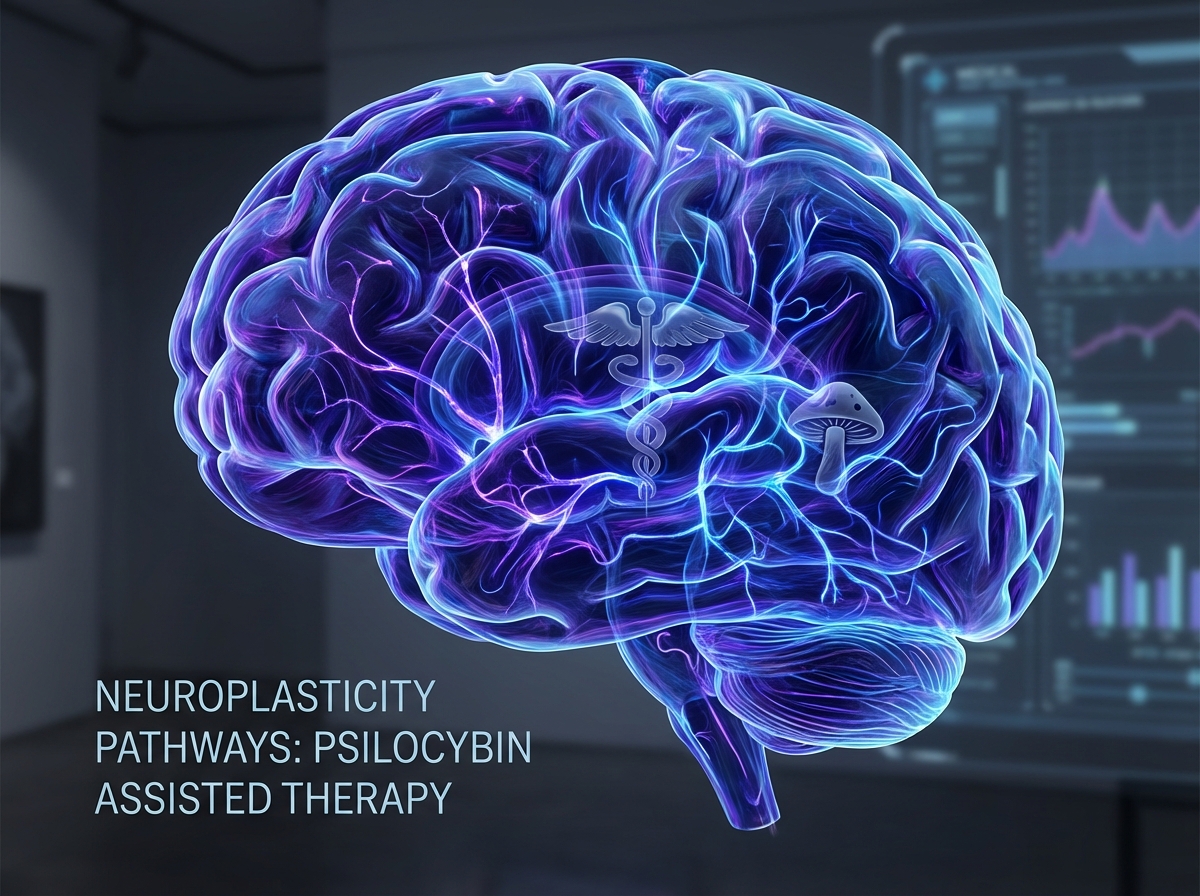
Modern neuroimaging has provided a mechanistic picture:
Default Mode Network (DMN) suppression: Psilocybin reliably suppresses the brain's "self" network — the system that maintains the sense of being a continuous person with a stable narrative identity. This suppression is dose-dependent and correlates with the subjective sense of ego dissolution.
Increased brain entropy: Psilocybin increases the disorganization of brain activity patterns — more connections form between areas that don't normally communicate, fewer typical patterns dominate. This "entropic" state is associated with the loosening of rigid mental patterns that characterize depression, OCD, and addiction.
Post-session neuroplasticity: For 2–4 weeks following a session, BDNF (brain-derived neurotrophic factor) is elevated and the brain shows increased synaptic plasticity. This is the biological window in which therapeutic behavioral change is most effective.
The REBUS model (Robin Carhart-Harris, 2019) provides the best current theoretical framework: psilocybin flattens the brain's hierarchical predictive structure, allowing high-level beliefs (including pathological ones that maintain depression or addiction) to loosen temporarily.
What the Clinical Research Shows
The current evidence base is primarily Phase 2, with one Phase 3 dataset:
Major depression / treatment-resistant depression:
- COMPASS Phase 3 (n=233): ~35–40% response rate at 25mg vs. ~15% control; significant primary endpoint
- Johns Hopkins Phase 2 (n=24): 71% significant clinical response at 4 weeks; 54% remission
- Imperial College psilocybin vs. escitalopram: significant advantage on most secondary measures
Smoking cessation (Johns Hopkins): 80% abstinence at 6 months in open-label pilot (n=15) — far exceeding best pharmacotherapy (~35%)
Alcohol use disorder (NYU): 83% reduction in heavy drinking days vs. 51% placebo in Phase 2 RCT (n=93)
Cancer anxiety / palliative care: 78–92% showing significant anxiety reduction at 6 months across Hopkins and NYU trials — the largest effect sizes in the literature
PTSD: Phase 2 data (60% with significant symptom reduction); MDMA has stronger Phase 3 data specifically for PTSD
OCD: All 9 participants in the Arizona pilot showed significant symptom reduction; Yale RCT ongoing
Legal Status in 2026
Federal (US): Psilocybin is Schedule I — "no currently accepted medical use." Federal possession, sale, and manufacture are criminal offenses. FDA approval would change the federal status.
Oregon: Legal for adults at licensed service centers (Measure 109, operational since 2023). No diagnosis required; no prescription; personal cultivation is not authorized. Cost: $1,200–$4,500 for a full program.
Colorado: Adults have state-level personal-use protections under Proposition 122, and regulated natural-medicine licensing moved into facilitator and business operations in 2025. Personal cultivation for personal use has state-level protections, but commercial services, provider claims, and local permissions still need verification.
Decriminalized cities: Denver (2019), Seattle, Oakland, several others. Decriminalization removes criminal penalties but does not create a legal market.
Jamaica: Unscheduled and effectively legal — the most established international retreat market for Americans.
Netherlands: Legal for psilocybin truffles (sclerotia) — sold in smart shops; multiple retreat programs operational.
Australia: TGA approved for authorized psychiatrist prescribing (2023) — the first national-level approval in the world.
FDA pathway: COMPASS Pathways NDA expected late 2026; FDA approval possible 2027–2028 if approved.
Who Should Not Use Psilocybin
Psilocybin poses serious psychological risk for people with:
- Personal or family history of psychosis or schizophrenia
- Bipolar I disorder
- Active suicidal ideation in acute crisis
- Current lithium use (seizure risk when combined)
- Current MAOI use (serotonin syndrome risk)
SSRIs significantly reduce psilocybin effects (receptor downregulation); tapering under medical supervision is sometimes done prior to therapy.
Harm Reduction Basics
If you choose to use psilocybin:
- Test your substance: Ehrlich reagent turns purple/violet for psilocybin (confirms identity)
- Start low: 1–2g dried mushroom for a first experience
- Set and setting: Your mindset and environment are the most important variables
- Have a sober, trusted person present — especially for first experiences
- Crisis support: Fireside Project — 62-FIRESIDE (623-473-7433) — 24/7 free peer support
Resources
- Fireside Project: 62-FIRESIDE — psychedelic crisis support
- ClinicalTrials.gov: Search "psilocybin" for current enrolling trials
- Oregon Health Authority: psilocybinservices.oregon.gov — licensed service centers
- Psychedelic Alpha: psychedelicalpha.com — regulatory tracking
- Erowid: erowid.org/chemicals/psilocybin — harm reduction library