
Oregon Psilocybin Services: The Complete Guide to Measure 109
Oregon's Measure 109, passed by 56% of voters in November 2020 and operational since mid-2023, created the first licensed psilocybin services program in the United States. This guide provides a complete overview of how the program works, who can access it, what to expect, and the regulatory framework.
What Measure 109 Created
Measure 109 did not legalize psilocybin for personal possession or use generally — it created a licensed services framework specifically for administered psilocybin. Under the framework:
- Psilocybin can be produced by licensed manufacturers
- Psilocybin can be tested by licensed laboratories
- Psilocybin can be administered by licensed facilitators at licensed service centers
- Personal possession outside this framework remains illegal under Oregon law
The measure established the Oregon Health Authority (OHA) as the regulatory body and directed OHA to develop rules, licensing requirements, and standards for the program.
The Key Players
Oregon Health Authority (OHA): The state agency administering the program. OHA issues licenses, sets rules, and provides oversight.
Licensed Manufacturers: Companies licensed to cultivate and produce psilocybin products (currently dried mushrooms and standardized extracts).
Licensed Service Centers: Physical locations where client sessions occur. Must meet OHA facility requirements, have licensed facilitators on staff, and maintain client records.
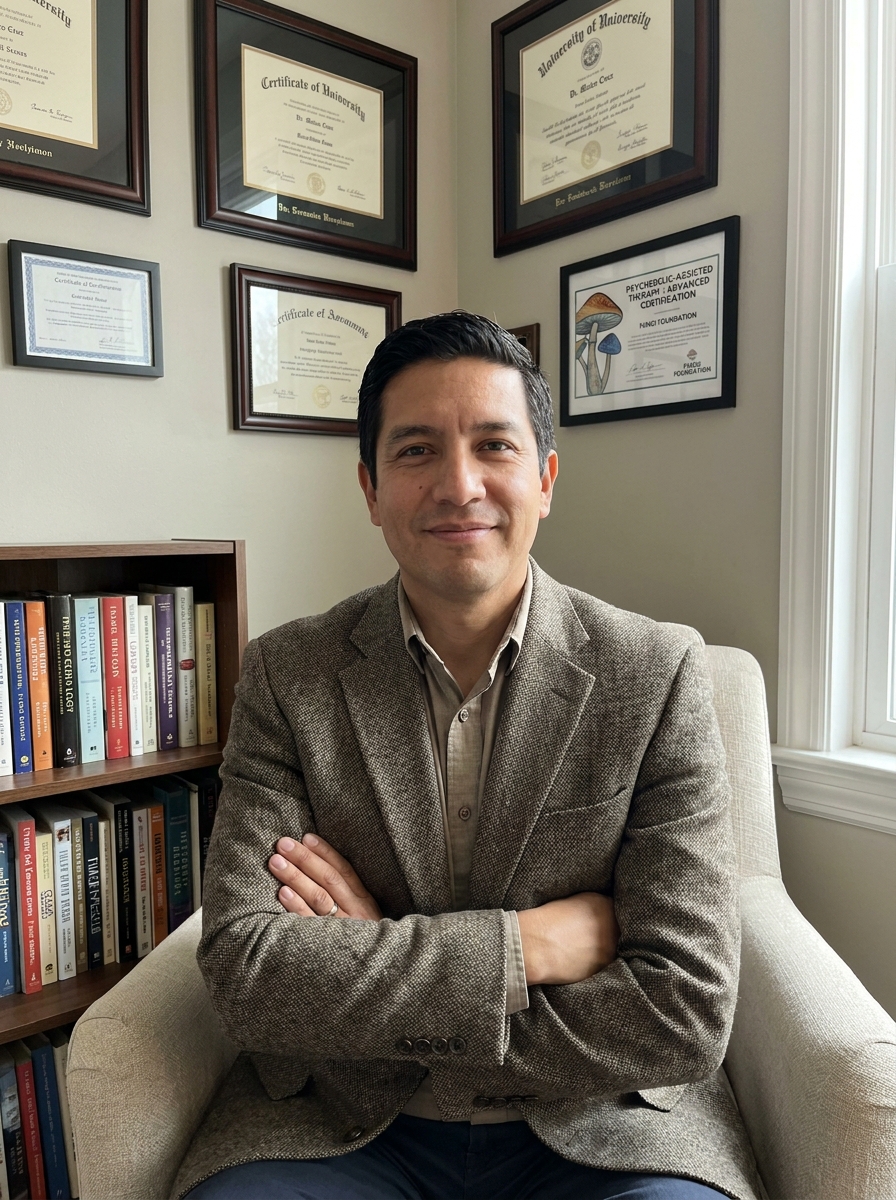
Licensed Facilitators: Individual practitioners licensed to administer psilocybin to clients. Licensure requires completion of an OHA-approved training program (minimum 160 hours), pass state exam, and maintain ongoing education requirements.
Clients: Any Oregon adult (21+) can access services — no medical diagnosis required, no referral required.
Who Can Access Oregon Services
Eligibility: Adults 21 and older. Oregon residents and out-of-state visitors are both eligible. There is no residency requirement.
No diagnosis required: Unlike therapeutic frameworks in clinical trials, Oregon Measure 109 allows access for any adult, regardless of whether they have a specific mental health condition. You can access services for personal growth, curiosity, or any intention.
Safety screening: Licensed facilitators are required to conduct preparation sessions and health screening before any client takes psilocybin. The facilitator has discretion to decline to serve a client they believe would be at risk. This is not a formal medical screening process but a facilitated assessment.

The Service Process
Under standard practice at Oregon service centers, a client experience includes:
1. Initial consultation: Meeting with the service center to discuss your goals, experience history, health considerations, and expectations. Usually 30-90 minutes.
2. Preparation session(s): One or more sessions (typically 1-3) with your facilitator to develop intentions, discuss what to expect, and prepare you for the session experience. These are required and should be substantive — a facilitator who rushes past preparation is a yellow flag.
3. Administration session: The psilocybin session itself. Typically 4-8 hours at the service center. You are present with your facilitator for the entire session. The facilitator does not guide or direct the experience — they hold space and offer support as needed.
4. Integration session(s): Post-session meetings (typically 1-3) to process what arose and develop practical integration plans. Some service centers offer more robust integration support; some less.
Dosing in Oregon Sessions
Oregon service centers use psilocybin mushrooms (typically in standardized form) and report dosing in milligrams of psilocybin (mg) rather than grams of mushrooms:
- Low dose: 5-10mg psilocybin (approximately 0.5-1g dried mushrooms equivalent)
- Moderate dose: 10-20mg psilocybin (approximately 1-2g equivalent)
- High dose: 20-30mg+ psilocybin (approximately 2-3.5g+ equivalent)
- Standard therapeutic dose in most protocols: 25mg psilocybin (approximately 2.5-3g equivalent)
Clients and facilitators discuss dosing in preparation sessions. First-time clients are often recommended to start at moderate doses.

Costs
Oregon psilocybin services are not inexpensive. Typical total costs for a full program (preparation + session + integration):
- Preparation sessions: $150-300 per session
- Administration session: $500-1,800 (varies significantly by center, facilitator experience, session length, and whether group or individual)
- Integration sessions: $100-300 per session
Total typical program: $800-3,000+ for a complete experience with preparation and integration.
Group sessions: Some service centers offer group administration sessions (multiple clients in the same space simultaneously, each with their own facilitator) at lower per-client cost. Group rates may be $300-500 per person for the session itself.
There is currently no insurance coverage for Oregon psilocybin services.
Finding a Service Center
The Oregon Health Authority maintains a public directory of licensed service centers at oregon.gov/oha/ph/preventionwellness/pages/psilocybin-services.aspx.
As of early 2026, service centers are concentrated in the Willamette Valley (Portland metro, Eugene, Bend, Ashland) with growing presence in rural Oregon.
What to look for in a service center:
- Licensed facilitators (verifiable through OHA directory)
- Substantive preparation and integration offerings
- Clear communication about what the session involves
- No pressure to take higher doses than you're comfortable with
- Professional, clinical-feeling space (not necessarily sterile, but not chaotic)
What Measure 109 Does NOT Allow
- Personal psilocybin possession outside the service framework
- Psilocybin sales for home use
- Unlicensed facilitation or "underground" sessions marketed as Measure 109 compliant
- Medical claims by service centers (they cannot claim to treat specific conditions)
- Insurance billing
The Oregon Program in Context
Oregon's Measure 109 is unique globally — the only US state with a non-medical licensed psilocybin services framework. It differs from clinical trials (research setting, medical eligibility requirements) and from personal decriminalization (which doesn't create access infrastructure).
The program is also collecting real-world data — outcomes, adverse events, and client experiences — that will inform future policy both in Oregon and nationally. Oregon's successes and challenges with implementation are shaping how other states design their own psychedelic access legislation.
Colorado's Proposition 122, passed in November 2022, follows Oregon's model with modifications, including state-level personal-use protections and a regulated natural-medicine licensing system. Check current Colorado DORA/DOR records and local rules before relying on any specific healing-center or facilitator claim.