
Psilocybin and Neuroplasticity: The Science Behind the Plasticity Window
One of the most clinically significant findings in psilocybin research is that it reliably induces a period of enhanced neuroplasticity after the experience — sometimes called the "plasticity window." This finding explains why integration therapy in the days and weeks after a session is particularly potent, and why the timing of therapeutic work matters.
What Is Neuroplasticity?
Neuroplasticity is the brain's capacity to change — to form new connections, modify existing ones, and reorganize in response to experience and learning. Neuroplasticity underlies:
- Learning and memory formation
- Recovery from brain injury
- Habit formation and behavior change
- Therapeutic change in psychotherapy
In adult brains, neuroplasticity is reduced compared to childhood. This is why changing ingrained behavioral patterns, beliefs, and emotional responses is so difficult in adulthood — the neural pathways are well-established and the brain is less flexible.
How Psilocybin Affects Neuroplasticity
BDNF (Brain-Derived Neurotrophic Factor): Psilocybin reliably increases BDNF production. BDNF is often called "fertilizer for the brain" — it promotes neuronal survival, growth, differentiation, and the formation of new synaptic connections. Elevated BDNF creates conditions favorable for structural brain changes.
Dendritic spine growth: Neuroimaging and animal studies show that psilocybin promotes growth of dendritic spines — the tiny projections on neurons that form synaptic connections. This structural change is the physical substrate of new learning and memory. A 2021 study by Shao et al. found significant dendritic spine growth in the prefrontal cortex of rodents following psilocybin administration, persisting for at least 1 month.
5-HT2A receptor activation and synaptic plasticity: Psilocybin's primary mechanism — 5-HT2A receptor agonism — directly activates signaling cascades (including the Gq/IP3/DAG pathway) that promote synaptic plasticity. The same receptor activation that produces the acute psychedelic experience also triggers the cellular machinery of neural change.
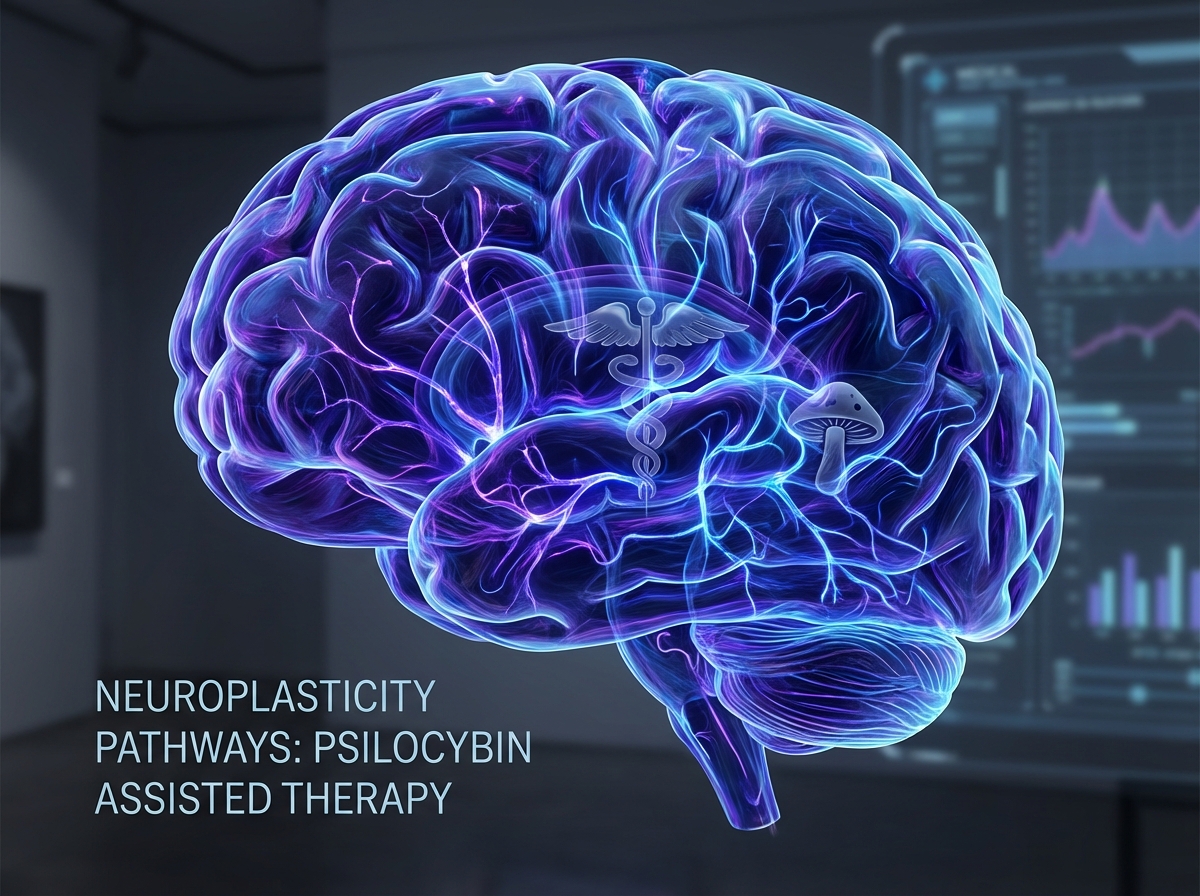
The Plasticity Window
The enhanced neuroplasticity triggered by psilocybin is not permanent — it represents a temporary window of heightened brain flexibility. Based on current research:
Duration estimates:
- Acute peak: during the session and immediately after (hours)
- Elevated BDNF and synaptic change: 24-72 hours
- Structural changes (dendritic spines): measurable at 1 month in animal studies
- Functional behavioral flexibility: anecdotally, 2-4 weeks is the most commonly reported period of heightened sensitivity to behavioral and psychological change
Clinical implication: The brain is literally more changeable in the days and weeks after a psilocybin session. New habits form more easily. New perspectives embed more durably. Therapeutic work has unusual leverage. This is why integration timing matters.
Why Integration Immediately After Matters
The plasticity window explains what would otherwise seem like an arbitrary protocol choice — the emphasis on intensive integration work in the first week after a session.
In the plasticity window:
- Behavioral changes practice more readily become habit
- Insights are more likely to become encoded as lasting perspective shifts
- Therapeutic processing has more neurological traction than it would otherwise
In practice, integration therapy within the first week is not just "processing the experience" — it is strategically timed therapeutic work during the period when the brain is most responsive to change.
Comparison to Other Neuroplasticity-Promoting Interventions
Exercise: Aerobic exercise increases BDNF. The psilocybin-induced increase appears to be larger and more acute, but exercise's ongoing, consistent elevation of BDNF is also therapeutically valuable. Many integration protocols recommend exercise in the first week post-session.
Sleep: Deep sleep is critical for memory consolidation and synaptic pruning. Sleep quality after a session directly affects how well the experience is integrated neurologically. This is why disrupted sleep in the first few nights after a session is clinically relevant.
Meditation: Long-term meditation practice is associated with structural brain changes including increased gray matter density in the prefrontal cortex. Combining contemplative practice with psilocybin's neuroplasticity effects is a common integration strategy.
Antidepressants: SSRIs have modest neuroplasticity effects (increased BDNF over weeks). Psilocybin's neuroplasticity effect appears to be more acute and larger in magnitude, which may partly explain why it produces faster antidepressant effects than SSRIs.

What This Means Practically
- Prioritize integration in the first week: Journal daily. Attend therapy if possible. Make behavioral experiments related to session insights — this is the time when they are most likely to stick.
- Protect sleep: Psilocybin often disrupts sleep the night of the session (REM suppression). Protect sleep quality in the following nights — good sleep consolidates neuroplastic changes.
- Exercise: Even 30 minutes of aerobic exercise in the days after a session supports BDNF elevation and neuroplasticity.
- Minimize alcohol and cannabis: Both reduce neuroplasticity. The post-session plasticity window is the worst time to consume substances that blunt the brain's flexibility.
- Avoid high-stress situations: Stress impairs neuroplasticity (via cortisol). If you have the ability to reduce stressors in the first week post-session, do so.