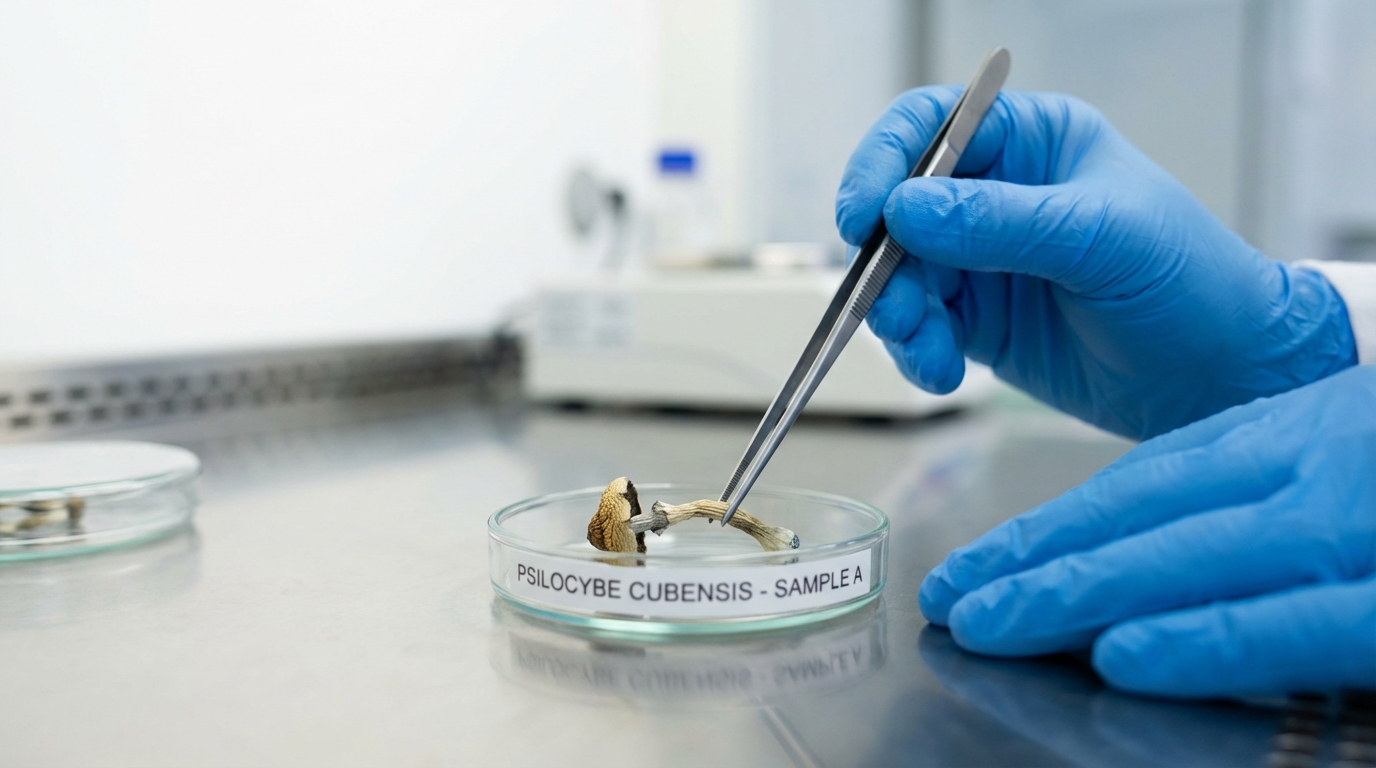
The History of Psilocybin Research: From Wasson to the Renaissance
Psilocybin's journey from ceremonial mushroom to clinical research subject to potential FDA-approved medicine is one of the most unusual trajectories in the history of pharmacology. Understanding the history explains both the strength of the current evidence base and the decades-long gap in research that the renaissance is now filling.
Before Western Science: Indigenous Use
Psilocybin mushrooms have been used in Mesoamerican ceremonial contexts for at least 2,000 years — possibly much longer. Archaeological evidence from Mayan and Aztec cultures includes mushroom stones and codices depicting ritual mushroom use. The Aztecs called them teonanácatl — "flesh of the gods."
Spanish colonizers in the 16th century documented and then violently suppressed mushroom ceremonies, driving the practice underground in indigenous communities. It survived in isolated areas — particularly in Oaxaca, Mexico — where Mazatec healers (curanderos) continued using mushrooms in healing ceremonies.
Maria Sabina, a Mazatec healer who became famous after R. Gordon Wasson's 1957 Life magazine article, practiced this tradition continuously through the colonial period. Her family and predecessors practiced it for generations.
R. Gordon Wasson and the Western Discovery (1957)
R. Gordon Wasson, a banker and amateur mycologist, traveled to Oaxaca in 1955 with his wife Valentina and participated in a mushroom ceremony with Maria Sabina. In 1957, he published his account in Life magazine — "Seeking the Magic Mushroom" — one of the most widely read magazine articles of the decade.
Wasson's article introduced psilocybin mushrooms to Western popular culture almost overnight. It is often cited as the origin event of the 1960s psychedelic movement. Maria Sabina's community, meanwhile, was profoundly disrupted by the flood of Western seekers that followed — she later expressed regret about Wasson's publication.
Albert Hofmann and Psilocybin's Isolation (1958)
Albert Hofmann — the Swiss chemist at Sandoz who had already synthesized LSD in 1938 — received a sample of the Oaxacan mushrooms from Wasson. In 1958, Hofmann isolated and synthesized psilocybin, naming and characterizing the compound. Sandoz made psilocybin available to researchers, initiating the first wave of clinical research.
The First Wave of Research (1958–1970)
The decade following Hofmann's synthesis saw over 1,000 papers published on psychedelics, including psilocybin, for therapeutic applications. Key areas of investigation:
- Alcoholism treatment (early Bill Wilson, co-founder of AA, experimented with LSD for alcoholism)
- Neurosis and anxiety treatment
- Creativity enhancement
- Spiritual experience and the psychology of religion
Timothy Leary and Richard Alpert conducted the Harvard Psilocybin Project (1960–1962), including the Concord Prison Experiment (psilocybin for prisoner rehabilitation) and the Marsh Chapel Experiment (1962, demonstrating that psilocybin could reliably induce mystical experiences). Both experiments produced interesting results; both also became associated with the cultural chaos of the 1960s.
The Prohibition Era (1970–1994)
The Controlled Substances Act of 1970 placed psilocybin in Schedule I — no accepted medical use, high abuse potential. This effectively ended nearly all clinical research in the US and most Western countries. The rationale was primarily political and cultural, not scientific.
For 25 years, the clinical evidence base was frozen. Underground use continued; so did small pockets of European research, particularly in Switzerland.
The Beginning of the Renaissance (1994–2006)
1994: Rick Strassman published his DMT human trials at the University of New Mexico — the first federally approved psychedelic research on humans in decades. It demonstrated that DEA Schedule I research was possible and opened a regulatory pathway.
1997: Francisco Moreno at the University of Arizona began studying psilocybin for OCD.
2001: Johns Hopkins University established the first formal psilocybin research program in the United States under Roland Griffiths. The regulatory process was extensive — it took Griffiths nearly two years to obtain FDA and DEA approval.
2006: Griffiths published the landmark Hopkins mystical experience paper — demonstrating that psilocybin could reliably produce mystical-type experiences in a controlled setting, and that these experiences had lasting positive effects on wellbeing. This is widely considered the paper that launched the contemporary psychedelic renaissance. Published in Psychopharmacology, it was the most rigorous demonstration to date that psilocybin had therapeutic potential beyond anecdote.
The Renaissance Phase (2006–Present)
2006–2012: Imperial College London's Robin Carhart-Harris established a neuroimaging program showing that psilocybin reliably suppresses the default mode network and increases brain entropy. This provided the mechanistic basis for therapeutic action.
2012: Carhart-Harris publishes the first modern psilocybin depression paper in Proceedings of the Royal Society B.
2016: The Hopkins and NYU cancer anxiety trials — published simultaneously in the Journal of Psychopharmacology — produce the most dramatic clinical effect sizes in the literature (78–92% showing significant anxiety reduction). These papers receive widespread media coverage and are credited with mainstreaming scientific interest in psilocybin.
2017: FDA grants psilocybin Breakthrough Therapy designation for treatment-resistant depression.
2018: COMPASS Pathways Phase 2b trial begins.
2020: Oregon voters pass Measure 109, creating the first legal psilocybin service model in the world.
2022: Imperial College psilocybin vs. escitalopram trial (New England Journal of Medicine). NYU psilocybin for alcohol use disorder Phase 2 RCT published in JAMA Psychiatry.
2023: COMPASS publishes Phase 2b results (n=233); Oregon service centers open. Australia TGA approves psilocybin prescribing for authorized psychiatrists.
2024-2025: Colorado moves from rulemaking and facilitator licensing into regulated natural-medicine business licensing. Multiple Phase 3 trials begin.
2026: COMPASS NDA submission expected. FDA approval decision anticipated 2027.
The Question of Continuity
One of the ongoing debates in the field is the relationship between the indigenous ceremonial tradition and the medical research tradition. They share the same compound and some of the same phenomenological terrain, but the contexts — sacred ceremony vs. clinical protocol — are profoundly different. Scholars like Bia Labate and others argue that the research tradition should acknowledge its cultural debts more explicitly.
This is not merely a philosophical question: it shapes how psilocybin-assisted therapy is conceptualized, who is represented in access frameworks, and how benefit is distributed.
Resources
- Wasson, "Seeking the Magic Mushroom" (1957): The foundational public document — available in Life magazine archives
- Pollan, How to Change Your Mind (2018): The most comprehensive popular account of the history
- Erika Dyck, Psychedelic Psychiatry (2008): Academic history of the first wave
- Griffiths et al. (2006): The revival landmark paper — available free on PubMed
- Chacruna Institute: chacruna.net — indigenous perspectives and cultural history resources