Psilocybin and Creativity: What the Research Shows
Artists, writers, and musicians have long credited psychedelics with expanding their creative vision. Psilocybin's association with creativity is one of the oldest cultural claims in the psychedelic space — and one of the least rigorously studied. Here's what the actual research shows, what remains uncertain, and how the evidence contradicts both the utopian and dismissive positions.
What "Creativity" Means in Research
The creativity research literature distinguishes between:
Divergent thinking: The ability to generate many different solutions to an open-ended problem. Often measured by tests like the Alternate Uses Task (how many uses can you think of for a brick?).
Convergent thinking: The ability to identify the single correct or best solution to a problem with a defined answer. Often measured by Remote Associates Tests.
Openness to experience: A stable personality trait associated with aesthetic sensitivity, curiosity, and receptivity to new ideas. One of the Big Five personality factors.
The Research Findings
Openness to experience increases post-psilocybin: A 2011 Johns Hopkins study (MacLean et al.) found that psilocybin produced significant increases in openness to experience — a personality trait directly linked to creativity — that persisted at 14-month follow-up. This was one of the few studies to show sustained personality change in adults from a psychedelic intervention.
Divergent thinking improves temporarily: Several studies show enhanced performance on divergent thinking tasks during or immediately after psilocybin. The increase is not maintained indefinitely — it corresponds to the period of altered consciousness and the immediate aftermath.
Convergent thinking may decrease during peak experience: Acute psilocybin appears to impair some aspects of focused, convergent thinking during the peak — consistent with reports of difficulty reading, writing, or doing organized tasks during the experience.
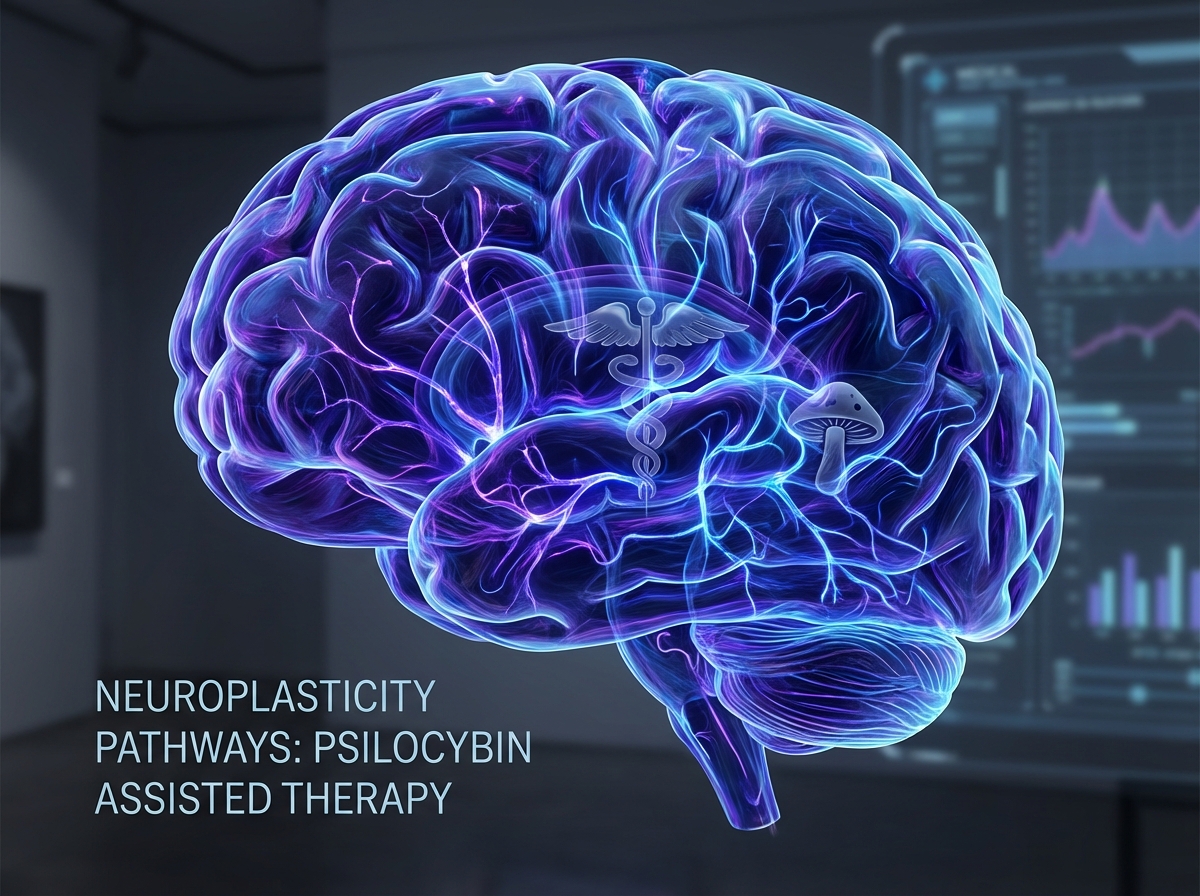
The Imaginative and Associative Network: Under psilocybin, brain regions not normally communicating with each other show increased connectivity. This cross-network communication may underlie the subjective experience of unusual idea combinations and associative leaps that people report as creative insight.
The Complexity of Long-Term Creative Impact
The research becomes more complex when looking at sustained creative careers. Several documented findings complicate the simple "psilocybin = more creativity" narrative:
Individual variation: Some people report profound and lasting creative openings from psychedelic experience. Others report disruption, confusion, or difficulty integrating insights that seemed profound in the moment. The population-level average hides wide individual variation.
The "insight problem": Many people report coming away from psilocybin sessions with creative insights that feel absolutely certain and important — but which, when examined later, are either already well-known or don't withstand scrutiny. The felt sense of insight does not necessarily correlate with the quality of the insight.
The role of preparation and intention: Creativity-oriented sessions that are prepared with creative intention (listening to music, bringing art materials, working with a specific creative question) appear to produce more relevant creative output than general-purpose sessions. The experience amplifies what's brought to it.
What We Don't Know
- Whether the openness increase drives better creative output (as opposed to just broader interest)
- Whether repeated psilocybin use sustains, diminishes, or damages creative capacity over years
- How psilocybin compares to other creativity-enhancing practices (meditation, sleep, aerobic exercise, flow state activities) in terms of lasting benefit
- What the optimal protocol looks like for someone specifically pursuing creative enhancement
The Bottom Line
The research supports: temporary increases in divergent thinking, sustained increases in openness to experience after significant psilocybin sessions, and enhanced cross-network brain connectivity that may underlie novel associations.
The research does not support: that psilocybin reliably produces better creative work, that insights felt during the experience are more valuable than other insights, or that repeated use builds cumulative creative capacity.
For working artists and creators considering psilocybin, the evidence suggests potential value in occasional, intentionally structured sessions with creative focus — not as a regular creative tool, but as a periodic recalibration of perspective and openness.