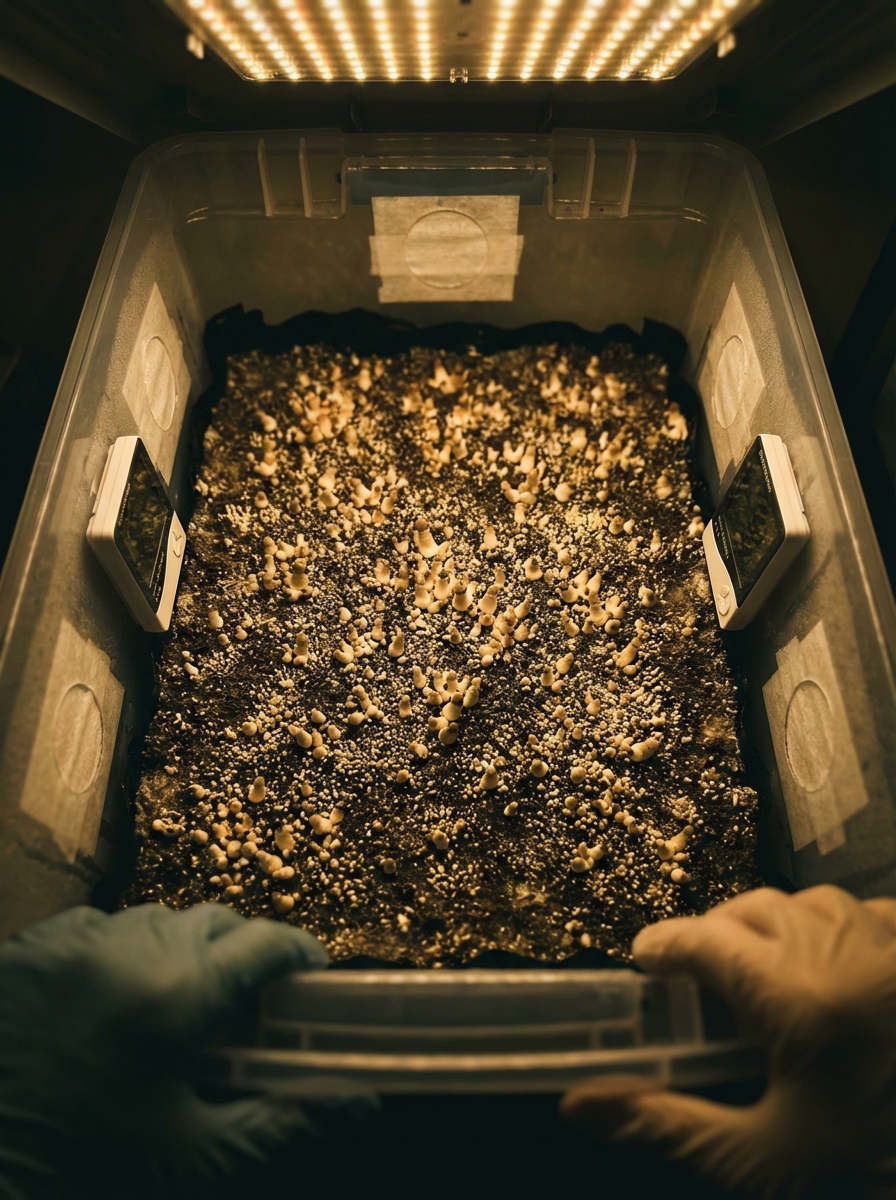
Casing Layer Tek: How to Double Your Mushroom Yields
A casing layer is a non-nutritive top layer applied over colonized substrate to initiate and support pinning. It is one of the most reliable yield-improvement techniques in Psilocybe cubensis cultivation — consistently producing 2–4x more pins than uncased substrate of equal quality.
What a Casing Does
- Moisture reservoir: Holds water and releases it slowly, maintaining the surface humidity that triggers pinning
- CO2 buffering: Creates a gradient between the substrate and the surface air
- Neutral pH surface: Brings the surface to the pH range optimal for pinning (6.5–7.5)
- Light barrier: Prevents light penetration into the substrate — pins form from the casing surface, not within the substrate
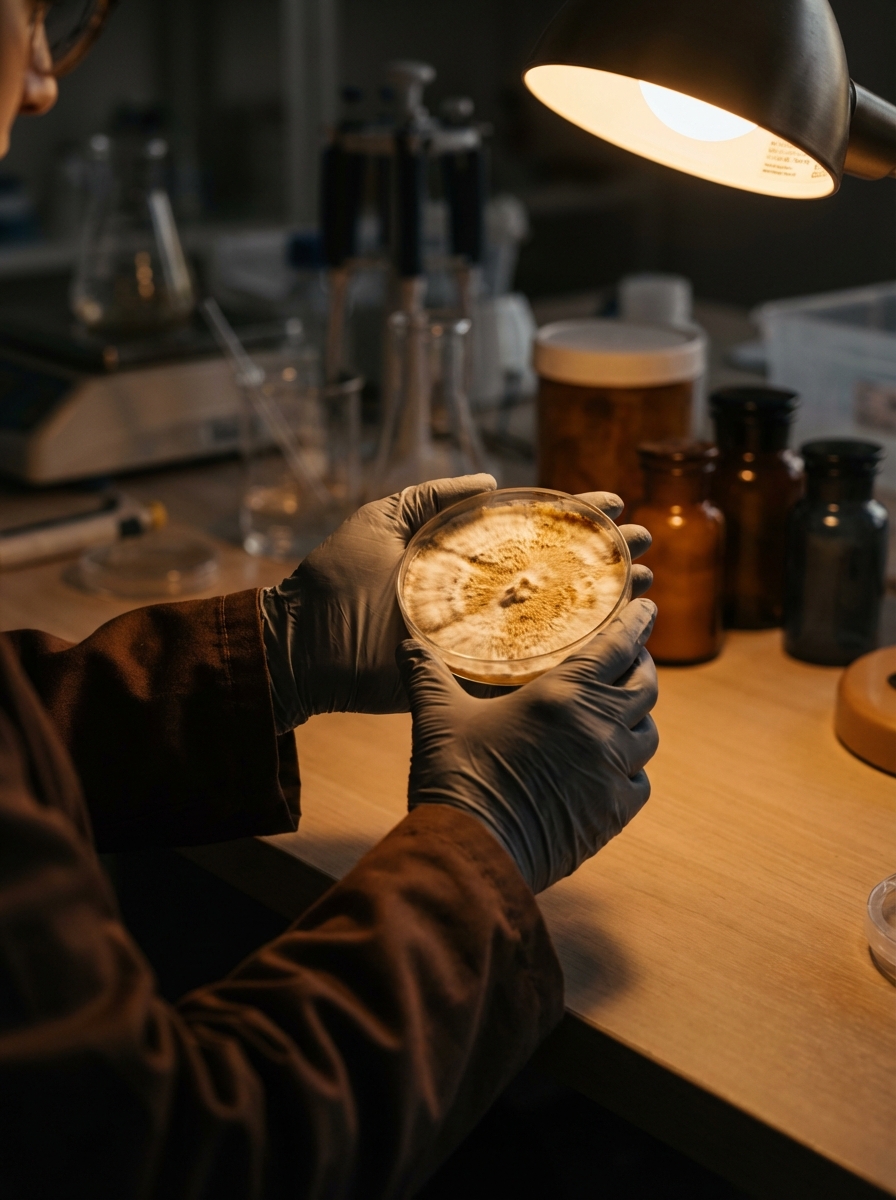
The CVG Recipe (Most Reliable)
Ingredients: coconut coir, coarse vermiculite, gypsum
Ratio: 3 parts coco coir : 2 parts vermiculite : 1/4 part gypsum
Preparation:
- Hydrate a coco coir brick with boiling water in a bucket (the heat pasteurizes the coir while hydrating it)
- Mix in vermiculite and gypsum while the coir is still warm
- Allow to cool to room temperature before applying
- Test for field capacity: squeeze a handful — no more than a few drops should come out
No sterile technique needed: The boiling water pasteurizes sufficiently. This casing doesn't need pressure cooking.
Application
- Wait until the bulk substrate is 100% colonized — white mycelium throughout, no green/black/pink patches
- Apply CVG in a 1/2 inch (12mm) layer over the entire substrate surface
- Level with a gloved hand or clean spatula — do not press down
- Return to fruiting conditions: 90-95% humidity, 70-75°F, appropriate FAE
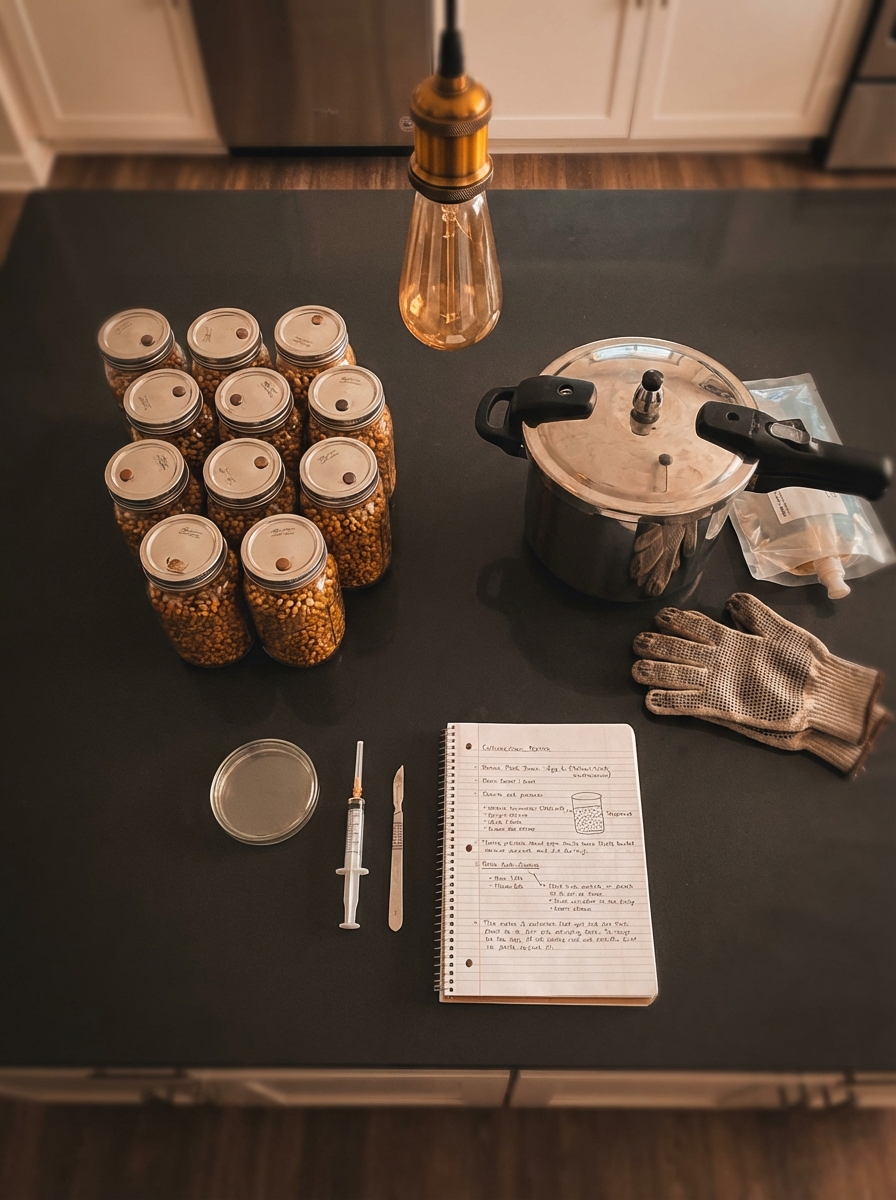
After Application
- Days 1–7: Mycelium colonizes the casing layer. White growth appears at the surface.
- Days 7–14: Pins initiate in the casing layer once mycelium reaches the surface and encounters fruiting triggers.
- Days 14–21: First flush typically begins. May be slightly later with very thick casing or cool temperatures.
Common Mistakes
Too thick: Over 3/4 inch creates CO2 buildup under the casing that inhibits pinning. 1/2 inch is the target.
Applied too wet: If casing is oversaturated and you mist heavily, the surface becomes anaerobic. Let the casing breathe.
Applied before full colonization: Wait until fully colonized. Premature casing allows contamination to establish.
Casing a contaminated tub: Casing does not save a contaminated grow. Triage first.

Multiple Flushes
After harvesting the first flush, remove all remaining pins (including aborts), lightly mist the casing surface, and return to fruiting conditions. A well-cased tub produces 3–5 flushes before substrate exhaustion.