
Who Should Not Use Psilocybin
An honest, compassionate guide to psilocybin contraindications — psychosis history, bipolar I, medications, and other risk factors.
Contraindications for Psilocybin
A contraindication is a reason not to proceed, or not to proceed without specialist medical supervision. Psilocybin may look simple because it is often discussed as a mushroom, but high-dose psychedelic sessions can temporarily alter perception, judgment, blood pressure, emotional regulation, and reality testing.
Use this page as a screening guide, not medical advice, diagnosis, or permission slip. If anything here applies to you, pause and speak with a qualified clinician.
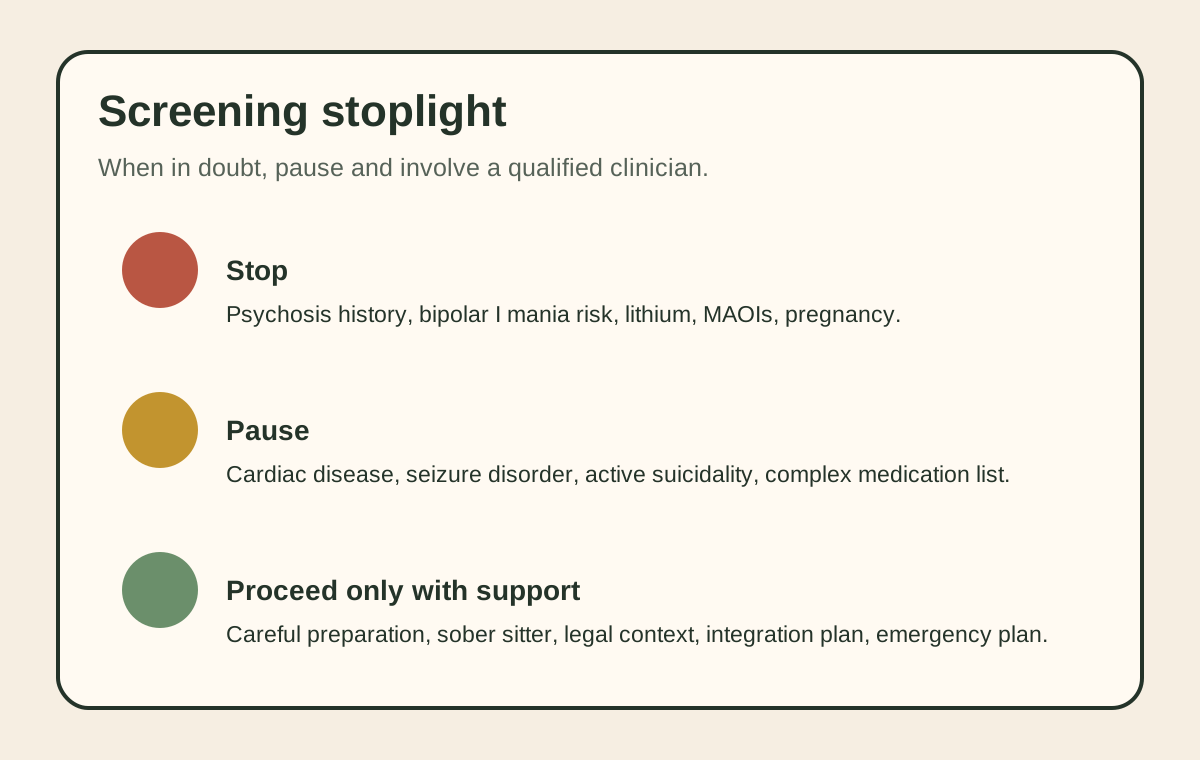
Quick Stop List
Do not proceed outside a legitimate clinical setting if any of these apply:
- Personal history of schizophrenia, schizoaffective disorder, psychosis, or psychedelic-triggered psychosis.
- Bipolar I disorder, recent mania, or unstable bipolar-spectrum symptoms.
- Current lithium use.
- Current MAOI use.
- Current suicidal intent, plan, or inability to maintain safety.
- Pregnancy or breastfeeding.
- Possible wild-mushroom poisoning or uncertain mushroom identification.
Psychiatric Contraindications
Psychosis History
Psilocybin can produce temporary psychosis-like effects even in screened participants. In people with underlying psychosis vulnerability, that temporary state may not resolve normally. A personal history of psychosis is one of the clearest reasons to avoid psilocybin outside specialist care.
Family history matters too. A first-degree relative with schizophrenia or psychosis does not mean a person will develop psychosis, but it is enough to require conservative screening.
Bipolar Disorder and Mania Risk
Clinical trials often exclude bipolar I disorder because mania can be dangerous, prolonged, and destabilizing. Bipolar II and well-managed bipolar-spectrum histories are more nuanced, but they still require psychiatric review. Any recent hypomania, mania, mixed state, sleep-collapse pattern, or impulsive high-risk behavior is a reason to stop.
Current Suicidality
Psilocybin is being studied for serious mental health conditions, but a session is not a crisis intervention. Active suicidal ideation with plan or intent needs immediate mental health support, not an unsupervised psychedelic experience.
If you are in the United States and might harm yourself, call or text 988. Veterans can call 988 and press 1.
Medication Contraindications
Lithium
Lithium is a hard stop because of seizure reports and severe adverse reactions when combined with classic psychedelics. Do not skip, taper, or stop lithium to make a session possible without psychiatric supervision.
MAOIs
MAOIs can intensify and prolong psychedelic effects and may raise serotonin-toxicity concerns. Do not combine MAOIs and psilocybin outside specialist supervision.
Complex Psychiatric Medication Regimens
Multiple antidepressants, antipsychotics, mood stabilizers, seizure medicines, sedatives, or stimulants deserve clinician and pharmacist review. The risk often comes from the whole regimen, not just one drug.
See Drug Interactions for the medication guide.
Medical Conditions That Require Review
These are not always permanent exclusions, but they are not DIY situations:
- Uncontrolled hypertension or significant cardiovascular disease.
- Arrhythmia, coronary artery disease, heart attack history, or stroke history.
- Active seizure disorder or unexplained seizure history.
- Severe liver disease.
- Frailty, fall risk, or conditions where vomiting, dehydration, or confusion could be medically serious.
- Recent major surgery or unstable medical illness.
Psilocybin commonly causes temporary increases in blood pressure and heart rate, plus nausea, dizziness, anxiety, and impaired coordination. Those ordinary effects become more important when the body is medically vulnerable.
Situations Where Timing Is the Risk
Sometimes the answer is not "never." It is "not now."
- Acute grief, conflict, panic, or major life instability.
- Recent psychiatric hospitalization or medication change.
- Sleep deprivation.
- Active trauma processing that is already destabilizing.
- Pressure from a facilitator, partner, friend, or group.
- Lack of a sober sitter or safe setting.
Postponing is a harm-reduction decision, not a failure.
Facilitator Red Flags
Be cautious of anyone who:
- Does not ask about medications, diagnosis history, family psychosis history, cardiac history, and emergency contacts.
- Encourages medication changes without medical credentials.
- Promises certain results or breakthroughs.
- Pressures you to proceed after you disclose concerns.
- Dismisses bipolar, psychosis, lithium, MAOI, cardiac, or suicide-risk concerns.
- Has no emergency plan.
What Good Screening Looks Like
A reasonable intake includes:
- Complete medication and supplement list.
- Psychiatric history and family psychiatric history.
- Cardiovascular and seizure history.
- Substance use, including alcohol, cannabis, stimulants, and opioids.
- Current stress level, sleep, supports, and crisis risk.
- A clear plan for preparation, session support, integration, and escalation.
Source Links
- Drug-drug interactions involving classic psychedelics: systematic review
- Acute adverse effects of therapeutic doses of psilocybin: systematic review and meta-analysis
- Fireside Project Psychedelic Support Line