What Is Psilocybin Therapy?
An evidence-based introduction to psilocybin-assisted therapy — how it works, what a session involves, and what the research shows.
What Is Psilocybin Therapy?
Psilocybin therapy is a structured therapeutic approach that uses psilocybin — the active compound in "magic mushrooms" — within a carefully prepared session to support mental health, personal growth, or spiritual exploration. It is not recreational drug use with a therapist in the room. It is a specific clinical or facilitated methodology backed by over two decades of modern research at institutions including Johns Hopkins, NYU, and Imperial College London.
The defining feature of psilocybin therapy is the therapeutic container: trained preparation beforehand, a supported session of 4–8 hours, and structured integration afterward. The compound does not work in isolation. The setting, the relationship with the guide or therapist, and the work done before and after the session are considered as important as the psilocybin itself.
How It Works
Psilocybin is converted in the body to psilocin, which binds primarily to serotonin receptors — specifically the 5-HT2A receptor subtype, which is densely expressed in the prefrontal cortex and the default mode network (DMN). The DMN governs self-referential thought: the inner narrator, the sense of being a separate self, habitual thought patterns. Psilocybin temporarily disrupts normal DMN activity, reducing the grip of these patterns and increasing communication between brain regions that don't ordinarily exchange information.
The practical result is an experience that ranges from gentle perceptual shifts at low doses to a complete dissolution of ordinary self-awareness at higher doses. Emotional material — memories, fears, grief, patterns of self-perception — tends to surface with less defensive resistance than in ordinary consciousness. This creates a window in which therapeutic insights are more accessible and more durable than in conventional talk therapy.
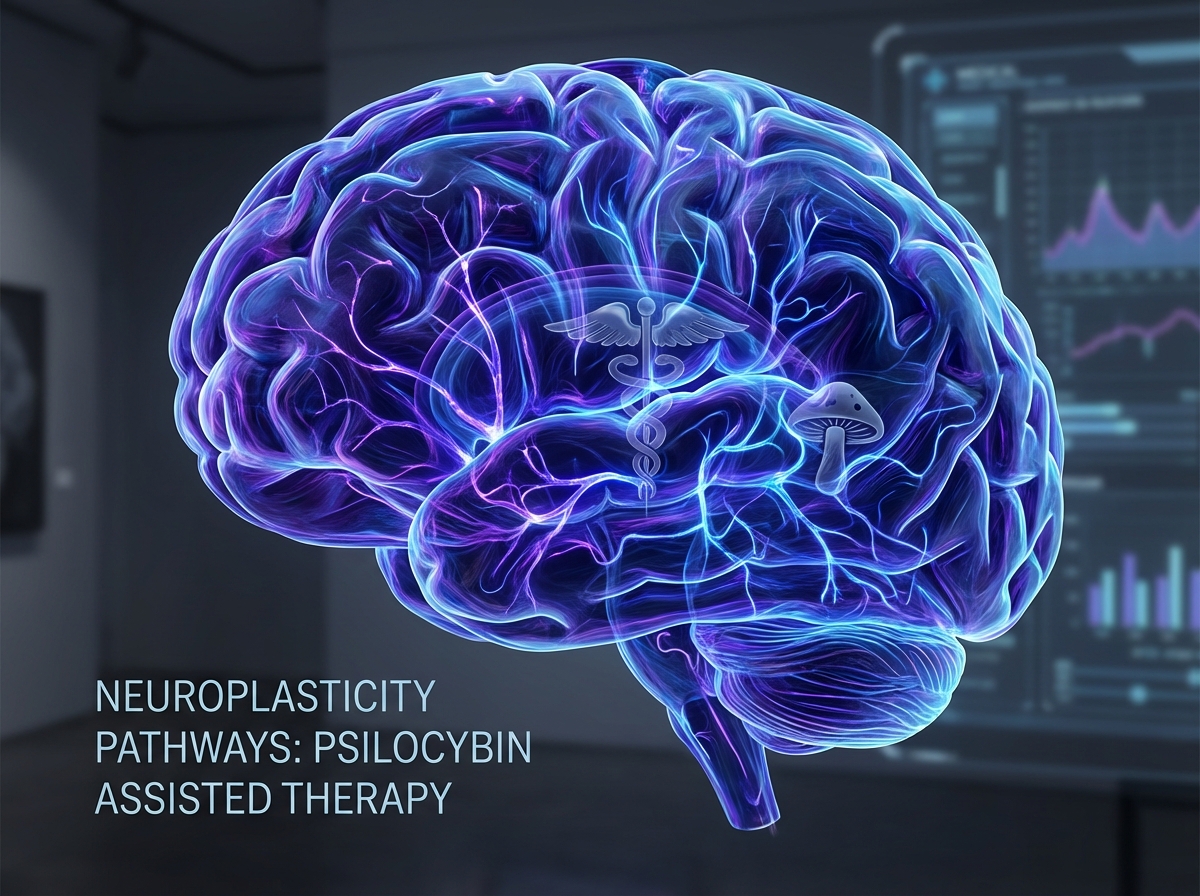
Neuroplasticity — the brain's capacity to form new connections — is measurably elevated in the two to four weeks following a psilocybin session. This is the integration window: the period during which new patterns, perspectives, and behaviors can take hold more readily.
What a Session Involves
Preparation
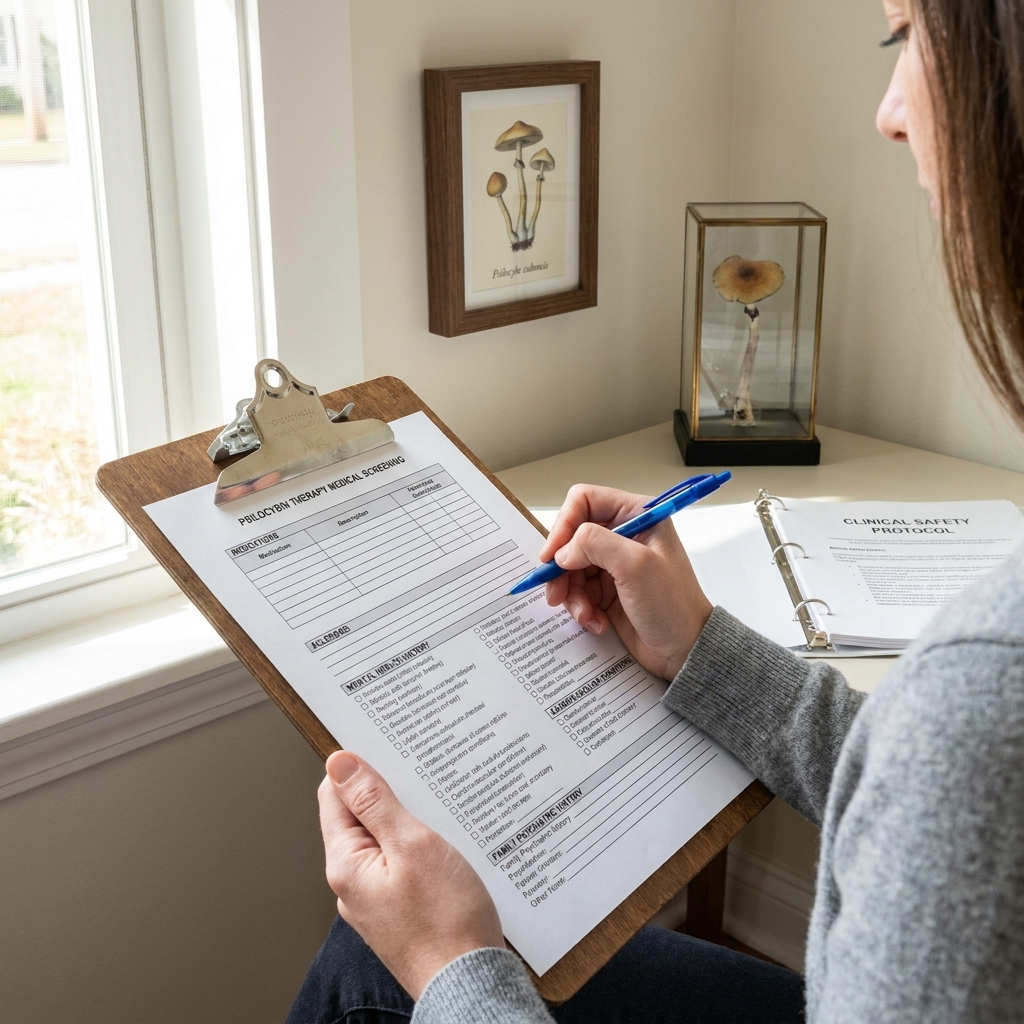
A preparation session (or sessions) precedes any psilocybin experience. The guide or therapist covers:
- Medical and psychiatric history screening
- Intention-setting — not goal-setting, but clarifying what you are bringing to the experience
- What to expect physically and psychologically
- How to work with difficult moments (surrender rather than resist)
- Logistics: what to wear, what to bring, what to avoid beforehand
Preparation is not optional. Ethical practitioners will not skip it.
The Session
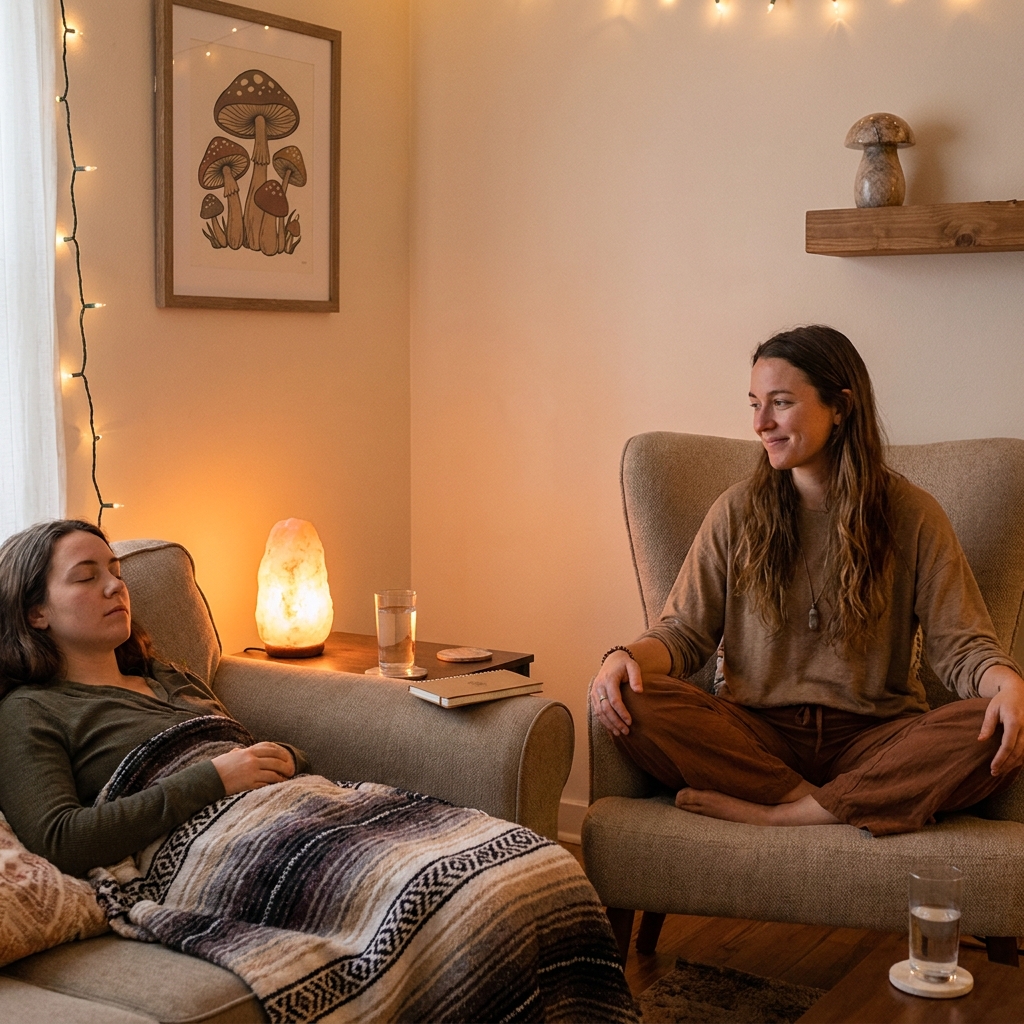
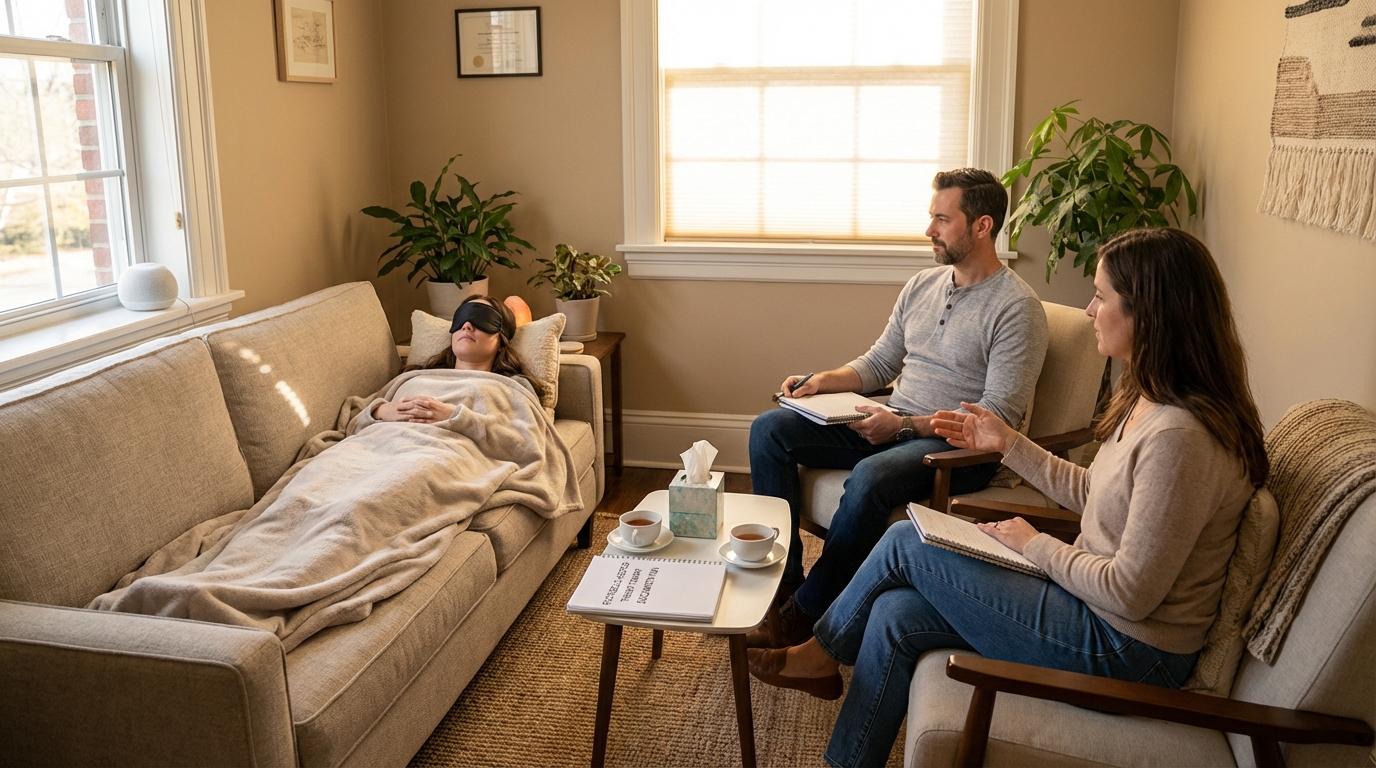
A standard therapeutic session involves ingesting a moderate to high dose of psilocybin (typically 20–30mg of synthetic psilocybin in clinical trials, or 2–4g of dried mushrooms in facilitated settings). The person lies on a mat or recliner, wears an eye mask, and listens to a curated music playlist. The facilitator or therapist remains present but does not direct the experience.
Sessions last 4–8 hours, reflecting the natural duration of psilocybin's effects. There is no rushing the process.
Integration
The days and weeks following the session are as important as the session itself. Integration involves making meaning of what emerged — through journaling, conversation with a therapist or trusted person, somatic practices, time in nature, and reduced use of substances that blunt the neuroplasticity window (alcohol, cannabis, stimulants).
Many practitioners consider integration the most undervalued part of the process.
What the Research Shows
Modern psilocybin research has produced results that are unusual by the standards of psychiatric medicine:
- Treatment-resistant depression: Johns Hopkins trials showed 71% of participants with significant clinical response at 4 weeks; more than half achieved full remission. COMPASS Pathways Phase 3 trials confirmed efficacy for treatment-resistant depression.
- Major depressive disorder: A 2021 Johns Hopkins trial in non-treatment-resistant depression found similar response rates with effects lasting 12 months.
- End-of-life anxiety: 2016 NYU and Johns Hopkins trials in terminal cancer patients showed dramatic reductions in anxiety and depression lasting 6+ months after a single session.
- Addiction: Smoking cessation trials showed 80% abstinence at 6 months — compared to roughly 35% for the most effective approved medication. Alcohol use disorder trials show significant reductions in heavy drinking days.
- PTSD: Early-stage VA-affiliated trials are underway following the April 2026 executive order, with promising preliminary signals.
These results come from Phase 2 and Phase 3 trials with careful screening, trained facilitators, and structured integration. They reflect psilocybin therapy, not psilocybin alone.
Who It May Help
Psilocybin therapy has shown the strongest evidence for:
- Treatment-resistant depression (multiple failed antidepressant trials)
- Major depressive disorder
- End-of-life existential anxiety and depression
- Alcohol use disorder and tobacco addiction
- PTSD (especially combat-related)
- Grief and bereavement
It is not a universal treatment and is not appropriate for everyone. See our contraindications page for a full list of conditions and medications that require special consideration.
Who Should Not Use Psilocybin
Psilocybin therapy is contraindicated or requires careful medical consultation for people with:
- Personal or family history of schizophrenia, bipolar I disorder, or psychosis
- Current use of lithium (serious seizure risk when combined with psychedelics)
- Active MAOI use (dangerous interaction)
- Certain cardiac conditions
- Pregnancy
This is not a complete list. See drug interactions and contraindications for full detail.
Legal Access in 2026
Psilocybin therapy is legally accessible in three US states:
- Oregon — Licensed psilocybin service centers operating since 2023. No diagnosis required. Adults 21+. Costs typically $800–$3,000+ for a full session package.
- Colorado — Regulated natural-medicine licensing moved into active facilitator and business operations in 2025. Personal adult possession has state-level protections, but provider claims still need current DORA/DOR and local-rule verification.
- New Mexico — Medical Psilocybin Act signed in April 2025. The Department of Health says program development is underway with a goal of enrolling first patients by the end of December 2026; it is not ordinary public access yet.
Many other states have decriminalized personal possession or have active legislation. See the legal map for your state.
Finding a Guide or Therapist
In legal states, verify facilitator licensing through official regulatory databases:
- Oregon: Oregon Health Authority (OHA) facilitator license registry
- Colorado: DORA (Department of Regulatory Agencies) healing center registry
Outside legal states, integration therapists — licensed mental health professionals who support psilocybin experiences without administering the compound — are available in most major cities. Our directory lists vetted service providers.
See How to Find a Psilocybin Therapist for a full guide including red flags and questions to ask.