Psilocybin for Addiction Treatment
Clinical evidence for psilocybin in alcohol, tobacco, and other substance use disorders — what the trials show, mechanisms, and access options.
Psilocybin for Addiction Treatment: What the Evidence Shows
Addiction is characterized by compulsive behavior that persists despite negative consequences — a pattern of narrowed attention, habituated response, and diminished capacity for change. Psilocybin's mechanism appears to directly address these features: it temporarily disrupts habituated neural patterns, elevates neuroplasticity, and produces experiences that research subjects frequently report as clarifying or reorienting. This is why addiction is one of the most promising and biologically coherent applications for psilocybin-assisted therapy.
This guide covers the current clinical evidence for alcohol, tobacco, and other substance use disorders, the proposed mechanisms, and access options in 2026.
The Clinical Evidence
Tobacco (Nicotine) Addiction
Matthew Johnson et al., Johns Hopkins (2014–2017)
The most striking addiction result in psychedelic research to date. In a 2014 pilot study of 15 smokers who had failed multiple cessation attempts:
- 80% abstinence at 6-month follow-up (vs. ~35% for best available pharmacotherapy — varenicline)
- 67% sustained abstinence at 12 months
- Two or three psilocybin sessions combined with cognitive behavioral therapy (CBT) support
These results are nearly double the best available pharmacological treatment for a substance use disorder that kills approximately 480,000 Americans annually.
A larger randomized controlled trial (NCT03426085, Johns Hopkins) is ongoing comparing psilocybin-assisted therapy to nicotine patch as active control. Results expected 2025–2026.
Why it works (hypothesis): Smokers report that psilocybin allowed them to see smoking from outside their habitual self-narrative — they observed the behavior from a perspective that wasn't captured inside the craving. Multiple participants described the experience as making smoking "feel foreign" or "not who I am."
Alcohol Use Disorder
Michael Bogenschutz et al., NYU (2015, 2022)
Two major studies:
2015 pilot (n=10): Psilocybin combined with Motivational Enhancement Therapy (MET) produced significant reductions in alcohol consumption. Mean percent days heavy drinking decreased from 68% to 27% at follow-up.
2022 RCT (n=93, JAMA Psychiatry): The first large randomized controlled trial. Psilocybin vs. diphenhydramine (active placebo):
- Percent heavy drinking days decreased 83% in psilocybin group vs. 51% in placebo group
- Percent days abstinent significantly higher in psilocybin group
- Two psilocybin sessions (25mg) with 12 weeks of MET therapy
This is Phase 2 data — robust effect size, needs Phase 3 replication at scale.
Imperial College London (2023–ongoing)
Following their depression results, Imperial College launched an alcohol use disorder trial with psilocybin-assisted therapy. Preliminary data expected 2025–2026.
Opioid Use Disorder
No large trials yet. This is a critical gap given the opioid epidemic, and a growing number of researchers consider it the highest-priority target for future psilocybin research.
Current status (2026):
- University of Alabama Birmingham: Phase 2 psilocybin for opioid craving and use — enrolling
- Johns Hopkins: planning opioid-focused pilot
- Multiple smaller pilots at international institutions
The mechanistic case is strong: opioid addiction involves profound disruption of the default mode network and reward circuitry that psilocybin addresses directly. The clinical trials lag the basic science by several years.
Important note on ibogaine: Ibogaine (from the iboga plant) has stronger evidence for opioid use disorder than psilocybin — including dramatic results in veterans with opioid dependence (Stanford Nature Medicine 2024). Ibogaine is not psilocybin and requires cardiac monitoring, but it is part of the same psychedelic-assisted therapy landscape. If opioid dependence is the concern, ibogaine data is the most directly relevant.
Cocaine and Stimulant Use Disorder
Experimental stage. Case reports and mechanistic arguments are strong, but controlled trials are minimal as of 2026. NYU and UC Berkeley have expressed interest in stimulant-focused trials.
Cannabis Use Disorder
Paradoxically, there is essentially no clinical psilocybin research targeting cannabis use disorder despite some mechanistic rationale. Clinical attention has focused on substances with higher mortality risk.
The Mechanism: Why Psilocybin May Help With Addiction
Several overlapping mechanisms have been proposed:
1. Default Mode Network disruption
Addiction involves entrenched self-referential patterns — narratives about identity, craving, and inevitability that are mediated by the default mode network (DMN). Psilocybin reliably reduces DMN activity in proportion to dose, temporarily disrupting these narratives and allowing new perspectives to form.
2. Neuroplasticity elevation
Post-psilocybin neuroplasticity is elevated for 2–4 weeks (Cahart-Harris et al.). During this window, new behaviors and response patterns are more easily established. Combined with behavioral therapy, this may explain why 2–3 psilocybin sessions produce sustained behavior change in populations that haven't responded to conventional treatment.
3. Mystical-type experience
Both the Johns Hopkins tobacco data and the NYU alcohol data show correlation between mystical-type experience ratings and treatment outcome. Participants who reported the most profound experiences showed the greatest behavioral change — suggesting that the subjective quality of the session is itself therapeutically active, not just a side effect.
4. Self-narrative disruption
Addiction is deeply identity-linked. "I'm a smoker." "I drink to cope." Psilocybin at high doses temporarily dissolves ordinary self-narrative, creating a window in which the habitual identity feels less fixed. Many participants describe a post-session sense that their identity is not determined by the addiction.
Who Is This For?
Psilocybin addiction treatment research has primarily enrolled adults who:
- Have a current DSM-5 diagnosis for the substance use disorder being studied
- Have tried at least one conventional treatment without adequate success
- Do not have psychosis, schizophrenia, bipolar I, or first-degree family history of these conditions
- Are not currently on lithium or first-generation antipsychotics
- Are medically stable
The population who stands to benefit most: People with moderate-to-severe substance use disorder who have attempted conventional treatment (medication, behavioral therapy, 12-step programs) without achieving sustained recovery.
Access in 2026
Clinical Trials
Clinical trials are free and represent the highest standard of care available. Most addiction trials include:
- Careful medical and psychiatric screening
- Preparation sessions
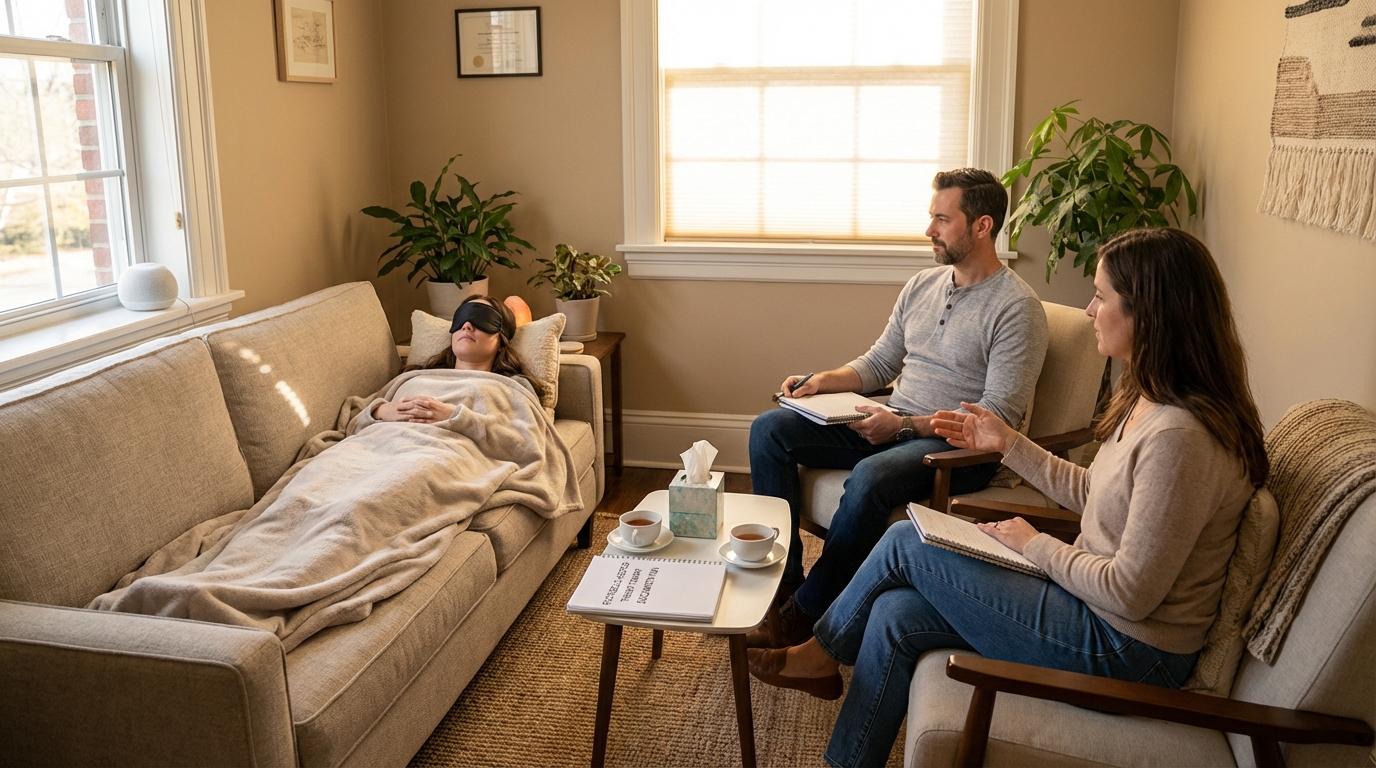
- Psilocybin sessions with trained monitors
- Integration sessions afterward
To find enrolling trials: ClinicalTrials.gov → search "psilocybin" + condition ("alcohol use disorder," "tobacco addiction," "nicotine," "opioid")
Active as of 2026:
- Johns Hopkins: tobacco, alcohol, and depression+substance use trials
- NYU Langone: alcohol, ongoing follow-up studies
- University of Alabama: opioid
- UCSF: multiple substance use applications
Oregon and Colorado Service Centers
Service centers can legally provide psilocybin for general wellness — they do not treat specific diagnoses. However, many people with substance use disorders access service centers for intentional work on their relationship with the addictive substance.
Important: service centers are not addiction treatment programs. They do not provide MAT (medication-assisted treatment), withdrawal management, or addiction counseling infrastructure. If acute withdrawal risk is present, that must be managed medically first.
Cost: $1,500–$3,500 in Oregon/Colorado. No insurance coverage currently.
Private Guides (Underground)
Unregulated. Quality varies dramatically. Ask specifically about training in addiction contexts, crisis protocols, and aftercare. Well-trained underground guides with addiction experience do exist and have helped many people. Untrained practitioners in addiction contexts can cause real harm (particularly with opioid users who may experience destabilizing experiences without appropriate support).
Integration and Aftercare
Psilocybin does not cure addiction — it creates a window. What happens in the weeks after the session determines how durable the change is.
Key integration elements for addiction:
- Behavioral therapy continuation: CBT, MET, or SMART Recovery during the post-session neuroplasticity window
- Social support: 12-step programs, SMART Recovery, or sober community
- Integration therapy: Specifically working with the material from the psilocybin session in therapeutic context
- Avoiding cross-addiction: Some people in early recovery from alcohol increase cannabis or benzodiazepine use post-psilocybin if they're not carefully monitored
Warning on relapse: A return to use after psilocybin-assisted therapy does not mean the treatment failed. Clinical trials show that some participants relapse and then recommit; the trajectory is often one of reduced use and increasing periods of abstinence rather than instant, permanent cessation. Track the trend, not individual events.
Resources
- ClinicalTrials.gov — search by substance + psilocybin for enrolling trials
- SAMHSA National Helpline — 1-800-662-4357 — free addiction treatment referral
- Fireside Project — 623-473-7433 — support during/after psychedelic experiences
- SMART Recovery — smartrecovery.org — secular alternative to 12-step
- American Addiction Centers — for medical withdrawal management before psilocybin work