
Grief as a Clinical Problem
Grief is a universal human experience — and for most people, it resolves over time without clinical intervention. But for a significant minority, bereavement becomes a prolonged, disabling condition. Prolonged Grief Disorder (PGD), recently added to the DSM-5-TR and ICD-11, is characterized by persistent and intense yearning for the deceased, difficulty accepting the loss, bitterness or anger, and functional impairment lasting more than 12 months. It affects an estimated 10 percent of bereaved individuals — millions of people in the United States alone.
Conventional treatments for PGD — grief-focused CBT, complicated grief treatment (CGT), and antidepressants — have moderate efficacy. They help some people meaningfully, but many do not fully recover. The treatment gap has prompted researchers to ask whether psilocybin might offer something that existing approaches cannot.
The answer emerging from early clinical work is: possibly, and for reasons that are theoretically compelling.
How Grief Works in the Brain
Understanding why psilocybin might be relevant requires understanding what makes grief complicated.
Normal grief involves the disruption of what psychologists call the "continuing bond" — the internal working model we maintain of a loved one, shaped by thousands of interactions over years. The death of someone close does not immediately dissolve this internal model; the grieving person continues to reach for the person in mind and habit, only to encounter absence. Over time, the model is updated: the loss is integrated, the person is internally represented as deceased rather than temporarily absent, and life reorganizes around the new reality.
In complicated grief, this updating process stalls. The internal model of the deceased remains frozen — yearning continues without resolution, acceptance is blocked, and the person cannot make psychological space for a new relationship to someone who is gone. Some researchers describe this as a failure of extinction learning — the same process disrupted in PTSD, where the threat-avoidance association formed during a traumatic event fails to extinguish over time.
This is relevant to psilocybin: one of psilocybin's proposed mechanisms is enhanced extinction learning, the neurological process by which fear and avoidance associations formed in traumatic contexts are updated with new, corrective information. If complicated grief involves a similar stalling of psychological updating, psilocybin's effect on extinction learning may be directly relevant.
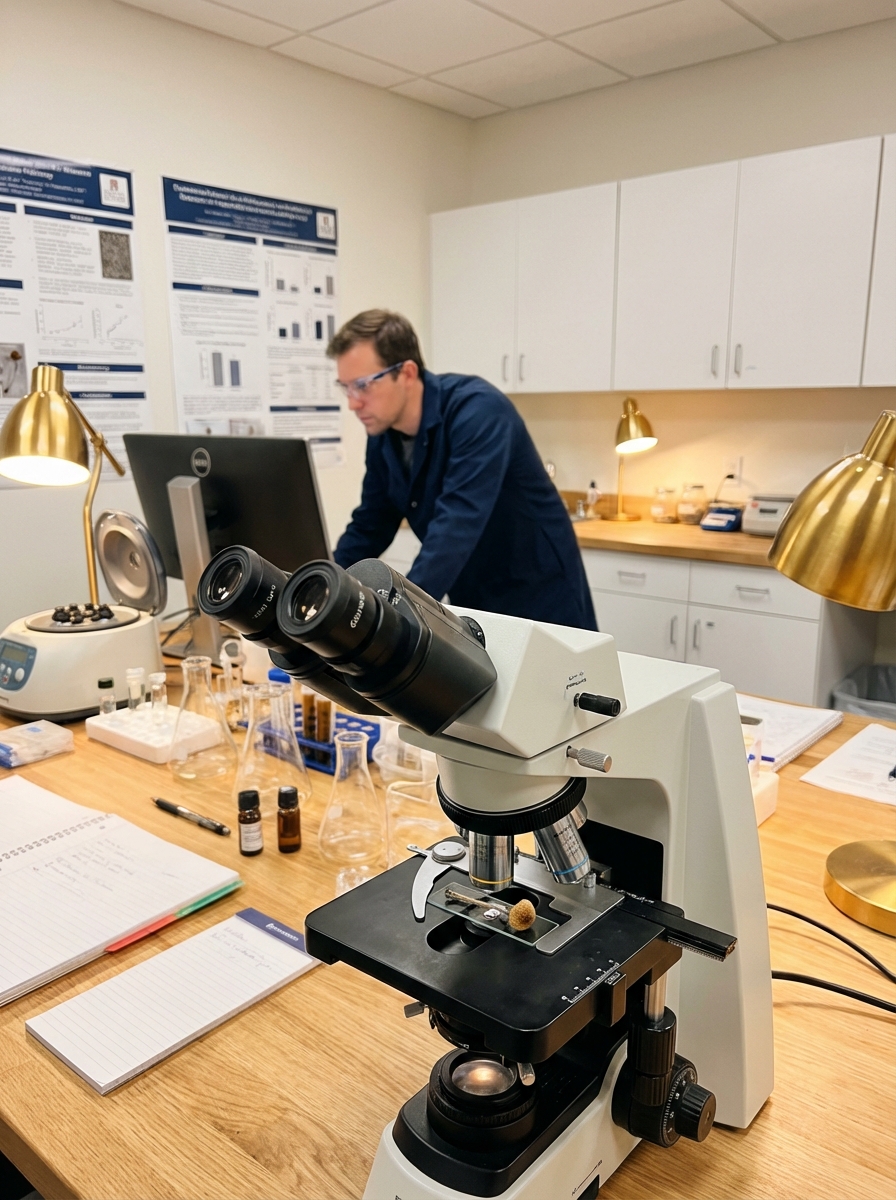
The Psilocybin Mechanism for Grief
Several mechanisms have been proposed:
Default Mode Network Disruption and Self-Model Updating
The default mode network maintains the brain's continuous self-model — the narrative of who we are, our relationships, and our place in the world. Grief, and especially complicated grief, may involve the DMN maintaining a self-model that has not been updated to incorporate the loss. The grieving person's self-concept still implicitly includes the deceased as present.
Psilocybin dramatically disrupts DMN activity, temporarily dissolving rigid self-models. This may create a window in which the self-model is more plastic — more amenable to the painful but necessary updating that grief requires.
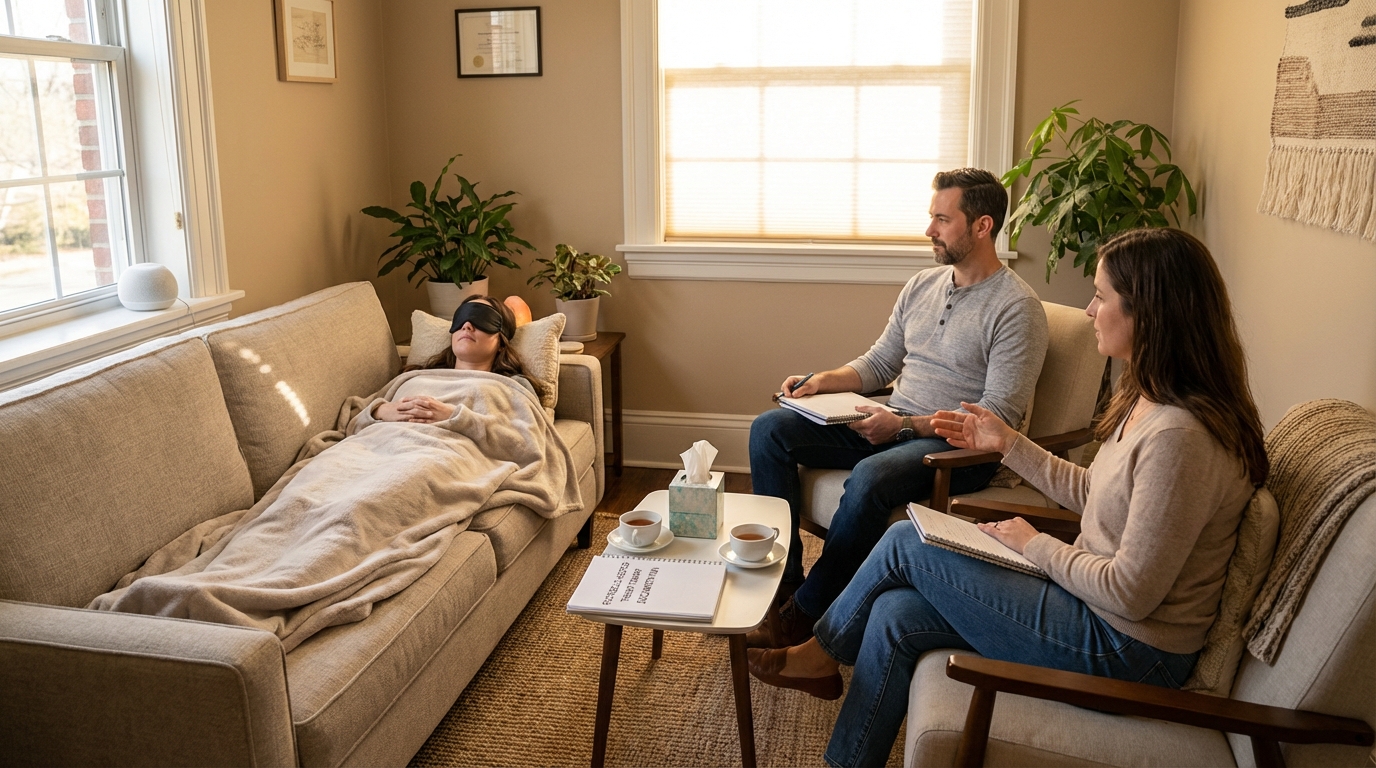
Mystical Experience and Continued Connection
Many bereaved people who have had psilocybin experiences report encounters or a felt sense of connection with the deceased. Whether these are understood as real spiritual contact, projection, or psychologically constructed experiences is theologically and philosophically contentious — but clinically, they are often deeply healing.
The sense of resolution, peace, or communication that these experiences can produce has been reported to shift the relationship to loss from anguish and yearning to something more like acceptance and gratitude. This is not a fantasy or denial — multiple researchers describe it as a shift in the quality of the internal representation of the deceased, from absence to presence, from loss to integration.
Roland Griffiths and colleagues at Johns Hopkins have noted this phenomenon in their end-of-life studies, where terminally ill patients reported reunions or communications with deceased loved ones during psilocybin sessions that significantly reduced their fear of death.
Increased Psychological Flexibility
Acceptance and Commitment Therapy (ACT) research shows that psychological inflexibility — difficulty accepting painful internal states and moving toward values-based living — predicts worse grief outcomes. Psilocybin is associated with increases in psychological flexibility, openness, and acceptance. These changes support the grieving process.
Emotion Regulation
Psilocybin sessions can allow people to access grief that has been suppressed, often producing cathartic and processing experiences with difficult emotions. This emotional processing, when supported by a skilled therapist or guide, may facilitate the natural grief process that has been blocked.
Clinical Evidence: What We Know
The clinical evidence base for psilocybin in grief specifically is early but growing.
End-of-Life Anxiety Studies
The closest existing evidence base is from studies on psilocybin for anxiety and depression in patients with life-threatening illness. The landmark Johns Hopkins (Ross et al., 2011; Griffiths et al., 2016) and NYU (Ross et al., 2016) trials enrolled patients with cancer-related psychological distress — many of whom were experiencing anticipatory grief, grief about their own impending death, and grief about relationships that would be severed.
Both studies showed dramatic, rapid, and sustained reductions in depression and anxiety. Mystical experience quality predicted outcomes: participants who had more complete mystical experiences during the session had greater improvements. The proposed mechanism — psilocybin providing an experience of consciousness that transcends ordinary death-anxiety — directly applies to bereavement as well.
Pilot Studies in Grief Proper
Johns Hopkins launched a small open-label pilot in 2022 specifically targeting bereaved adults experiencing prolonged grief. Initial results, presented at research conferences, are promising — participants reported meaningful reductions in grief severity and improvements in functional impairment at 6-month follow-up. Publication of full results is expected in 2026.
The Centre for Psychedelic Research at Imperial College London has a similar pilot underway for complicated grief, with results expected in 2026-2027.
These are small, uncontrolled studies. They establish safety and provide preliminary signal — not proof of efficacy. The next step is randomized controlled trials, which are now in planning phases at both institutions.
The Integration Frame for Grief Work
The experience is only part of the work. Integration — what happens in the weeks and months after a session — is where grief processing happens most explicitly.
Integration for grief typically involves:
Narrative work: Writing, talking, or recording the experience of the session, particularly any encounters or shifts related to the deceased
Continuing bonds practices: Many contemporary grief therapists use "continuing bonds" frameworks that treat an ongoing internal relationship with the deceased as normal and healthy, rather than pathological or stuck. Psilocybin experiences often naturally move people toward a transformed continuing bond — not yearning for the person to return, but maintaining a relationship with their memory and meaning.
Letter writing and ritual: Writing letters to the deceased, creating memorials, or developing personal rituals for honoring the relationship are commonly useful integration tools.
Grief-informed therapy: Integration therapy for grief works best when the therapist understands both psychedelic experience and grief specifically. CGT (complicated grief treatment) therapists with psychedelic competency are rare but exist; standard integration therapists with genuine grief experience are more common.
Access in 2026
Clinical Trials
The most rigorous and safest access path for grief-specific psilocybin work. Search ClinicalTrials.gov for "psilocybin grief," "psilocybin bereavement," and "psilocybin prolonged grief." Johns Hopkins, Imperial College London, and affiliated sites may have open enrollment.
Oregon and Colorado Legal Programs
Licensed service centers can administer psilocybin within a wellness framework. Facilitators cannot diagnose or treat complicated grief, but bereaved individuals can access these programs with grief-related intentions. Facilitators with experience supporting grief work exist within these programs — ask explicitly when inquiring about fit.
Palliative and Hospice Contexts
Some palliative care practices and hospice organizations are beginning to explore integration of psilocybin support into their care frameworks, particularly for patients facing their own death and for bereaved family members. This is not yet widespread but is expanding.
International Retreats
Retreat centers in Jamaica, the Netherlands, and Mexico often work with grief. Quality varies. Ask specifically about facilitator experience with grief and bereavement, and about the availability of integration support post-retreat.
Who May Be Most Helped
Based on the evidence and theoretical frameworks, psilocybin may be particularly relevant for:
- People with prolonged grief disorder who have not responded to standard grief therapy
- Bereaved individuals experiencing co-occurring depression or PTSD
- People with traumatic or sudden losses (suicide, accidents, violence), where grief often stalls
- People who describe their grief as "stuck" or who cannot cry or access their emotions about the loss
- People experiencing end-of-life grief (anticipatory grief for their own death or for a terminally ill loved one)
It may be less appropriate for people in the acute phase of grief (first 3-6 months) where the natural grief process may simply need time and support, or for people with contraindicated medical or psychiatric conditions.
What Psilocybin Cannot Do
Psilocybin does not erase grief. It does not bring the deceased back, and it does not produce false comfort. What it may do is:
- Allow deeper contact with the grief that has been avoided
- Produce a subjective sense of resolution, connection, or peace that feels genuine
- Shift the internal representation of the deceased in ways that enable continued living
- Open psychological flexibility that supports the natural grief process
The experience itself is not the endpoint. It is a catalyst — what the person does with it, in integration and in life, determines whether it produces lasting change.
Summary
Psilocybin for grief is an emerging area of clinical research grounded in compelling theoretical mechanisms and promising early evidence. The DMN disruption that allows flexible updating of self-models, the extinction learning effects relevant to complicated grief's core pathology, the mystical experiences that can shift the relationship to loss — all point toward real potential.
The evidence base as of 2026 is preliminary: open-label pilots, case reports, and mechanistic rationale. Randomized controlled trials are underway. For people with prolonged or treatment-resistant grief, clinical trials represent the most scientifically rigorous access path. Oregon and Colorado legal programs offer accessible alternatives for those seeking supported psilocybin experiences with grief-related intentions.
Grief is ultimately about love — the depth of loss reflects the depth of connection. Psilocybin does not eliminate grief, but it may help people carry it differently.