
Integration Therapy After Psilocybin: A Complete Guide
The psilocybin session is not the endpoint. It is a catalyst. What happens in the weeks and months after — the integration phase — is where the lasting benefit, or the confusion, tends to take root. Understanding integration therapy, what it involves, and how to access it is as important as preparing for the session itself.
This guide covers the full arc of integration: what it is, why it matters, what to expect from a qualified therapist, and practical tools you can use on your own.
What Integration Means (and What It Doesn't)
Integration, in the psychedelic therapy context, refers to the process of making meaning out of a psilocybin experience and translating that meaning into lasting changes in behavior, perspective, and wellbeing.
The word is sometimes used loosely to mean "processing what happened." That is part of it. But genuine integration goes further — it connects the insights and emotions from the experience to a person's actual daily life, relationships, habits, and patterns of thought.
Integration is not:
- Reliving the experience repeatedly without grounding it
- Treating the insight as complete in itself ("I understood everything; now I'm done")
- Bypassing difficult material that came up by reframing it as "just psychedelic effects"
- Racing back to another session before the first one has settled
The clinical literature is clear that integration support improves outcomes. A 2022 analysis of psilocybin depression trials found that therapeutic support before and after sessions — but not necessarily during — was a significant predictor of sustained benefit at 3-month and 6-month follow-up.

The Timeline of Integration
Integration does not end when the acute effects do. Most therapists who specialize in this work use a rough phasing framework:
Days 1–3 (Immediate aftermath): The experience is still very present. Emotions may be heightened. Insights feel vivid and urgent. This is a period for rest, journaling, and gentle reflection — not for making major decisions.
Days 4–14 (Consolidation): The experience begins to settle into memory. This is when the first integration session with a therapist is most useful. Themes begin to emerge. Some people feel a "window of neuroplasticity" during this period — an unusual openness to behavioral change.
Weeks 2–8 (Active integration): The work of translating insights into life happens here. This might involve changing a relationship dynamic, starting therapy for underlying trauma, shifting a daily habit, or simply sitting with difficult material that surfaced.
Months 3–6 (Long-term integration): For many people, the experience continues to surface and deepen over months. Some people return to a therapist during this phase when they hit blocks or when new life events reactivate themes from the session.
What Integration Therapy Sessions Look Like
Integration therapy is not a standardized modality — it is an orientation that skilled therapists bring to existing frameworks. Common approaches include:
Somatic awareness work: Psilocybin experiences often carry a significant body dimension. Integration therapists may guide attention to where emotions are held in the body, using techniques from somatic experiencing or sensorimotor psychotherapy.
Parts-based exploration: Internal Family Systems (IFS) maps well onto the way psilocybin experiences often present inner conflicts — exiled parts, protective mechanisms, and a deeper Self. Many integration therapists trained in IFS find it a natural fit.
Narrative therapy: Translating a non-linear, often symbolic experience into a coherent personal narrative can itself be therapeutic. The therapist helps the person find meaning without forcing premature closure.
Mindfulness-based approaches: Helping a person stay present with difficult material that emerged — grief, anger, shame — without being overwhelmed by it or shutting it down.
Relational processing: When experiences touch on attachment wounds or relationship patterns, the therapeutic relationship itself becomes a container for working through those themes.
An integration session typically runs 50–90 minutes. How many sessions are needed varies widely: some people find 2–3 sessions sufficient; others work with a therapist for months following a profound or difficult experience.

Finding a Qualified Integration Therapist
The field of psychedelic integration therapy is not fully regulated. Anyone can call themselves a "psychedelic integration coach" without clinical training. When seeking support, it is worth knowing what to look for.
Licensed mental health professionals with specialized training: Look for therapists who are licensed (LCSW, LMFT, PhD, PsyD, MD) and who have completed formal training in psychedelic-assisted or integration therapy. Organizations offering training include the California Institute of Integral Studies (CIIS), Multidisciplinary Association for Psychedelic Studies (MAPS), and Fluence.
Directories to search: MAPS maintains a therapist directory. The Psychedelic Support network and Integration Circle also list practitioners by specialty and location. ZENDO Project has resources for difficult-experience support specifically.
Questions to ask a prospective therapist:
- What is your training in psychedelic integration specifically?
- Are you licensed in my state?
- Do you have personal experience with psychedelic states (you don't have to have — but their answer tells you something about their orientation)?
- What modalities do you draw from?
- Have you worked with people who had difficult experiences?
Online vs. in-person: Many integration therapists work via telehealth, which has expanded access significantly. In-person work is preferable for somatic approaches but is not always practical.
Integration Without a Therapist
Not everyone has access to — or wants — formal therapy. A full integration practice can be built with a combination of:
Journaling: Writing by hand, without editing, for 20–30 minutes within 24 hours of the session. Capture imagery, emotions, bodily sensations, recurring themes. Return to the journal over subsequent weeks.
Meditation: A regular sitting practice, even 10 minutes daily, creates conditions for insight to continue emerging. Mindfulness-based stress reduction (MBSR) techniques are particularly compatible with integration work.
Somatic practices: Yoga, slow walking, cold water immersion, and breathwork can help the body process what the mind is working through. The experience is not purely cognitive.
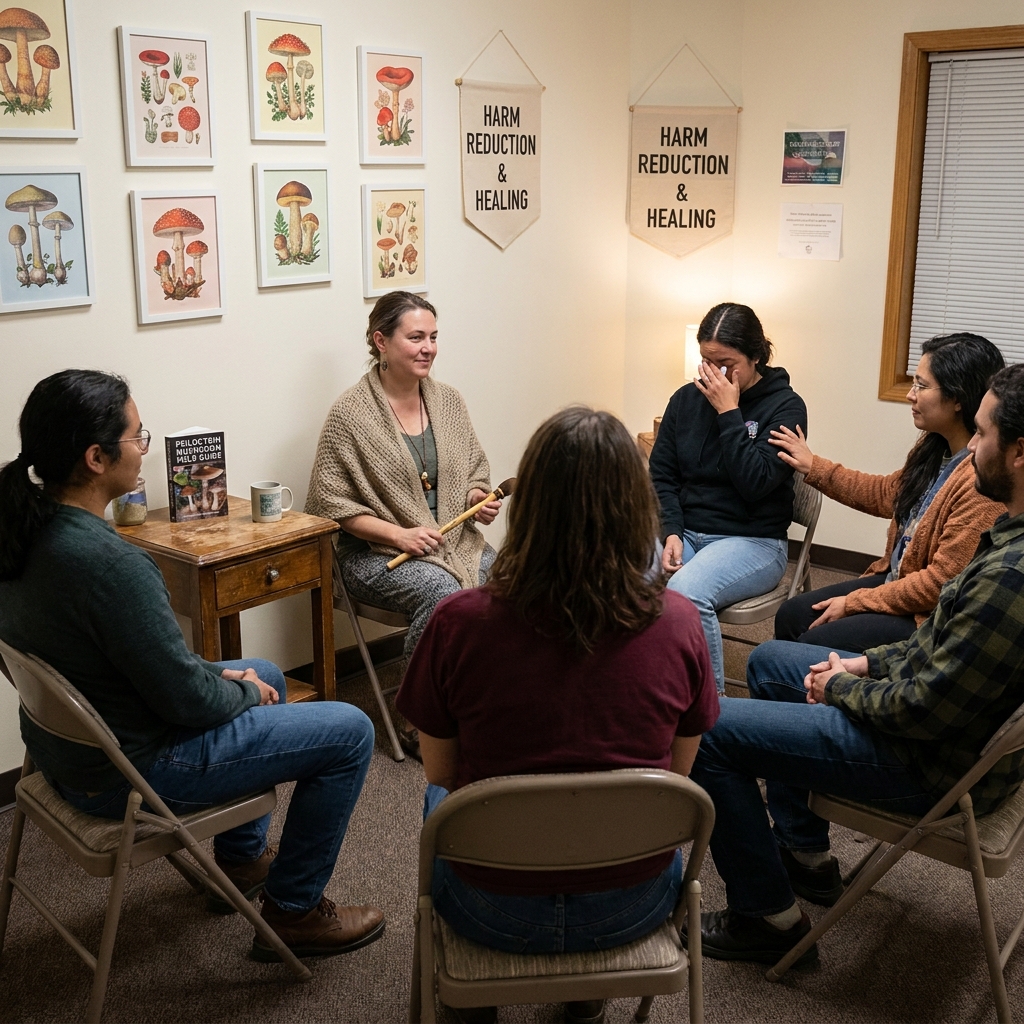
Integration circles and peer support: Psychedelic integration circles — peer-led or facilitator-guided group sharing spaces — exist in many cities and online. These offer community and reflection without the cost of individual therapy.
Creative expression: Drawing, painting, music, and movement have been used by many people to process experiences that resist verbal articulation. There is no wrong medium.
When Integration Is Difficult: Challenging Material
Not all integration is smooth. Psilocybin can surface suppressed trauma, existential anxiety, grief, or confronting material about relationships and identity. This is not a sign the session failed — it is often a sign it went deep.
Challenging integration material warrants more support, not less. Signs that professional support is especially important:
- Persistent anxiety, depersonalization, or derealization lasting more than 2 weeks after the session
- Intrusive recollections or flashbacks that feel distressing
- Significant mood destabilization
- Desire to talk about the experience compulsively, without being able to move forward
- The experience triggered memories of trauma
A skilled integration therapist — and in some cases a psychiatrist familiar with psychedelic medicine — can help navigate this territory safely. MAPS and the Fireside Project both offer crisis support lines staffed by people trained in psychedelic support.
Building an Integration Practice Over Time
The most effective integration is not a single event — it is an ongoing orientation to one's inner life. People who report sustained benefit from psilocybin experiences often describe a continued practice of self-reflection, therapy, creative work, or community that was either started or deepened after the experience.
Integration, at its best, is not about preserving a memory. It is about becoming the person the experience pointed toward.