
Why Bipolar Disorder Sits Outside Most Psilocybin Trials
Every major psilocybin clinical trial to date — Johns Hopkins, NYU, Imperial College London, COMPASS Pathways — has one exclusion criterion that appears on virtually every informed consent document: a personal or first-degree family history of bipolar I disorder or any psychotic disorder. This isn't an arbitrary bureaucratic decision. It reflects a genuine, evidence-grounded concern that psilocybin's mechanism of action creates specific risks for people whose neurobiology includes mood cycling, and specifically the risk of triggering mania or psychosis in susceptible individuals.
Understanding why that exclusion exists, how it differs between bipolar I and bipolar II, and what the emerging literature actually says is essential for anyone with a bipolar diagnosis who is considering psilocybin — either through a legal clinical program or independently.
This article is educational, not medical advice. The information here does not replace consultation with a psychiatrist who knows your history.
What Is Bipolar Disorder, and Why Does It Matter Here?
Bipolar disorder is not a single condition. It exists on a spectrum:
Bipolar I involves full manic episodes — periods of elevated or irritable mood lasting at least seven days, often requiring hospitalization, during which the person may have grandiosity, decreased need for sleep, pressured speech, risky behavior, and in severe cases, psychosis. Depression often follows, but the defining feature is the manic episode.
Bipolar II involves hypomanic episodes — similar in character to mania but less severe, shorter (at least four days), and not requiring hospitalization or causing marked impairment. Bipolar II is characterized primarily by recurrent major depression with hypomanic episodes interspersed. Many people with bipolar II spend far more of their lives in depressive episodes than hypomanic ones.
Cyclothymia is a milder variant with hypomanic and depressive symptoms that don't meet the full criteria for either.
The distinction matters enormously for psilocybin risk assessment.
The Core Risk: Mania Induction and Psychosis
Psilocybin is a serotonin 2A receptor agonist. Its primary mechanism involves flooding serotonergic receptors with agonist activity, dramatically increasing neural signal entropy, reducing default mode network activity, and producing what researchers describe as a state of "unconstrained cognition." For most people, this produces mystical experiences, emotional breakthroughs, and shifts in perspective that appear to have lasting therapeutic value.
For people with bipolar I, the concern is that this pharmacological disruption could trigger a manic or mixed episode. Psilocybin may dysregulate mood circuits in ways that persist beyond the acute experience. Serotonergic hyperactivation has been associated with hypomanic and manic switches in people taking SSRIs — a well-documented phenomenon in psychiatry. Psilocybin's serotonergic load is far more intense than an SSRI, and while its action is brief (4–6 hours), the downstream effects on mood regulation are not fully characterized.
There are case reports — though small in number — of manic episodes emerging days or weeks after psilocybin use in individuals with or without a known bipolar diagnosis. These are not conclusive, but they inform the conservative exclusion criteria used by trial investigators.
Why Bipolar II May Be Different
Bipolar II does not involve full mania. The neurobiological substrates of hypomania and full mania are related but distinct, and researchers increasingly argue that grouping bipolar I and II under a single exclusion criterion may be overly conservative — particularly given the severity of treatment-resistant depression that characterizes many bipolar II presentations.
A 2023 open-label pilot from the University of Copenhagen enrolled a small cohort of people with bipolar II disorder and treatment-resistant depression in a psilocybin-assisted therapy protocol. The results were preliminary but notable: participants reported significant reductions in depressive symptoms at two weeks and eight weeks post-treatment. No participants experienced manic or hypomanic switches during the trial period. The investigators called for larger controlled studies and stressed that their findings should not be generalized, but the data was a meaningful first step.
Imperial College London's Centre for Psychedelic Research has also called for dedicated bipolar II studies, noting that lumping the two diagnoses creates a knowledge gap precisely where the need is often greatest.
What the Exclusion Criteria Mean Practically
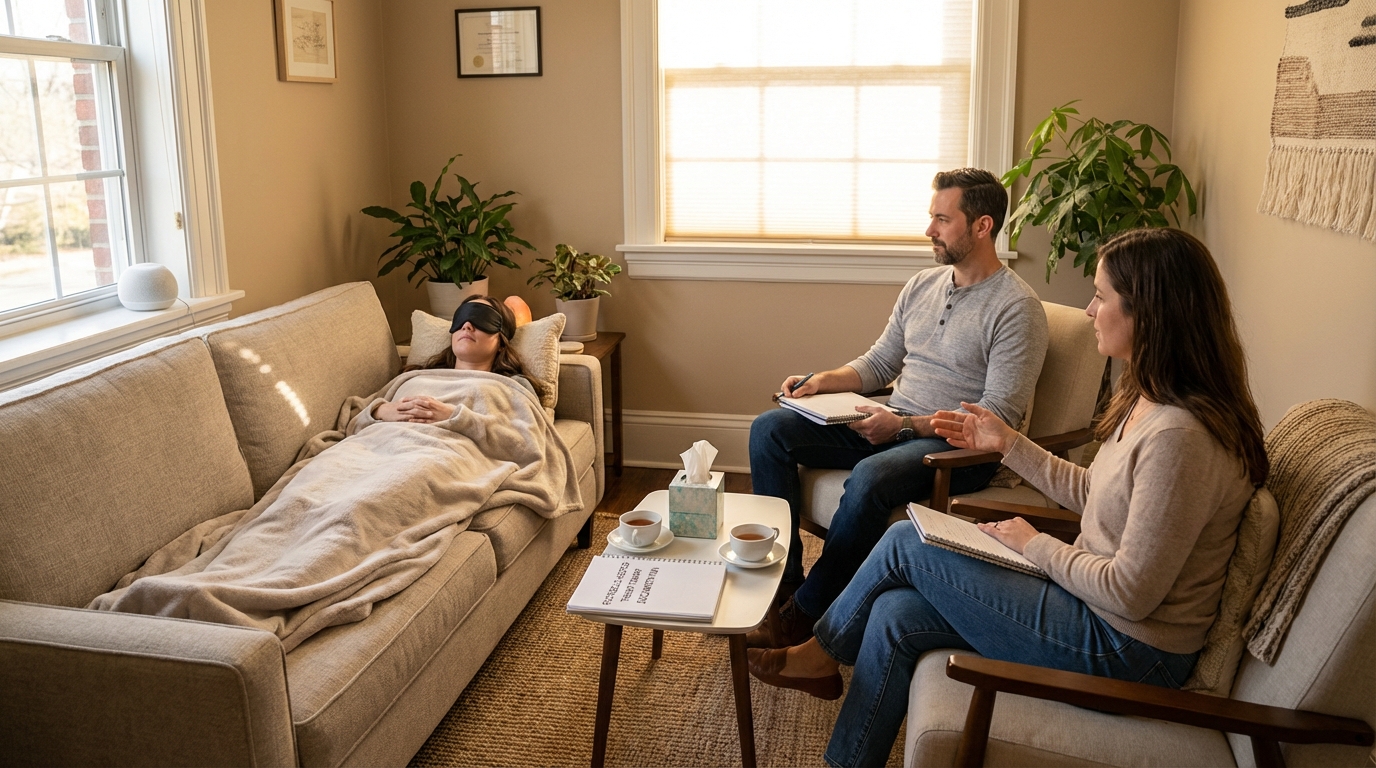
If you have a bipolar I diagnosis, virtually every licensed psilocybin service provider operating legally in Oregon, Colorado, or any other jurisdiction will decline to work with you. This is not gatekeeping for its own sake — it reflects genuine liability and safety concerns backed by the available evidence.
If you have a bipolar II diagnosis, the situation is less clear-cut. Some licensed facilitators in Oregon will work with bipolar II clients on a case-by-case basis, typically requiring:
- A letter from a treating psychiatrist documenting stability, current medications, and an assessment of risk
- An extended intake process covering full mood history
- A conservative dosing approach (typically 15–20mg psilocybin rather than the 25mg used in most depression trials)
- A plan for the weeks following the session to monitor mood closely
This is not universal. Many facilitators still apply a blanket exclusion to all bipolar diagnoses out of caution, and that is a defensible position.
Drug Interactions: A Separate Layer of Risk
People with bipolar disorder are frequently on complex medication regimens. Lithium, valproate, lamotrigine, quetiapine, aripiprazole — all of these interact with serotonergic systems in ways that add complexity to psilocybin risk assessment.
Lithium is the most significant concern. There are case reports of lithium combined with psilocybin resulting in seizure. The exact mechanism is unclear, but lithium's narrow therapeutic window and its interactions with serotonergic signaling make it a contraindication that most researchers treat as absolute. Anyone taking lithium should not combine it with psilocybin.
Valproate and lamotrigine may attenuate the effects of psilocybin through different mechanisms and are generally considered lower risk, though this should not be interpreted as safe without medical guidance.
Antipsychotics (particularly those with strong 5-HT2A antagonist activity, such as olanzapine and risperidone) will significantly blunt or completely block psilocybin's effects. This is sometimes used as a tool to terminate difficult experiences but should not be taken as evidence that the combination is otherwise benign.

What People with Bipolar Should Know Before Making Any Decision
- Psychiatric consultation is non-negotiable. If you have a bipolar diagnosis and are considering psilocybin, a conversation with a psychiatrist — not just a therapist or facilitator — is essential. The risk of a mood episode is not theoretical.
- Know your specific subtype. Bipolar I and bipolar II carry different evidence profiles. Do not accept blanket statements that apply one to the other.
- Mood stability matters. Even within bipolar II, pursuing psilocybin during a period of active cycling, high-stress life circumstances, or medication changes is categorically different from considering it during a period of extended stability.
- The legal pathway exists for a reason. Oregon's licensed services require screening precisely to catch contraindicated situations. If a licensed service accepts you, that reflects a considered clinical judgment. If they decline, that also reflects a considered judgment.
- Harm reduction if you proceed independently. If someone with a bipolar diagnosis chooses to use psilocybin outside any formal setting — which does happen — the harm-reduction basics matter more, not less: start with a very low dose, have a trusted sober sitter, have a plan for what to do if mood escalates in the weeks following, and tell your psychiatrist what you did.
The Research Gap and Where It's Headed
The honest answer is that psilocybin and bipolar disorder is an under-researched question. The exclusion criteria that define most trials were written conservatively, and appropriately so, but they have also meant that the population most likely to benefit from novel antidepressants — people with treatment-resistant bipolar depression — has largely been excluded from the data.
The Copenhagen pilot, Imperial's advocacy for dedicated studies, and growing patient advocacy from the bipolar community are pushing this in the right direction. Expect more data in the next two to three years specifically designed for bipolar II populations. Until then, the field is operating on incomplete information, and anyone affected should approach that uncertainty with corresponding caution and care.