
Psilocybin and the Immune System: Early Research
Most public discussion of psilocybin focuses on its psychiatric effects — depression, PTSD, addiction. But a separate line of research has begun exploring an unexpected direction: psilocybin's potential effects on the immune system. The evidence is early, largely preclinical, and not yet ready to guide clinical decisions — but it is scientifically interesting and worth understanding clearly.
The Serotonin-Immune Connection
Psilocybin's primary mechanism of action is agonism at the 5-HT2A receptor — a serotonin receptor subtype found abundantly in the brain's prefrontal cortex. But serotonin receptors, including 5-HT2A, are not exclusive to the brain. They are expressed on immune cells including T lymphocytes, macrophages, dendritic cells, and natural killer cells.
This means that compounds that activate serotonin receptors — including psilocybin and its active metabolite psilocin — have the potential to directly affect immune cell behavior. The question is whether this potential is realized at clinically relevant doses, and what the direction and magnitude of any immune effects are.
Anti-Inflammatory Research: The Nichols Lab
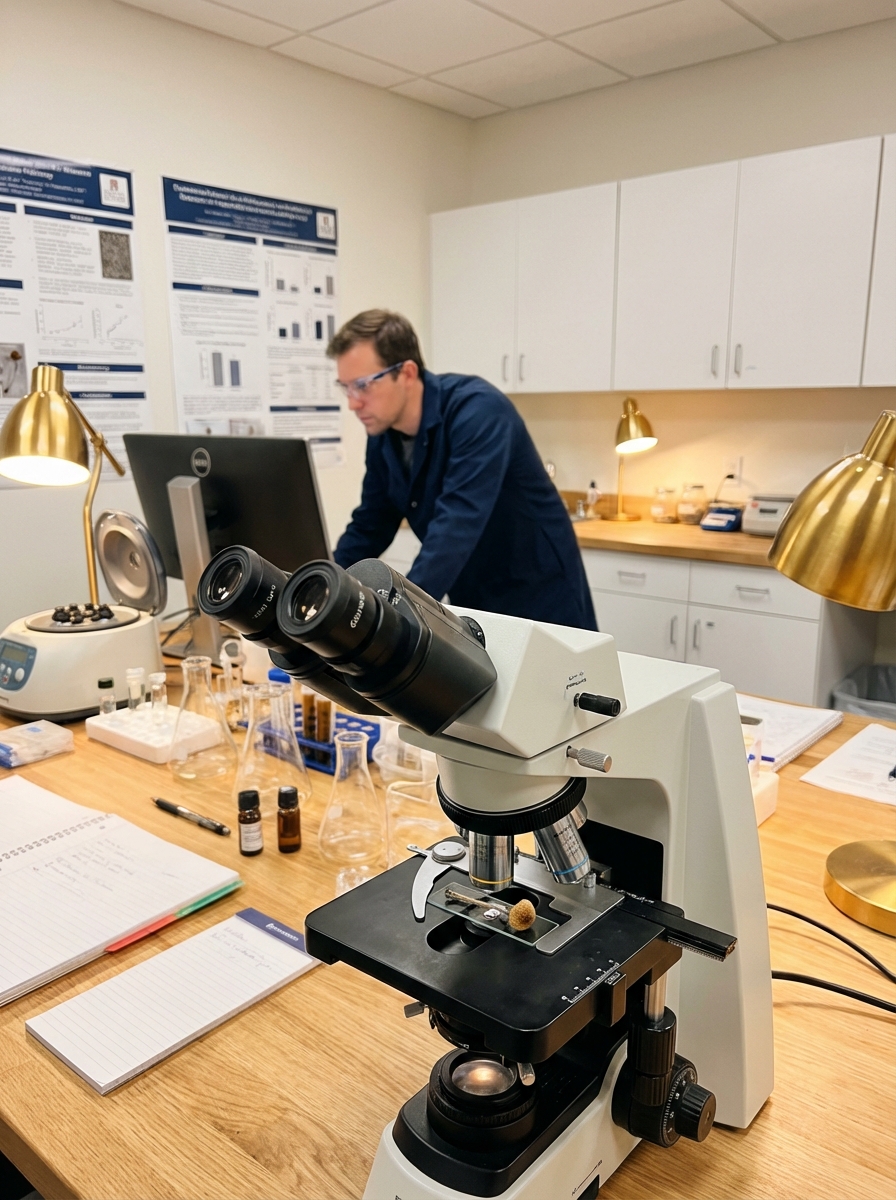
The most influential early work on psychedelics and immune function comes from Charles Nichols and colleagues at Louisiana State University. In a series of preclinical studies beginning in the 2000s, Nichols found that classic psychedelics — including LSD and psilocin — suppressed the production of pro-inflammatory cytokines in human cell cultures and animal models.
Specifically, these compounds reduced the production of TNF-alpha, a key inflammatory signaling molecule, when cells were stimulated with lipopolysaccharide (a bacterial component used to trigger inflammation in laboratory settings). The effect was mediated by 5-HT2A receptor activation and could be blocked by 5-HT2A antagonists.
This is a significant finding for a fundamental reason: neuroinflammation is increasingly implicated in depression, neurodegenerative diseases, and chronic pain conditions. If psilocybin has anti-inflammatory properties, this could represent a mechanism of action that complements — or operates independently from — its effects on neural connectivity and plasticity.
Implications for Depression Research
The relationship between inflammation and depression is an active area of research. Elevated inflammatory markers (particularly IL-6, TNF-alpha, and CRP) are found in a subset of patients with treatment-resistant depression. Whether inflammation causes depression, results from it, or is an epiphenomenon of related stress pathways is not fully established — but the correlation is robust.
If psilocybin has genuine anti-inflammatory effects at human doses, this could help explain why some patients with treatment-resistant depression respond to it, particularly those with elevated inflammatory markers. A 2023 study from King's College London examined inflammatory markers in psilocybin therapy responders vs. non-responders and found preliminary evidence of greater inflammation reduction in responders, though the sample was small and the finding requires replication.
This is a hypothesis, not an established mechanism. It suggests a testable prediction: psilocybin therapy might show stronger antidepressant effects in patients with elevated baseline inflammation. Future clinical trials should pre-register inflammatory markers as outcome measures to test this directly.

Psychedelics and Autoimmune Conditions
A small number of case reports and anecdotal accounts describe improvements in autoimmune symptoms following psilocybin use — including Crohn's disease, psoriasis, and fibromyalgia. These are not clinical evidence. Case reports and anecdotes are subject to profound confounders: placebo effects, natural disease fluctuation, concurrent lifestyle changes, and reporting bias.
However, they are consistent with the preclinical anti-inflammatory findings and may represent a population worth studying systematically. Controlled trials in inflammatory conditions have not yet been conducted. This remains firmly in the hypothesis-generating stage.
The Serotonin-Gut Connection
A related area of emerging interest is the gut-brain axis. Approximately 90% of the body's serotonin is produced in the gut, where it regulates intestinal motility and interacts with enteric nervous system cells and immune tissue. The gut contains abundant 5-HT receptors including 5-HT2A.
Several researchers have hypothesized that psilocybin might affect gut microbiome composition or gut immune function through enteric serotonin signaling. This remains largely speculative. One mouse study found altered gut microbiome composition after psilocybin administration, but whether this effect occurs in humans at therapeutic doses is unknown.
The gut-brain axis is genuinely important in depression, anxiety, and inflammatory conditions. Whether psilocybin's potential immune effects operate partly through this pathway is an open question.
Important Cautions
Several significant caveats apply to this entire research area:
Most evidence is preclinical. Cell culture and animal studies establish that effects can occur. They do not establish that they do occur at doses used in human therapy, or that the effects are meaningful to clinical outcomes.
Directionality is uncertain. Acute and chronic psilocybin exposure may have different immune effects. A compound that reduces inflammation acutely could have different effects with repeated use — a question particularly relevant for microdosing regimens.
5-HT2A activation can also promote inflammation. The serotonin system's relationship to immunity is not uniformly anti-inflammatory. Context, cell type, and co-activation of other receptors all affect outcomes. Simplistic "psilocybin reduces inflammation" claims outpace the evidence.
No human clinical trials have been designed around immune endpoints. Until controlled trials measure immune function as a primary outcome in human psilocybin studies, the clinical relevance of preclinical findings remains speculative.
What to Watch For
The next few years of psilocybin research will likely include studies measuring inflammatory markers in clinical trial participants, potentially stratifying participants by inflammatory status, and examining whether responders show differential immune changes. Researchers at Yale, Johns Hopkins, and Imperial College have all expressed interest in this direction.
The immune angle is not the primary story of psilocybin research — that remains psychiatric and psychological. But it may turn out to be an important part of the full picture, particularly for conditions where inflammation and mental health intersect.