
The History of Sacred Mushroom Use in Mesoamerica
Long before psilocybin entered clinical trials or Western pharmacology, mushrooms containing psilocybin were central to healing and ceremonial traditions across Mesoamerica. This use spans at least two millennia, survived violent colonial suppression, and continues in living indigenous communities today. Understanding this history is essential context for anyone engaging with psilocybin — whether in a clinical, ceremonial, or personal context.
Archaeological Evidence
The earliest physical evidence of ritual mushroom use in Mesoamerica comes from archaeology. Mushroom stones — carved stone sculptures representing humanoid figures with mushroom caps — have been found throughout Guatemala, Mexico, and Honduras, dating to roughly 1000 BCE to 900 CE. The concentration of these objects in highland Mayan regions suggests sustained ceremonial use over many centuries.
Aztec and Mayan codices — illustrated manuscripts documenting ritual, cosmology, and daily life — include depictions of mushroom consumption in ceremonial contexts. The Florentine Codex, compiled by Franciscan friar Bernardino de Sahagun in the 16th century, contains some of the most detailed early Spanish documentation of mushroom use among the Aztec. De Sahagun described the mushrooms as causing visions, laughter, and spiritual revelation, and noted their use at important feasts and ceremonies.
Teonanacatl: The Flesh of the Gods
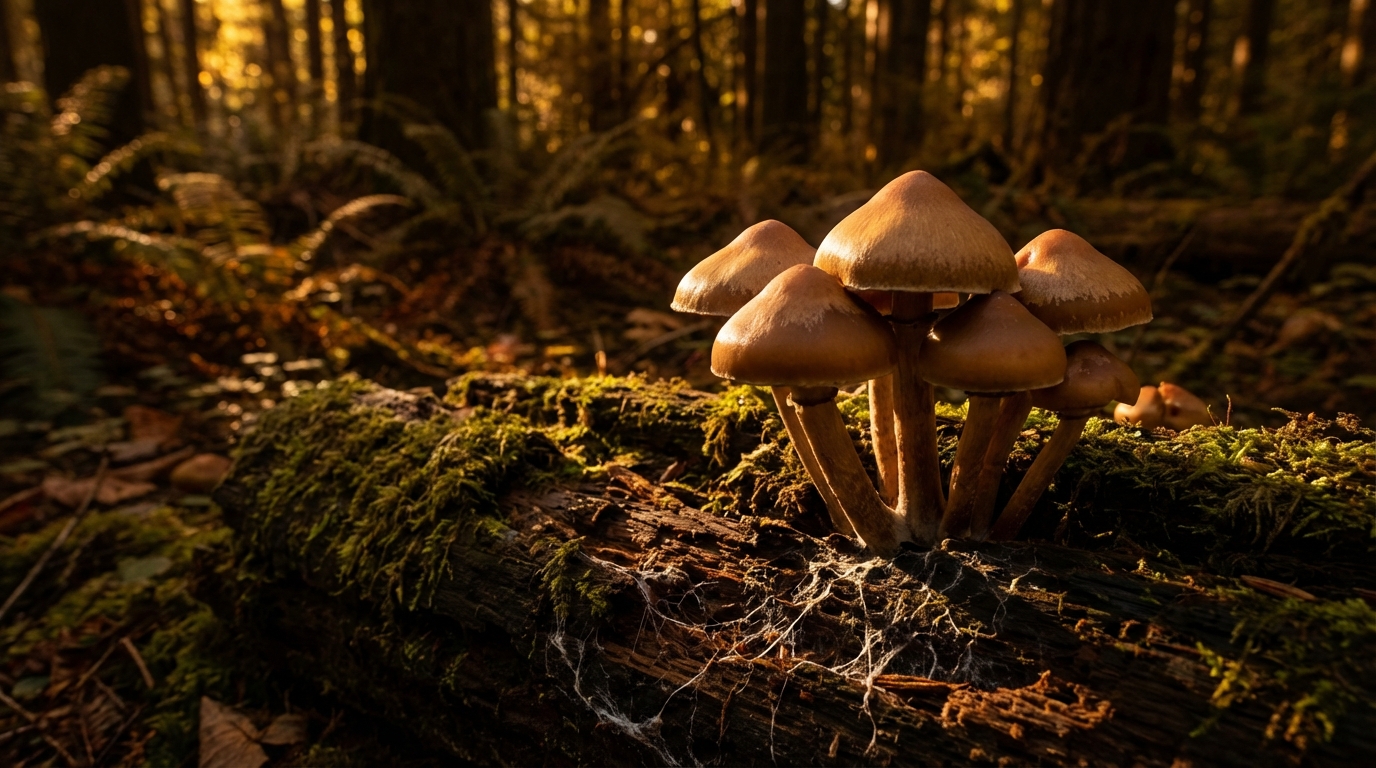
The Aztec term for the ceremonial mushrooms was teonanacatl — frequently translated as "flesh of the gods" or "divine mushroom," though the precise etymology is debated. The term appears in multiple Spanish colonial sources, always in contexts describing ritual ingestion for visionary and divinatory purposes.
Aztec ceremonial mushroom use occurred at specific festivals and was not casual. The mushrooms were consumed with cacao or honey, and the experiences were interpreted through the cosmological framework of Aztec religion. Priests and diviners used the mushrooms to communicate with deities, diagnose illness, and identify lost objects or people.
Among the Mazatec people of what is now Oaxaca, mushrooms were called nti si tho in Mazatec — "little ones who spring forth." The Mazatec tradition represents the most continuous and well-documented living lineage of ceremonial mushroom use.
Colonial Suppression
Spanish colonizers arrived in Mesoamerica in the early 16th century and moved aggressively to suppress indigenous religious practices, including mushroom ceremonies. The Spanish Inquisition classified mushroom rituals as devil worship and idolatry. Practitioners faced imprisonment, torture, and execution.
This suppression was partially effective in eliminating mushroom ceremonies in urban centers and among populations under direct colonial control. However, in remote regions — particularly the mountains of Oaxaca — the ceremonies survived underground. Indigenous communities maintained the practice while concealing it from Spanish authorities, adapting the ceremonial vocabulary to superficially align with Catholic saints and imagery.
The result was a syncretic tradition that blended Mazatec cosmology with Catholic elements — a survival strategy that is still visible in how some contemporary curanderos reference Catholic saints and prayer within mushroom ceremonies.
Maria Sabina and the Western Encounter
The most consequential figure in the modern history of Mesoamerican mushroom use was Maria Sabina (1894-1985), a Mazatec curandera (healer) from Huautla de Jimenez, Oaxaca. Sabina was a practitioner of the velada — an all-night healing ceremony in which mushrooms called nti si tho were ingested by the curandera and sometimes the patient, to diagnose and treat illness.
In 1955, R. Gordon Wasson — a New York banker and amateur mycologist — traveled to Huautla with his wife Valentina and participated in a velada conducted by Sabina. He was the first documented outsider to participate in the ceremony. In 1957, he published a first-person account in Life magazine titled "Seeking the Magic Mushroom," which became one of the most widely read magazine articles of the decade and introduced psilocybin mushrooms to Western popular culture.
The consequences for Maria Sabina and her community were severe. Thousands of Western seekers descended on Huautla in the years following Wasson's article. The sacred mushrooms became a tourist attraction. Local authorities, viewing the influx as destabilizing, burned down Sabina's home. She faced criticism from her own community for allowing outsiders access to the ceremonies.
Sabina herself, in interviews late in her life, expressed regret. She said the mushrooms had lost their power — that the sacred had been profaned. The exploitation of her cultural heritage for Western spiritual tourism, with no benefit to her community and significant harm, is a model that continues to be replicated in contemporary psychedelic tourism.
The Living Tradition
Mazatec mushroom ceremonies continue today. Some curanderos practice traditional veladas with Mazatec patients in the context of healing specific physical and psychological conditions. The tradition is not a museum piece — it is a living practice within living communities.
It is also under ongoing pressure. Psychedelic tourism has made Huautla de Jimenez a destination. Some traditional practitioners have accommodated outside visitors; others have refused. The lines between authentic ceremonial healing and tourist-oriented ceremony are not always clear from the outside.
Several indigenous scholars and practitioners have articulated concerns about appropriation: Western people extracting ceremonial practices, stripping them of their cosmological context, and repackaging them as wellness products or "healing retreats" without attribution, compensation, or respect for the communities from which they came.
What This History Asks of Us
Psilocybin's current renaissance builds on a long foundation. The compound was isolated, characterized, and introduced to Western research because of a tradition sustained for two millennia by Mesoamerican indigenous communities — communities that paid a high cost to maintain it under colonial suppression.
Engaging with psilocybin thoughtfully involves acknowledging this history. It means:
- Recognizing that the knowledge underlying modern research comes from indigenous sources
- Being cautious about appropriating ceremonial forms and vocabulary without deep context
- Supporting organizations that advocate for indigenous sovereignty over traditional plant medicines
- Skepticism toward retreat offerings that claim indigenous authenticity without demonstrated relationships with actual indigenous practitioners
The Mesoamerican tradition is not merely backstory. It is the origin of what Western science is now rediscovering — and living indigenous communities are still its stewards.