

First: decide whether this is psychological distress or a medical emergency
A difficult psychedelic experience can be frightening without being medically dangerous. But some situations need urgent medical care. Triage means sorting those apart quickly and calmly.
This guide is educational harm reduction for sitters, friends, partners, facilitators, and people preparing for a legal supervised session. It is not emergency medical advice. If someone is in immediate danger, call emergency services. If someone is suicidal or in mental health crisis in the United States, call or text 988.
Use this with LearnShrooms' crisis resources, set and setting guide, trip sitter guide, and integration guide.
Call emergency services now if any of these are present
- seizure
- chest pain
- trouble breathing
- loss of consciousness
- severe injury
- repeated vomiting with dehydration
- very high fever
- severe confusion that does not improve as effects wear down
- dangerous agitation or violence
- suicidal intent with means
- psychosis or mania that continues after the acute intoxication window
- suspected adulterated product or unknown substance
- child exposure
- pregnancy complication
Do not try to peer-support your way through a medical emergency.
If the person is medically stable but terrified
If the person is breathing normally, physically safe, not injured, and not an immediate danger to self or others, the first job is to reduce threat.
Simple steps:
- Lower stimulation.
- Remove crowds.
- Speak slowly.
- Use the person's name.
- Remind them that they took a substance and the peak will pass.
- Offer water, but do not force it.
- Keep them away from balconies, streets, weapons, cars, kitchens, and open water.
- Do not argue with the content of the experience.
- Do not shame them for being scared.
- Keep one calm person as the main support voice.
The goal is not to make the experience pleasant. The goal is to help the person stay safe while the intensity moves.
The sitter's script
Use short, grounded phrases:
- "You are safe right now."
- "I am here with you."
- "This is intense, and it will change."
- "You do not have to figure it out right now."
- "Let's breathe together."
- "Can we move to a quieter room?"
- "Would a blanket help?"
- "You can keep your eyes open or closed."
Avoid:
- "Calm down."
- "You are fine."
- "Stop thinking about it."
- "You are ruining this."
- "You asked for this."
- "Let me explain what it means."
In a difficult psychedelic state, meaning-making can wait.

When to call peer support
Fireside Project offers psychedelic peer support by phone and text in the United States. Peer support can help with fear, confusion, integration, and non-emergency support. It is not a substitute for emergency care.
Call peer support when the person is medically stable but needs calm, experienced support, or when the sitter needs coaching. Call emergency services when there is medical danger, violence, suicidal intent with means, or inability to keep the person safe.
If paranoia or panic is rising
Reduce novelty. Fewer people, fewer lights, less music, less explanation. Ask before touching. Do not block the doorway unless safety requires it. Offer choices, but not too many:
"Do you want to sit here or on the couch?"
"Would you like music off or softer?"
"Can I sit near you, or would you like more space?"
Agency helps. Debate does not.

If trauma material appears
Trauma memories, body sensations, shame, grief, or rage can surface. Do not push for details. Do not ask leading questions. Do not say the experience is "healing" while the person is overwhelmed. Focus on orientation:
- name
- place
- date
- body position
- breath
- present safety
- choice
After the acute experience, integration with a trauma-informed therapist may be appropriate.
The next 24 hours
After a difficult experience:
- do not drive until fully sober and rested
- eat simple food
- hydrate
- sleep if possible
- avoid making major life decisions
- avoid posting publicly while still dysregulated
- check in with a trusted person
- seek professional support if fear, insomnia, suicidality, paranoia, or mania persists
If the person used an unknown edible, high dose, Amanita product, or mixed substances, keep the packaging and consider Poison Control or medical care.
What legal providers should have prepared
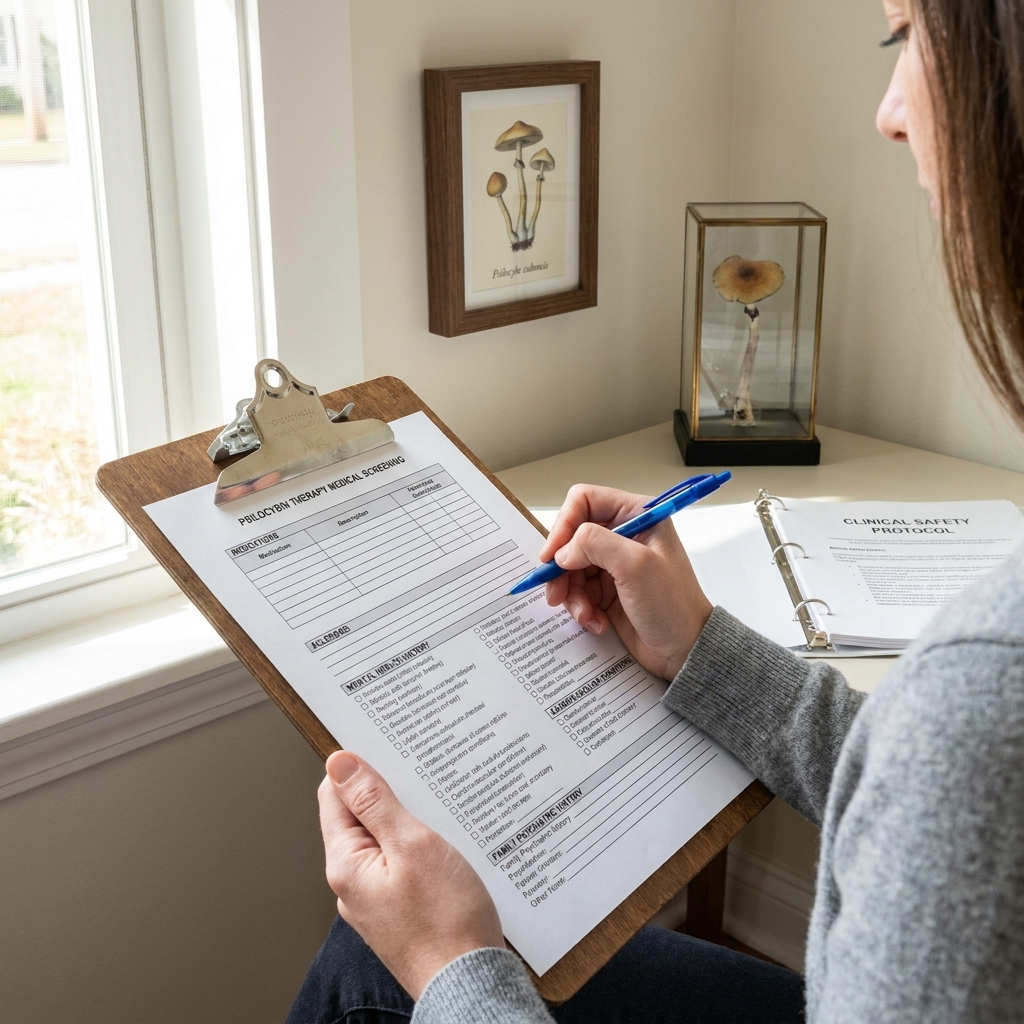
A legal or professional provider should have:
- medical screening
- medication review
- consent process
- emergency protocol
- transportation plan
- support plan
- incident documentation
- aftercare and integration referral options
- criteria for declining or postponing service
If a provider cannot explain the difficult-experience plan before the session, that is a provider-verification problem.
Bottom line
A difficult psychedelic experience is not automatically a disaster, but it deserves respect. The best triage is simple: protect the body, reduce threat, avoid arguing with the experience, use peer support when appropriate, and call emergency services when safety is beyond peer support.