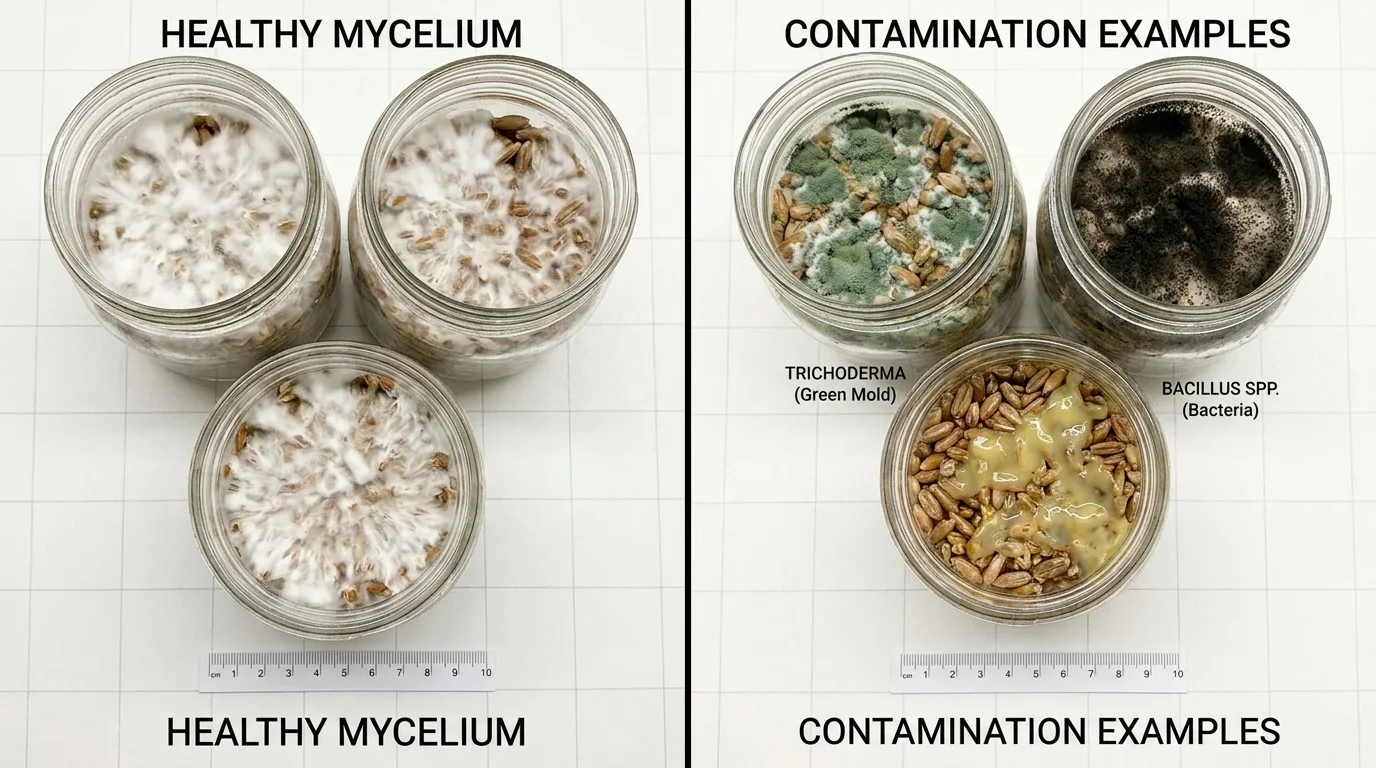
Contamination Guide
Everything you need to know about Contamination Guide — from materials to first harvest.
What You'll Need
- See full supply list in guide below.
Find grow supplies at vendors in our Directory.
Step-by-Step Process
Contamination Guide: Identification, Prevention, and Response
Contamination is the most common cause of failed mushroom grows. Every cultivator experiences it — the question is whether you can identify it quickly, respond correctly, and prevent it from recurring. This guide covers the organisms you are most likely to encounter, how to identify them, what to do when you find them, and how to systematically reduce contamination rates in your grow operation.
Fast Triage
When something looks wrong, slow down and use a short decision path:
- Green, black, pink, sour, or slimy: Seal it, remove it from the work area, and discard it safely.
- Unclear white or gray growth: Photograph it, isolate it, and compare against known healthy mycelium before handling again.
- Any strong odor: Stop opening containers indoors. Odor is a practical warning sign even before color is obvious.
- Repeat failures: Audit sterile work, substrate hydration, and storage conditions before starting another batch.
This guidance is written for lawful edible and educational mycology. It is not a reason to keep working with restricted species where cultivation is illegal.
Why Contamination Happens
Psilocybe cubensis mycelium and the molds, bacteria, and yeasts that compete with it all want the same things: nutrients, moisture, and warmth. Your substrate provides all three. The goal of sterile and clean technique is to give cubensis mycelium a head start — establishing throughout the substrate before competing organisms can gain a foothold.
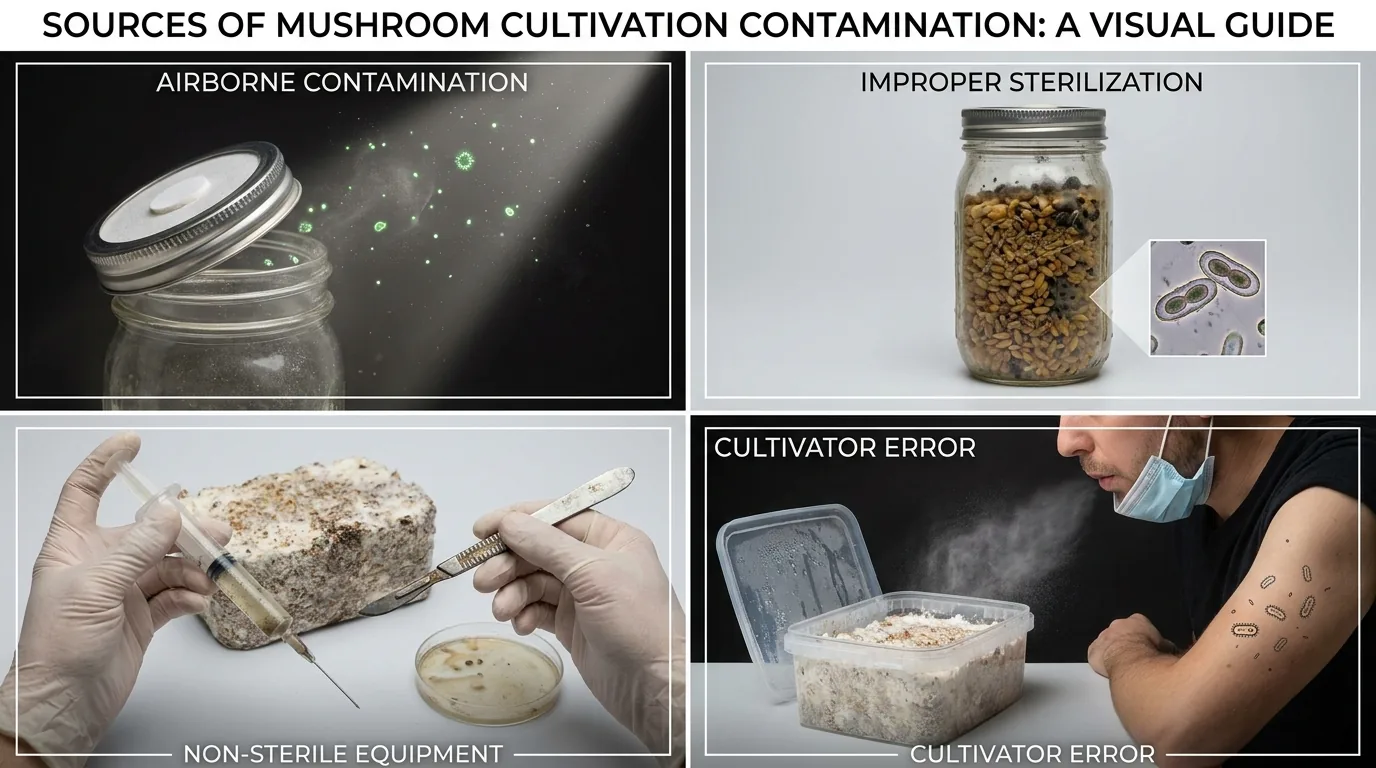
Contamination sources fall into four categories:
Airborne: Mold spores are everywhere in ambient air. Every time you open a jar, plate, or tub, airborne spores land on your substrate. A still air box or flow hood minimizes this exposure.
Substrate-borne: Insufficiently sterilized or pasteurized substrate harbors surviving organisms. Bacterial endospores (Bacillus species) survive pasteurization and can establish if colonization is slow. Proper preparation eliminates most threats.
Equipment and surface contact: Non-sterile needles, scalpels, gloves, and work surfaces introduce contaminants directly. Flame sterilization and isopropyl alcohol wipe-downs address these.
The cultivator: Your hands, breath, and skin shed bacteria and spores constantly. Gloves, masks, and working quickly reduce this source.
Common Contaminants
Trichoderma (Green Mold)
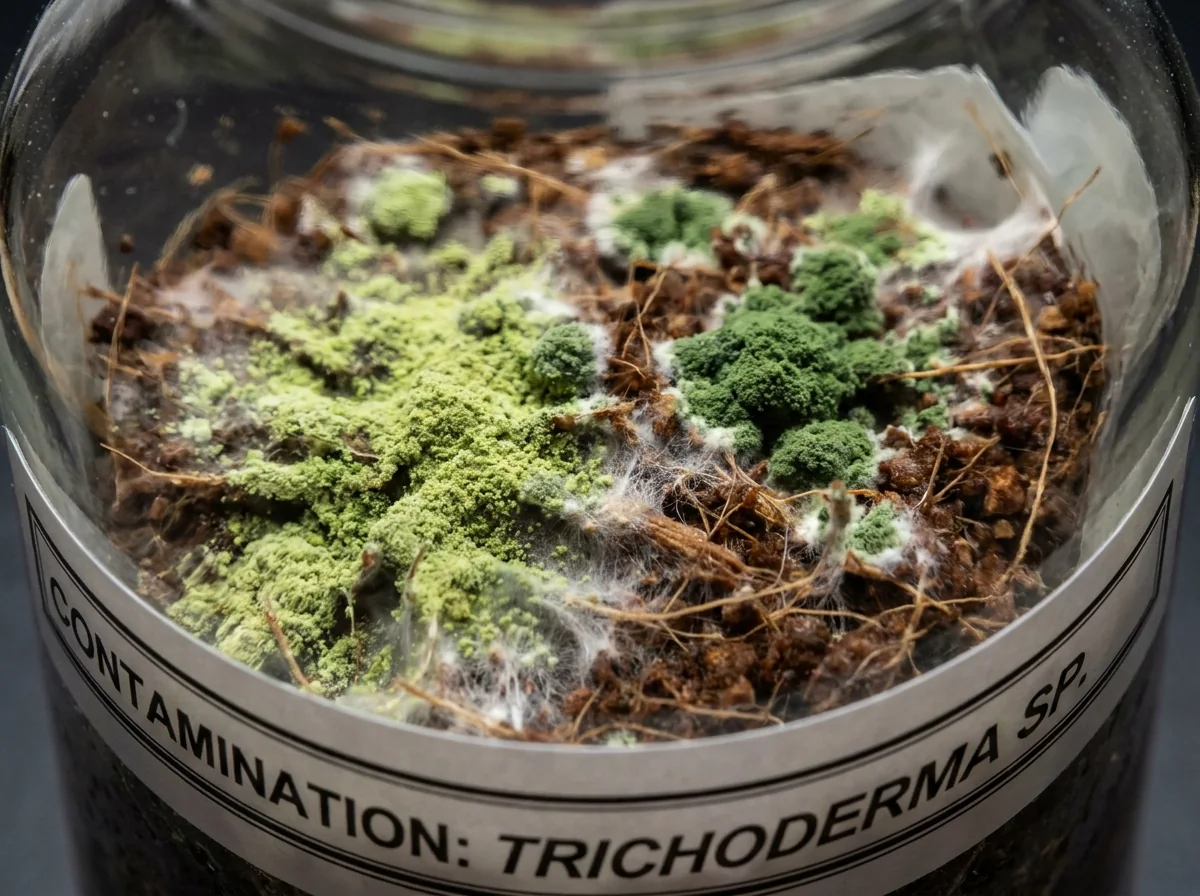
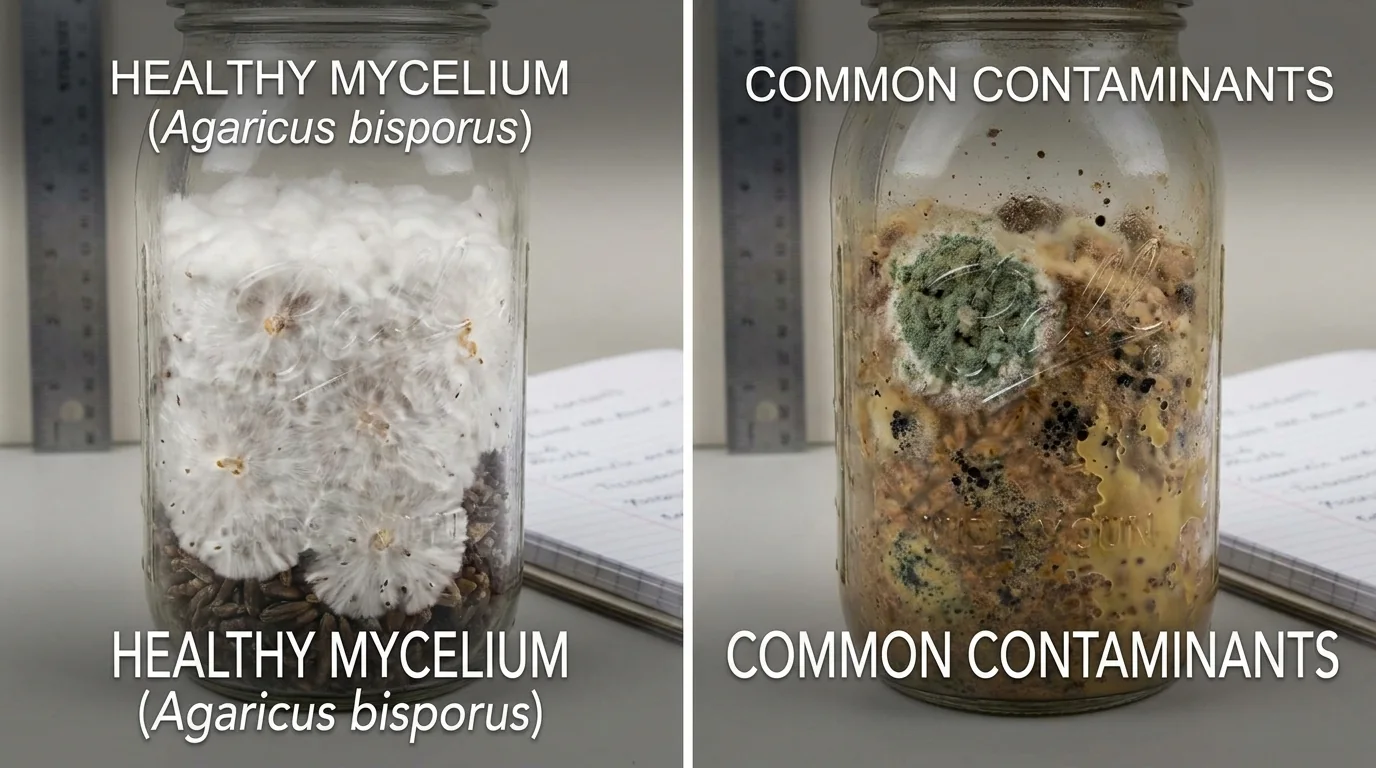
Appearance: Bright green to dark green powdery patches. Starts as white mycelium that quickly develops green spores — you may see a white patch that "turns green" over 2–3 days.
Where it appears: On substrate surface, inside grain jars, on agar plates. Trichoderma is the most aggressive cubensis competitor and the most common mold contaminant in grain and bulk substrate.
Why it's serious: Trichoderma produces lytic enzymes that actively attack and kill cubensis mycelium. It is not a passive competitor — it destroys your culture. A Trichoderma-contaminated jar or tub cannot be saved once green spores appear.
Response: Remove the contaminated vessel from your grow space before opening it. Seal it in a plastic bag, then dispose of. Do not open contaminated jars inside your grow space — the spores will spread and contaminate future grows.
Prevention: The primary prevention is sufficient spawn ratio (in bulk grows) and colonization speed (in grain jars). Trichoderma cannot establish if cubensis mycelium fully colonizes the substrate first. Secondary prevention: verify field capacity — over-wet substrate favors Trichoderma. Tertiary: maintain clean work surfaces and equipment.
Cobweb Mold (Hypomyces)
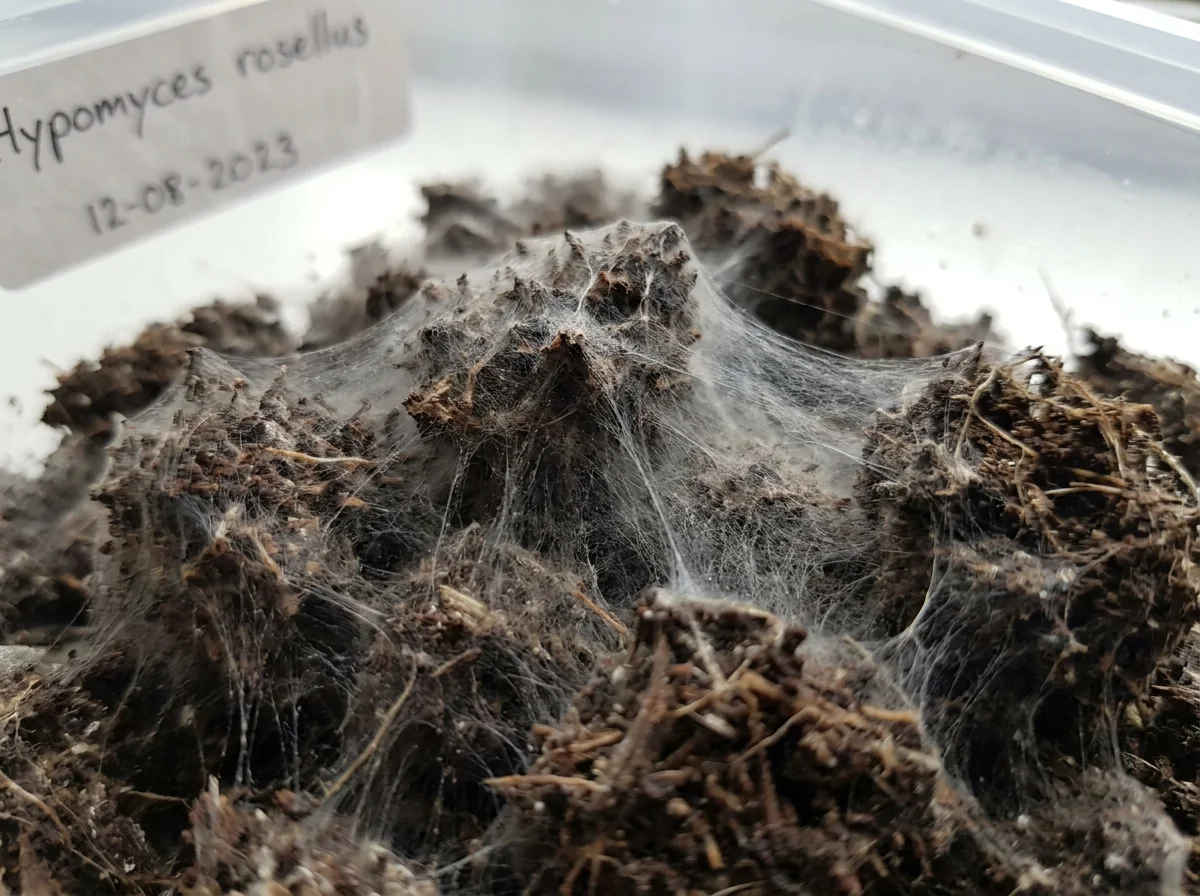
Appearance: Thin, grey or white web-like growth on substrate surface or fruiting body surfaces. Often described as looking like a spider web draped over the substrate. Unlike Trichoderma, cobweb mold is diffuse and wispy rather than dense and powdery.
Is it contamination? Cobweb mold is often confused with mycelium, but mycelium grows from the substrate upward while cobweb mold typically drapes across the surface. The key distinction: cubensis mycelium will not retract when misted with water; cobweb mold often partially retracts or collapses.
Response: Light cobweb mold on a fruiting substrate is often manageable. Mist the affected area with clean water and fan with fresh air — cobweb mold is sensitive to high humidity and airflow in a way that cubensis mycelium is not. Increase your FAE (fresh air exchange) frequency. If the cobweb mold is extensive or spreading rapidly, the substrate may be compromised.
Prevention: Adequate FAE. Cobweb mold thrives in stagnant, high-CO₂ environments. Increasing fanning frequency resolves most cobweb mold outbreaks.
Aspergillus (Black Mold / Yellow-Green Mold)
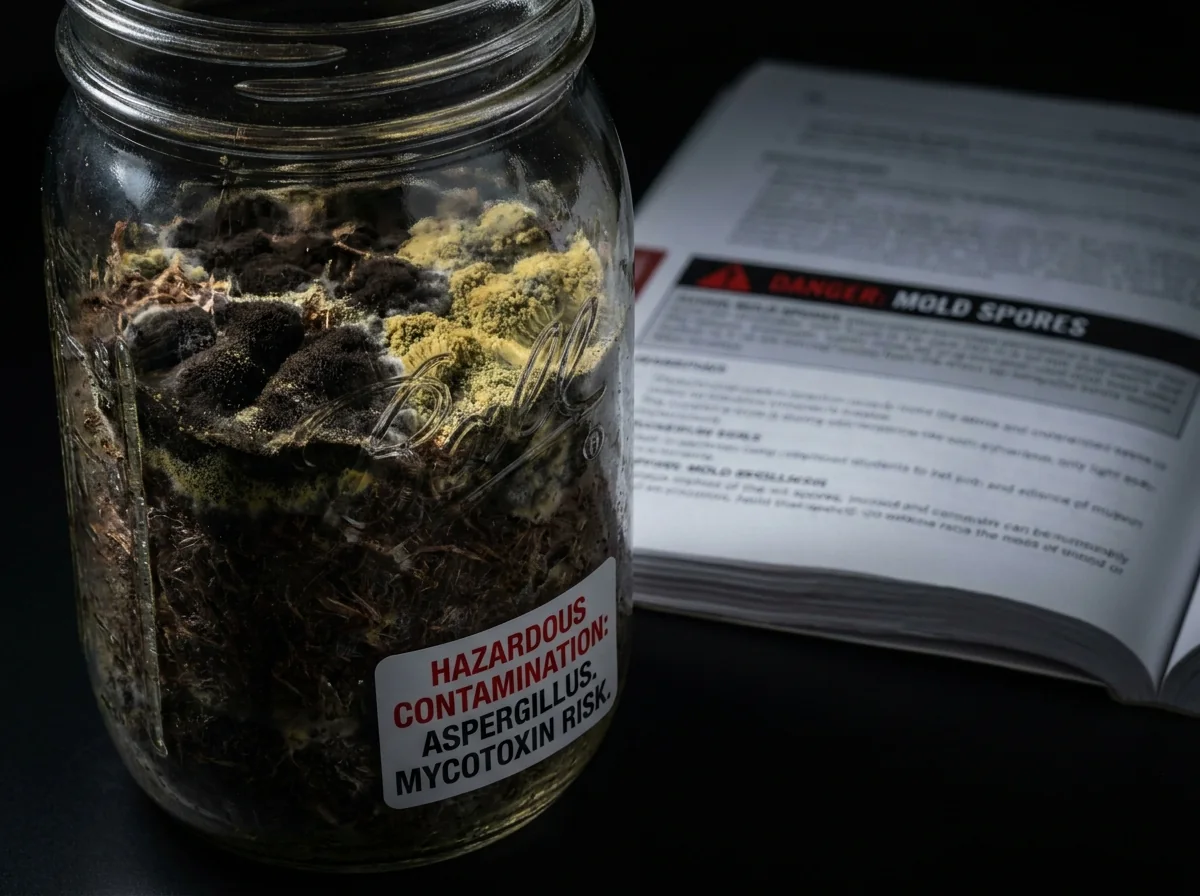
Appearance: Black, yellow-green, or brown powdery patches. Various Aspergillus species appear differently but all produce a powdery, spore-heavy appearance. Black Aspergillus is the most immediately recognizable.
Why it matters: Some Aspergillus species produce mycotoxins (aflatoxins) that are hazardous to human health. Do not handle contaminated substrate without gloves and a mask.
Response: Seal and dispose of immediately, same as Trichoderma. Do not attempt to salvage.
Prevention: Same as Trichoderma — substrate preparation quality, proper sterilization, and adequate inoculant density.
Penicillium (Blue-Green Mold)
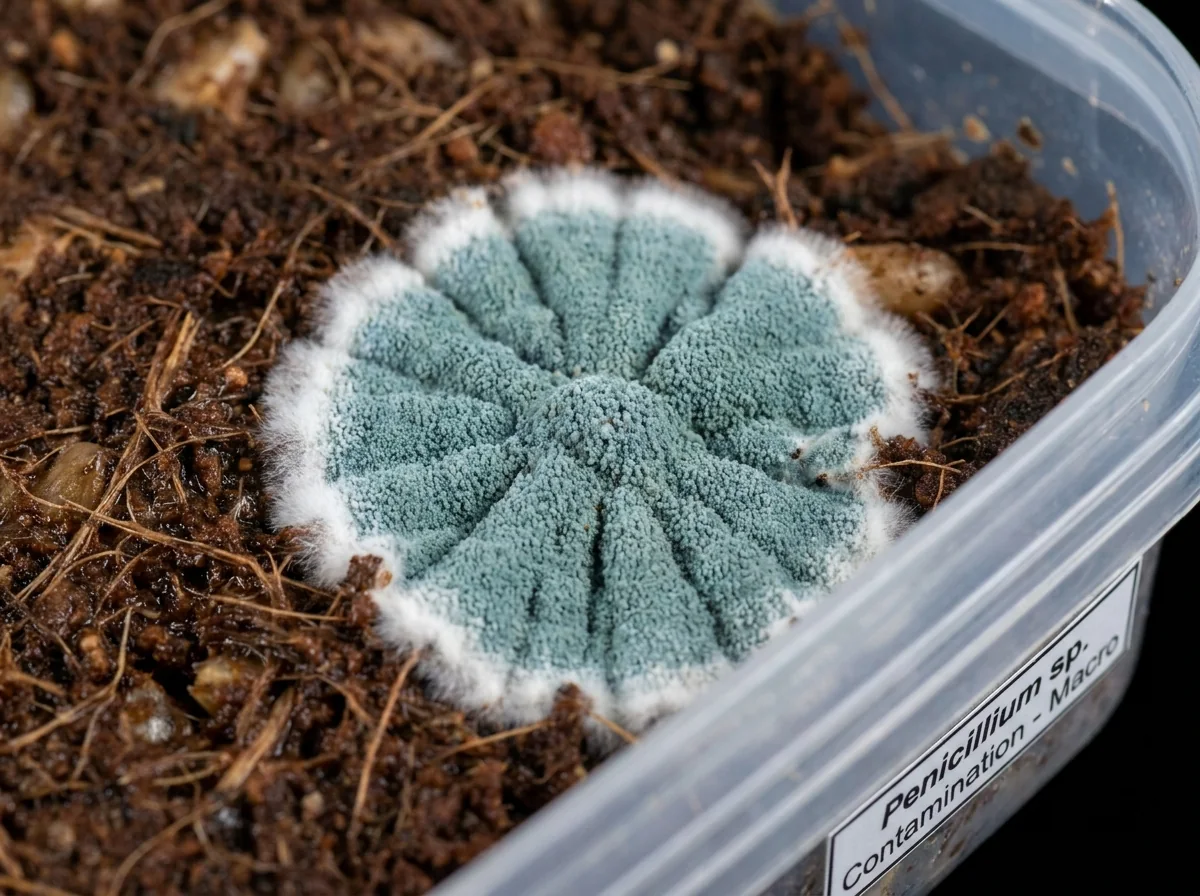
Appearance: Blue-green powdery growth; sometimes with a white fringe at the advancing edge. The blue-green color is distinctive and makes Penicillium easier to identify than some molds.
Response: Seal and dispose of. Penicillium produces penicillin and related compounds that inhibit cubensis mycelium growth — a contaminated jar or tub will not recover.
Prevention: Sterilization quality and clean technique.
Bacterial Contamination
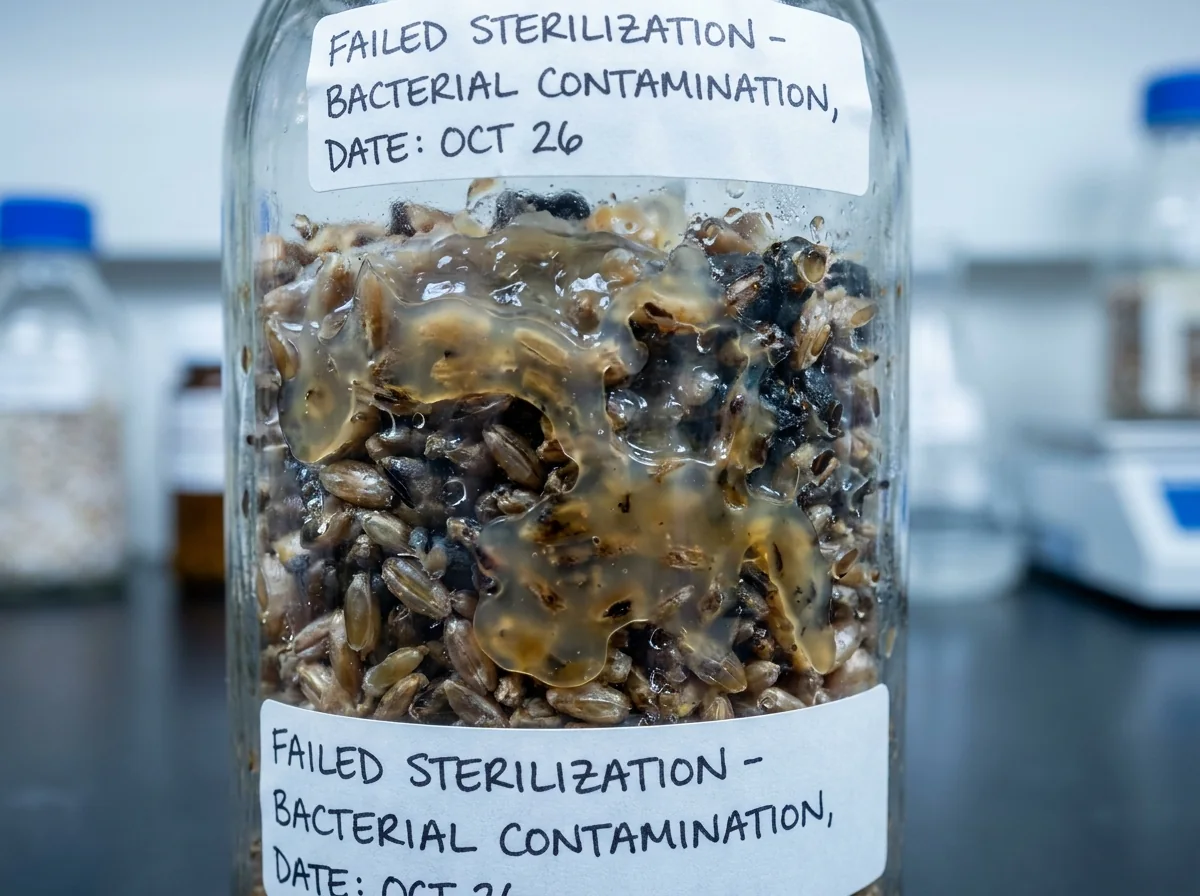
Appearance: Wet, slimy, translucent patches on substrate or grain. Often has a distinctive sour or rotten smell. Affected areas have a "melted" appearance rather than the fuzzy texture of mold.
Where it appears: Most common in grain spawn that was over-hydrated before sterilization, or in bulk substrate that was not properly pasteurized. Also appears in jars with cracked lids or failed seals.
Common organisms: Bacillus species (endospore-formers that can survive pasteurization), Pseudomonas, and other gram-negative bacteria. Bacillus contamination is particularly common because Bacillus endospores survive pasteurization — they establish when the grain or substrate is insufficiently sterilized or when colonization is slow.
Response: Seal and dispose of. Bacterial contamination spreads rapidly and produces metabolites toxic to cubensis mycelium.
Prevention for grain: Correct hydration before sterilization is critical. Over-wet grain that clumps in jars is prime bacterial contamination territory. Proper sterilization time (90 minutes at 15 PSI for grain, not the 60 minutes adequate for BRF) addresses endospore concerns. Inoculate promptly after jars have cooled — jars that sit for days after sterilization have more risk.
Yeast
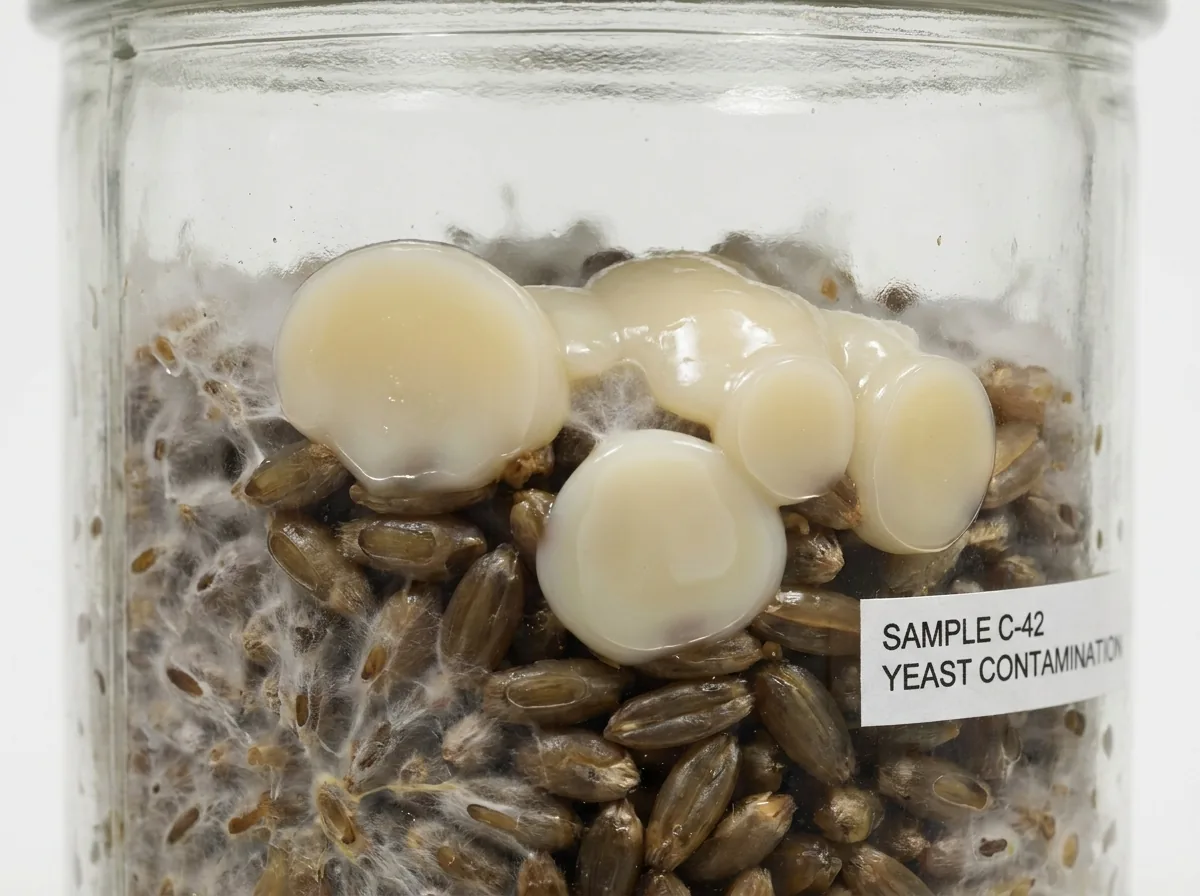
Appearance: White, cream, or pale yellow smooth patches that look wet and almost polished — no fuzzy texture, no mycelial threads. Often appears at inoculation points.
Distinguishing from mycelium: Mycelium has visible thread-like structure under magnification and visible fuzzy texture to the naked eye. Yeast colonies are smooth and featureless.
Source: Yeast contamination often comes from spore syringes prepared in non-sterile conditions, or from the cultivator's skin.
Response: Contaminated jar or plate — seal and dispose of.
Prevention: Source high-quality spore syringes from reputable vendors who test for contamination. Flame-sterilize needles and maintain clean technique.
Green Blotches vs. Yellow Metabolites
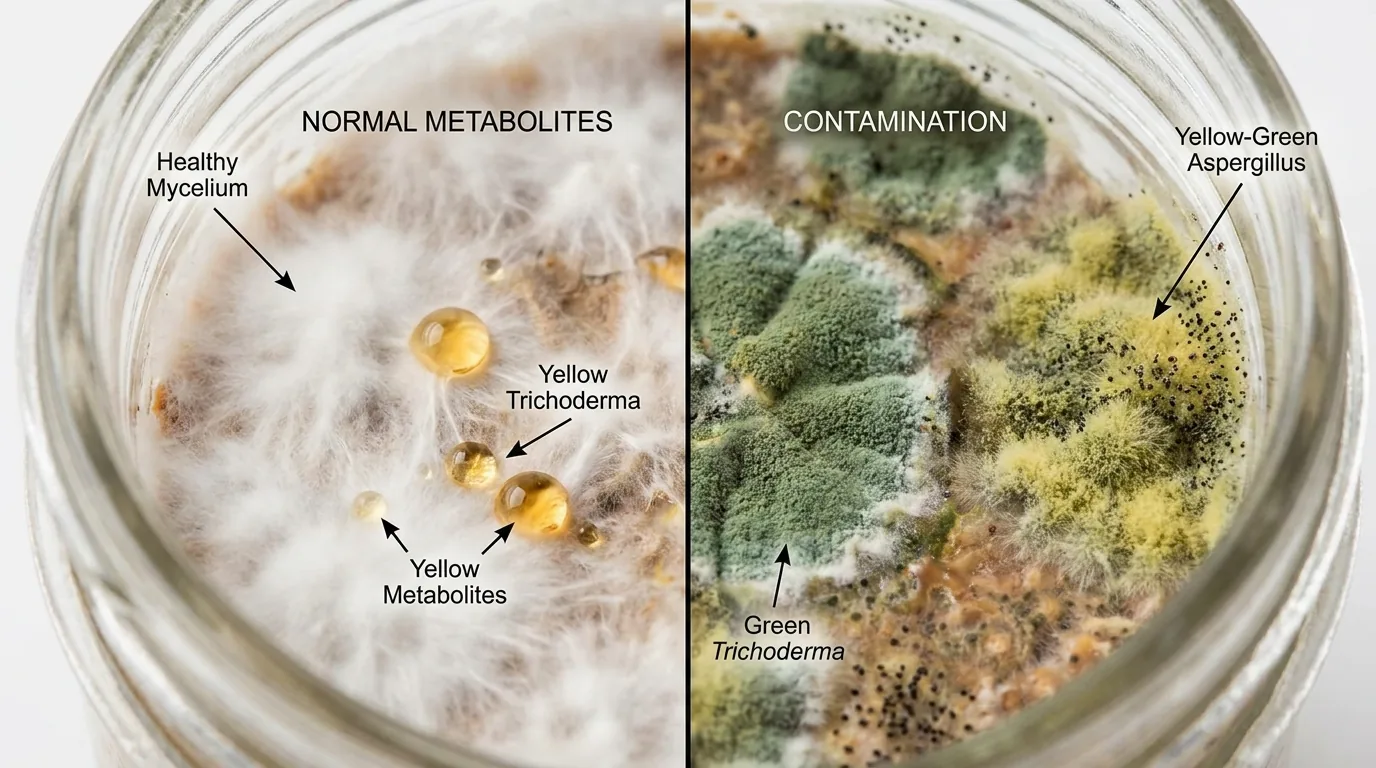
A common point of confusion for new growers:
Yellow metabolites: Cubensis mycelium secretes yellow-tinged liquid as a metabolic byproduct. Small amounts of yellowing of substrate or liquid accumulation in jars is normal and is not contamination. Heavy yellowing can indicate a stressed culture but is not itself contamination.
Green patches: Always contamination. No shade of green is normal for cubensis mycelium. Bright green = Trichoderma. Yellow-green = possibly Aspergillus or Penicillium. If you see green, act immediately.
Contamination Rate Benchmarks
New growers with good but not perfect technique typically experience contamination rates of 10–30% of jars or tubs. Experienced growers with refined technique and a flow hood routinely achieve contamination rates below 5%. Understanding your baseline contamination rate helps identify when something in your process has changed.
If contamination rates suddenly increase:
- Check your spore syringe — the current syringe may be contaminated
- Check your pressure cooker seals and gauge — inadequate pressure means inadequate sterilization
- Check your water source — municipal water with high chloramine levels can be an issue; use filtered water
- Review your technique for changes — new workspace, different humidity, seasonal air quality differences
Contamination Response Protocol
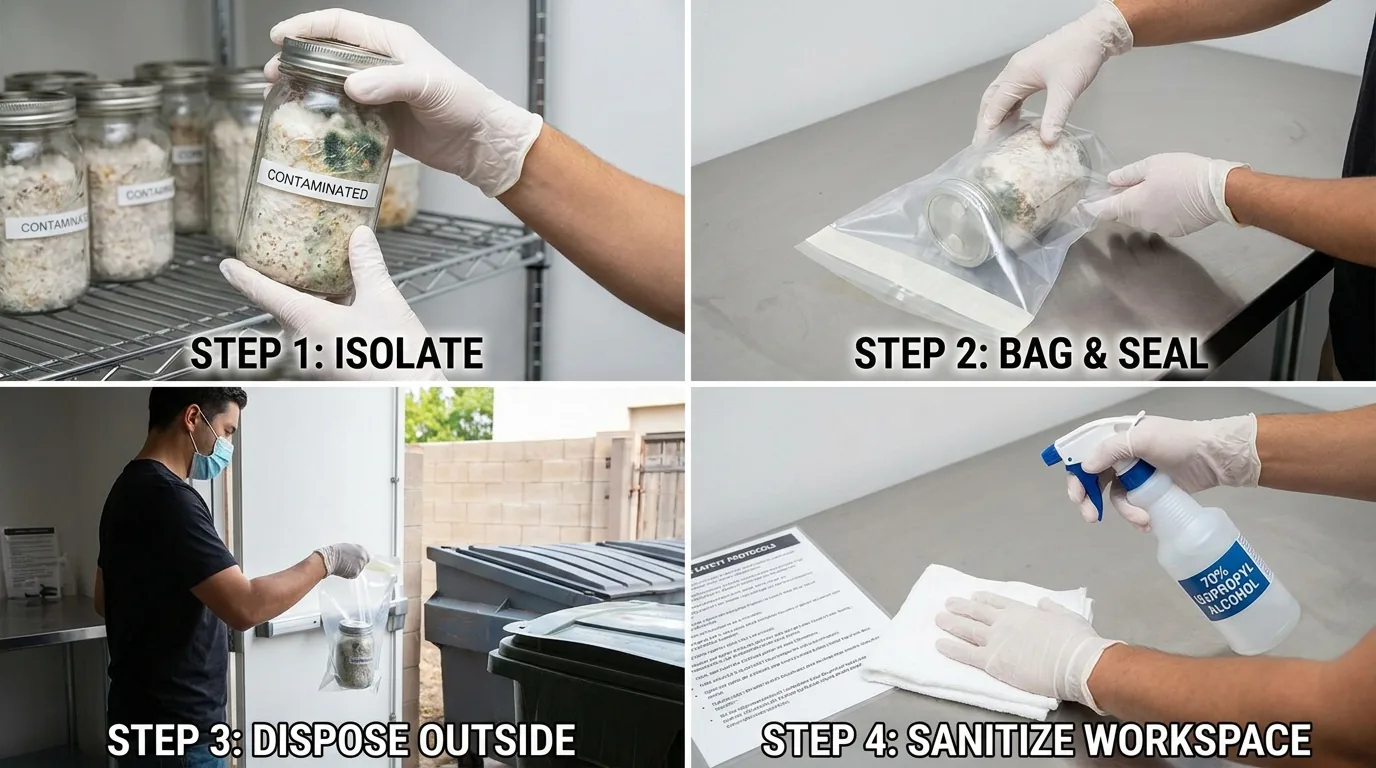
Grain Jars
- Identify early. Check jars daily. Green, black, pink, yellow, or slimy patches are contamination. White fuzzy growth with visible mycelial threads is almost certainly cubensis — but verify by checking growth pattern (growing from inoculation points outward is cubensis; random patches are suspect).
- Isolate immediately. Pick up the contaminated jar carefully without shaking it (you don't want to spread spores inside the jar). Place in a plastic bag without opening.
- Remove from grow space. Take the bagged jar outside or to a separate area before disposal. Opening contaminated jars inside your grow space aerosolizes millions of spores that will settle on surfaces and future grows.
- Dispose. Seal the bag. Dispose in outdoor trash.
- Sanitize. Wipe down the area where the contaminated jar was stored with isopropyl alcohol.
Bulk Substrate (Monotub)
- Small surface spot: Treat the project as suspect. In a legal gourmet grow, isolate the tub, photograph the area, and decide whether discarding the whole substrate is safer than trying to rescue it.
- Spreading contamination or any Trichoderma: The tub is compromised. Seal and dispose of outside.
- Post-contamination cleanup: Bleach-clean the tub before reuse (1 tablespoon bleach per gallon of water, 30-minute soak, thorough rinse). Some growers discard contaminated tubs entirely rather than risk residual spores.
Systematic Prevention
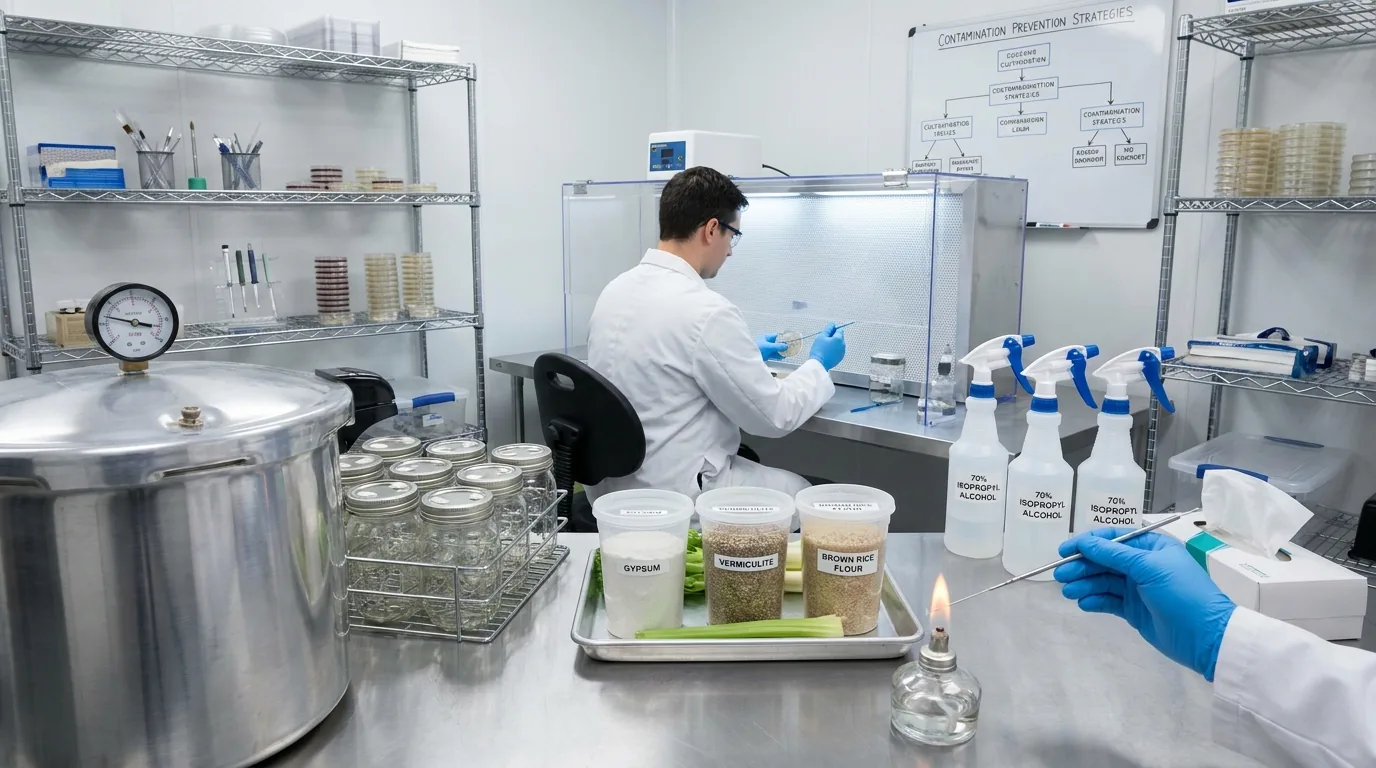
Substrate Preparation
- Verify correct field capacity before sterilizing or pasteurizing
- Sterilize grain at 15 PSI for 90 minutes — not 60 minutes, which is marginal for bacterial endospore elimination
- Allow jars to cool completely before inoculation (overnight is better than a few hours)
- Use fresh substrate ingredients — old coco coir bricks that have been stored damp can harbor mold
Inoculation Technique
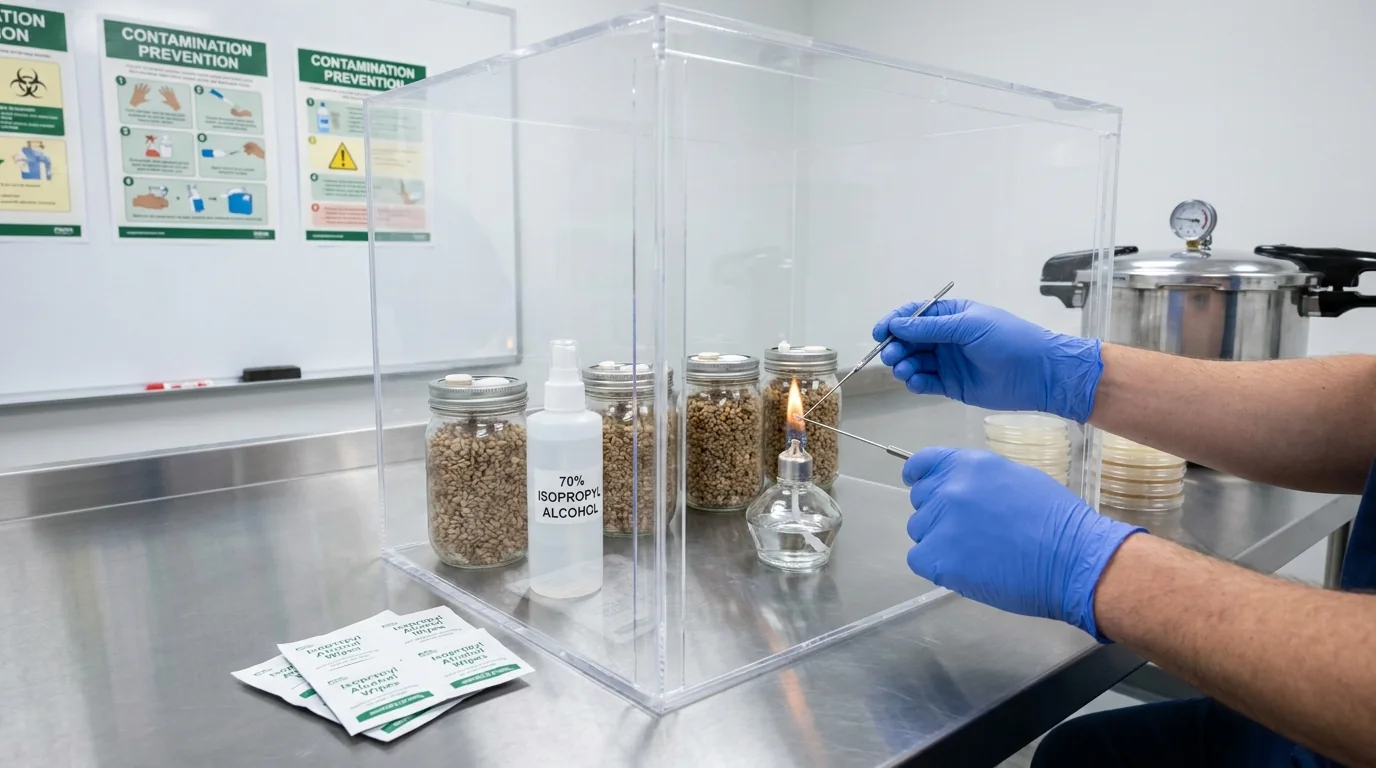
- Work inside a still air box or flow hood for all inoculation and agar work
- Flame-sterilize needles until glowing red between jars (not between holes within a jar)
- Wipe all surfaces with 70% isopropyl alcohol before working — 70% is more effective than higher concentrations because the water component improves cell penetration
- Wear gloves; wipe gloves with isopropyl before working
- Work quickly — every second with a jar open is contamination exposure
- Do not talk, cough, or sneeze while working with open containers
Environmental Controls
- Keep your grow space clean — vacuum or wipe down surfaces regularly
- Do not grow in rooms with high ambient mold (basements with water damage, bathrooms)
- Positive pressure rooms (where air flows outward when you open a door) have lower contamination rates than negative pressure rooms
- Consider your air quality seasonally — outdoor spore counts are higher in some seasons
Spawn Ratio and Colonization Speed
The fastest-colonizing substrate has the lowest contamination rate. In bulk grows, a generous spawn ratio (1:3 grain to bulk substrate) produces faster colonization than a minimal ratio (1:5). The mycelium outcompetes contamination through speed.
Choosing fast-colonizing strains (Z-Strain, Cambodian, B+) for bulk grows reduces contamination vs. slow-colonizing strains (Penis Envy, McKennaii) at equivalent technique levels.
When to Keep vs. When to Discard
| Situation | Keep | Discard | |----------|------|---------| | Yellow metabolite staining on jars | Yes — normal | — | | Blue bruising on mycelium | Yes — normal | — | | Single small green spot on bulk substrate, early | Maybe — remove and monitor | If spreading | | Any green in a grain jar | — | Yes, immediately | | Cobweb mold on fruiting substrate | Maybe — treat with FAE | If extensive | | Black, yellow-green, or pink patches anywhere | — | Yes, immediately | | Wet, slimy, foul-smelling substrate | — | Yes, immediately | | Contamination after first flush in fruiting tub | Case by case | If spreading rapidly |
Default rule: When in doubt, discard. The cost of losing one jar or tub is far lower than the cost of contaminating your entire grow space with mold spores from an opened contaminated vessel.
Common Problems & Troubleshooting
See the Contamination Guide for common issues.
Tips for Success
Take notes at every stage. Consistency beats perfection.