Bulk Growing: Scaling from Jars to Tubs
Everything you need to know about Bulk Growing: Scaling from Jars to Tubs — from materials to first harvest.
What You'll Need
- See full supply list in guide below.
Find grow supplies at vendors in our Directory.
Step-by-Step Process
Bulk Growing: Scaling from Jars to Tubs
The step from PF Tek (quart jars, small yields) to bulk growing (larger containers, higher yields) is the most significant transition in mushroom cultivation. Bulk growing unlocks dramatically higher productivity from the same time and effort investment, but requires understanding new concepts in substrate management, contamination control, and fruiting chamber optimization.
Bulk Readiness Filter
Bulk methods multiply both learning and loss. Start only when the basics are controlled:
- Legal fit: Keep hands-on practice to gourmet or locally permitted species; do not use scaling advice to bypass local law.
- Clean spawn: Do not send questionable jars to bulk. A single contaminated jar can compromise the whole tub.
- Batch size: First bulk attempts should be small enough that throwing one away is emotionally and financially easy.
- Traceability: Label each tub with species, substrate, spawn date, ratio, and observations so failures teach something.
Why Go Bulk?
Yield difference: A single PF Tek jar produces 2–8g dry per flush. A 66-quart monotub with 4–6 quart jars of grain spawn produces 30–100g+ dry across multiple flushes. The time investment is similar; the output is 10–20x higher.
Substrate efficiency: Bulk substrates (CVG, manure, Master's Mix) are less expensive per gram of output than brown rice flour used in PF Tek.
Scalability: Once you understand bulk growing, adding tubs means proportionally more yield. Scaling to 3–5 tubs simultaneously is manageable for one grower.
The Core Concept: Spawn to Bulk
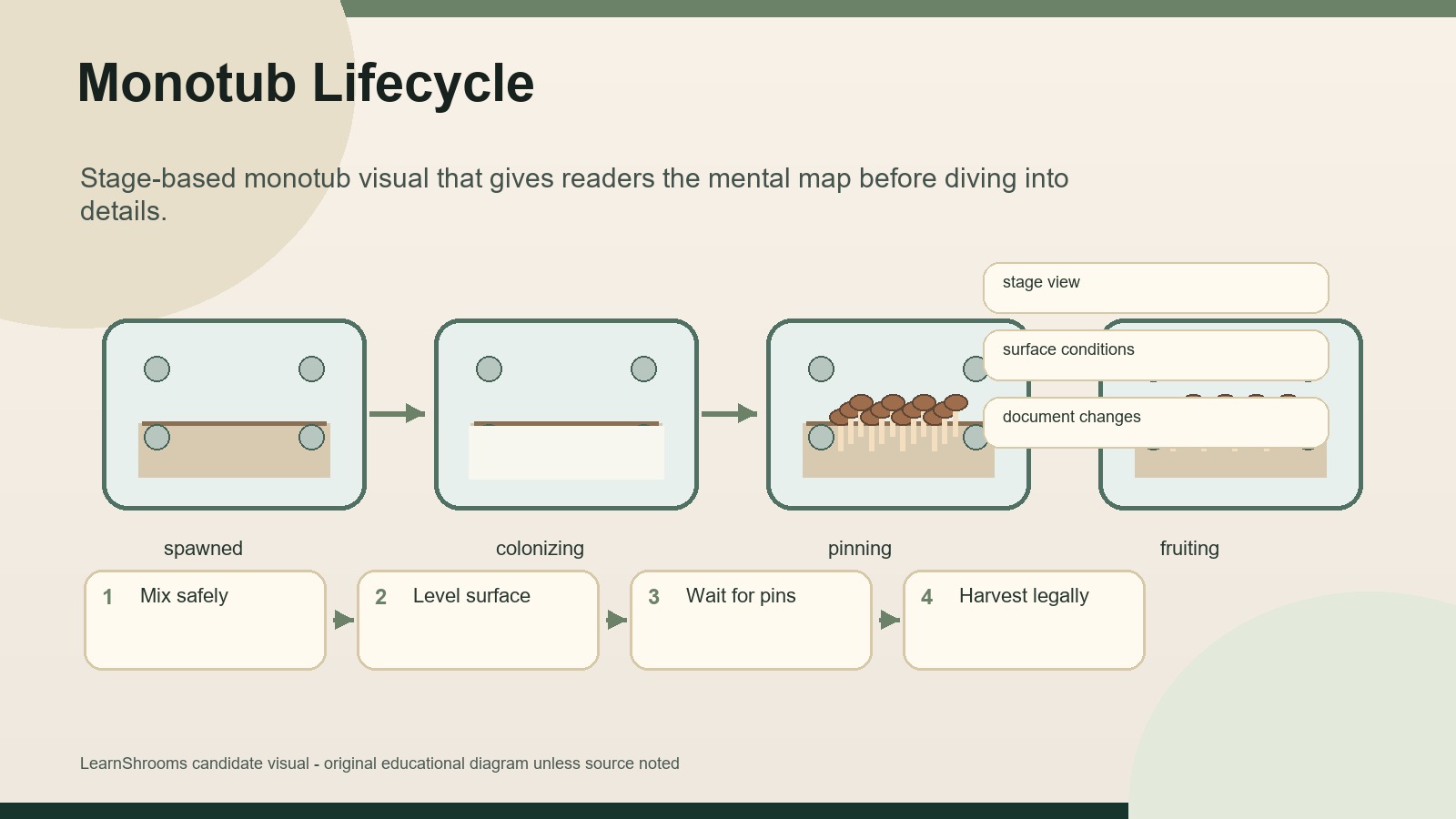
Bulk growing separates the colonization phase from the fruiting phase:
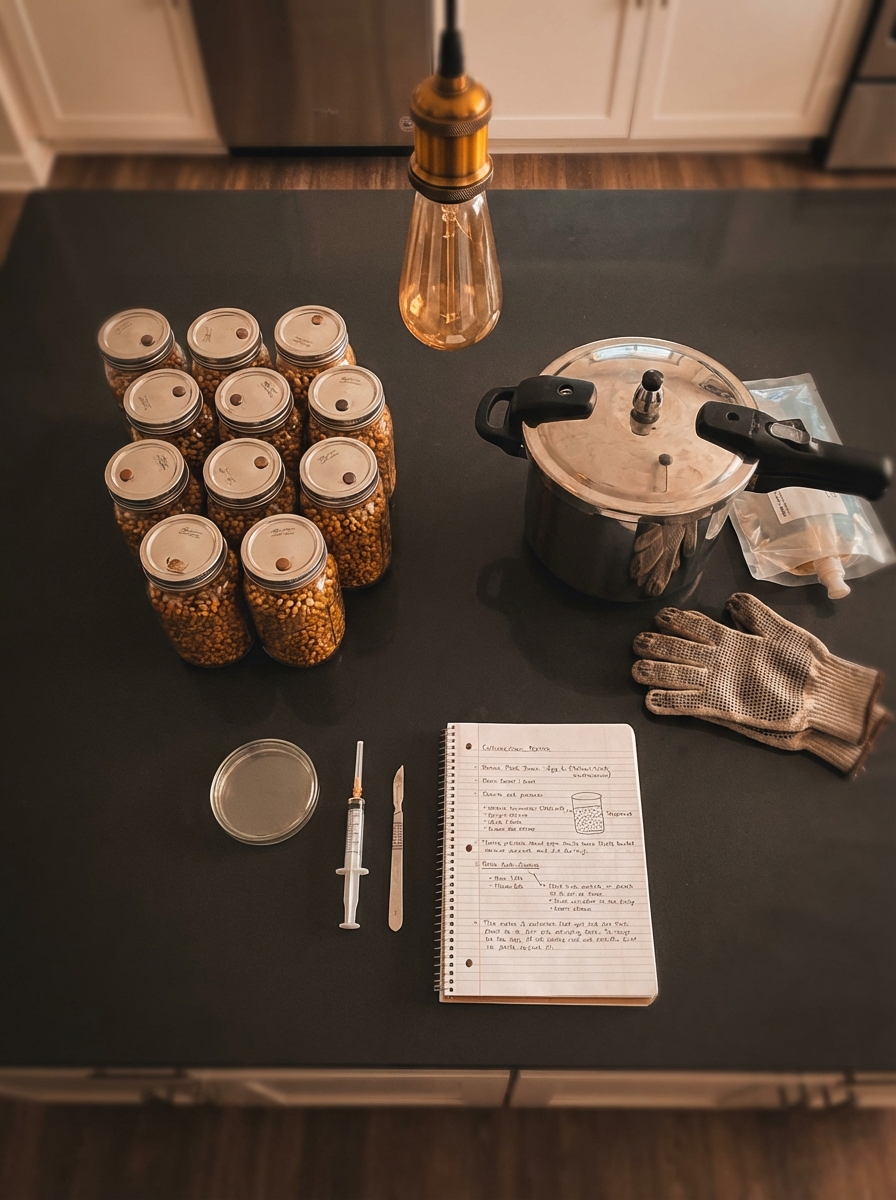
- Colonize grain spawn in quart jars (rye, wheat, oats, or similar)
- Mix colonized grain into bulk substrate in a larger container
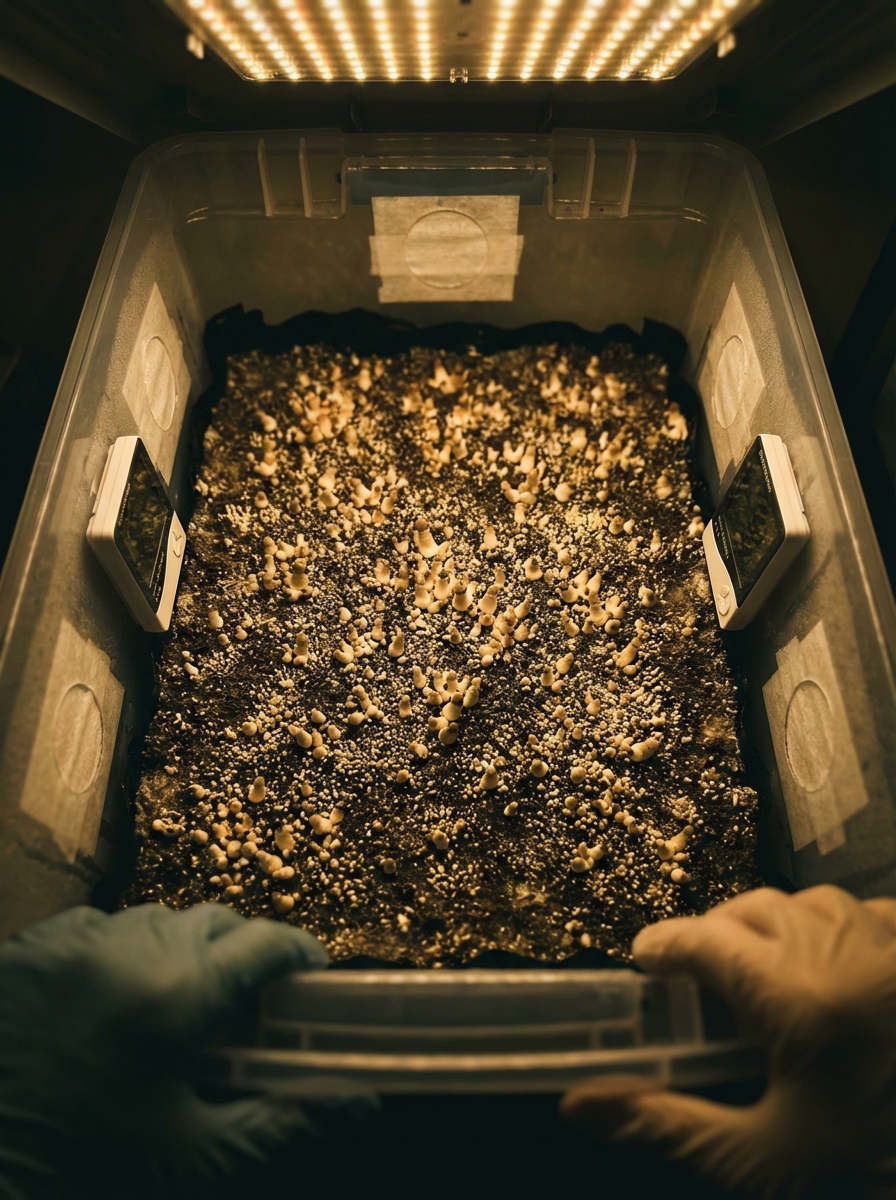
- Fruit the bulk container
The grain spawn acts as a dense inoculum that colonizes the bulk substrate rapidly, outcompeting contamination.
Choosing Your Bulk Substrate
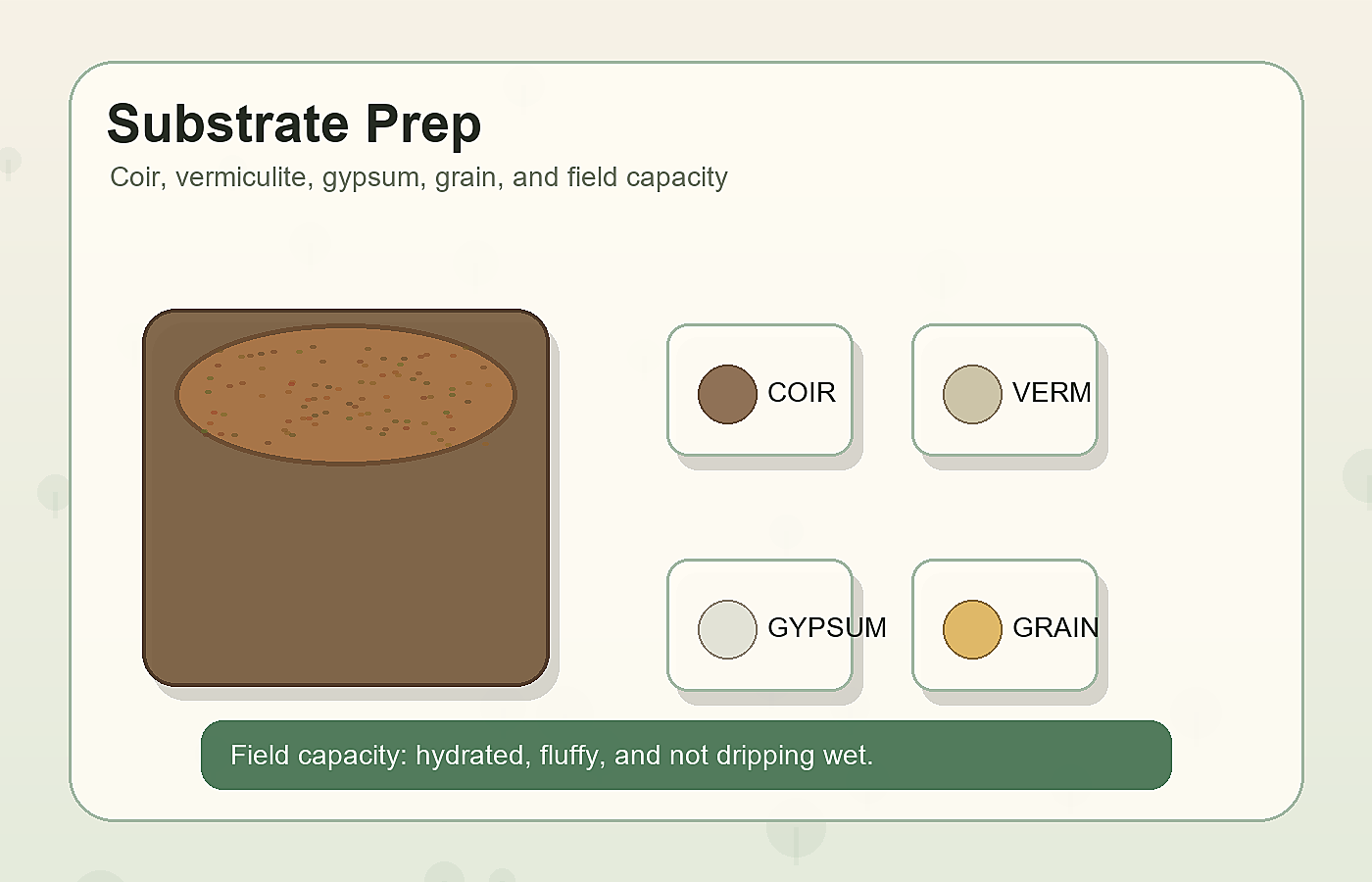
CVG (coco coir, vermiculite, gypsum): Most forgiving. Can be pasteurized (not sterilized). Low contamination risk. Lower yields than nutritious substrates but very reliable for beginners transitioning to bulk.
Manure-based substrates: Horse or cow manure composted with vermiculite (4:1 ratio). Higher yields than CVG. Requires pasteurization at minimum (185°F / 85°C for 90 minutes). Stronger odor during preparation.
Master's Mix (hardwood + soy hulls or wheat bran): Highest yield potential. Requires full sterilization (pressure cooking). Best for growers with established sterile technique.
Container Selection
66-quart monotub: The standard. Provides adequate surface area and depth. Polyfill holes (4 holes, 2 per long side) provide passive FAE. Black tub preferred (blocks light from substrate sides, promoting surface pinning).
90-quart or larger tubs: Viable for larger operations. Requires more grain spawn.
Martha tent setups: Multiple shelves in a greenhouse tent with automated misting and a fan for FAE. Allows scaling to many fruiting containers simultaneously.
Spawn to Bulk Ratio
1:2 to 1:3 (grain to bulk by volume) is the standard range. Higher spawn rate = faster colonization = less contamination risk. Lower spawn rate = more economical but longer colonization window.
Beginners should use 1:2 to maximize colonization speed. Experienced growers with proven clean technique can push to 1:3.
Mixing and Loading
- Break grain spawn into small pieces (rye grains should be mostly individual, not clumped)
- Mix thoroughly with bulk substrate in a clean bin
- Load into your tub and flatten to even depth (3–4 inches ideal for monotub)
- Apply casing layer if using one (CVG, 12mm thick)
- Move immediately to fruiting conditions or colonization conditions
Fruiting Conditions
Temperature: 70–75°F (21–24°C) for most P. cubensis strains Humidity: 90–95% — maintain with misting 1–2x daily FAE: Polyfill holes provide passive exchange. Avoid over-fanning, which dries surfaces. Light: 12 hours on / 12 hours off. Indirect natural or artificial light.
Troubleshooting Common Bulk Issues
No pins forming after 3+ weeks:
- Check: is substrate too wet? (anaerobic, won't pin)
- Check: is humidity too low? (surface dries, won't pin)
- Try: cool shock (48 hours at 60–65°F) then return to fruiting conditions
- Try: increase FAE (briefly remove lid or fan for 10 minutes)
Pins abort (die before developing):
- Check: humidity drop during pin formation is the #1 cause
- Check: CO2 levels — inadequate FAE can cause abort
- Maintain steady humidity through pin development
Contamination appears in bulk:
- Visible green, black, pink mold = contamination
- Contaminated zones: if isolated, you can try to remove and patch. If widespread, dispose of the tub.
- Casing does not save a contaminated substrate. Prevention is the only solution.
Common Problems & Troubleshooting
See the Contamination Guide for common issues.
Tips for Success
Take notes at every stage. Consistency beats perfection.