Grow Tek Comparison: Choosing the Right Method
Everything you need to know about Grow Tek Comparison: Choosing the Right Method — from materials to first harvest.

What You'll Need
- See full supply list in guide below.
Find grow supplies at vendors in our Directory.
Step-by-Step Process
Grow Tek Comparison: Choosing the Right Method
There are dozens of mushroom cultivation techniques ("teks"), each with different requirements for equipment, skill, time, and cost. Choosing the right tek for your situation is the first decision a new grower makes — and one that significantly affects success rates. This guide compares the most widely used teks and helps you choose based on your actual circumstances.
Quick Decision Filter
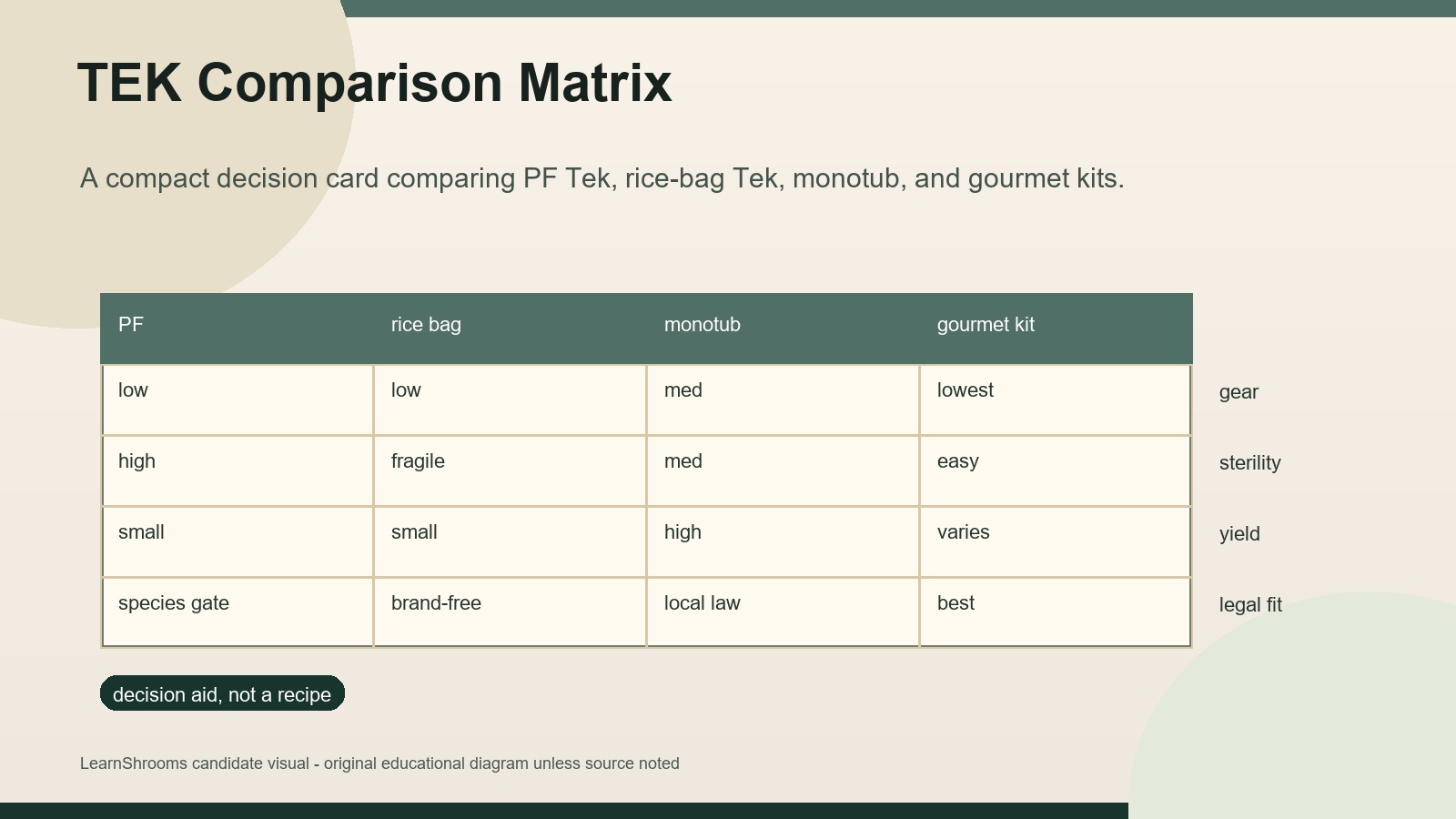
Use this short filter before comparing methods:
- Legal fit: If your jurisdiction does not clearly allow psilocybin cultivation, keep practice to gourmet species, microscopy-only spores where legal, and non-controlled educational diagrams.
- Sterile work: Choose a method that matches your clean-work equipment instead of forcing a high-contamination workflow.
- Loss size: Beginners usually learn better from small, contained failures than from one large tub that can fail all at once.
- Documentation: Pick the method you can photograph, label, and journal consistently.
The Key Variables to Consider
Before comparing teks, identify your constraints:
Space: How much room do you have? Some teks require dedicated rooms; others work in a closet or even a single tub under a desk.
Equipment: Do you have a pressure cooker? A flow hood? A still air box? The more equipment you start with, the more teks become accessible.
Time availability: How many hours per week can you dedicate? Some teks require daily attention; others are nearly hands-off.
Budget: Initial investment varies from under $50 to several hundred dollars.
Risk tolerance: Some teks have lower contamination rates; others require more precision.
PF Tek (Brown Rice Flour)
Difficulty: Beginner Equipment needed: Pressure cooker, mason jars Timeline: 6–8 weeks from inoculation to harvest Cost: $30–60
PF Tek uses half-pint mason jars filled with a mixture of brown rice flour (BRF) and vermiculite. It was developed and popularized in the 1990s and remains the most documented beginner method.
Advantages:
- Well-documented with decades of community troubleshooting
- Small jars mean small contamination losses
- Forgiving to slight sterilization errors
- Fruiting from jars directly is possible ("birthday cake" style)
Disadvantages:
- Very low yield per jar
- Inefficient for scale — doing 50 jars takes 50x the work of a single bulk tub
- BRF is less nutritious than grain spawn substrates
Best for: First-timers wanting proven documentation and small-scale learning
Wild Bird Seed (WBS) Tek
Difficulty: Beginner Equipment needed: Pressure cooker, mason jars Timeline: 3–5 weeks to colonized grain spawn Cost: $10–20
WBS tek uses wild bird seed — typically a milo/millet/sunflower seed mix — as grain substrate. The mix of seed types provides diverse nutrition and colonizes faster than many alternatives.
Advantages:
- Extremely cheap ($5–15 for a large bag)
- Available everywhere (Walmart, garden centers)
- Faster colonization than BRF
- Good nutrient profile for vigorous mycelium growth
Disadvantages:
- Smaller seed sizes (especially millet) have more surface area = slightly higher contamination risk if sterilization is off
- Requires more thorough prep work (soaking, simmering, drying)
Best for: Beginners who want to move into bulk grows with minimal cost
Rye Berry Tek
Difficulty: Intermediate Equipment needed: Pressure cooker, mason jars Timeline: 3–4 weeks to colonized spawn Cost: $20–40
Rye berries are the preferred grain spawn of many experienced cultivators. Dense, nutritious, and forgiving, they produce excellent mycelium density and transfer well to bulk substrate.
Advantages:
- High nutrient content supports vigorous growth
- Dense colonization with consistent results
- Excellent for grain-to-grain (G2G) transfer to scale up spawn volume
Disadvantages:
- Slightly slower to colonize than WBS
- More prone to moisture errors (if too wet, field capacity problems compound)
- Slightly more expensive than WBS
Best for: Growers ready to move past beginner teks who want a professional-grade spawn substrate
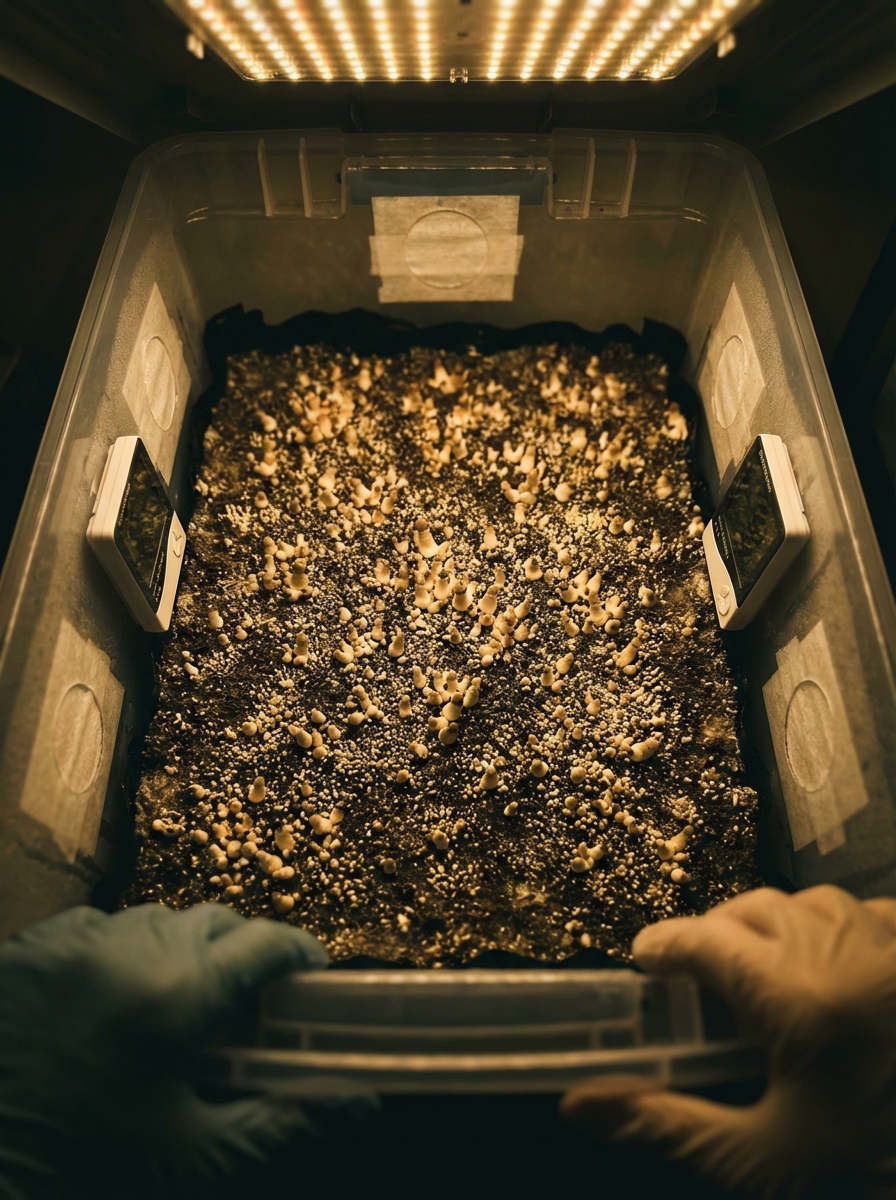
Monotub Tek
Difficulty: Intermediate Equipment needed: Large plastic tub (66L or similar), bulk substrate Timeline: 8–12 weeks start to finish Cost: $60–120
Monotub tek is a bulk fruiting method using a large plastic storage tub with modified atmosphere control (holes covered with polyfill). Spawn is mixed with bulk substrate (coco coir, vermiculite, and/or pasteurized straw) and allowed to colonize and fruit in the same container.
Advantages:
- High yields per unit of effort
- Handles multiple flushes with minimal intervention
- Relatively hands-off once set up (the tub manages its own microclimate)
Disadvantages:
- Large volume means large contamination loss if things go wrong
- Requires learning bulk substrate preparation
- More variables than jar-based methods
Best for: Growers who have done grain jars successfully and want to scale up yields
Shotgun Fruiting Chamber (SGFC)
Difficulty: Beginner Equipment needed: Large tote with holes drilled, perlite Timeline: Used as fruiting chamber, not for colonization Cost: $15–25
The SGFC is not a full tek — it's a fruiting chamber for taking colonized PF Tek cakes or other colonized substrates through fruiting. Holes drilled in all six sides of a storage tote, filled with moist perlite on the bottom, create a high-humidity, fresh-air environment.
Advantages:
- Very cheap and simple to build
- Works well with PF Tek cakes
- High air exchange reduces contamination risk during fruiting
Disadvantages:
- Requires regular fanning and misting (twice daily minimum)
- Not suitable for bulk substrate fruiting
- More labor-intensive than monotub approaches
Best for: PF Tek growers fruiting colonized cakes; people without space for larger setups
Agar (Petri Dish) Cultivation
Difficulty: Intermediate to Advanced Equipment needed: Petri dishes, agar medium, pressure cooker or microwave, ideally a still air box or flow hood Timeline: Ongoing Cost: $40–80 initial setup
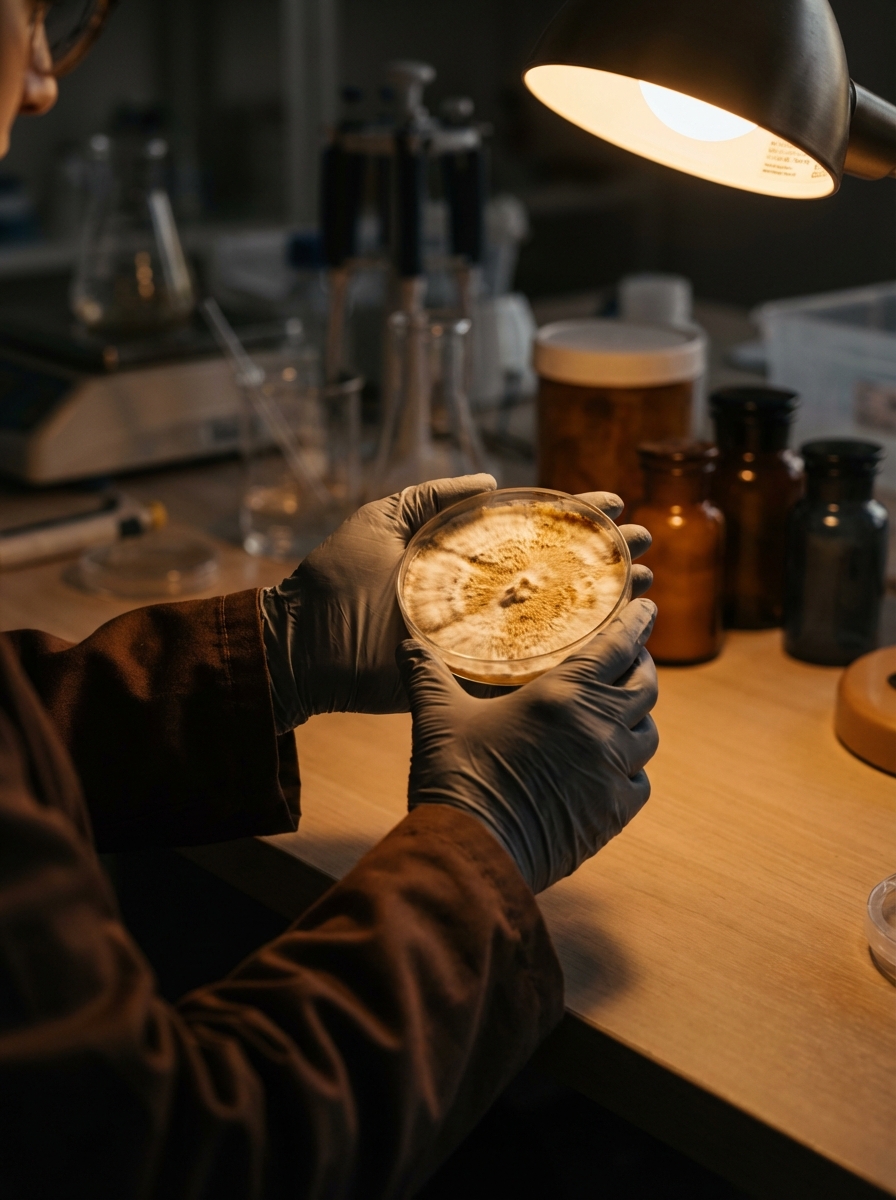
Agar work is not a complete grow tek but a genetics management and contamination detection tool. Growing mycelium on agar allows visual inspection, isolation of healthy growth, and long-term genetic storage.
Advantages:
- Enables selection of vigorous genetics
- Allows contamination detection before it reaches grain spawn
- Long-term storage of cultures in refrigerator
- Foundation for advanced cultivation
Disadvantages:
- Steep learning curve
- Requires aseptic technique
- Initial setup cost higher than basic grain jars
Best for: Cultivators who have had successful harvests and want to improve consistency and genetics
Summary Recommendation by Situation
| Situation | Recommended Starting Tek | |-----------|--------------------------| | Complete beginner, limited equipment | PF Tek | | Beginner wanting to scale quickly | WBS Tek → Monotub | | Intermediate cultivator with PC | Rye Berry + Monotub | | Want long-term consistency | Add agar work to any grain tek | | Limited space, hands-on approach | PF Tek + SGFC |
The most common trajectory: PF Tek → WBS grain jars → monotub tek → agar isolation. Each step builds on the last.
Common Problems & Troubleshooting
See the Contamination Guide for common issues.
Tips for Success
Take notes at every stage. Consistency beats perfection.