Triggering Pinning: Environmental Cues for Fruiting
Everything you need to know about Triggering Pinning: Environmental Cues for Fruiting — from materials to first harvest.
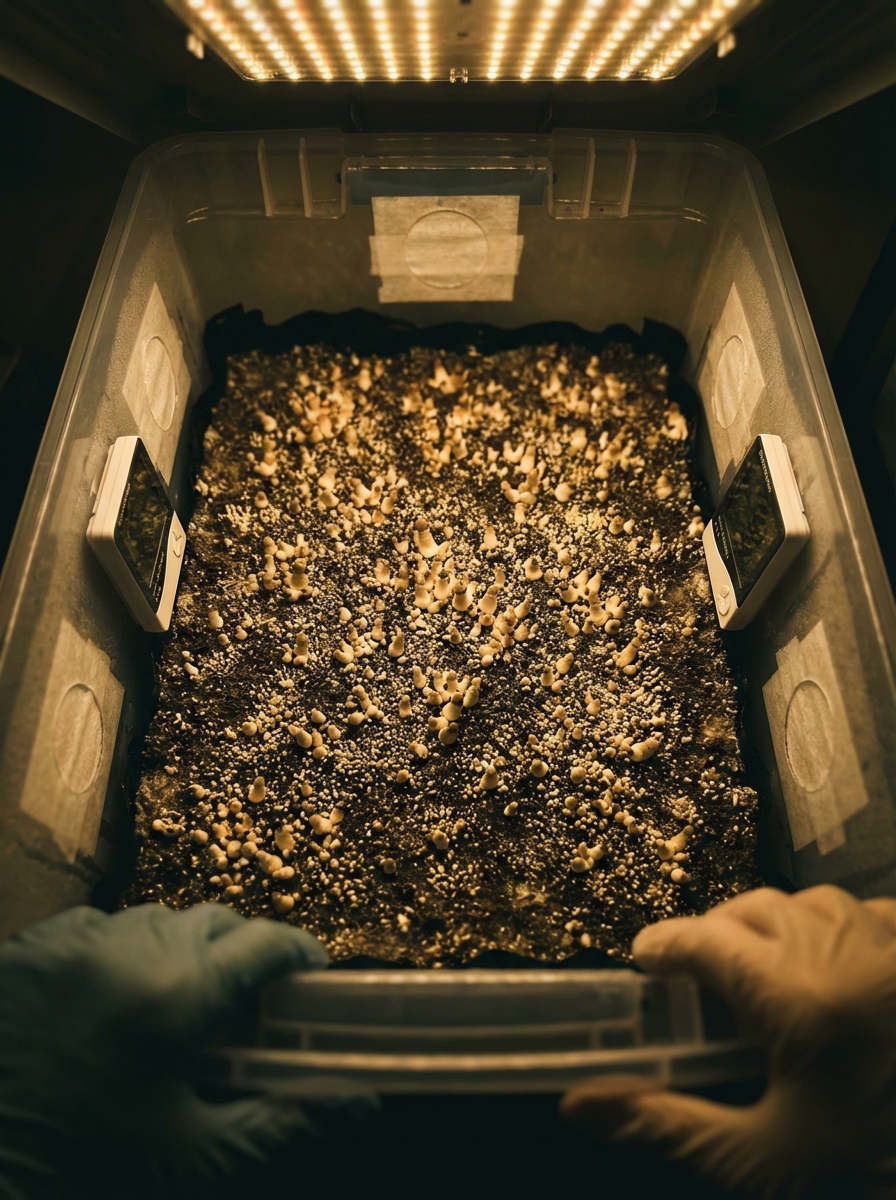

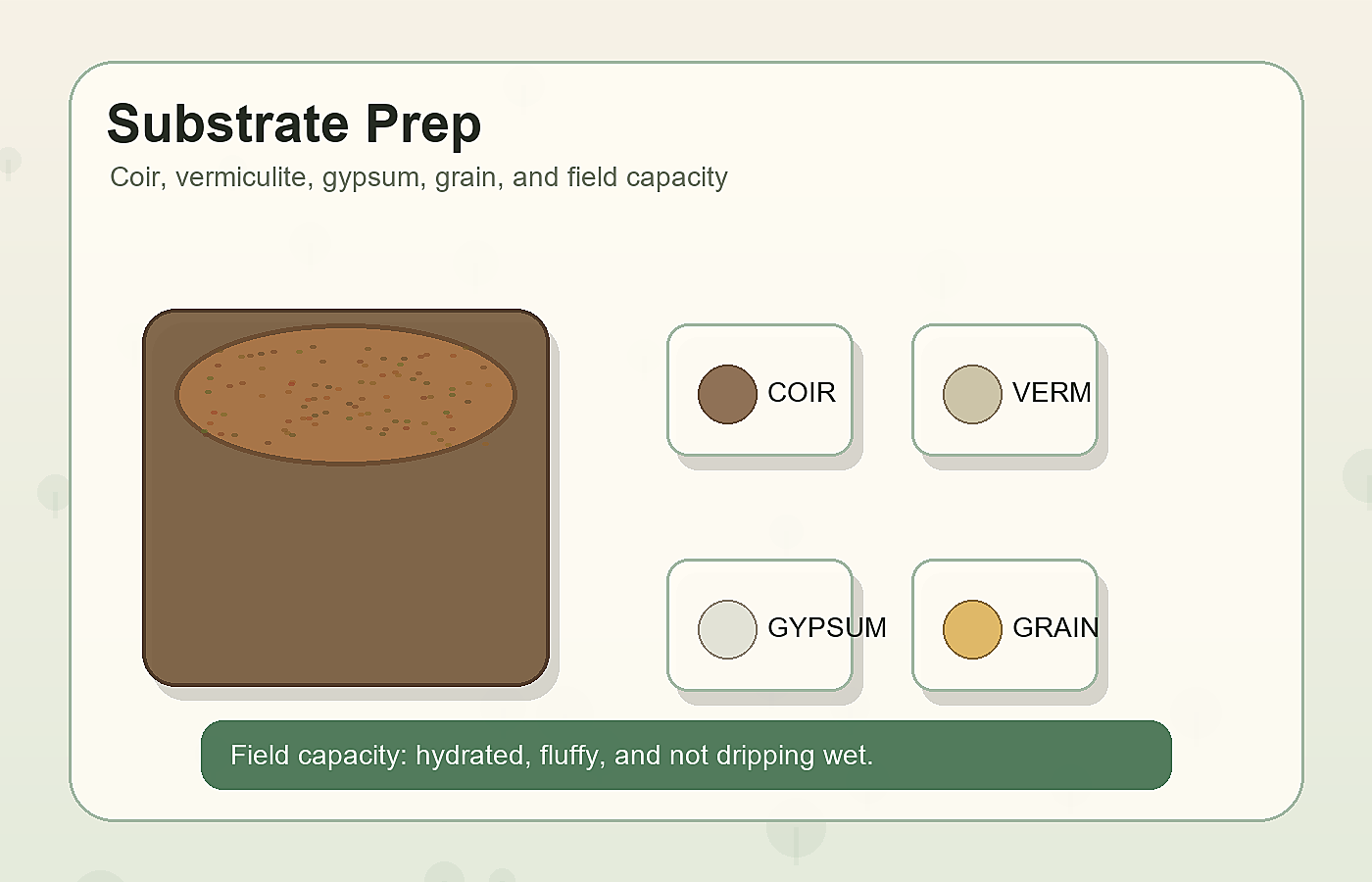
What You'll Need
- See full supply list in guide below.
Find grow supplies at vendors in our Directory.
Step-by-Step Process
Triggering Pinning: Environmental Cues for Fruiting
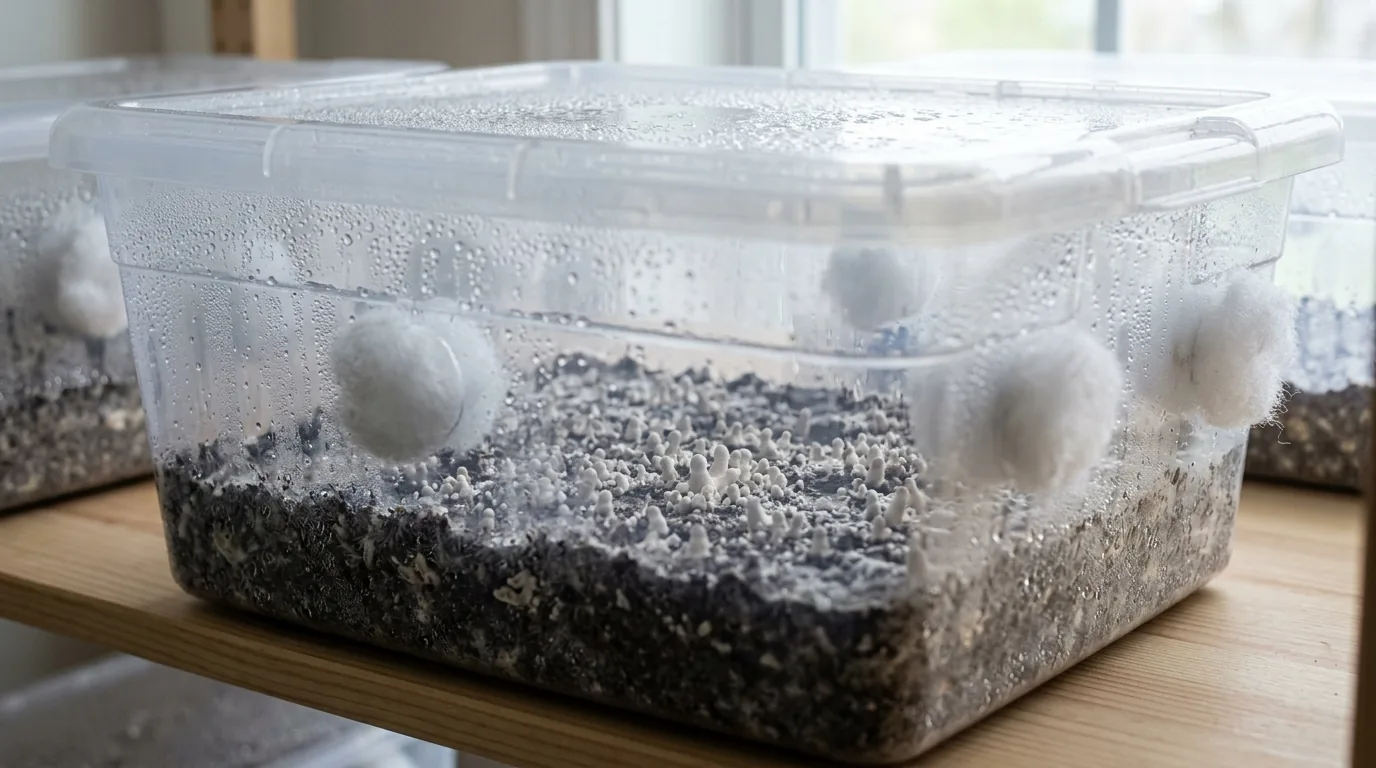
Pinning — the formation of the first tiny primordia (pin-head mushrooms) — is the pivotal transition in the cultivation cycle. It's also where many cultivators get stuck. A block that colonized beautifully may sit for weeks without pinning; another may pin explosively within days of fruiting chamber initiation.
Understanding what triggers pinning allows you to systematically encourage fruiting rather than waiting and hoping.
What Pins Actually Are
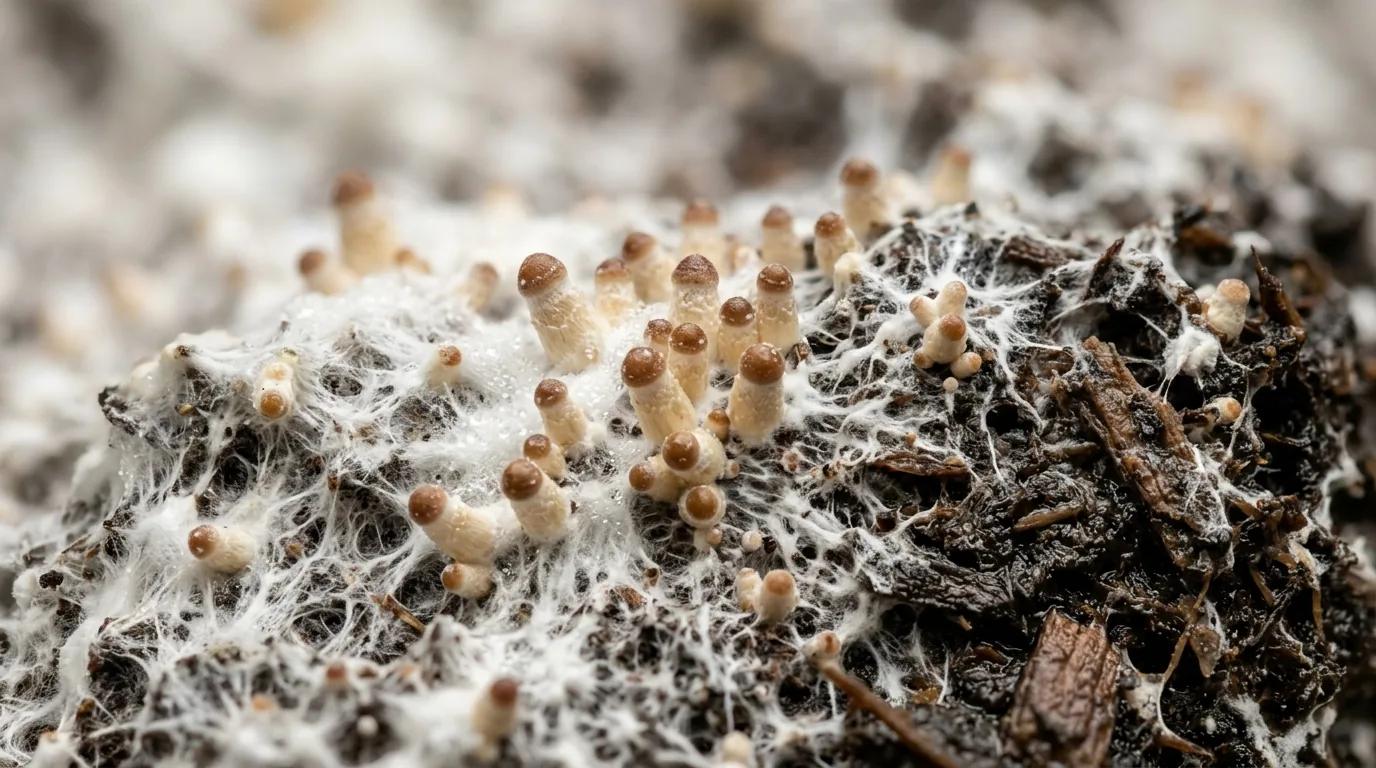
Before discussing triggers, it helps to understand what a pin is biologically. A mushroom primordium forms when mycelium undergoes a developmental transition from vegetative growth (colonization mode) to reproductive growth (fruiting mode). This transition is mediated by environmental signals that the mycelium interprets as "conditions are right to fruit."
In nature, these conditions typically signal the end of summer or the onset of autumn: cooling temperatures, increased humidity from rain, and reduced carbon dioxide as air circulates more freely. Cultivation techniques mimic these signals.
The Core Pinning Triggers
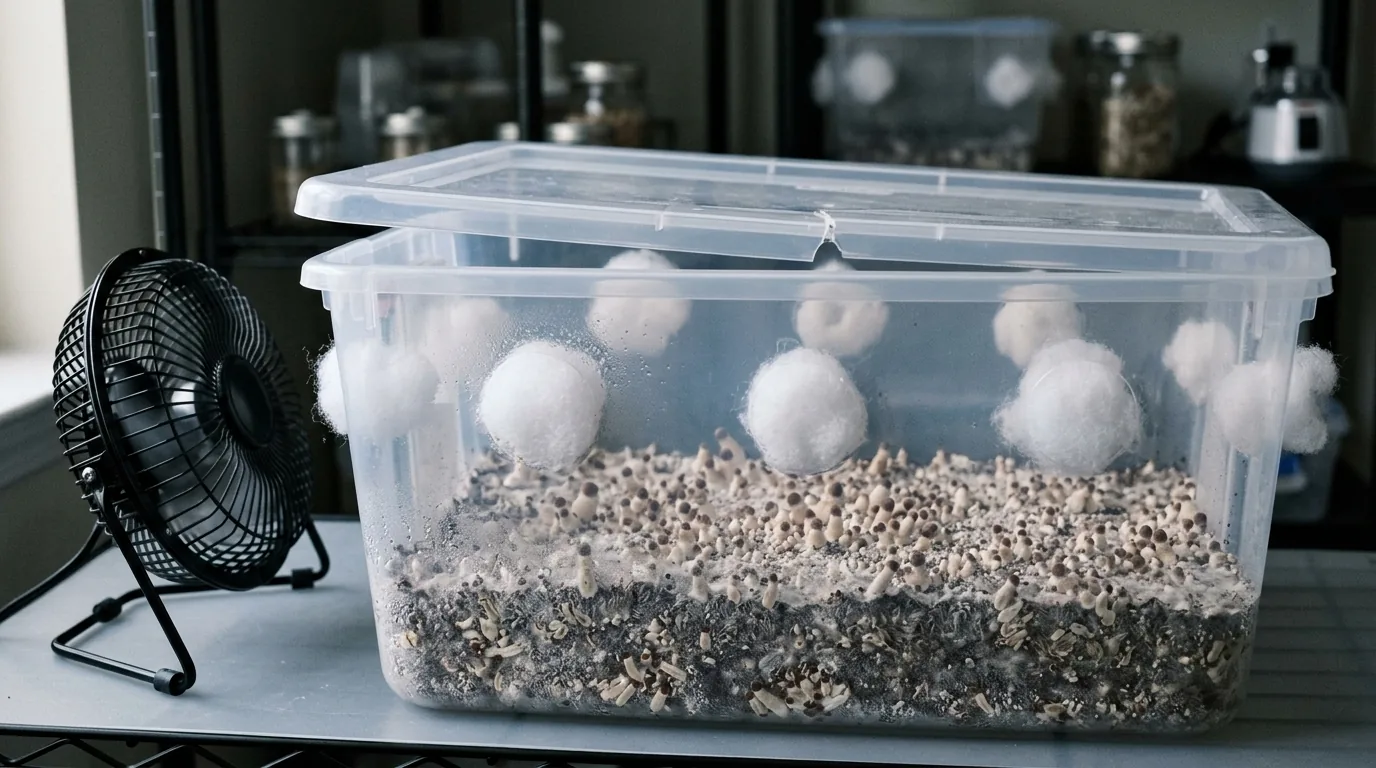
1. Fresh Air Exchange (FAE)
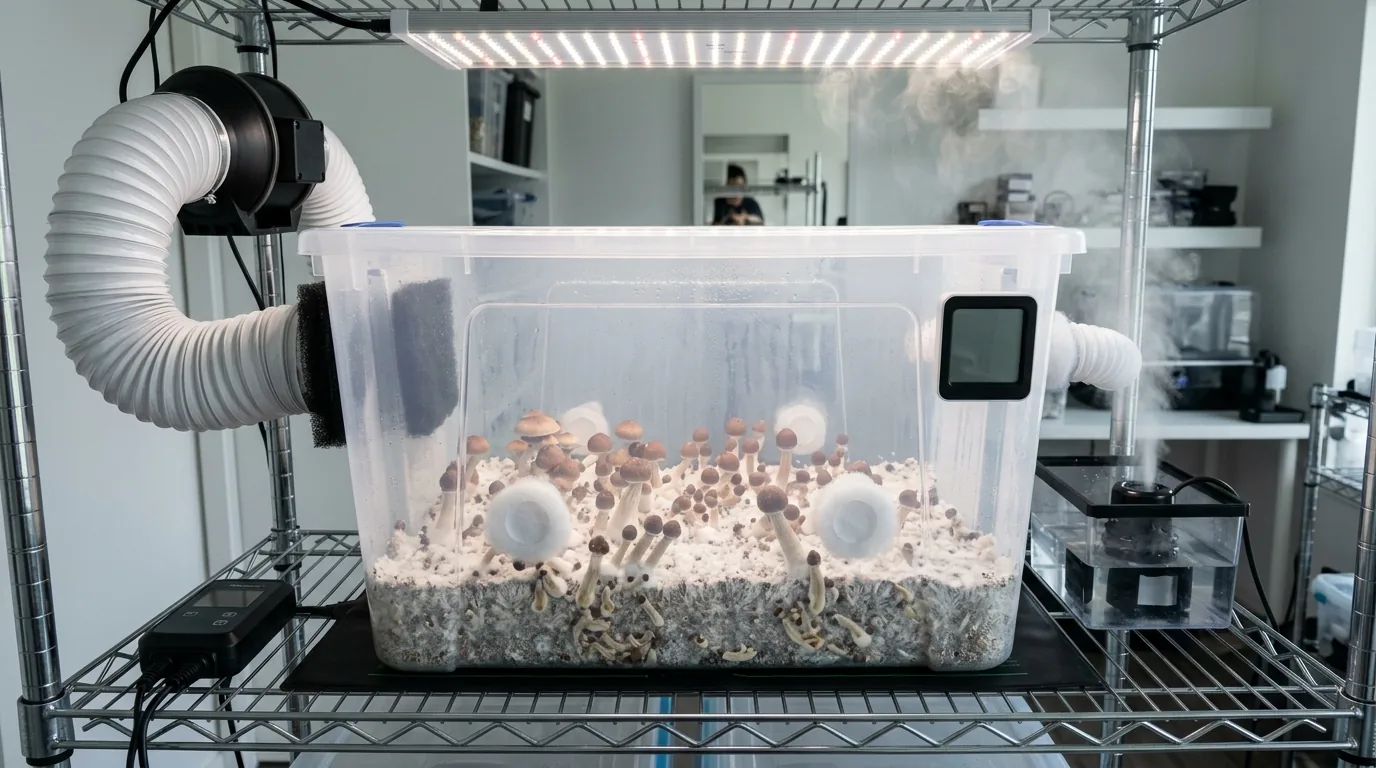
Carbon dioxide (CO2) accumulates in a colonizing substrate. High CO2 concentrations — typical in a sealed colonizing environment — suppress fruiting body development. When CO2 is reduced through fresh air exchange, the mycelium receives a signal that the environment is more open and aerobic — suitable for fruiting.
How to apply: FAE is the most important pinning trigger for most cultivators. Methods:
- Fan or manual fanning 2-4 times daily in a shotgun fruiting chamber (SGFC)
- Automated fans on timers in monotubs or Martha setups
- Simply opening and closing a fruiting chamber to exchange air
Target CO2 levels: Below 1,000 ppm is generally considered adequate; below 500 ppm is optimal for most species. You don't need to measure CO2 — if you're exchanging air regularly, you're reducing CO2.
2. Humidity
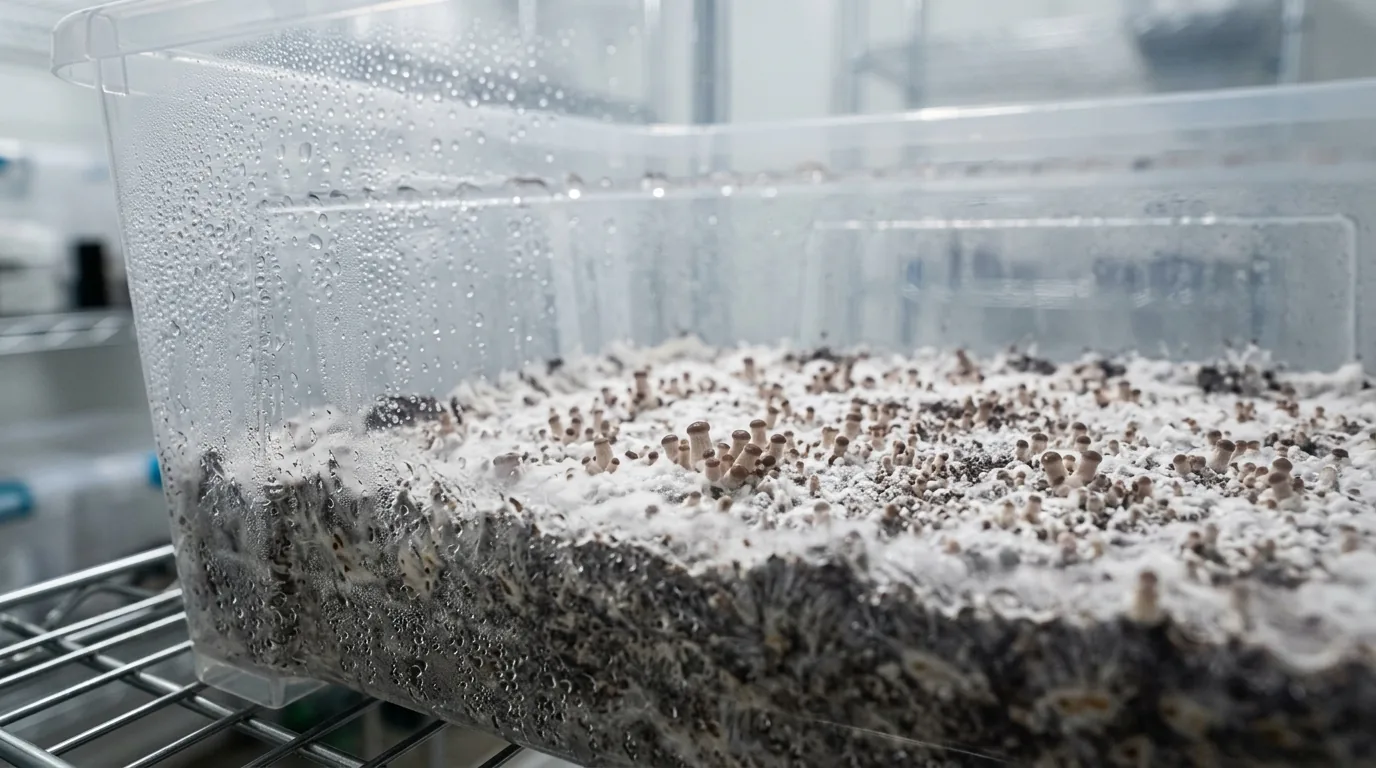
High relative humidity (RH) — 90-95% — is typically required for pinning. Mycelium will not pin in dry conditions, and forming primordia are extremely sensitive to moisture loss.
How to apply:
- Regular misting of chamber walls (not directly on substrate — droplets on mushrooms cause discoloration and bacterial issues)
- Saturated perlite layer as humidity buffer in SGFCs
- Ultrasonic humidifiers with humidity controllers in automated setups
Substrate surface moisture: For many fruiting methods, the substrate surface should have a slight sheen — visible moisture but not pooling water. This moisture gradient encourages pins to form at the surface.
3. Temperature Drop
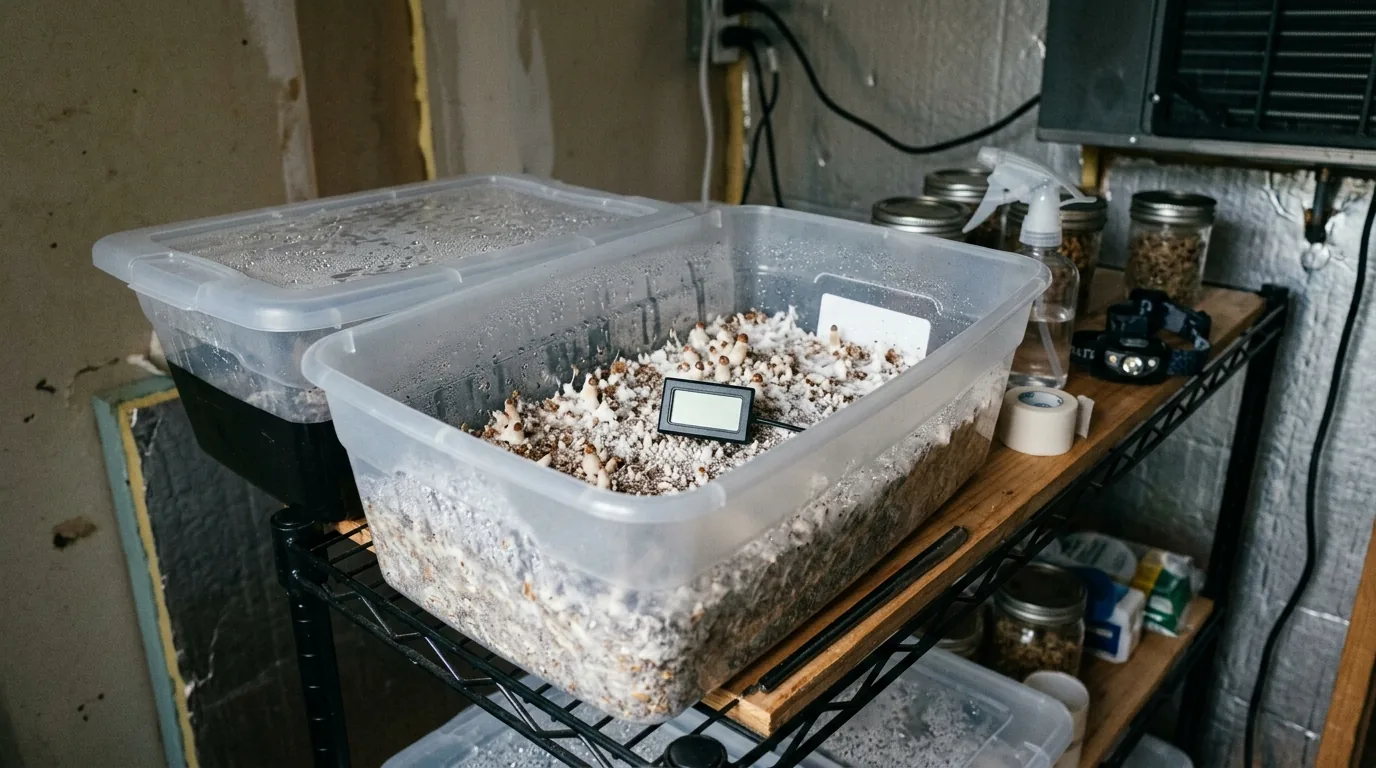
In nature, fruiting often follows a temperature decline. A 5-10°F (3-5°C) temperature drop signals the approach of cooler weather and triggers fruiting in many species.
How to apply:
- Move colonized substrate from an incubator (80°F/27°C) to a fruiting chamber at room temperature (68-74°F/20-23°C)
- Some cultivators place colonized blocks in the refrigerator for 24-48 hours before fruiting chamber introduction
- For species that prefer cooler fruiting (Psilocybe cyanescens, P. azurescens), temperatures of 60-68°F may be required
Note: Not all cultivators use temperature drops. For Psilocybe cubensis at standard home temperatures, the drop from colonization temperature to fruiting temperature may be sufficient passively. Active temperature drops are most useful for stubborn blocks or temperature-sensitive species.
4. Light
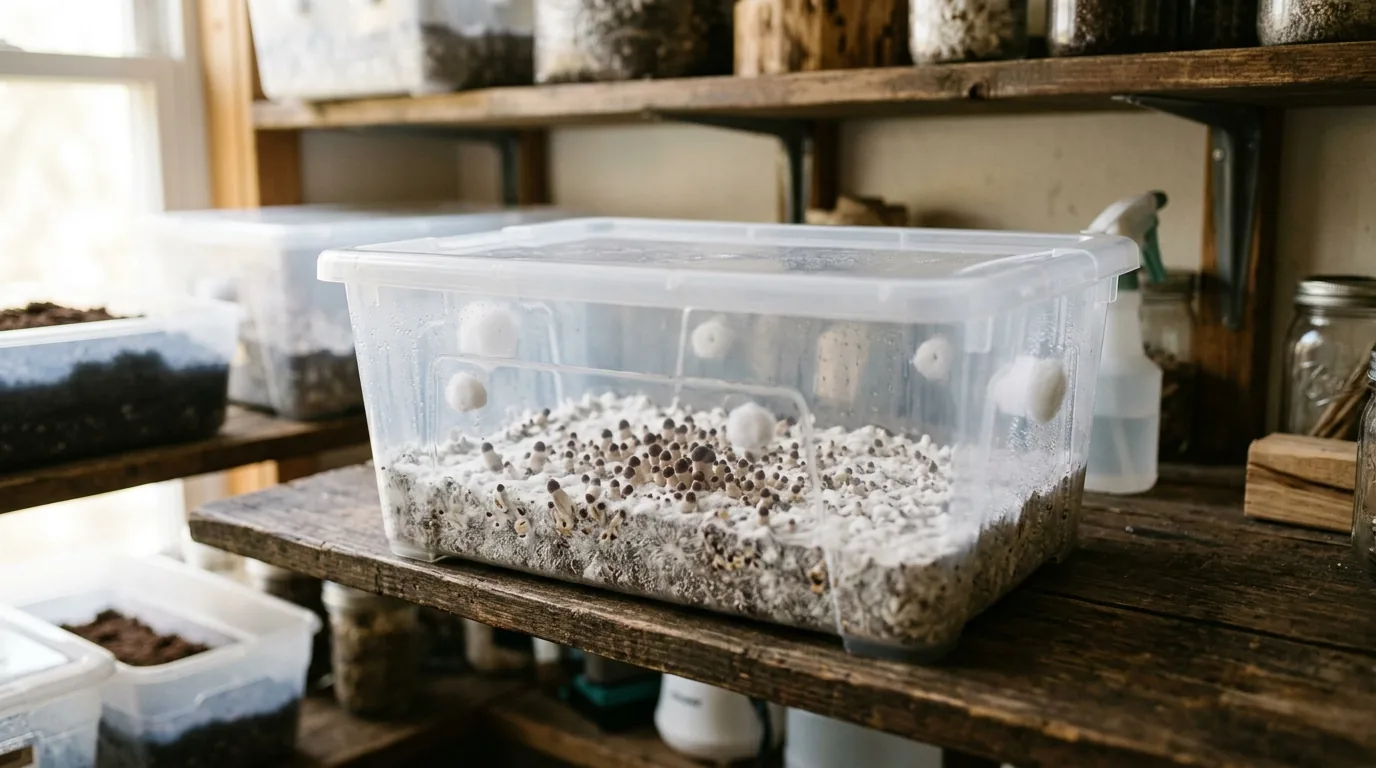
Light exposure is not a primary pinning trigger but acts as an orientation signal — mycelium uses light to determine "up" for fruiting body development.
How to apply:
- 12 hours of indirect light per day is sufficient
- Direct sunlight is unnecessary and may heat the substrate
- Room ambient light, a grow light, or even the occasional flashlight exposure during checks is sufficient
- Light direction affects pin orientation — pins grow toward light, so even light from above produces more erect fruiting bodies
5. Surface Disruption (Casing)
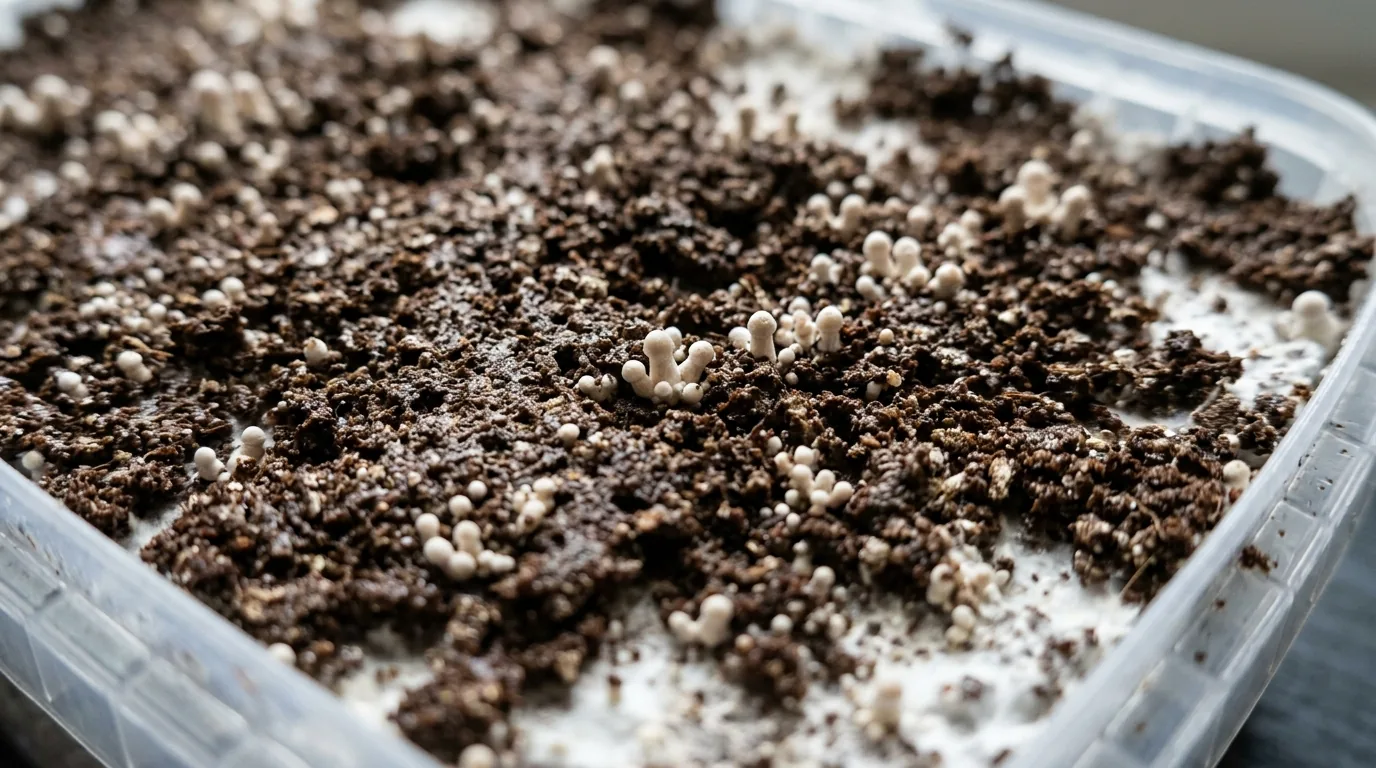
A casing layer — a non-nutritive moisture-retaining layer applied to the surface of colonized substrate — commonly triggers pinning. The mechanism involves:
- Moisture gradient between casing and colonized substrate
- Mechanical disruption of the mycelial surface
- Microbial flora in the casing (some cultivators believe bacteria in unsterilized casing layers produce pinning signals)
How to apply: Standard casing layer is 50% peat moss / 50% vermiculite, adjusted to field capacity. Apply 0.5-1 inch layer after colonization is complete.
6. Cold Shock
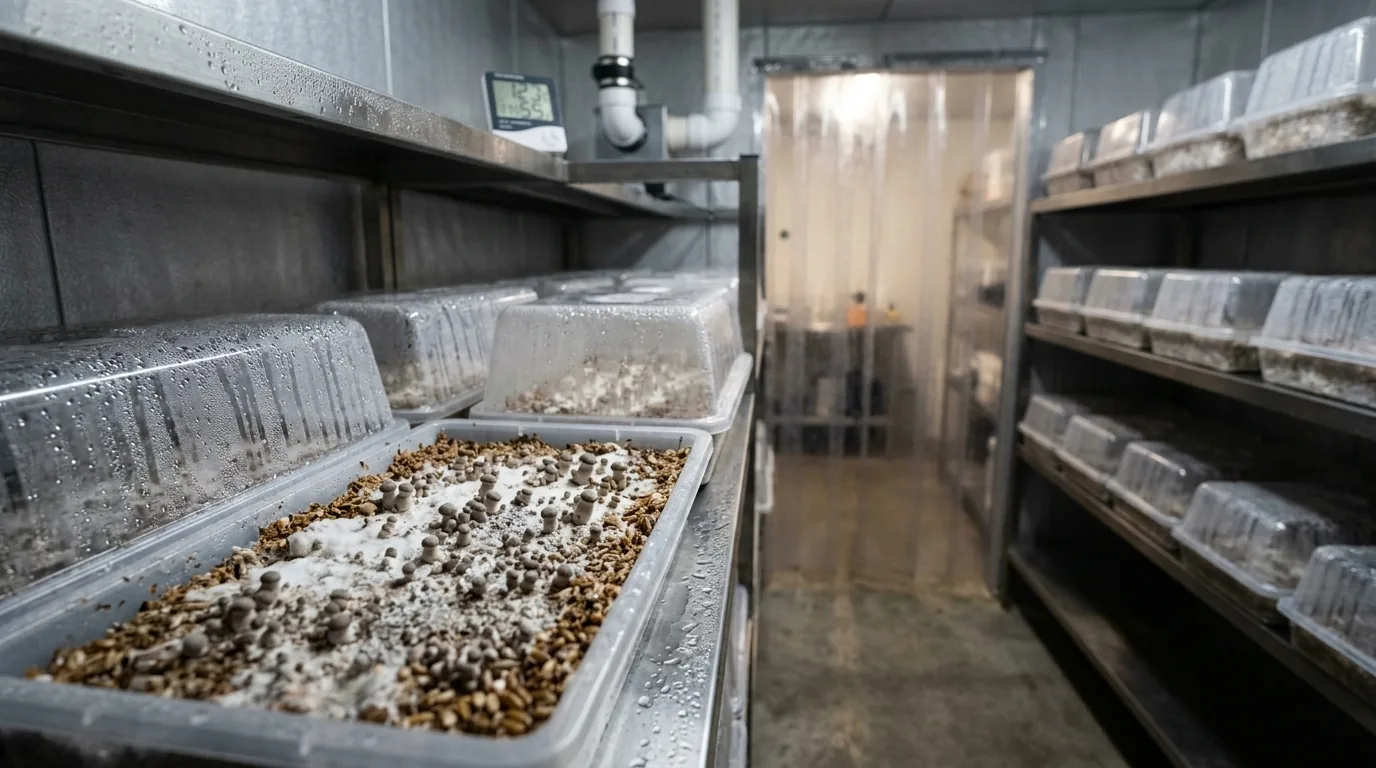
A brief (12-48 hour) cold treatment — 50-60°F (10-15°C) — can trigger stubborn blocks that haven't pinned despite other conditions being met.
How to apply: Place the colonized block in a plastic bag and refrigerate for 12-24 hours, then return to fruiting conditions. This mimics the temperature drop following cold rain.
Species-Specific Pinning Requirements
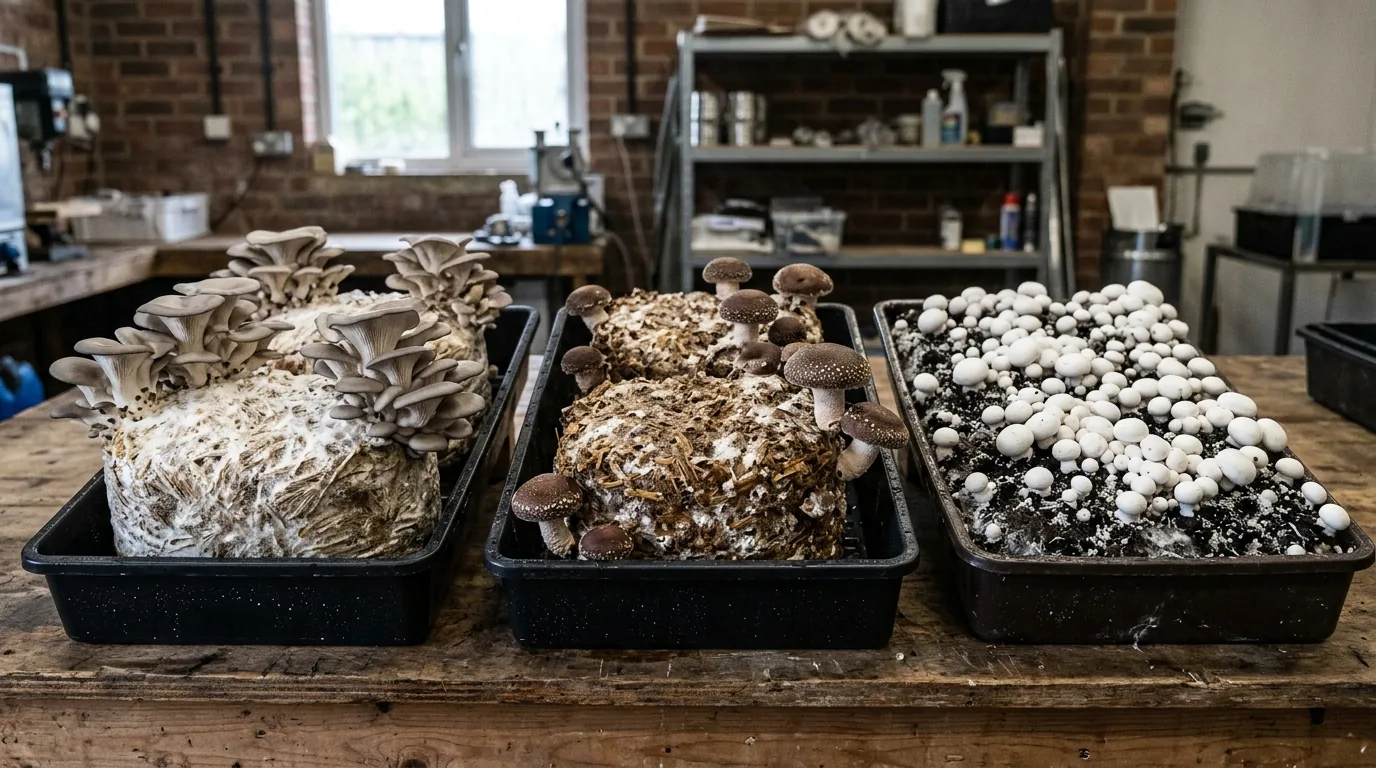
Psilocybe cubensis
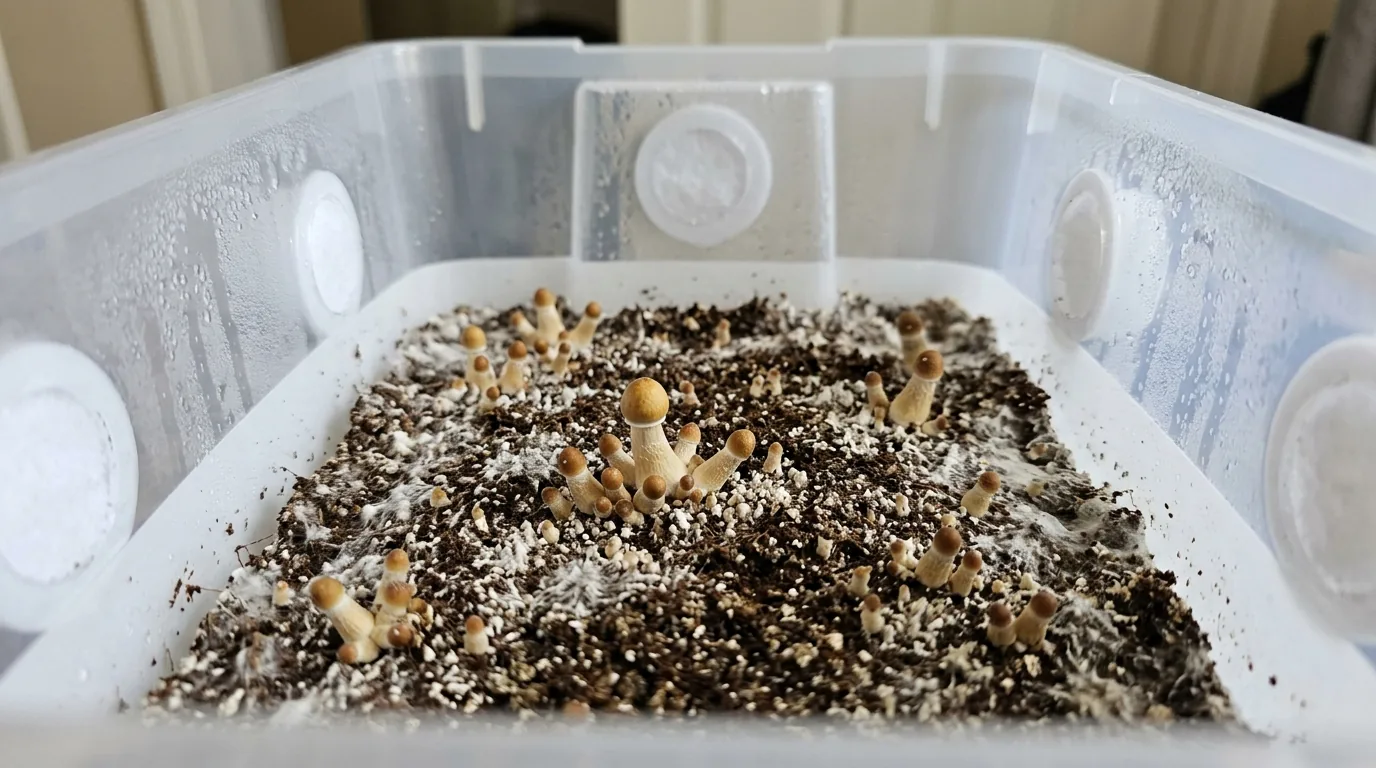
Most forgiving species. Pins readily with FAE and humidity at 68-80°F. The workhorse for beginners.
Stubborn pinners: Certain cubensis strains (Treasure Coast, Penis Envy strains) are notoriously slow to pin. PE strains in particular may require extended FAE, cold shocking, or casing to initiate.
Psilocybe cyanescens / P. azurescens
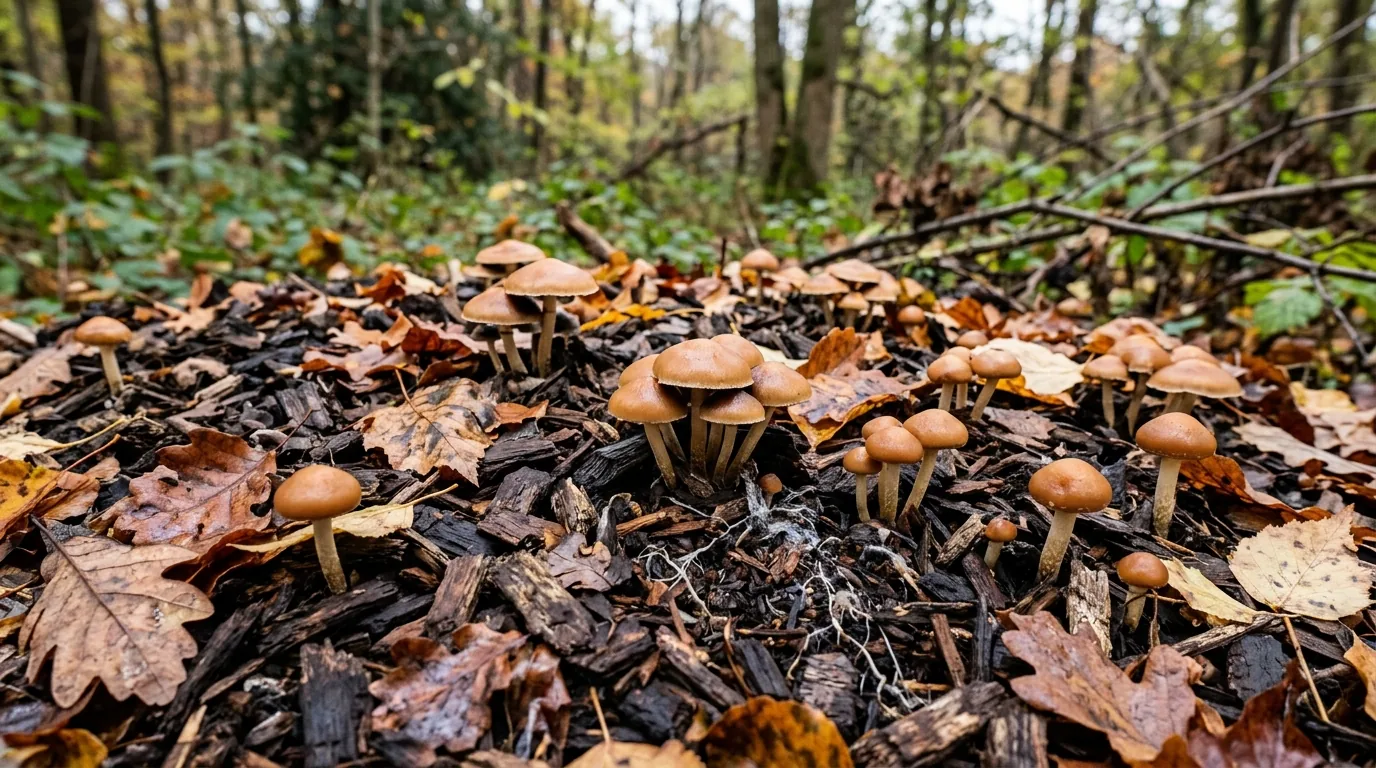
Require cooler fruiting temperatures: 45-65°F (7-18°C). Will not fruit well at room temperature. Outdoor cultivation in fall/winter is often the most reliable approach.
Panaeolus cyanescens (Pan Cyan)
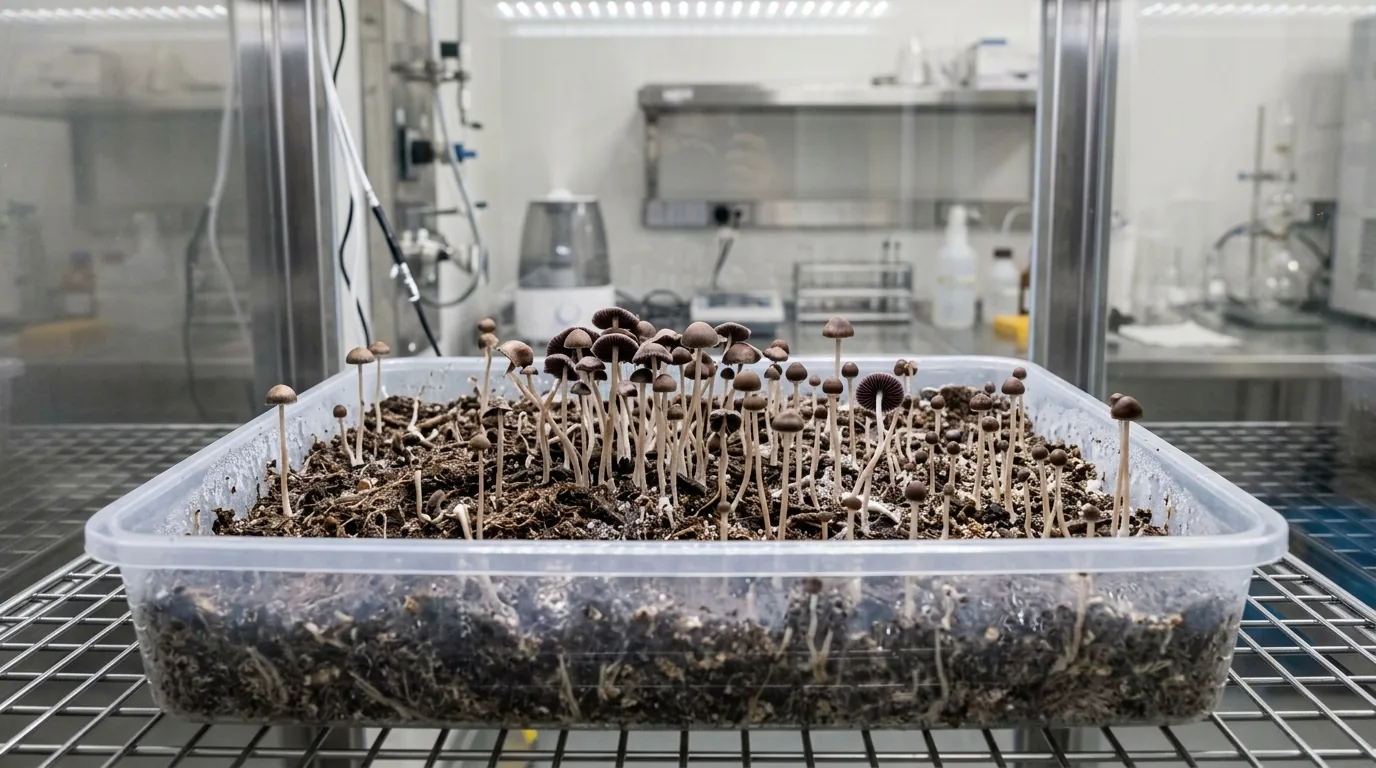
Requires heat and high humidity — prefers fruiting at 78-86°F (25-30°C). Needs very high humidity (95%+). Does not respond well to cold or temperature drops.
Diagnosing Pinning Problems
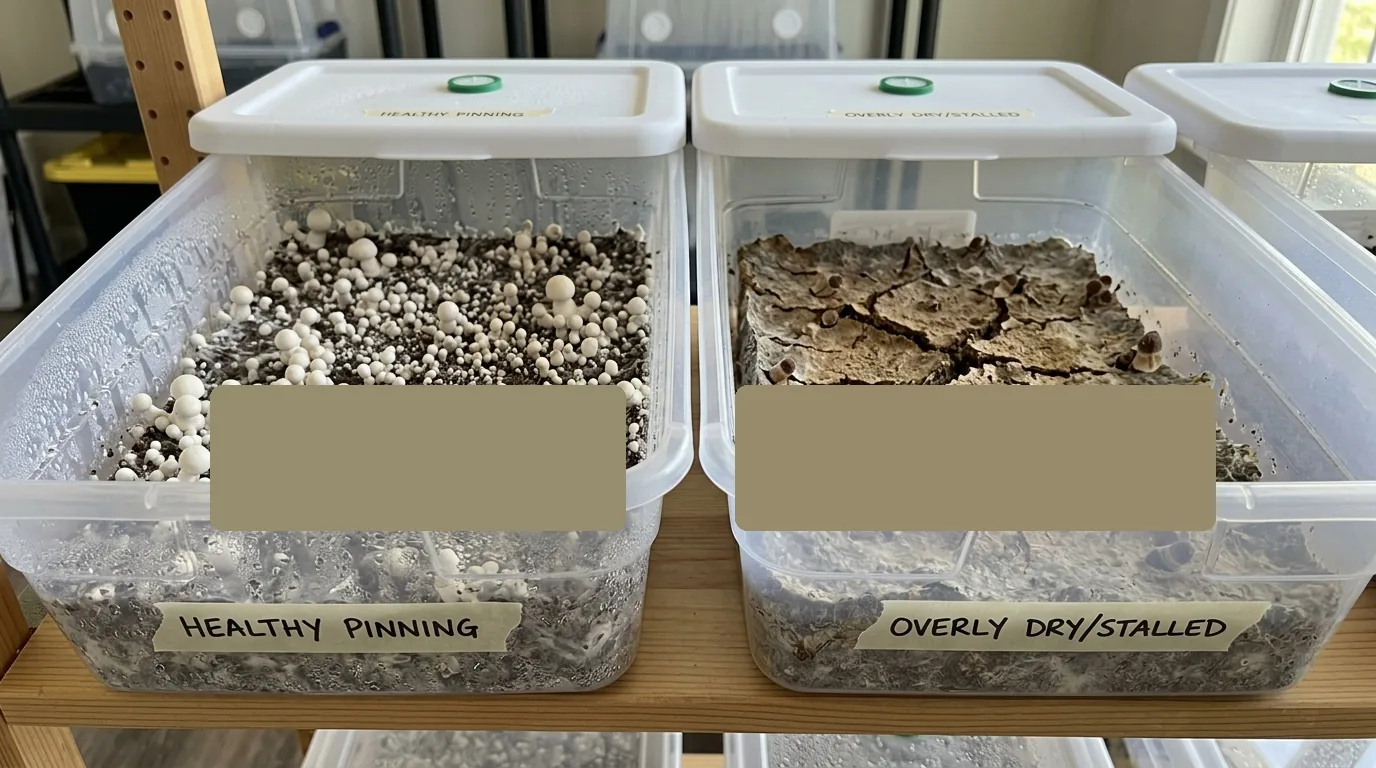
No pins after 2 weeks in fruiting conditions: Check CO2 first (FAE frequency), then humidity, then temperature.
Pins forming at sides or bottom of substrate: CO2 is too high — pins are "escaping" to find air. Increase FAE significantly.
Pins forming but aborting before development: Humidity fluctuation. Pins are extremely sensitive to drying out. Ensure consistent humidity; mist more frequently.
Surface overlay (thick white mat) preventing pinning: Scratch or score the surface lightly with a sterile fork. The disruption often breaks overlay and initiates pinning.
Pinning only at edges: Center of substrate may be too wet (anaerobic) or CO2 is concentrated in the center. Both are possible. Try scoring the center and increasing FAE.
Monotub Pinning Specifically
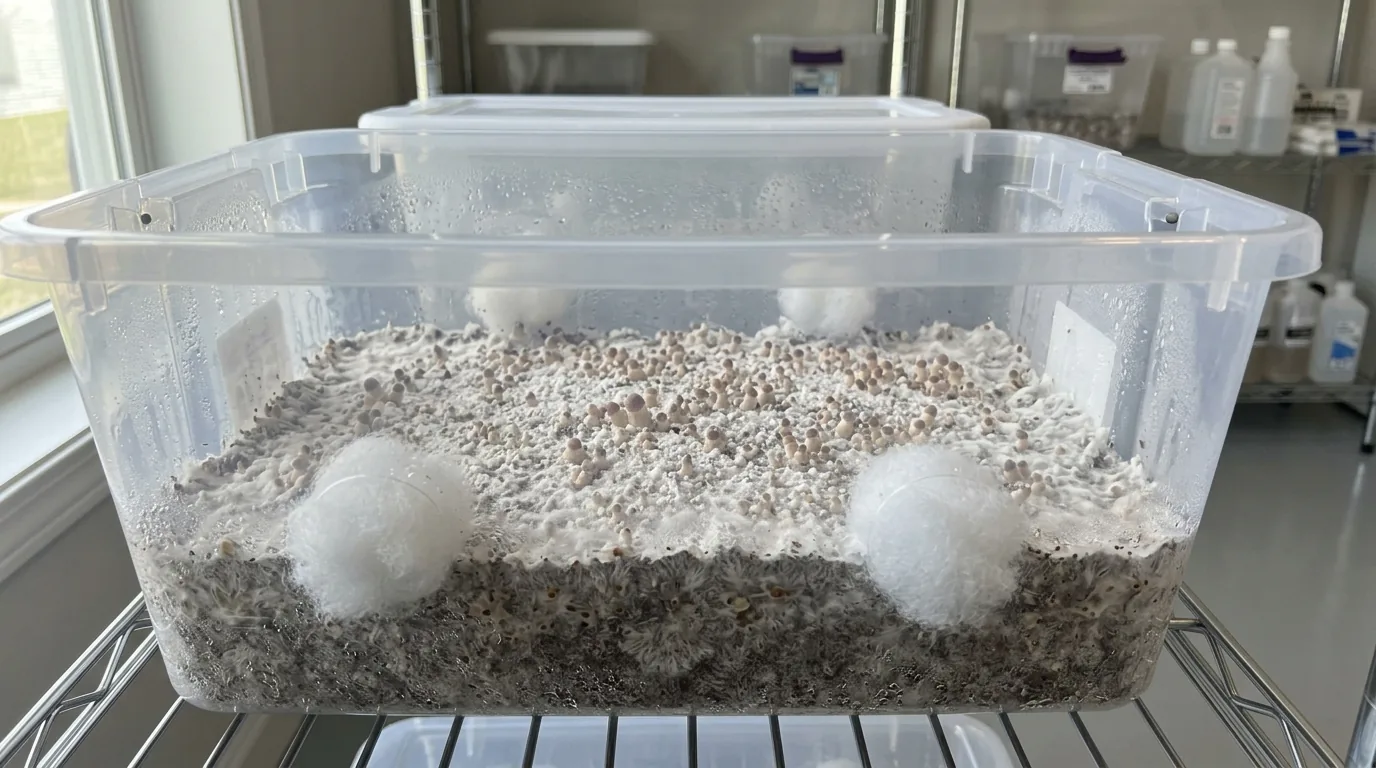
Monotubs create a unique CO2 microenvironment. The closed tub without FAE ports will not pin — CO2 builds to levels that suppress fruiting. Standard monotub designs with holes or filter disks rely on passive gas exchange.
Improving monotub FAE:
- Ensure holes are unobstructed
- Fan briefly by opening the lid 1-2 times per day
- Some cultivators cut additional holes or enlarge existing ones for stubborn tubs
- "Unmonitored" tubs (leaving the lid slightly ajar) dramatically increase FAE at the cost of humidity — requires more misting to compensate
Common Problems & Troubleshooting
See the Contamination Guide for common issues.
Tips for Success
Take notes at every stage. Consistency beats perfection.