Bulk Substrate Comparison: Coco Coir, Manure, Straw, Hardwood, and More
Everything you need to know about Bulk Substrate Comparison: Coco Coir, Manure, Straw, Hardwood, and More — from materials to first harvest.
What You'll Need
- See full supply list in guide below.
Find grow supplies at vendors in our Directory.
Step-by-Step Process
Bulk Substrate Comparison: Coco Coir, Manure, Straw, Hardwood, and More
Substrate choice is one of the most consequential decisions in mushroom cultivation. The substrate feeds your mycelium, determines contamination risk, affects how aggressively a species fruits, and dictates whether you need to sterilize, pasteurize, or do nothing at all. No single substrate works best for every species or every situation. Understanding the characteristics of each helps you match substrate to species, method, and your own skill level.
Fast Substrate Match
Use this quick filter before choosing a recipe:
- Edible species first: Straw and hardwood blocks are strong legal defaults for oysters, shiitake, lion's mane, and other gourmet mushrooms.
- Nutrition level: Rich substrates demand stricter sterilization and faster colonization; beginners usually learn more from lower-nutrition, forgiving mixes.
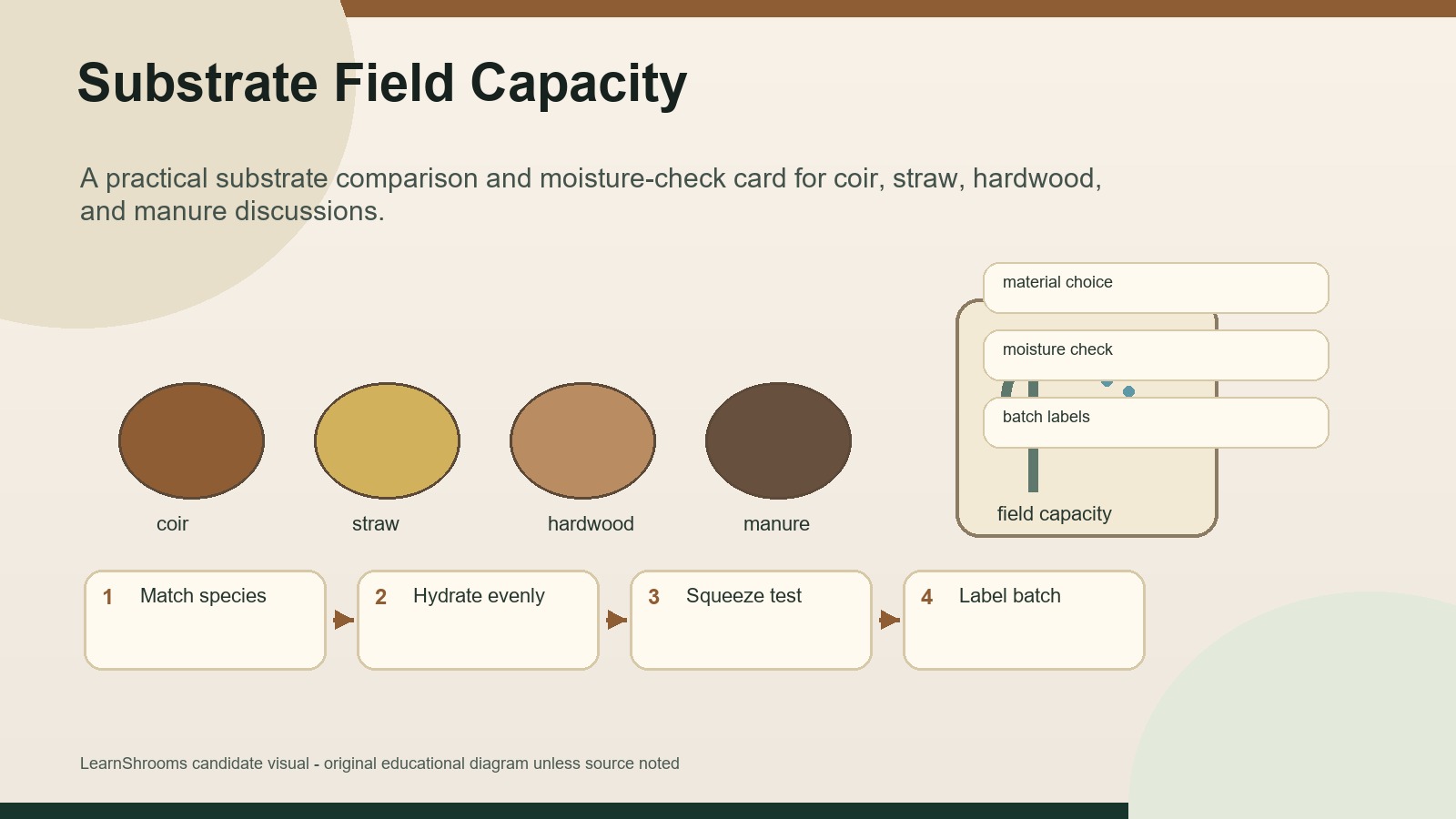
- Moisture check: Field capacity is a tactile target, not a number. A few drops under a firm squeeze is the safer starting point.
- Disposal plan: Any substrate that turns green, black, pink, slimy, or sour-smelling should be contained and discarded, not rescued.
Why Substrate Choice Matters
Mycelium digests its substrate through enzymatic breakdown, extracting carbon, nitrogen, and trace minerals. Different species evolved to digest different types of organic matter — psilocybe cubensis in dung-rich tropical soils, oyster mushrooms in wood and straw, lion's mane on hardwood. A substrate well-matched to a species produces faster colonization, more aggressive fruiting, and more flushes. A mismatched substrate yields slow growth, poor pins, and higher contamination rates.
Two technical considerations cut across all substrates: sterilization vs. pasteurization and C:N ratio (the ratio of carbon to nitrogen). Substrates high in nutrition (supplemented hardwood, manure) need full sterilization at 15 PSI in a pressure cooker because competing organisms thrive in nutrient-rich environments. Low-nutrition substrates (straw, plain coco coir) can often be pasteurized — heated to 160–180°F for 1–2 hours — since contaminants have less to compete for and mycelium colonizes quickly.
Substrate Comparison
Coco Coir / Vermiculite (CVG)
Overview: The beginner's go-to substrate. Coco coir is the fibrous husk byproduct of coconut processing. Combined with vermiculite (a puffed mineral that holds moisture and air), it creates a light, well-draining medium.
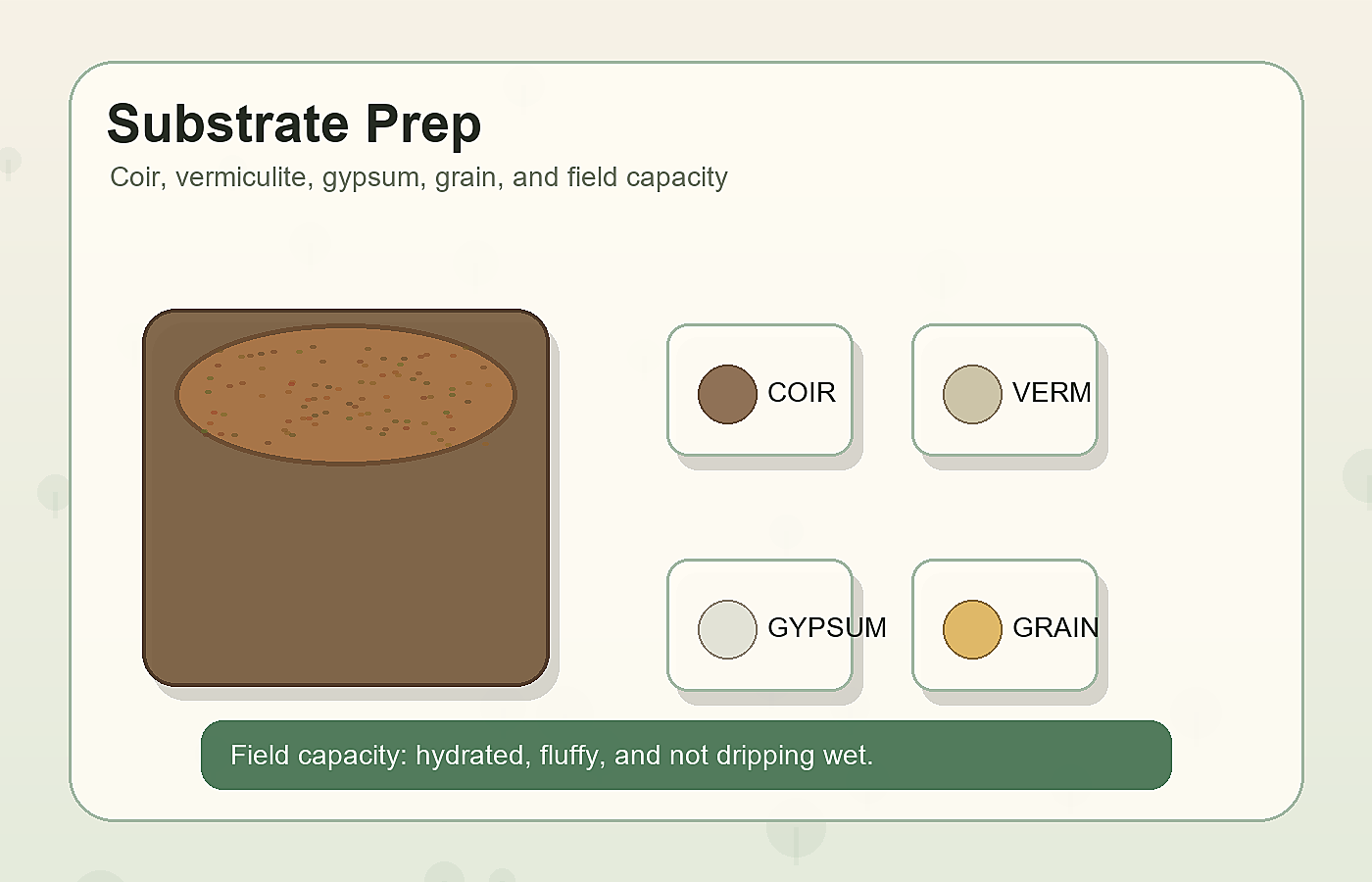
Preparation: Hydrate coco coir with boiling water, mix in vermiculite, check for field capacity. No pressure cooker required — the boiling water pasteurizes adequately. Ready to use in hours.
Difficulty: Low. Very forgiving of moisture variation. Pasteurization-only.
Contamination risk: Low. The low-nutrition profile makes it hard for competitor molds to establish.
Cost: Low. Coco coir bricks are inexpensive and available at garden centers.
Species suitability: Excellent for Psilocybe cubensis. Not ideal for wood-lovers (oysters, lion's mane) or high-nutrition-demanding species.
Yield: Moderate. CVG alone produces solid flushes but not maximum yields — supplementing with small amounts of bran or gypsum increases output at the cost of higher contamination risk.
Pasteurized Cow Manure
Overview: Cubensis's natural habitat is dung, so aged, pasteurized cow manure produces some of the fastest colonization and most vigorous fruiting of any substrate for that species.
Preparation: Use aged manure (not fresh) to reduce ammonia content. Pasteurize at 160–180°F for 2–3 hours. Field capacity hydration. Some cultivators add coco coir or vermiculite to improve drainage and lower contamination risk.
Difficulty: Moderate. Manure's nutritional richness demands faster colonization to outcompete competing organisms. Sourcing quality manure can be inconsistent.
Contamination risk: Moderate to high without proper sourcing. Well-aged, cleanly pasteurized manure performs well. Fresh or poorly stored manure is a contamination source.
Cost: Low to free if you have access to livestock. Bagged manure is available at garden centers.
Species suitability: Outstanding for P. cubensis. Appropriate for some other coprophilous (dung-loving) species. Not appropriate for wood-loving species.
Yield: High when colonization is fast and conditions are dialed in.
Straw (Wheat, Oat, or Rye)
Overview: Straw is the primary substrate for oyster mushrooms and some other wood-associated species. It is low-nutrition enough that it can often be pasteurized rather than sterilized.
Preparation: Chop straw to 2–4 inch lengths. Pasteurize by submerging in 160–180°F water for 1–2 hours, or lime-pasteurize (cold water + hydrated lime at pH 12 for 12–18 hours). Drain and allow to cool to room temperature before inoculating.
Difficulty: Low to moderate. Lime pasteurization requires attention to pH but eliminates the need for any heat source.
Contamination risk: Low for fast-colonizing species. Cobweb mold can appear on surfaces but is usually outrun by healthy oyster mycelium.
Cost: Very low. Agricultural byproduct.
Species suitability: Excellent for Pleurotus species (oysters). Adequate for P. cubensis, though yields are lower than manure or CVG-based substrates.
Yield: Very high for oyster species. Moderate for cubensis.
Supplemented Hardwood Sawdust (Master's Mix, Hardwood Fuel Pellets)
Overview: Hardwood sawdust, particularly from oak or alder, supports lion's mane, shiitake, maitake, and other gourmet species. Master's Mix — a 50/50 blend of hardwood sawdust and soy hulls — is a common supplemented formula that boosts yields significantly. Hardwood fuel pellets (HWFP, also called wood fuel pellets) are a widely available, inexpensive form that hydrates easily.
Preparation: Sterilization required at 15 PSI for 2.5–3 hours. Supplemented formulas are highly nutritious and will host aggressive contaminants without full sterilization.
Difficulty: High. Requires a pressure cooker, proper hydration (110–120% field capacity for sawdust, which is denser than coir), and faster colonization to outcompete bacteria and Trichoderma.
Contamination risk: High, particularly for supplemented mixes. Plain HWFP is lower risk.
Cost: Low to moderate. Hardwood pellets are inexpensive. Soy hulls cost more but are widely available through homebrew and livestock supply sources.
Species suitability: Outstanding for wood-loving gourmet species. P. cubensis colonizes it but is not optimized for it.
Yield: Very high for appropriate species.
Peat-Based Mixes
Overview: Peat moss is more often used as a casing layer component than as a primary substrate, but peat-based bulk mixes are used for species like Agaricus bisporus and some specialty cultivations.
Preparation: Pasteurization in most applications. pH adjustment with lime for bisporus (target pH 7–7.5). Peat is naturally acidic (pH 4–5).
Difficulty: Moderate. pH management and consistent hydration are key variables.
Cost: Low.
Species suitability: Best for A. bisporus and casing-dependent species.
Grain Spawn: Wild Bird Seed vs. Rye Berries
Grain spawn is what you inoculate first — before you ever reach bulk substrate. Two grains dominate home cultivation.
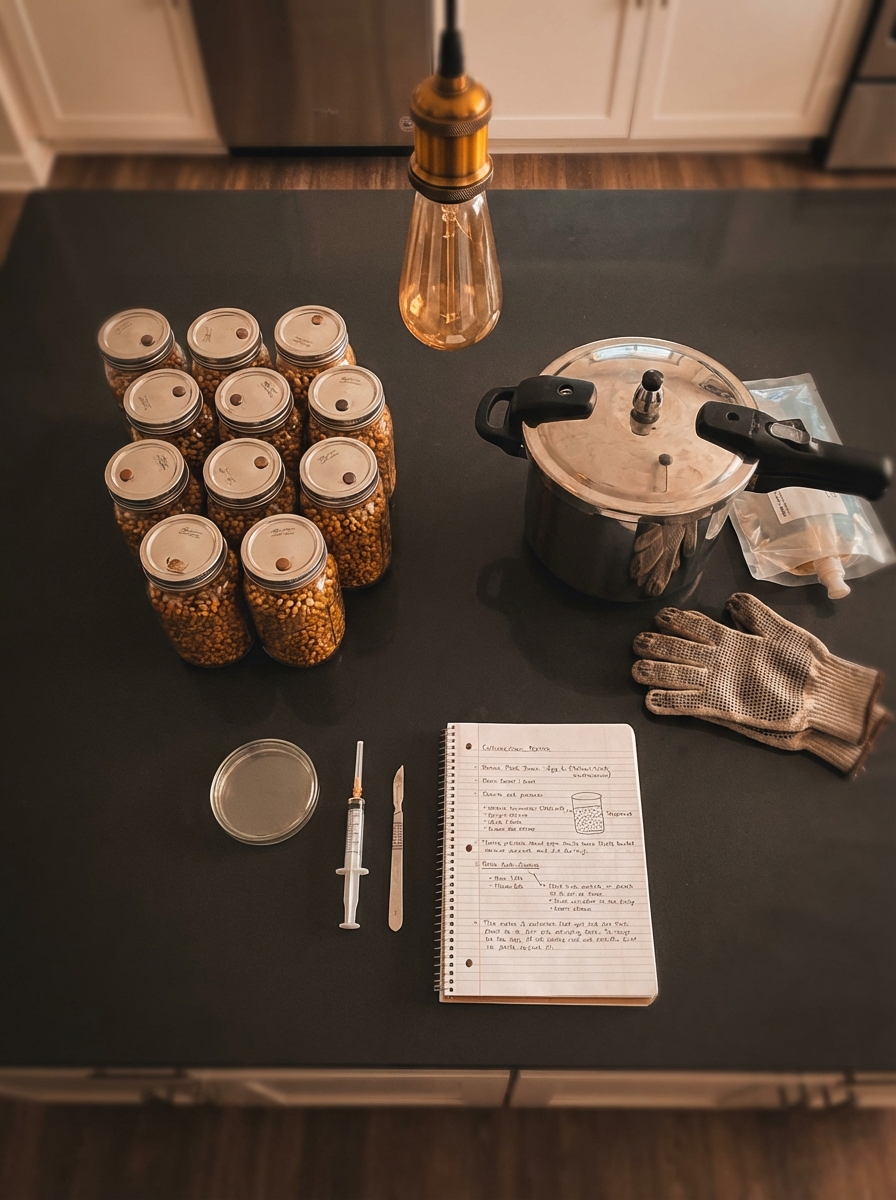
Wild bird seed (WBS): A mix of millet, milo, sunflower, and other seeds. Available cheaply in large bags. Requires a 12–24 hour soak, boiling for 15–20 minutes until cooked but not split, drying to surface-dry, then sterilization at 15 PSI for 60–90 minutes. The mixed seed sizes create more air pockets and contact points than uniform grains, which can accelerate colonization. The sunflower shells can be a nuisance. Contamination risk is moderate.
Rye berries: The standard professional grain. Dense, uniform, and highly nutritious. Requires a 12–24 hour soak, simmering for 15–20 minutes until cooked through (test by biting — the grain should give but not be mushy), surface drying on a towel, then sterilization at 15 PSI for 60–90 minutes. Rye colonizes extremely fast for experienced cultivators but can harbor wet spots that encourage bacteria if hydration isn't dialed in. Contamination risk is moderate to high for beginners.
Choosing between them: WBS is more forgiving for new cultivators because the seed size variation creates more gas exchange and the lower individual grain nutrition reduces bacterial pressure slightly. Rye offers faster, more uniform colonization once technique is consistent.
Key Decision: Sterilization or Pasteurization?
Pasteurize (160–180°F, 1–3 hours): CVG, plain straw, plain coco coir, plain hardwood pellets without supplements.
Sterilize (15 PSI, 2.5–3 hours in pressure cooker): Supplemented sawdust mixes, rye berries, wild bird seed, any nutrient-rich grain, all grain spawn regardless of type.
When in doubt, sterilize. Over-sterilization rarely causes problems. Under-sterilization is a primary contamination vector.
Common Problems & Troubleshooting
See the Contamination Guide for common issues.
Tips for Success
Take notes at every stage. Consistency beats perfection.