Contamination Identification: Visual Guide to Common Contaminants
Everything you need to know about Contamination Identification: Visual Guide to Common Contaminants — from materials to first harvest.
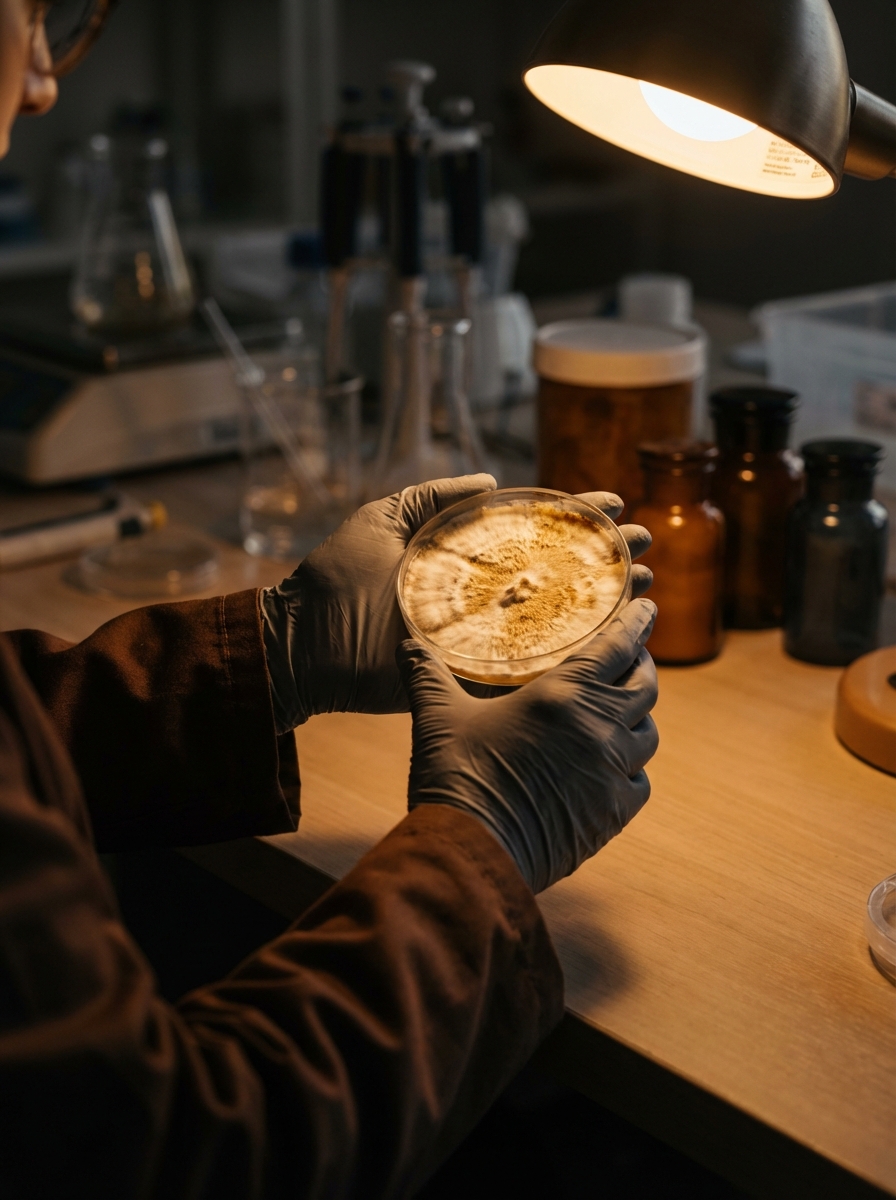

What You'll Need
- See full supply list in guide below.
Find grow supplies at vendors in our Directory.
Step-by-Step Process
Contamination Identification: Visual Guide to Common Contaminants
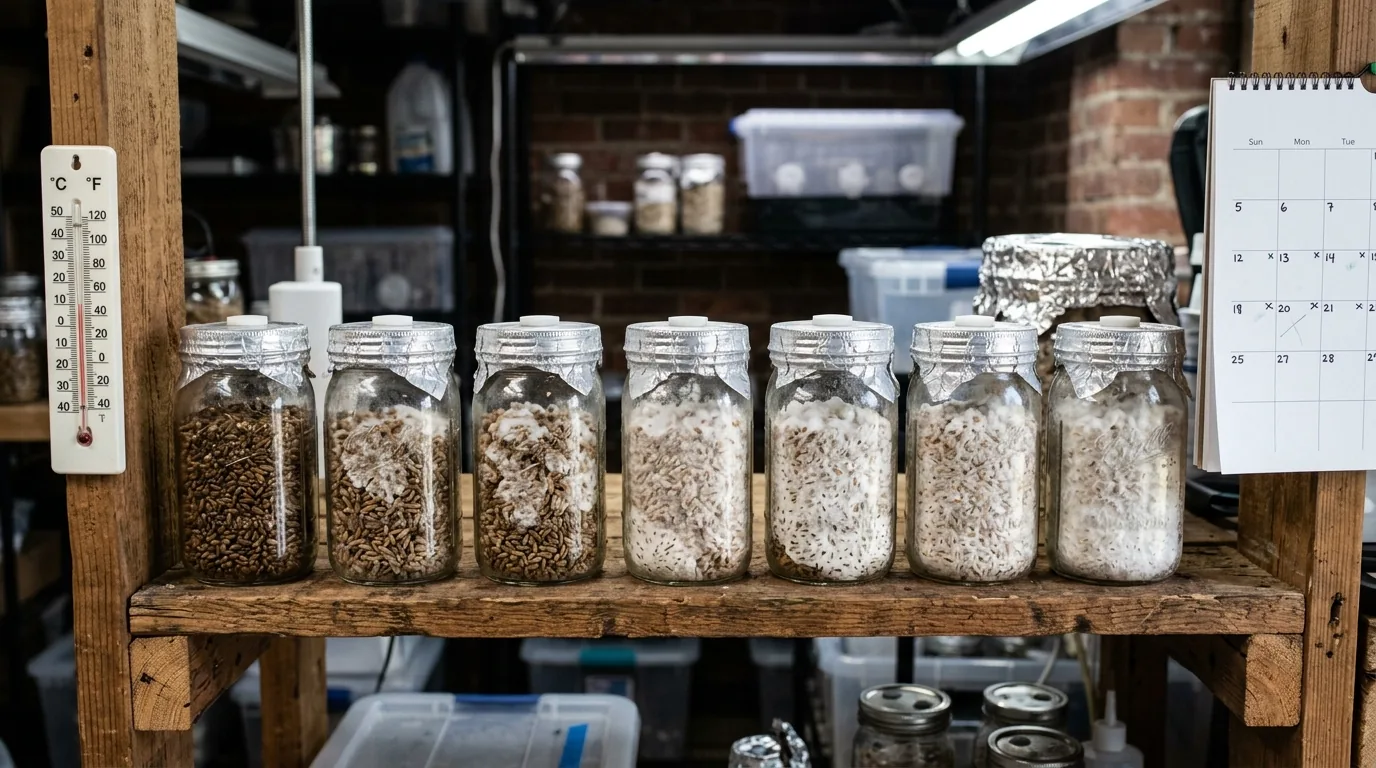
Contamination is the primary limiting factor in amateur mushroom cultivation. Learning to identify contaminants quickly — and distinguishing them from healthy mycelium — prevents you from wasting time on lost jars, spreading contamination to other cultures, and misinterpreting normal mycelial development as a problem.
The Cardinal Rule
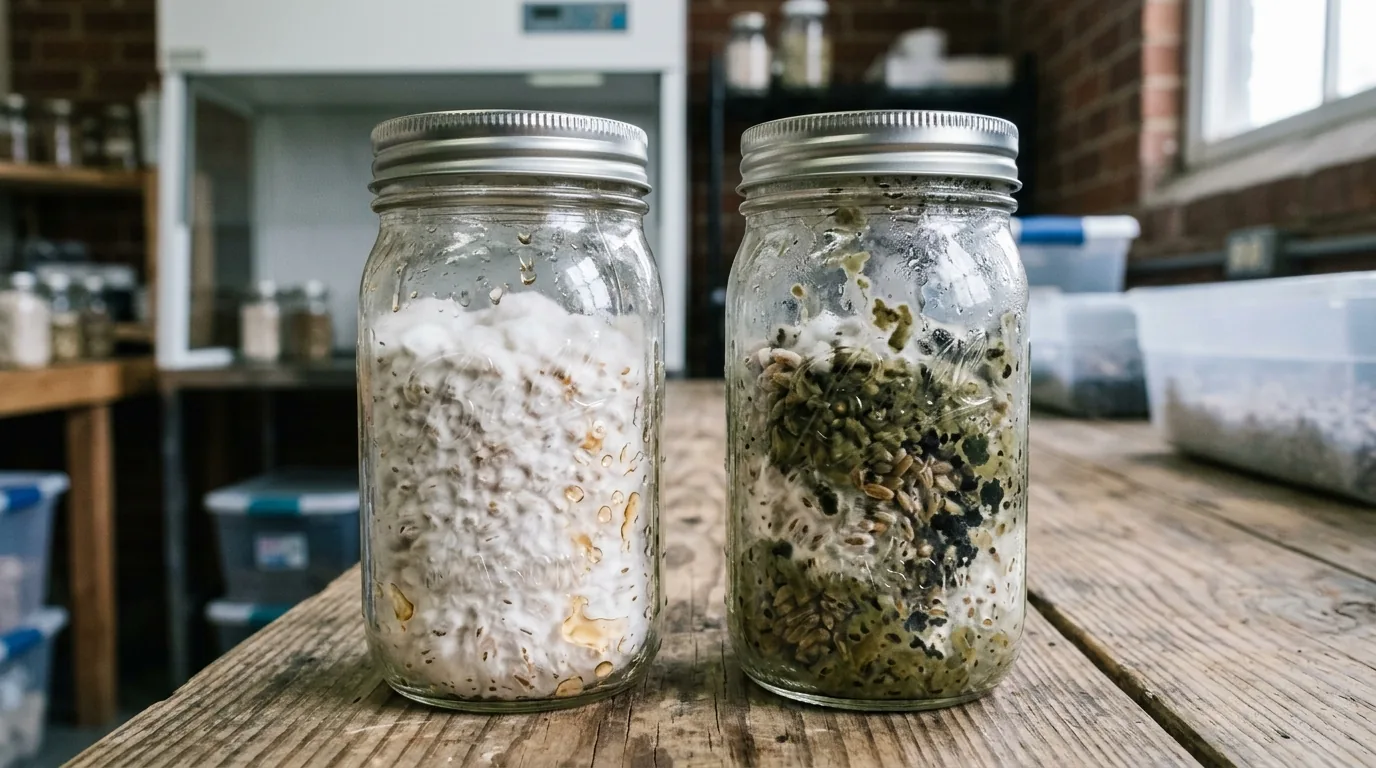
When in doubt, throw it out.
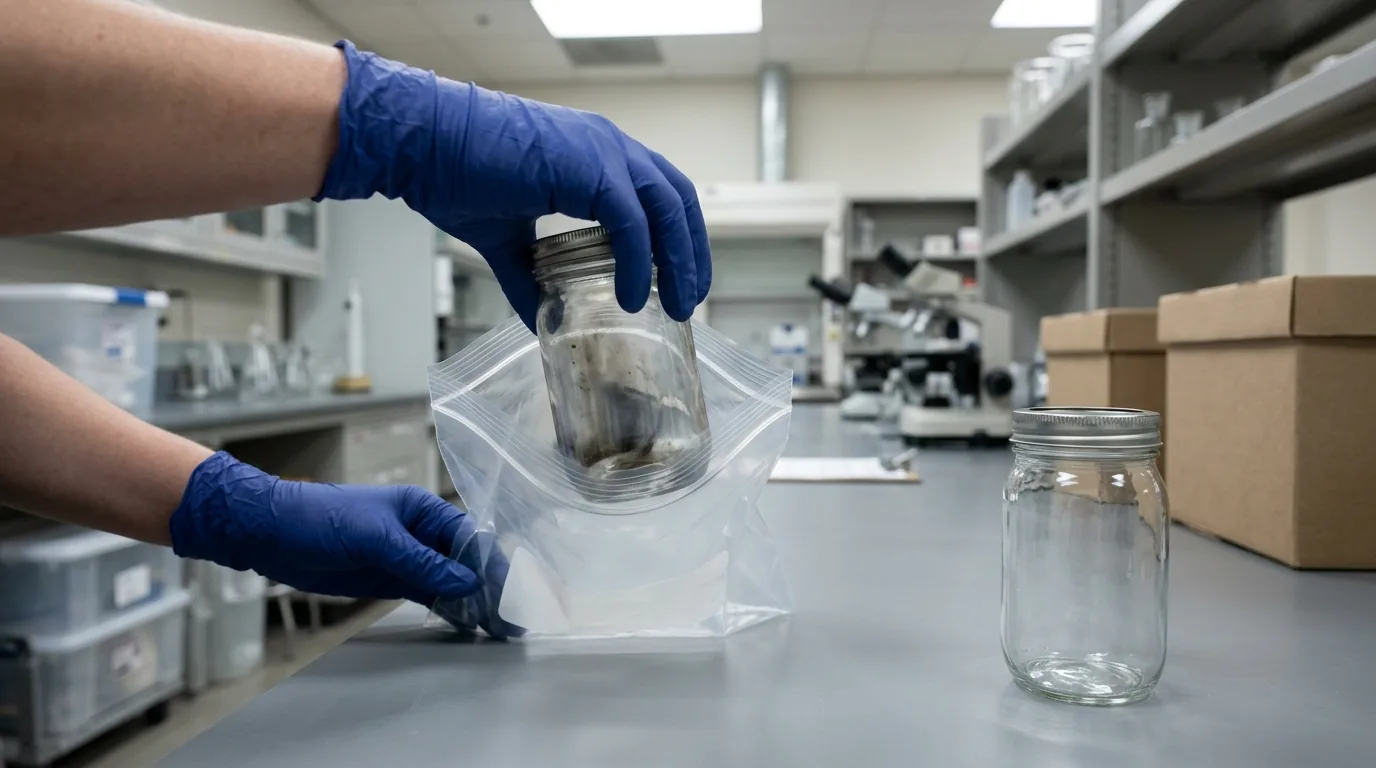
This is not overcaution — it's practical economics. A contaminated jar costs far less to discard than the time and materials lost if you let it spread. Seal contaminated material in a bag and discard outside your grow space. Never open contaminated jars inside your workspace.
Healthy Mycelium: What You're Looking For
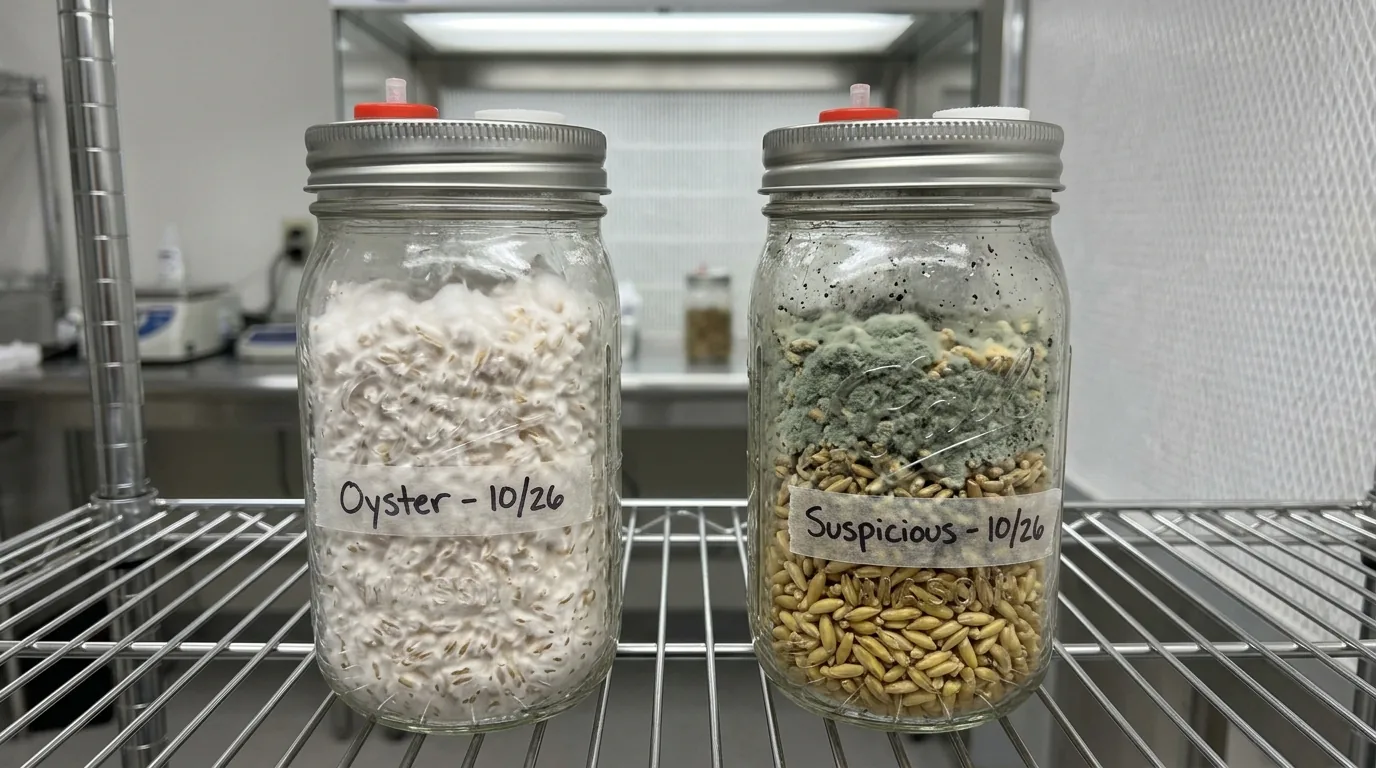
Before identifying problems, know what success looks like.
Healthy Psilocybe cubensis mycelium characteristics:
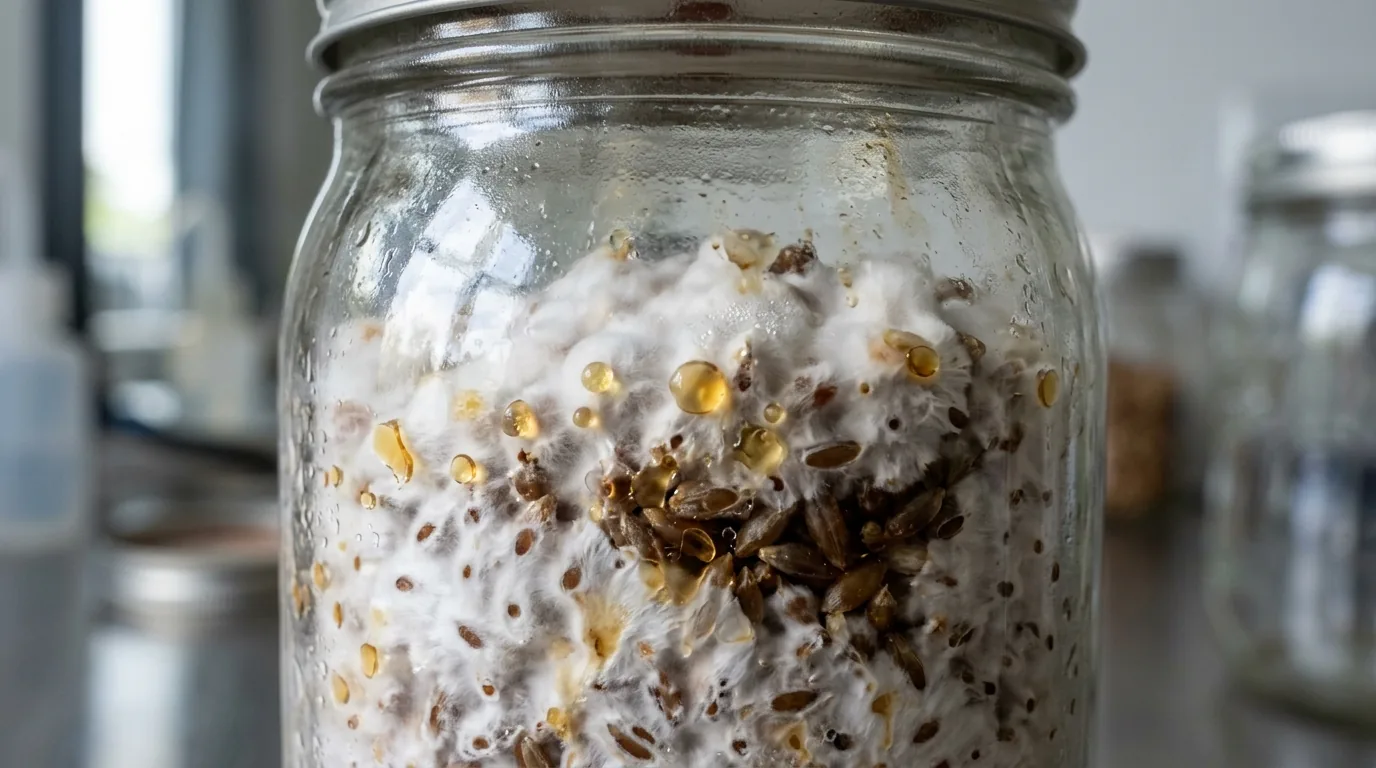
- Pure white to slightly off-white
- Fluffy, rope-like, or rhizomorphic (string-like) texture depending on strain
- Grows from inoculation point outward in a consistent pattern
- Mild grain/earthy smell — not sour, not cheesy, not ammonia-like
- May show slight yellowing as it matures (metabolite production — usually normal)
Metabolite secretion: Some cultures produce yellow, amber, or brownish liquid droplets or patches. This is a metabolic byproduct and is normal. It can be alarming to new cultivators but is generally not a contamination indicator.
Aerial hyphae: Fluffy "fuzzy" mycelium growing upward from the substrate surface is healthy aerial mycelium, not mold.
Common Contaminants
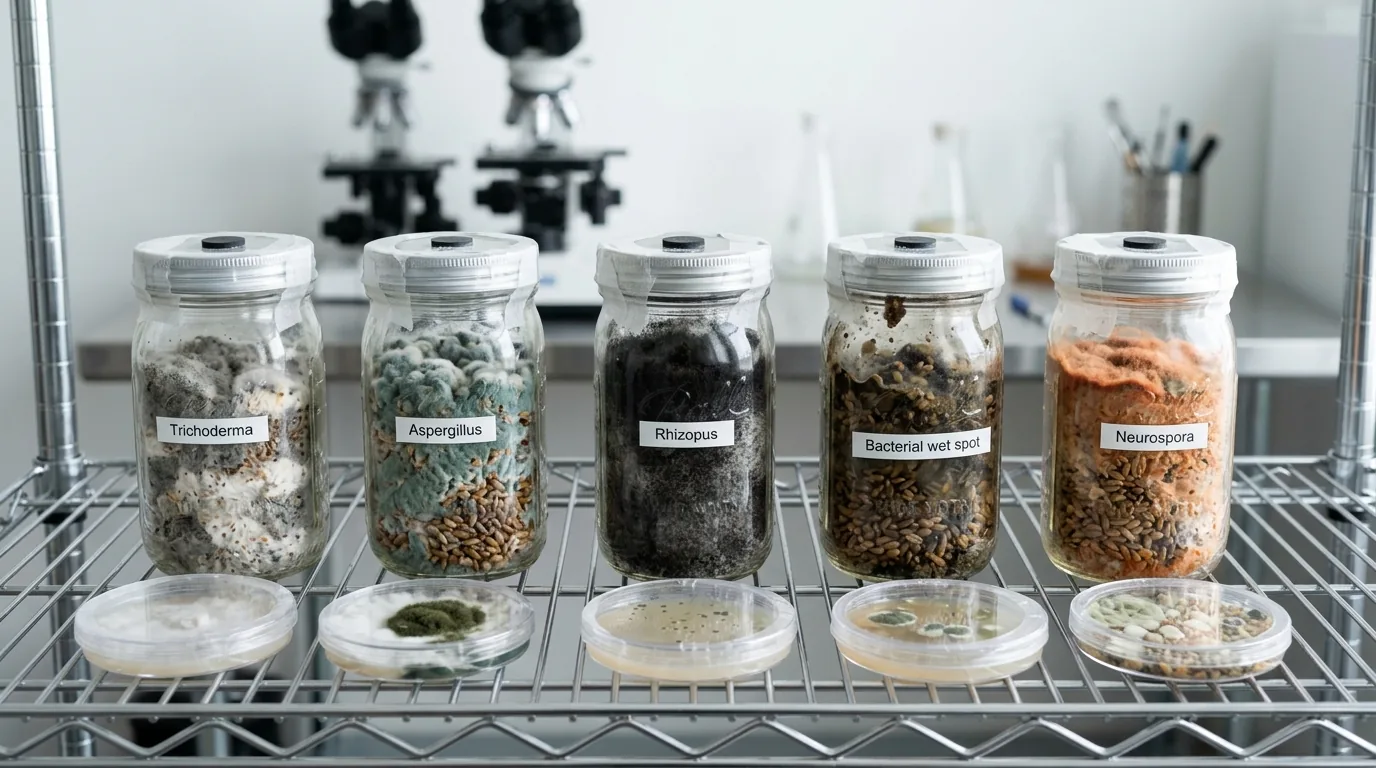
Trichoderma (Green Mold)
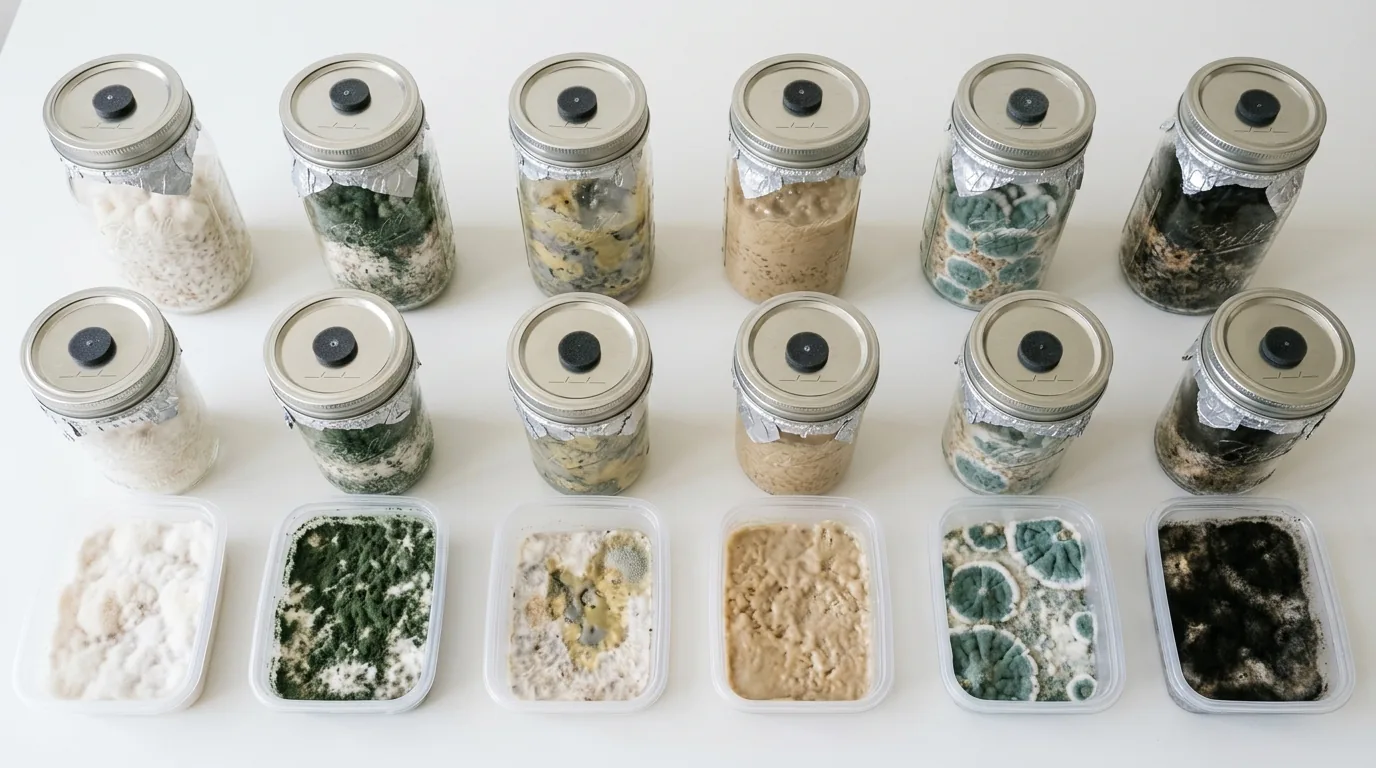
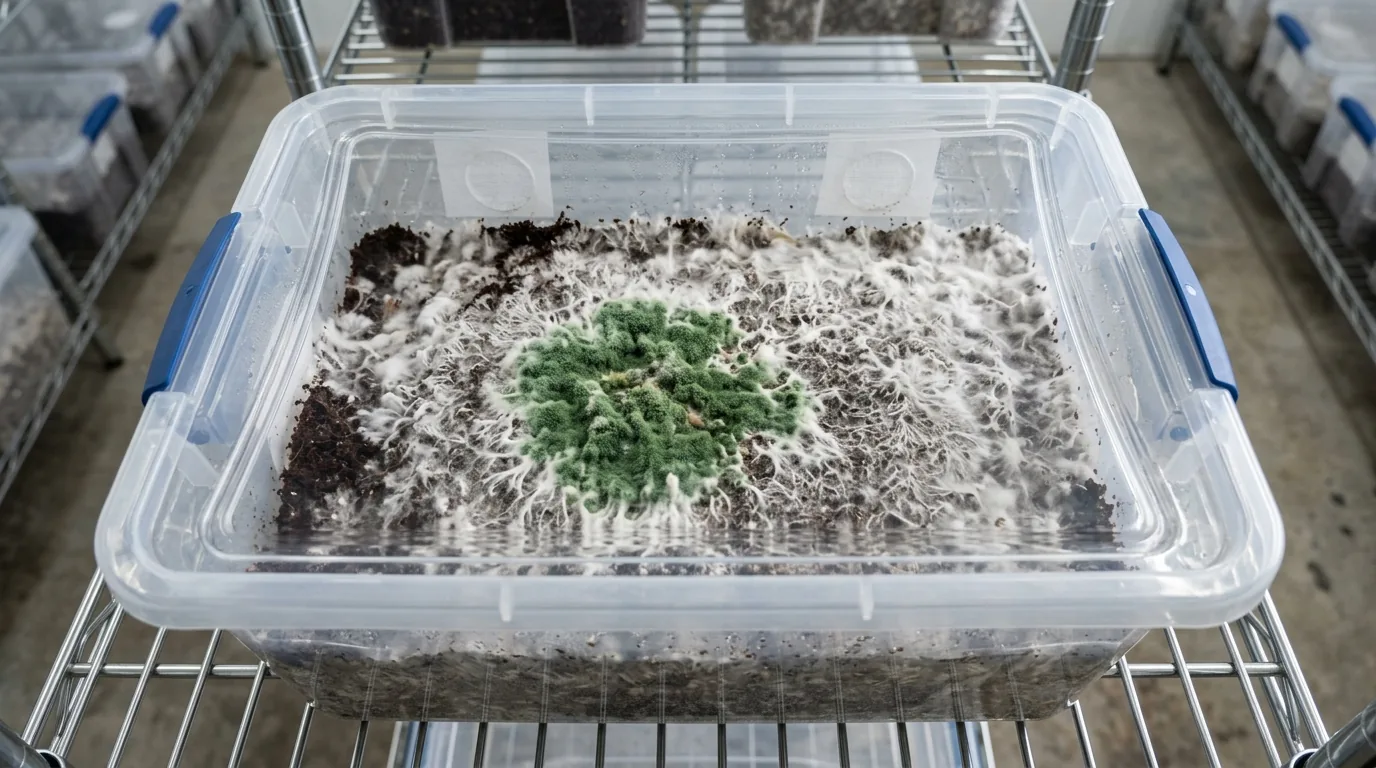
Appearance: Starts white, rapidly turns bright green or dark green as spores form. May start as small white patches that don't match the mycelial growth pattern.
Why it's dangerous: Trichoderma is the most aggressive and common competitor in cultivation. It spreads rapidly and produces antifungal compounds that kill mycelium. A single contaminated jar can ruin an entire grow space.
Smell: Strong musty, gym-locker odor.
Identification tips:
- Initial white patches at edges or bottom of jar (not spreading from inoculation)
- Patches appear denser and less fluffy than mycelium
- Green color develops within days of white appearance
Action: Remove from grow space immediately, seal, discard. Wipe down all surfaces with 70% isopropyl alcohol.
Aspergillus (Black/Gray/Dark Green Mold)
Appearance: Black, dark gray, or dark olive spots with powdery texture. Often appears at the top of grain jars, particularly if moisture was excessive.
Why it's dangerous: Many Aspergillus species produce mycotoxins and can cause respiratory illness. Some strains are dangerous to inhale.
Action: Never open aspergillus-contaminated jars. Seal, double-bag, and discard outside. Do not expose yourself to spores.
Penicillium (Blue-Green/Turquoise Mold)
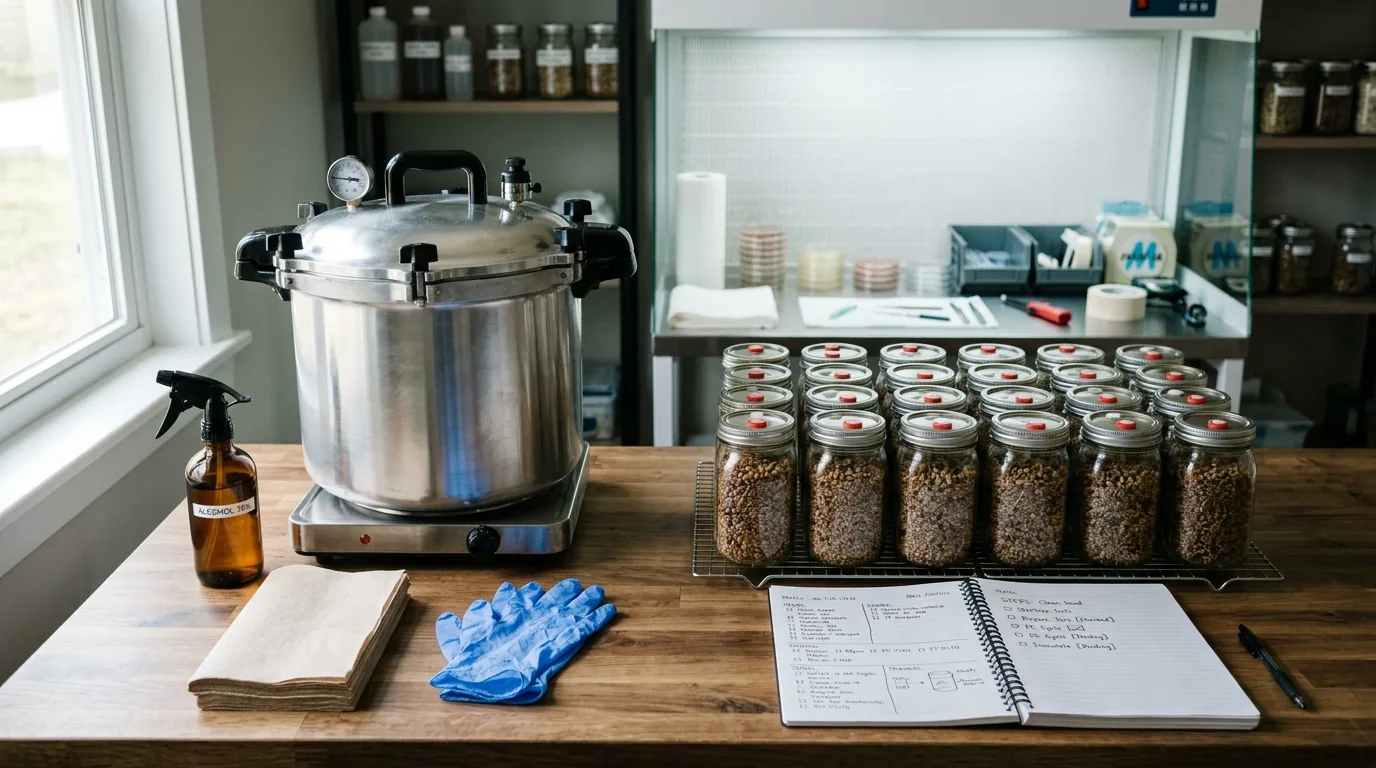
Appearance: Blue-green, turquoise, or gray-green powdery patches. Often confused with Trichoderma at early stages.
Smell: "Cheesy" or chemical — the same Penicillium genus that produces penicillin antibiotics has a distinctive smell.
Action: Same as Trichoderma — seal, remove, discard.
Cobweb Mold (Various species)
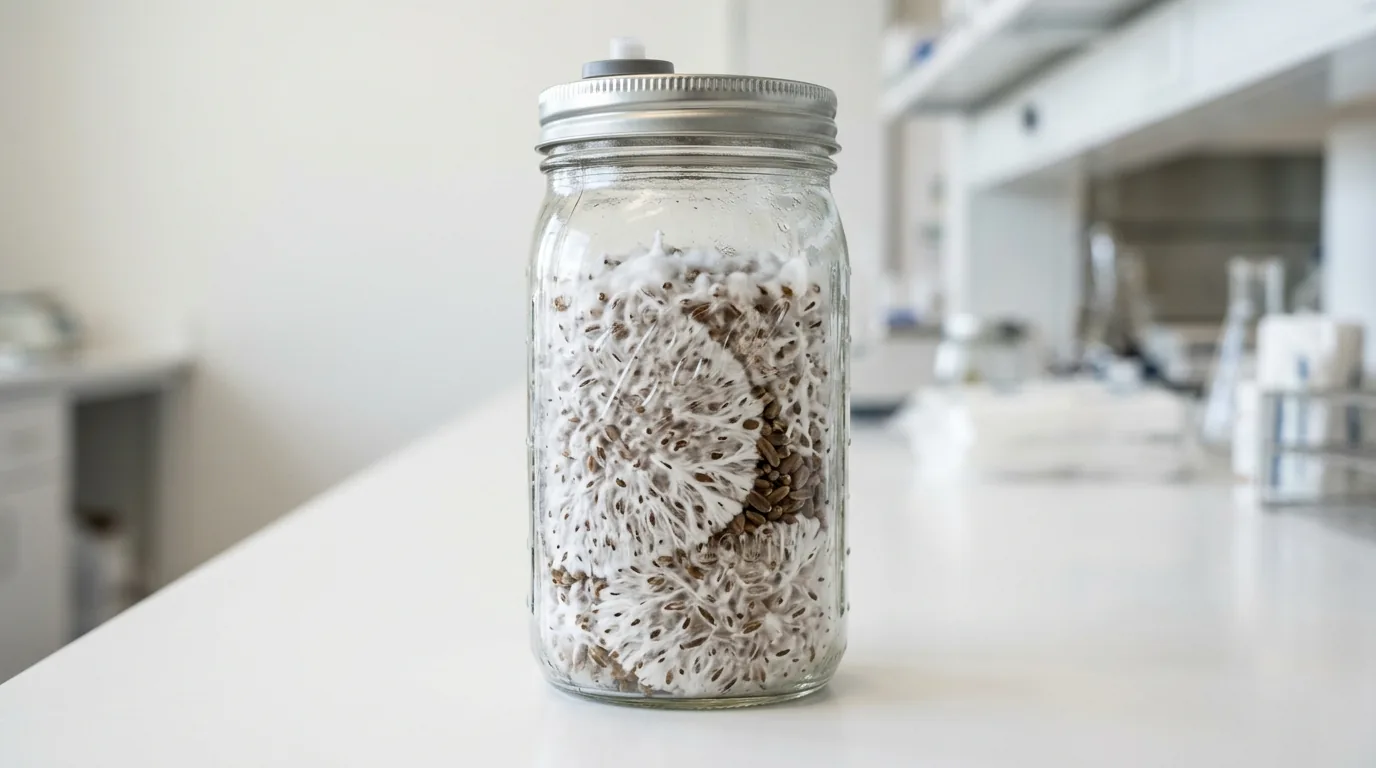
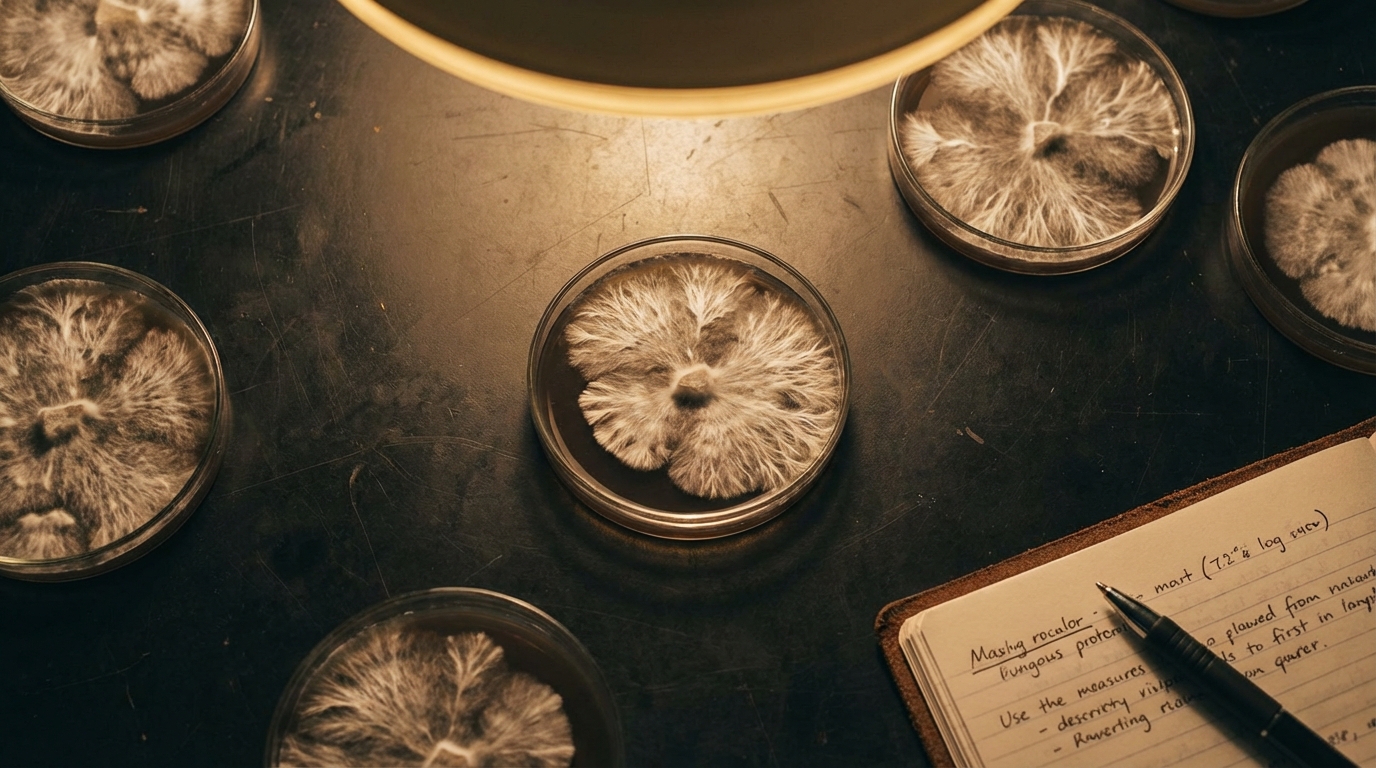
Appearance: Very thin, wispy, silvery-gray webbing on substrate or fruiting chamber surfaces. Unlike mycelium, it's extremely fine and doesn't have body.
Why it can be confused: Many cultivators mistake cobweb mold for healthy mycelium. The key difference: cobweb mold is visually wispy and light, like actual cobwebs. Healthy mycelium has more structure.
Good news: Cobweb mold is often easily treated by misting with water — it typically retreats and healthy mycelium overgrows it. Not always a death sentence for the grow.
Action: Mist gently and increase FAE. Monitor closely. If it spreads aggressively despite treatment, discard.
Bacterial Contamination
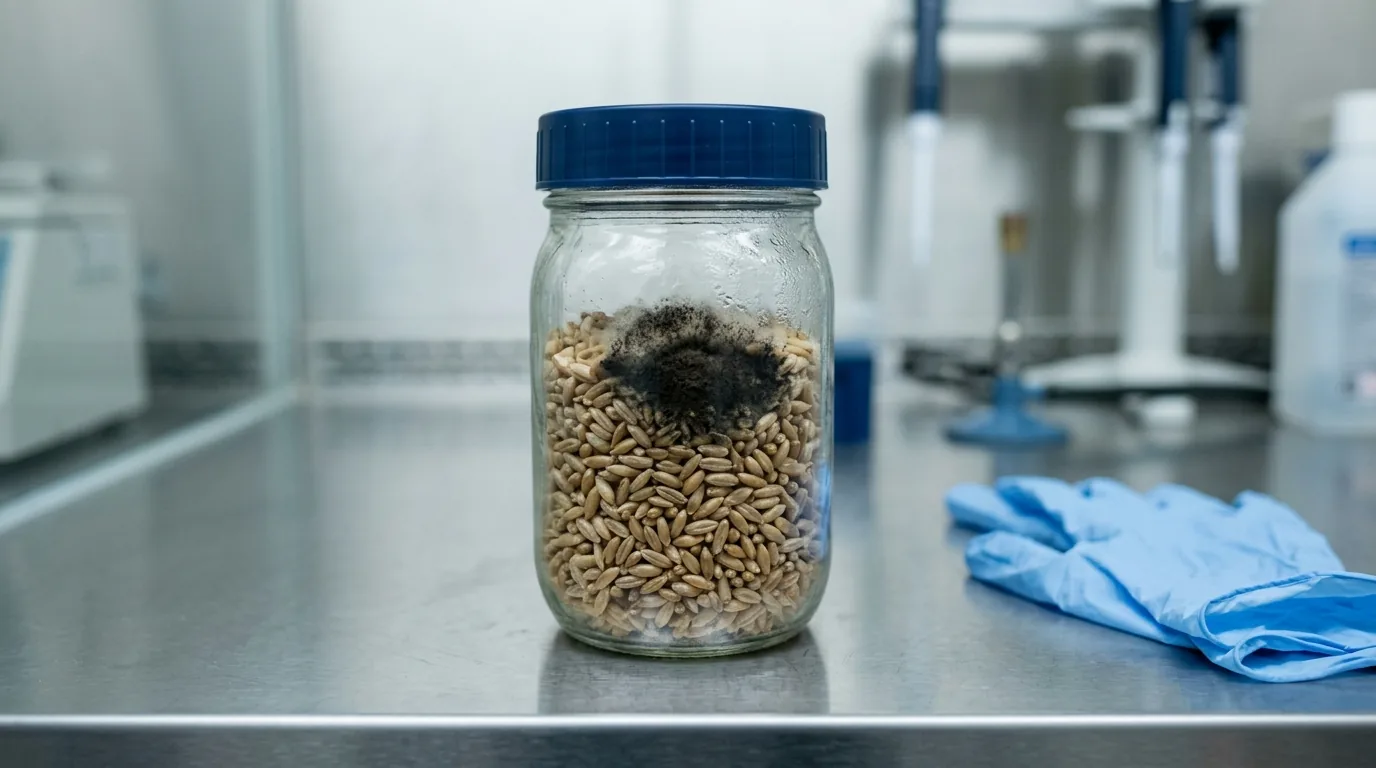
Appearance: Slimy patches, wet spots, liquid pooling with unusual color (yellow, orange, pink, brown). Substrate may appear water-damaged or have wet patches that don't dry.
Smell: Strong, sour, rotten, or fecal smell.
Causes: Over-wet grain, inadequate sterilization, contaminated water source, inoculation without proper sterile technique.
Action: Discard immediately. Bacterial contamination smells very bad and grows rapidly.
Bacterial Blotch
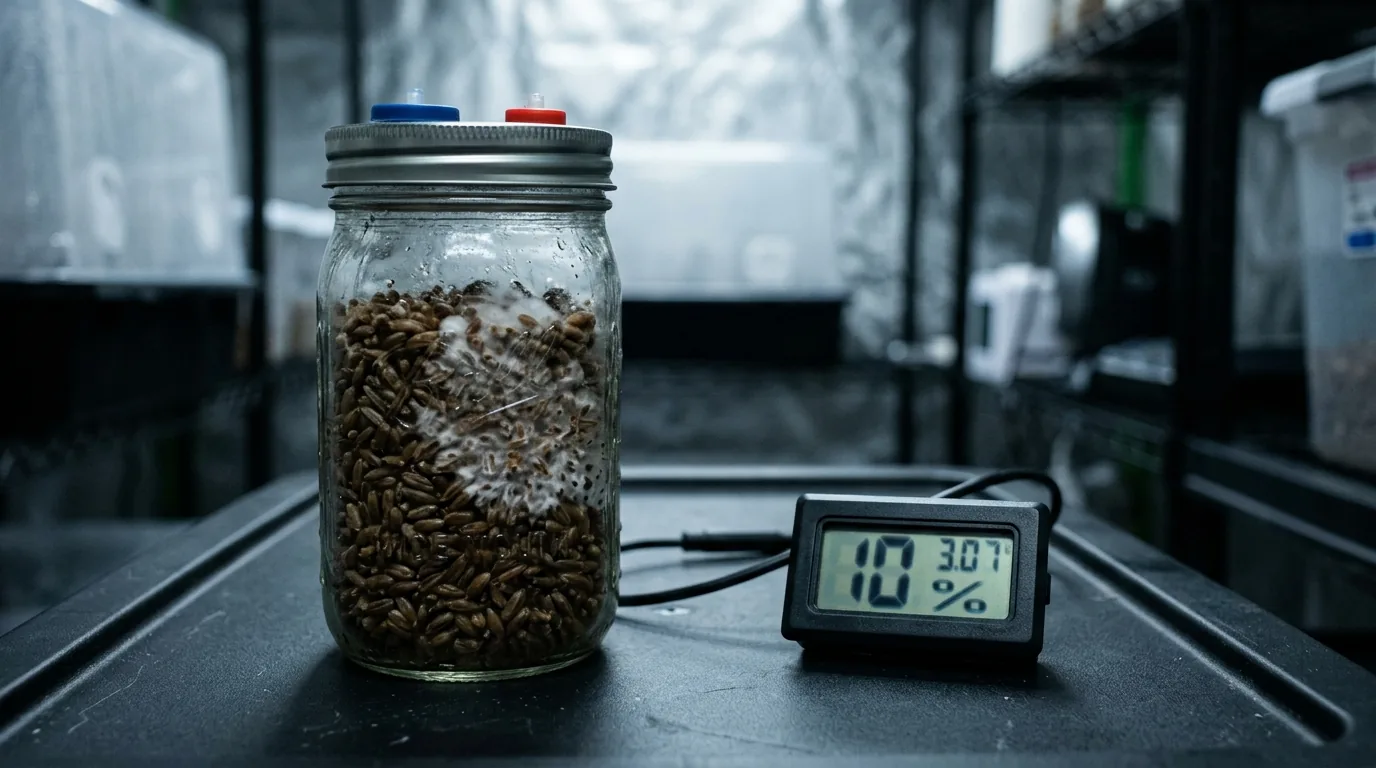
Appearance: Yellow, tan, or brown blotches on caps of fruiting mushrooms. May spread to other caps in the cluster.
Cause: Pseudomonas species — common environmental bacteria. Thrives in wet conditions; droplets of water on caps create ideal bacterial microhabitats.
Action: Reduce direct misting on fruiting bodies. Remove affected mushrooms promptly to prevent spread. Usually does not affect the substrate — can often continue harvesting from unaffected areas.
Lipstick Mold (Neurospora)
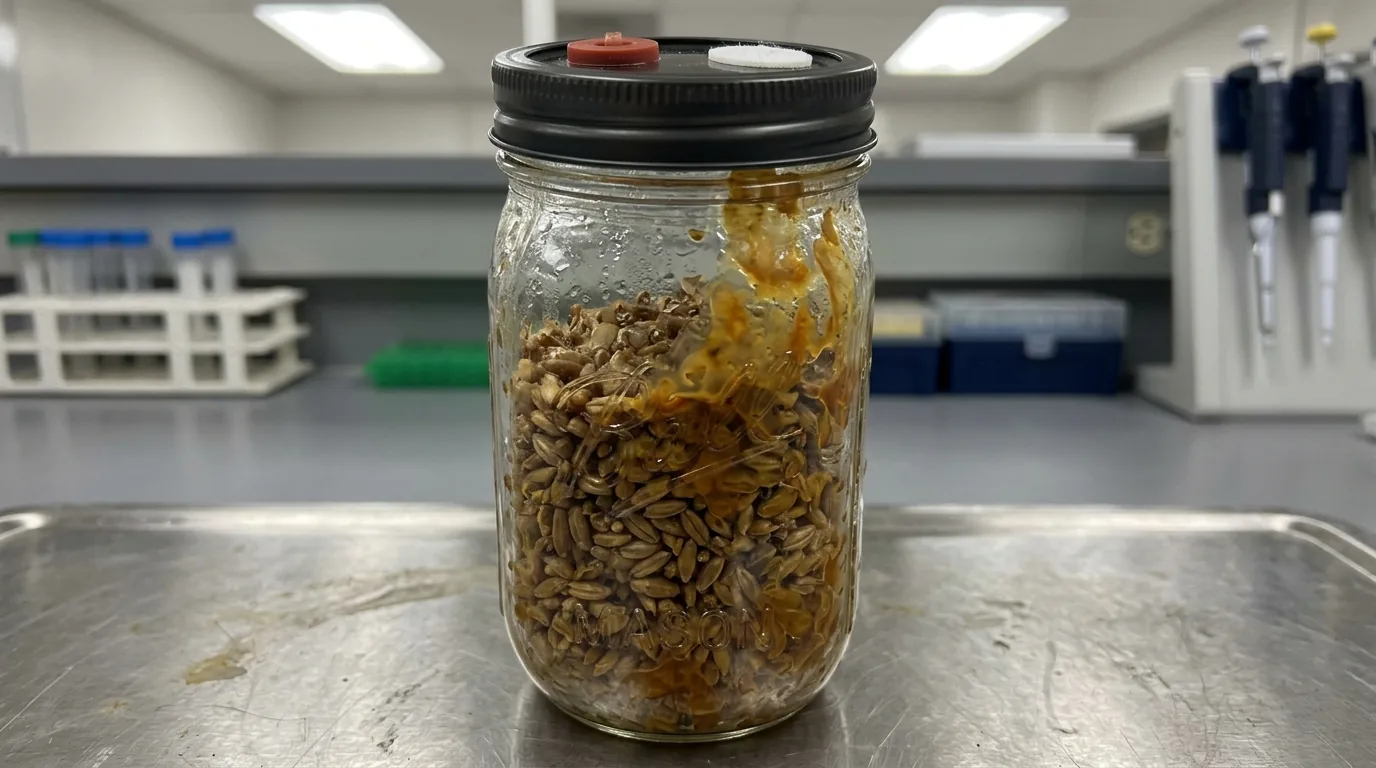
Appearance: Bright orange or salmon-pink powdery growth, typically appearing very quickly — within 1-3 days of sterilization.
Significance: Neurospora is extremely fast-growing and typically indicates sterilization failure. Its rapid appearance is diagnostic.
Action: Discard immediately. Check pressure cooker seal and timing — inadequate sterilization is the likely cause.
Distinguishing Contamination from Normal Mycelium
Yellow or Brown Patches
Normal: Metabolite secretion — mycelium excreting byproducts. Usually appears as amber or yellow liquid droplets or staining within white mycelium. Does not spread or grow.
Abnormal: Bacterial contamination or degradation. Usually wetter, smellier, and may spread.
Decision: Smell the jar. If it smells earthy or neutral, it's likely metabolites. If it smells sour, rotting, or unusual, it's likely bacterial.
Green Around Edges
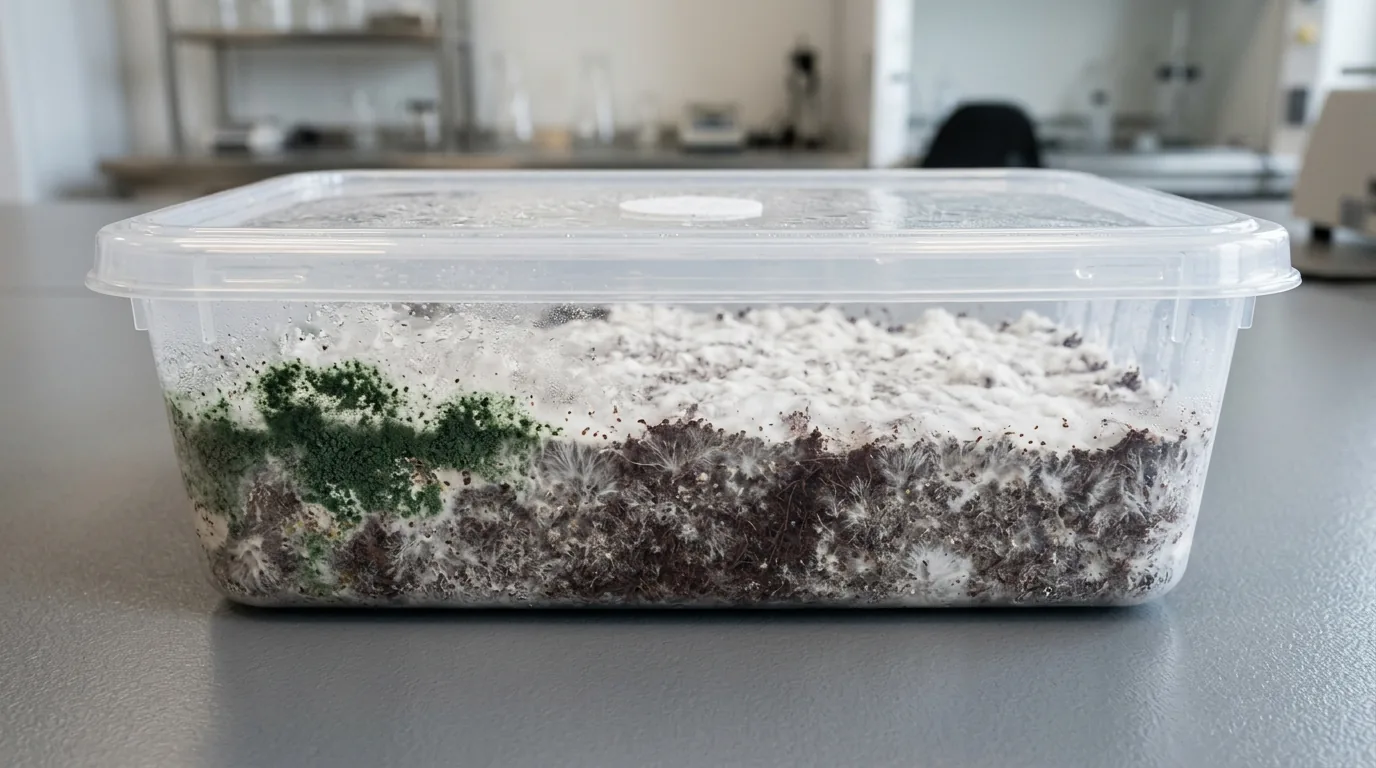
Always abnormal: Green is almost always Trichoderma or Penicillium. There is no healthy green mycelium.
Exception: Some older grain jars may show slight discoloration from substrate leaching, but any distinct green patches are contamination.
Dry Brown Patches
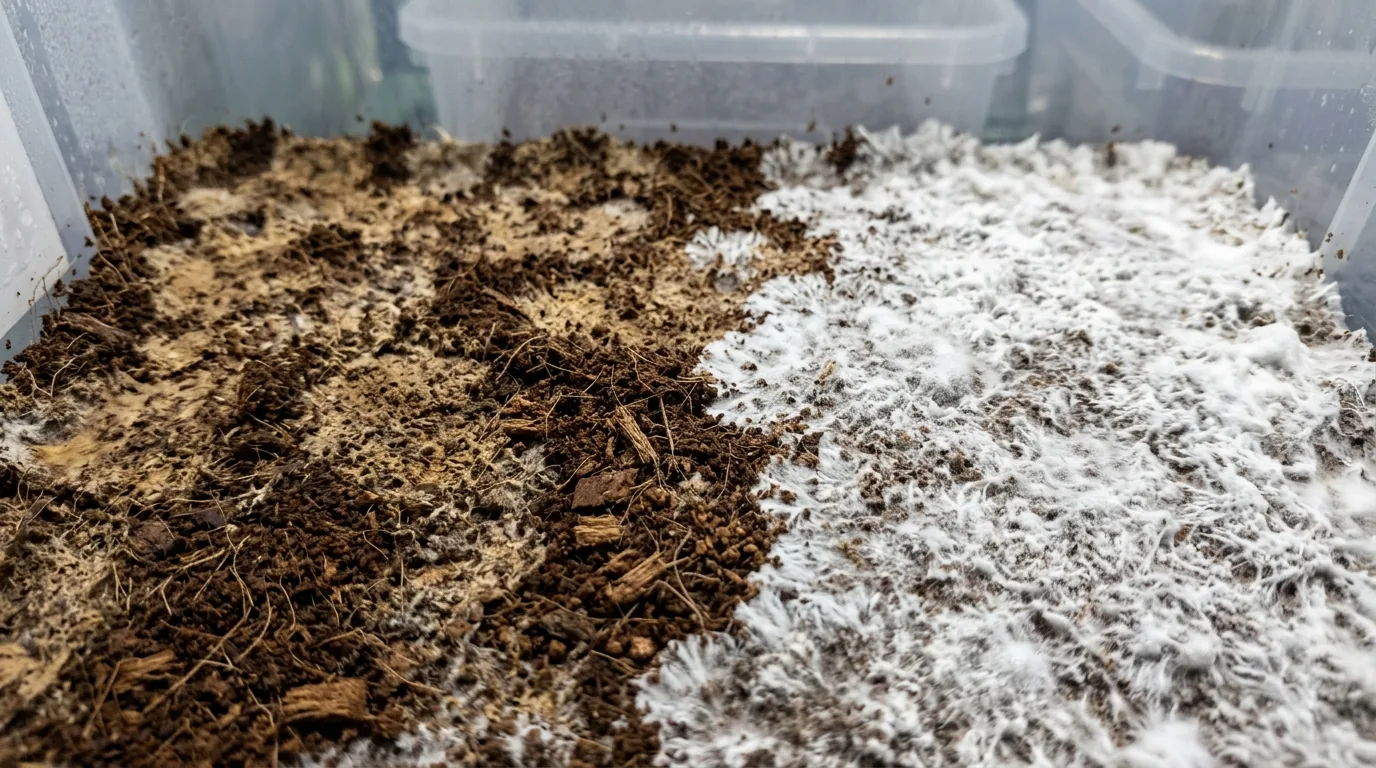
Could be normal: Some substrates brown naturally as mycelium ages. Coco coir showing through patches of mycelium is normal.
Could be abnormal: Bacterial blotch, Trichoderma at early stage. Check for smell and growth pattern.
Contamination Risk Points
Understanding when contamination enters the system helps you prevent future problems:
- Inadequate sterilization: Spores survive; contamination proliferates immediately after inoculation
- Inoculation technique failure: Airborne contamination enters during injection or opening
- Inoculation with contaminated instrument: Unflamed needle, dirty gloves, contaminated LC or spore syringe
- Post-colonization: Contamination during spawn transfer or casing work
- Fruiting chamber: Environmental molds can colonize exposed substrate
Prevention Summary
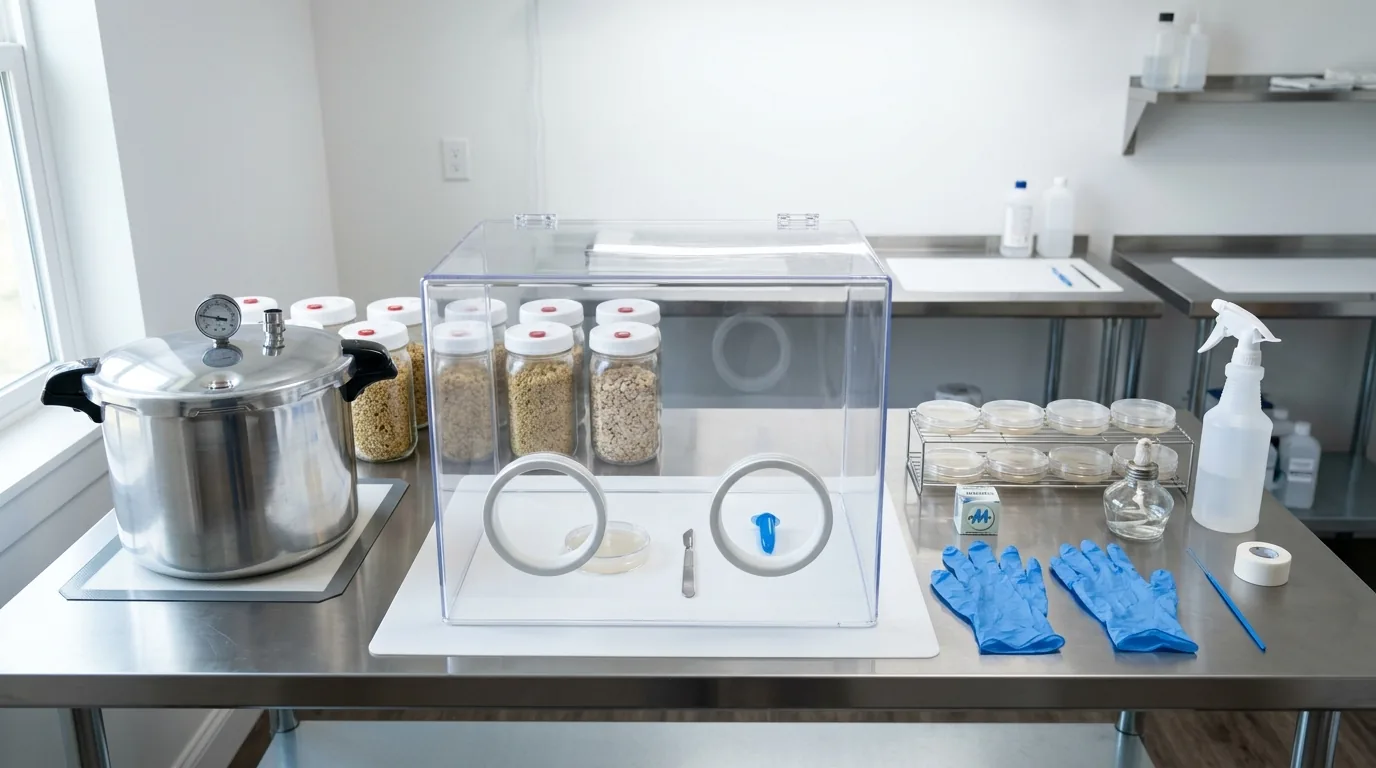
| Stage | Prevention | |-------|-----------| | Grain prep | Correct moisture, full sterilization (90 min @ 15 PSI) | | Inoculation | Still air box or flow hood, sterile technique | | Colonization | Sealed lids, minimize handling | | Spawn transfer | Still air box or flow hood, quick transfers | | Fruiting | FAE to reduce moisture accumulation, no direct misting on mushrooms |
Common Problems & Troubleshooting
See the Contamination Guide for common issues.
Tips for Success
Take notes at every stage. Consistency beats perfection.