Automated Mushroom Growing: Controllers, Humidifiers, and Tech
Everything you need to know about Automated Mushroom Growing: Controllers, Humidifiers, and Tech — from materials to first harvest.

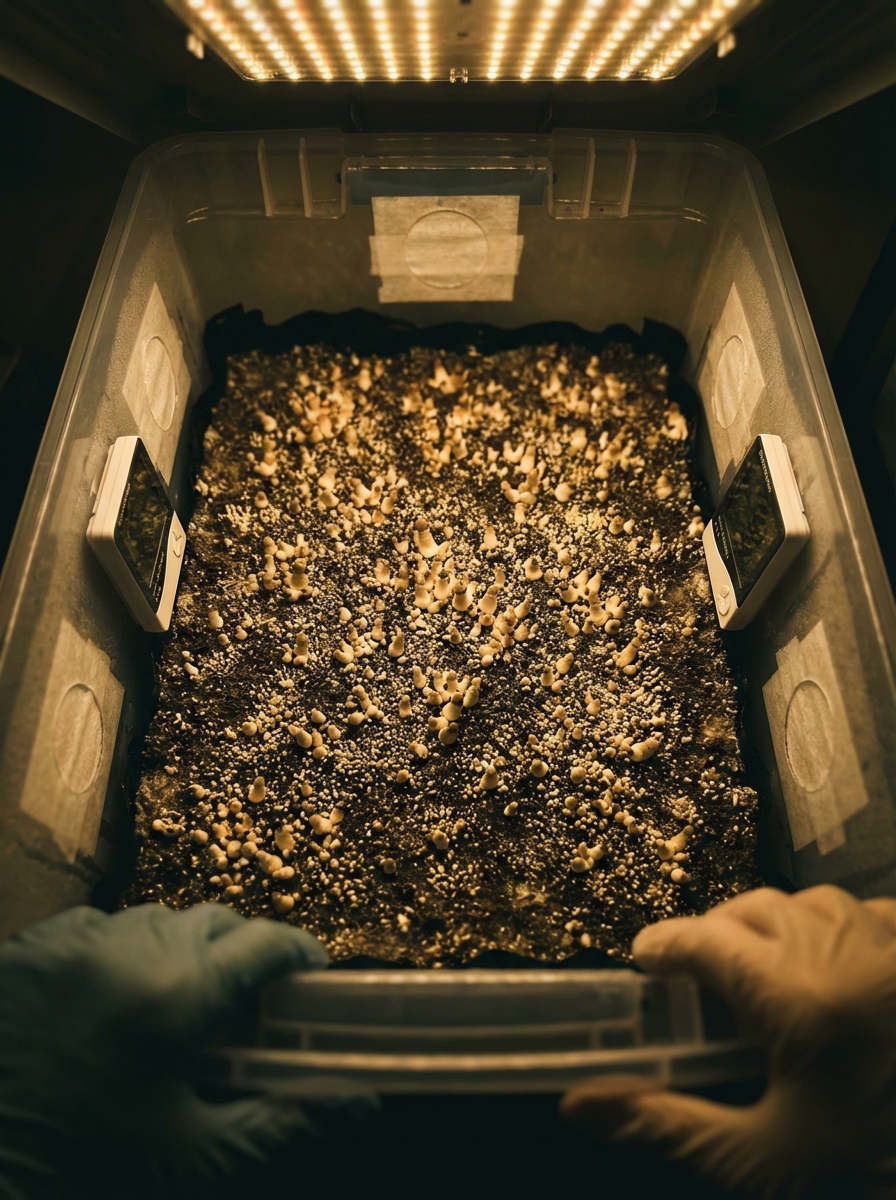
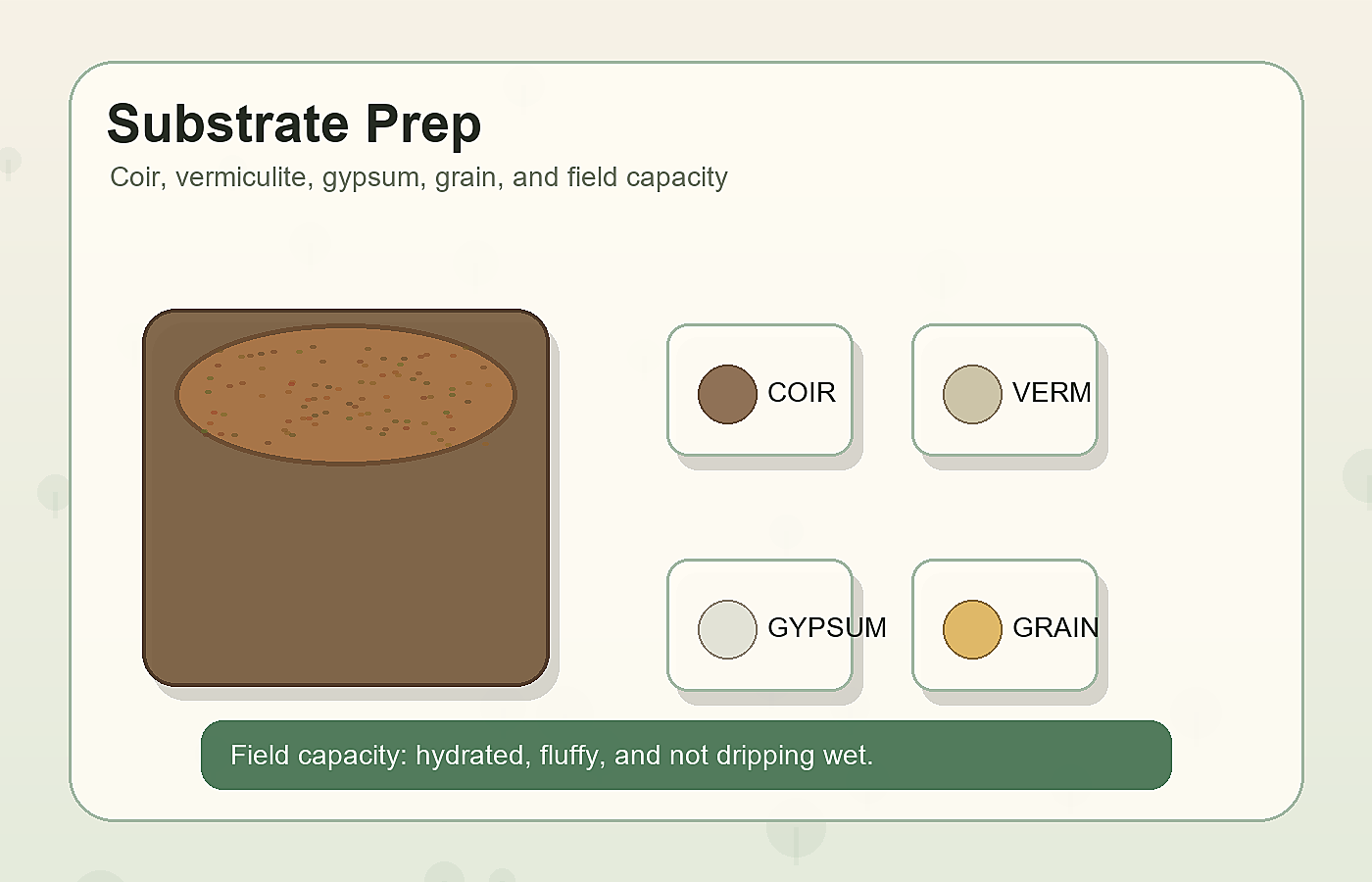
What You'll Need
- See full supply list in guide below.
Find grow supplies at vendors in our Directory.
Step-by-Step Process
Automated Mushroom Growing: Controllers, Humidifiers, and Tech
Manual misting and fanning works fine — but automation removes one of the most common failure modes in mushroom cultivation: neglect. Temperature and humidity fluctuations during fruiting reduce yields and invite contamination. Automation eliminates these fluctuations at relatively low cost. This guide covers the practical options.
Legal-First Automation Check
Before buying controllers or scaling a chamber, make the setup boring and reviewable:
- Species boundary: Practice automation with lawful edible species such as oysters, shiitake, lion's mane, or other locally permitted mushrooms.
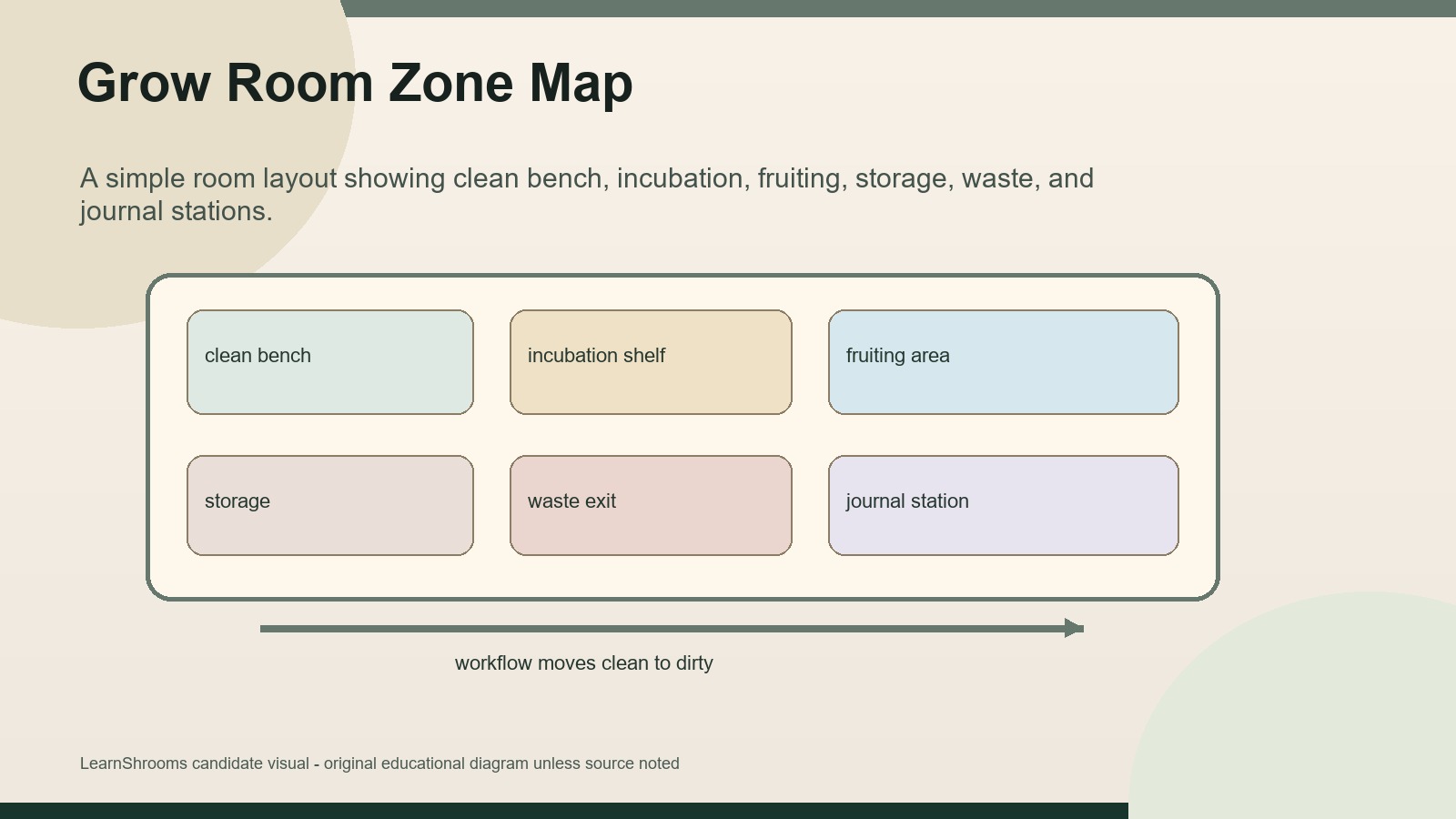
- Clean-to-dirty flow: Keep sterile work, incubation, fruiting, storage, and waste handling separated so one failure does not contaminate the whole room.
- Human inspection: Sensors help, but they do not replace twice-daily visual checks for pooling water, stalled growth, odor, or contamination.
- Journal proof: Record temperature, humidity, fresh-air timing, photos, and changes so troubleshooting is based on evidence.
Why Automate
The variables that most affect mushroom yields during fruiting are:
- Humidity: Fruiting bodies need 85–95% relative humidity. Drops below 80% cause surface cracking, stunted growth, and early veil tearing.
- Temperature: Optimal fruiting is species-dependent but typically 72–78°F for P. cubensis. Spikes above 85°F cause heat stress; drops below 65°F significantly slow fruiting.
- Fresh air exchange (FAE): CO2 buildup above ~1,000-2,000 ppm causes elongated stems and small caps. FAE is as important as humidity.
Manual approaches require action 2–4 times daily. Automation makes all three of these hands-off.
The Basic Automation Stack
Entry-level setup (~$50–80 total):
- Inkbird IHC-200 or equivalent humidity controller ($25–35)
- Cool mist ultrasonic humidifier ($25–40)
- Timer for FAE fan ($10–15)
This setup maintains humidity automatically and schedules fresh air exchange. For most monotub and martha tent setups, this is sufficient.
Humidity Controllers
What they do: A humidity controller monitors RH via a probe and switches a humidifier on when humidity drops below your set point. No more manual misting.
Recommended units:
- Inkbird IHC-200: The most widely used in the cultivation community. Reliable, accurate, affordable ($25–35). Has both high and low humidity outlets — the humidifier plugs into the "low" outlet (switches on when RH drops).
- Govee temperature and humidity sensors (paired with smart plugs): More expensive but allows remote monitoring via phone. Useful for tent setups away from your primary space.
Settings for P. cubensis fruiting: Target 88–92% RH. Set controller to turn humidifier on at 85% and off at 92%.
Probe placement: Keep the probe at substrate level, away from direct mist contact — wet probes give false high readings.
Humidifiers
Ultrasonic vs. evaporative: Ultrasonic humidifiers produce a visible cool mist and are universally used in mushroom cultivation. Evaporative humidifiers don't produce the same output for fruiting applications.
Ultrasonic humidifier options:
- Levoit Classic 200 (~$30): Well-reviewed, runs 24+ hours per fill, quiet
- Generic ultrasonic humidifiers from Amazon ($15–25): Work fine but may clog more quickly with white mineral deposits from tap water
Water quality matters: Tap water in hard water areas will produce white mineral dust that coats surfaces and potentially substrate. Use distilled or filtered water in humidifiers used for mushroom cultivation.
Positioning: Direct mist at the tent wall or ceiling, not directly at fruiting bodies. Direct mist causes rot spots on developing pins and caps.
Fresh Air Exchange Automation
CO2 buildup is the underappreciated limiting factor in many home grows. Mushroom mycelium produces CO2 as a metabolic byproduct. Without FAE, CO2 accumulates and fruiting bodies elongate (seeking fresh air above the CO2 layer) while caps stay small.
Simple timer approach:
- Small USB or 120V fan positioned to push fresh air into the tent or fruiting chamber
- Mechanical outlet timer set to run 5–10 minutes every hour
- This provides adequate FAE for most setups without continuous air flow (which would fight the humidifier)
Advanced approach (CO2 sensor):
- Aranet4 or similar CO2 monitor ($70–100)
- Smart plug triggered when CO2 exceeds 1,500 ppm
- More precise but significantly more expensive
For most home setups, a timer-controlled fan running 10 minutes per hour is sufficient.
Temperature Control
Heating:
- Heat mat with thermostat: Works for single-tub setups. Place mat under or beside the tub. Use an Inkbird ITC-308 or equivalent temperature controller ($25–35) to prevent overheating.
- Space heater with thermostat: For larger dedicated grow rooms. A small digital thermostat space heater ($30–50) maintains room temperature reliably.
Cooling:
- Most home cultivators don't cool — they work with ambient temperature. If your space gets above 80°F in summer, a small window AC unit or portable AC is the only reliable solution.
Thermostat controllers: The Inkbird ITC-308 is the standard recommendation — two outlets (one heating, one cooling) controlled by a temperature probe. Allows automatic switching between heating and cooling devices around a set temperature.
Martha Tent Setups
A "martha tent" is a wire-shelf grow tent (originally a mini greenhouse, sometimes called a "martha stewart" tent) used as a fruiting chamber. The enclosed space allows automation to maintain consistent conditions across multiple fruiting trays or tubs.
Setup:
- Wire shelving unit with zippered cover ($30–60 at garden centers or Amazon)
- Inkbird humidity controller + humidifier (setup described above)
- Small fan on timer for FAE
- Optional: LED grow light on 12/12 timer (not required but may improve pinning for some species)
Capacity: A standard 4-tier martha tent handles 8–12 monotubs. This is the standard setup for home cultivators who want meaningful yield from minimal space.
Monitoring Remotely
Govee or SensorPush sensors ($30–60): WiFi-connected temperature and humidity sensors with phone apps. Allows remote monitoring and alerts if conditions fall out of range. Useful for setups that aren't in your primary living space.
IP cameras: Some cultivators add a small IP camera to monitor fruiting progress without opening the tent. This prevents contamination from unnecessary openings and allows observation of pinning activity.
Common Automation Mistakes
Over-misting: If the humidifier runs too frequently or the mist hits the substrate directly, excess moisture causes wet rot, bacterial contamination, and stunted pins. Target 88–92% RH — not 100%.
No FAE: Humidity automation without FAE produces elongated, malformed fruiting bodies with small caps. Both humidity and FAE must be managed.
Wrong probe placement: Probes in direct mist spray give false high readings. The humidifier runs less frequently, actual humidity drops, and pins dry out.
Temperature creep in heat mat setups: Without a thermostat controller, heat mats can overheat the substrate — especially in well-insulated tubs. Always use a controller, not just the heat mat alone.
Common Problems & Troubleshooting
See the Contamination Guide for common issues.
Tips for Success
Take notes at every stage. Consistency beats perfection.