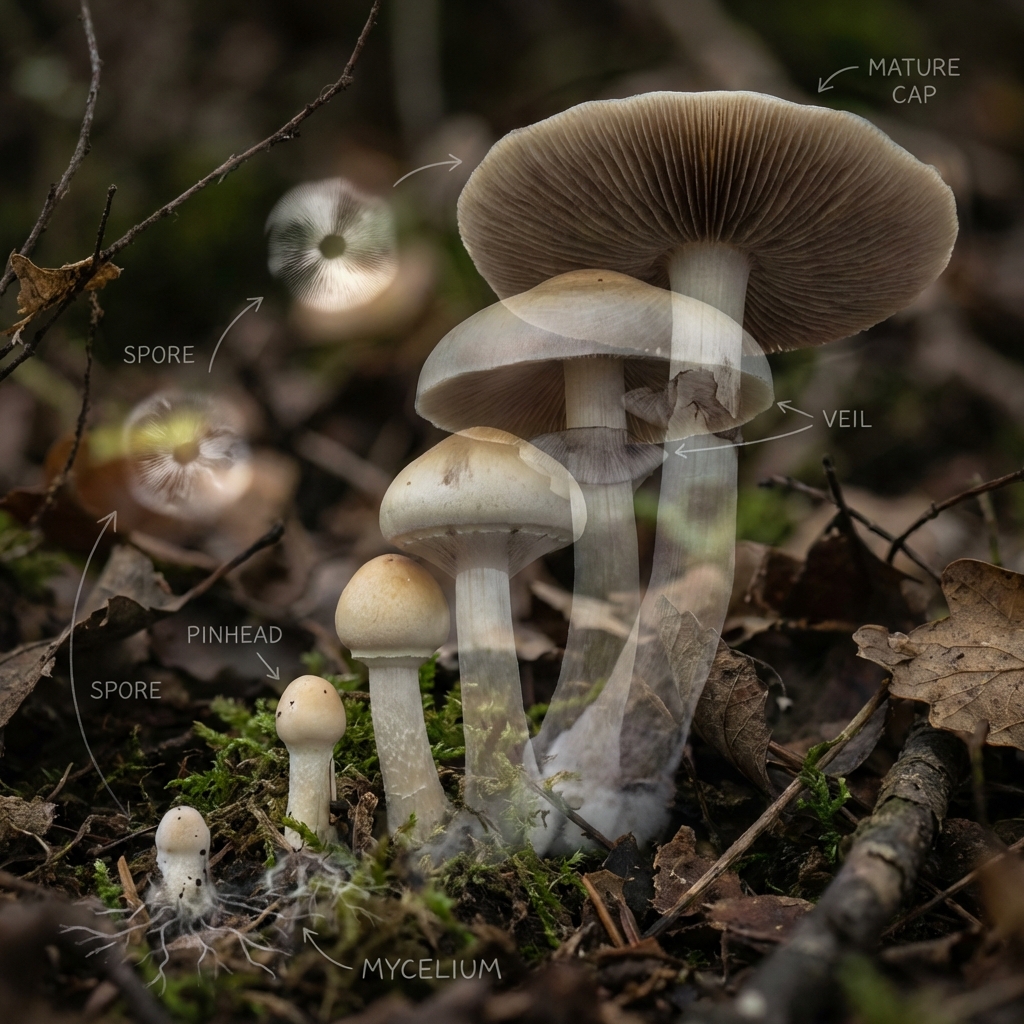
First Time Preparation Guide
Everything you need to know about First Time Preparation Guide — from materials to first harvest.
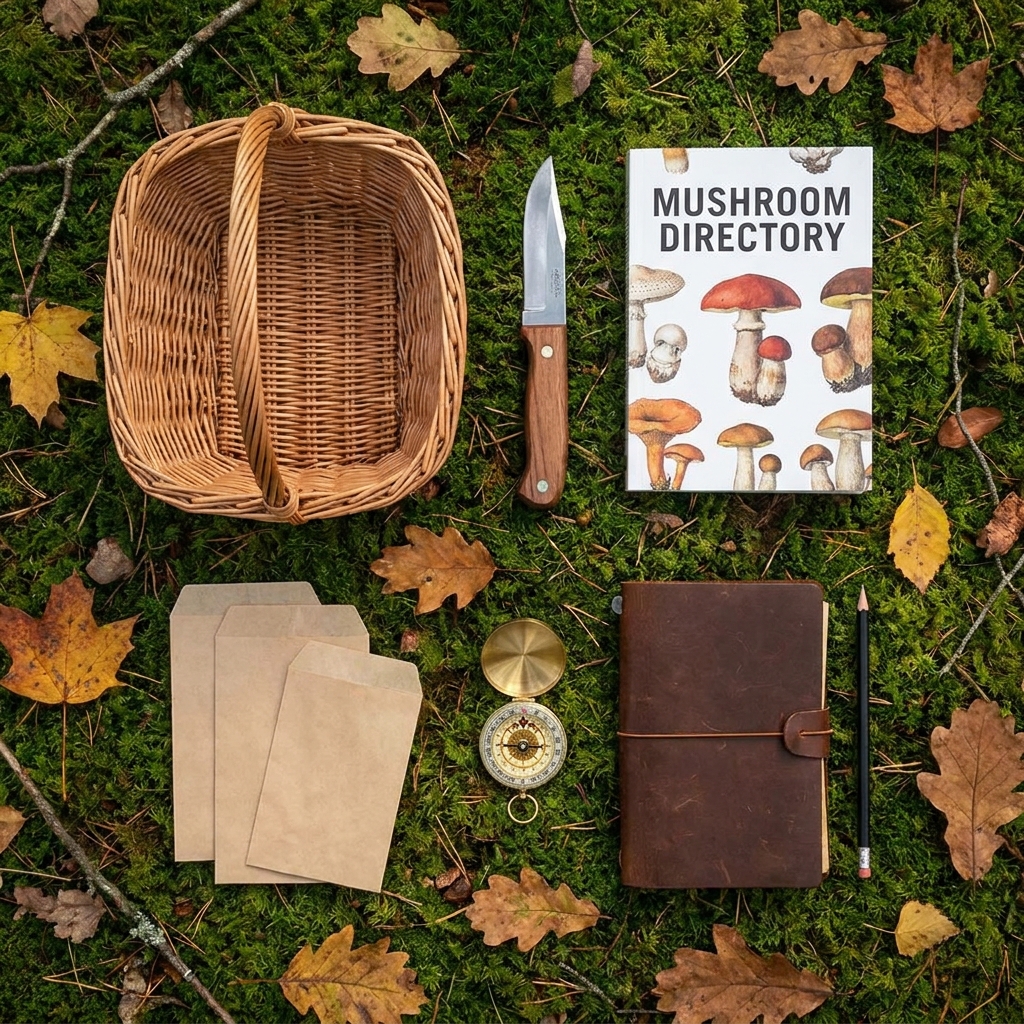
What You'll Need
- See full supply list in guide below.
Find grow supplies at vendors in our Directory.
Step-by-Step Process
First Time Preparation Guide
This guide is for someone planning their first psilocybin experience. It is not a how-to-grow guide — it is a how-to-prepare guide: what to do in the weeks before, the day of, and the days after a psilocybin session to maximize safety, minimize risk, and give the experience the best possible foundation to be meaningful and integrative.
This guide assumes you have already read and understood the Harm Reduction Guide, Set and Setting, and Drug Interactions pages.
The Two Weeks Before
Health Screening
Before your first experience, honestly assess whether psilocybin is appropriate for you. Psilocybin carries elevated risks for individuals with:
- Personal or family history of schizophrenia or psychosis — psilocybin can trigger or worsen psychotic episodes in vulnerable individuals
- Bipolar I disorder — the manic phase can be intensified; discuss with a psychiatrist before proceeding
- Active suicidal ideation — psilocybin can temporarily intensify overwhelming emotions; it is not a crisis intervention
- Lithium, MAOI, or tramadol use — these create potentially dangerous interactions (see Drug Interactions page)
If any of these apply, the appropriate path is through a licensed clinical program, not personal use.
Medication Considerations
If you take SSRIs, SNRIs, or other psychiatric medications:
- Many antidepressants — particularly SSRIs — blunt or block the effects of psilocybin
- Some people discontinue SSRIs 2–4 weeks before a planned session; only do this with a prescribing physician's guidance
- Never abruptly stop psychiatric medication without medical supervision
- See the SSRI and Medication Interactions page for full detail
Reduce Substance Use
In the 2 weeks before:
- Reduce or eliminate cannabis — cannabis combined with psilocybin significantly intensifies the experience in unpredictable ways; avoid for 48–72 hours minimum, ideally 2 weeks
- Avoid alcohol — liver function and mental clarity both matter; avoid for at least 72 hours
- No stimulants (caffeine included on the day of) — they increase anxiety which can compound during the experience
- Avoid other psychedelics — tolerance builds quickly; psilocybin effects are blunted if taken within 7–14 days of another dose
Set Intentions
Spend time in the week before thinking clearly about why you're doing this. Write down:
- What you're hoping to explore or work through — grief, anxiety, curiosity, creativity, spiritual inquiry
- What you're afraid of — naming fears in advance reduces their power during the experience
- A grounding phrase — something you can repeat to yourself if you feel overwhelmed: "This will pass," "I am safe," "I can let go"
You don't need a perfect answer. But intentional preparation significantly improves outcomes compared to experiences entered casually.
The Week Before
Reduce Obligations and Stress
Clear your schedule around the planned experience:
- Keep the day before low-key — rest, gentle activity, no major decisions
- Keep the day of completely clear — no work calls, no commitments, nowhere to be
- Keep the day after available for rest and reflection — integration begins immediately

Choose Your Setting
Your environment during the experience is critically important. Good settings share these properties:
- Safe and private — you won't be interrupted or need to perform for others
- Familiar and comfortable — your own home is usually better than an unfamiliar location
- Nature-accessible — a garden, park access, or even a window with natural light helps
- Pre-arranged — cushions, blankets, water, a bucket (nausea is possible), music, eye mask all set up and ready
Avoid:
- Public spaces where you'll need to manage your presentation to strangers
- Anywhere you might need to drive
- Unfamiliar environments unless specifically chosen as intentional (e.g., a retreat setting)
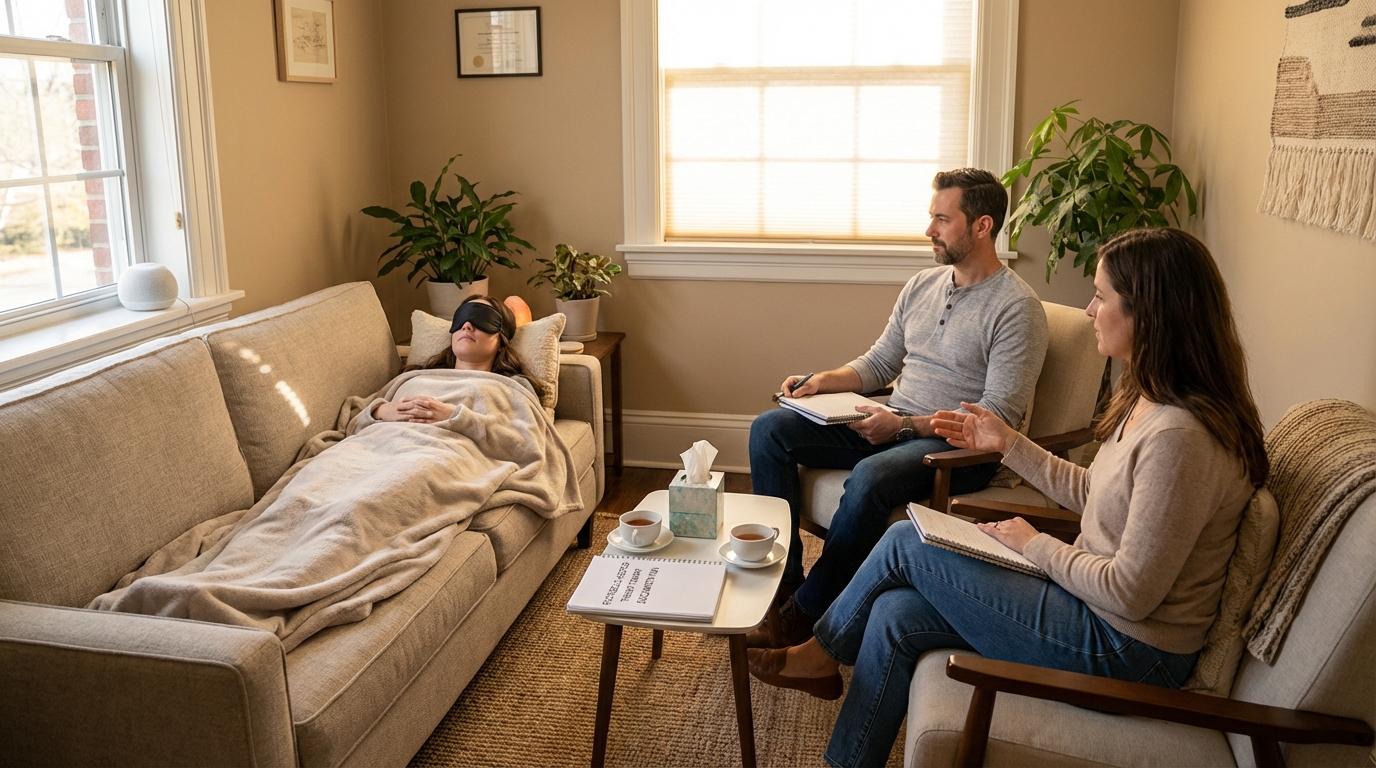
Choose a Sitter (Strongly Recommended for First Time)
A sitter is a sober, trusted person who agrees to be present for your experience. The sitter:
- Does not need to guide or facilitate — they simply witness and are available
- Should understand what psilocybin does and what normal difficult experiences look like
- Is someone you trust completely — no mixed feelings, no awkwardness
- Has the Zendo Project's MAPS protocols or similar harm reduction knowledge is ideal
A sitter is particularly important for first experiences because you don't yet know how you respond to psilocybin. Most people respond well. Having support available is not a sign of weakness — it's good planning.
The Day Before
Light Activities Only
- Walk, stretch, or gentle yoga
- Journal about your intentions
- Eat well — a healthy, easily digestible dinner
Prepare Your Space
Set up the physical environment:
- Clean and tidy the area where you'll spend most of the experience
- Place water, tissues, a blanket, a journal, and anything comforting within reach
- Prepare your playlist in advance (see Music section below)
- Locate your "grounding objects" — a meaningful photo, a stone, something physical to hold
- Leave a brief note for yourself: "I took psilocybin at [time]. The effects last 4–6 hours. I am safe. This will pass."
Rest
Get 7–8 hours of sleep. Fatigue significantly worsens psilocybin experiences — low mental energy correlates with difficult, looping, confused experiences rather than meaningful exploration.
The Day Of
Morning Preparation
- Skip coffee and caffeine — it increases anxiety and heart rate
- Eat a light breakfast if eating; fast for 4–6 hours before the session for strongest effect with less nausea
- Avoid screens if possible — let your mind settle before the experience
- Light stretching or meditation (even 10 minutes) helps establish a calm baseline
Dosage
For a first experience:
| Dose | Classification | Experience | |------|---------------|------------| | 0.5–1g dry | Threshold | Subtle perceptual shifts, mood lift | | 1–1.5g dry | Low | Mild visuals, introspective, manageable | | 1.5–2.5g dry | Moderate (recommended first dose) | Clear psilocybin experience without overwhelming intensity | | 2.5–3.5g dry | Strong | Significant visual and emotional intensity | | 3.5g+ | High | Potentially ego-dissolving; not for first experiences |
For a first experience, 1.5–2g is the recommended starting range. This is sufficient to experience psilocybin clearly while maintaining some ability to navigate if the experience becomes challenging.
Taking the Dose
- Ingest on an empty or nearly empty stomach for clearest onset
- Mushrooms can be eaten directly, steeped as tea, or ground into capsules
- Tea method reduces nausea: simmer ground mushrooms in water for 15 minutes, strain, drink warm with lemon (lemon tek)
- Onset: 20–60 minutes (longer on full stomach)
- Peak: 2–4 hours after ingestion
- Total duration: 4–6 hours
After taking the dose, sit, breathe, and allow — don't check the time compulsively.
During the Experience
The First Hour
The onset can include:
- Stomach warmth or mild nausea — usually passes within 30–45 minutes
- Tingling or heaviness in the limbs
- Colors appearing slightly more saturated
- Mild anxiety as the experience begins to take hold — this is normal
If anxiety arises at onset: lie down, close your eyes, and breathe slowly. The anxiety is transitional. Surrender to the experience rather than bracing against it.
Navigating Difficulty
If the experience becomes overwhelming:
- Change position — lie down, sit up, go outside if safe
- Change the music — something grounding and simple
- Hold a grounding object — something physical to orient you
- Breathe slowly — count to 4 on the inhale, 6 on the exhale
- Remember the note you wrote — "I am safe. This will pass."
- Call or contact your sitter if one is present
Do not take benzodiazepines (Valium, Xanax, Ativan) unless the experience has become genuinely unsafe and you need it to end. A trip terminator significantly reduces the therapeutic value of the experience.
The Music Question
Music during psilocybin experiences is deeply impactful. Prepare a playlist in advance:
- First hour: gentle, ambient, no lyrics — allows onset without distraction
- Middle hours: emotionally resonant music without strong personal associations — classical, world music, carefully chosen ambient
- Later hours: gradually more familiar and comforting as the experience winds down
Avoid music with strong associations — a song that reminds you of something painful can amplify that pain significantly. Neutral emotional territory is safer for first experiences.
After the Experience
Immediate Afterglow (Hours 4–8)
Most people feel a gentle warmth, mental clarity, and emotional openness in the hours following the peak. This is a valuable window:
- Write in your journal — even fragments are useful later
- Eat something simple and comforting
- Spend time in nature if possible
- Avoid screens and social media
- Talk with your sitter or someone you trust
Integration (Days 1–30)
Integration is the process of making meaning from the experience and incorporating insights into your daily life. It's the most undervalued part of psilocybin work.
First week:
- Journal daily — what images, emotions, or insights recurred?
- Notice what feels different in ordinary life (many people report increased sensitivity, easier emotional access)
- Avoid re-dosing — give the experience time to metabolize
First month:
- Consider working with an integration therapist if the experience brought up significant material
- Continue the journaling practice
- Implement at least one change inspired by the experience, however small
Most of the therapeutic value of psilocybin comes not from the experience itself but from what you do with it afterward. The medicine opens a door; integration is walking through it.
What to Expect: Common First-Time Experiences
Laughter — often spontaneous and uncontrollable during the onset; allow it
Crying — psilocybin frequently surfaces emotional material; allow it without judgment
Visual phenomena — geometric patterns with eyes closed, enhanced colors with eyes open; intensity varies
Sense of connection — to nature, to others, to something larger than yourself
Time distortion — hours may feel like minutes or vice versa
Insights — realizations about relationships, patterns, or values that feel significant
Body sensation — warmth, tingling, energy moving through the limbs
Nausea — most common during onset; usually passes by peak
A Final Note
Psilocybin is not for everyone, and not every experience is easy. Difficult experiences are not failures — they often yield the most significant insights. The preparation outlined here is designed to give you the best possible foundation, but no amount of preparation eliminates unpredictability.
Go in slowly. Prepare carefully. Have support available. And give the experience the respect it has earned across thousands of years of human use.
Common Problems & Troubleshooting
See the Contamination Guide for common issues.
Tips for Success
Take notes at every stage. Consistency beats perfection.