Psilocybe azurescens: Outdoor Cultivation Guide
Everything you need to know about Psilocybe azurescens: Outdoor Cultivation Guide — from materials to first harvest.

What You'll Need
- See full supply list in guide below.
Find grow supplies at vendors in our Directory.
Step-by-Step Process
Psilocybe azurescens: Outdoor Cultivation Guide
Psilocybe azurescens is the most potent naturally occurring Psilocybe species, with average total tryptamine content of 1.8–2.5% by dry weight — approximately 3–5x that of average P. cubensis. It is a wood-loving, cold-climate species native to the Oregon coast near Astoria. Unlike P. cubensis, it cannot be grown indoors effectively — it requires outdoor wood chip beds and cold weather fruiting conditions.
This guide is for educational purposes in jurisdictions where psilocybin cultivation is legal or decriminalized.
Natural History and Habitat
Paul Stamets and Jochen Gartz first described P. azurescens formally in 1995, though the species was documented from wild collections at a youth hostel near the mouth of the Columbia River in Oregon in the 1970s and 1980s.
Natural range: Oregon coast, particularly the Astoria area. Has been established by growers in other Pacific Northwest locations and has naturalized in some European settings.
Natural substrate: Sandy soil, dune grasses, alder and coastal wood debris. Fruits from October through December — cold weather is a fruiting trigger, not an obstacle.
Fruiting conditions: 40–60°F (4–16°C). P. azurescens fruits best in conditions that would stall or kill most other cultivated species. This is why indoor cultivation fails — most grow rooms cannot maintain 40°F.
Why P. azurescens Is Difficult to Cultivate
Temperature requirements: Fruiting requires cold conditions most cultivators cannot replicate indoors. Outdoor beds that naturally experience fall temperature drops are the only practical cultivation environment.
Wood substrate requirement: P. azurescens is lignicolous — it grows on woody debris, not dung or grain. It requires hardwood chips (alder, ash, beech) and sandy soil. Standard cubensis substrates do not work.
Long establishment time: After inoculating a wood chip bed, full colonization and first fruiting takes 6–12 months. Patience is essential.
Potency: The very high potency requires significant dose adjustment. Inexperienced users who treat P. azurescens doses like P. cubensis doses will have unexpectedly intense experiences.
Setting Up an Outdoor Bed
Location requirements:
- Partial shade (not full sun or full shade)
- Protected from heavy foot traffic
- Climate that naturally reaches 40–60°F in fall and winter
- Drainage: sandy or well-draining soil
Materials:
- Alder, ash, or beech wood chips (fresh or partially weathered, not composted)
- Hardwood sawdust or straw as a spawn carrier
- P. azurescens grain or agar culture (from reputable source)
- Sandy soil as a topdressing
Construction:
- Clear a 3–4 foot diameter area of sod and loosen soil
- Mix wood chips with grain or agar spawn thoroughly (aim for 10–15% spawn by volume)
- Layer into the bed 3–4 inches deep
- Top with sandy soil or hardwood sawdust 1 inch deep
- Water thoroughly to field capacity
- Cover with burlap or straw mulch to retain moisture
Colonization Phase (Spring–Summer)
The bed will colonize through spring and summer. You will not see fruiting bodies; the mycelium is establishing below the surface.
Maintenance during colonization:
- Water during dry periods — the bed should not dry out completely
- Check occasionally for cobweb mold or green mold (indicates contamination)
- Do not disturb the bed unnecessarily
Fruiting (Fall–Winter)
As temperatures drop to 45–55°F in fall, fruiting bodies will begin to appear. P. azurescens fruits with distinctive features:
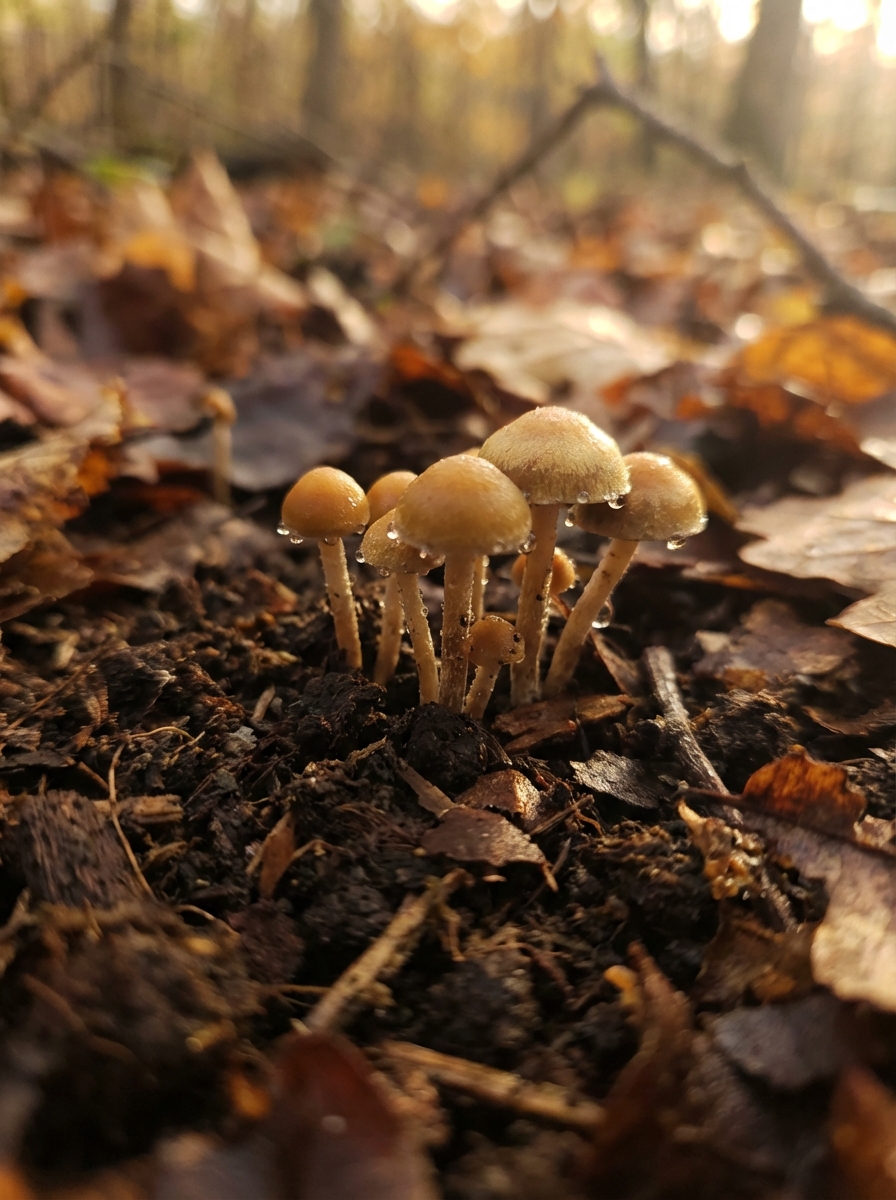
Cap: 3–10cm, chestnut brown to caramel, strongly papillate (prominent central bump), wavy margin, hygrophanous Stem: Long (9–20cm), silky white, hollow, strongly bluing when bruised Veil: Thin, collapses and leaves a faint ring zone Spore print: Purple-brown to black
Harvest: Before the veil tears and while cap edges are still rolled under. After veil tear, potency may decrease somewhat and spores drop rapidly.
Potency and Dosing
This is critical: P. azurescens has average psilocybin content of approximately 1.8% by dry weight, with some samples testing at 2.5%+. P. cubensis averages 0.5–0.9%.
If your typical P. cubensis dose is 3g, a starting dose of P. azurescens is 0.8–1.2g. Dose conservatively until you understand the potency of your specific collection.
Reports of "wood lover's paralysis" (temporary lower body weakness) are more common with P. azurescens than with P. cubensis. This effect is not dangerous but can be alarming if unexpected. Hydrate well and avoid physical activity during peak effects.
Year-to-Year Maintenance
An established P. azurescens bed can fruit for 3–7 years with proper maintenance. After each fruiting season:
- Remove spent fruiting bodies and substrate surface
- Add fresh wood chips (no spawn needed — the established mycelium colonizes the new material)
- Water and mulch for the following year's establishment period
Common Problems & Troubleshooting
See the Contamination Guide for common issues.
Tips for Success
Take notes at every stage. Consistency beats perfection.