Outdoor Mushroom Cultivation: Wood Chips and Garden Beds
Everything you need to know about Outdoor Mushroom Cultivation: Wood Chips and Garden Beds — from materials to first harvest.


What You'll Need
- See full supply list in guide below.
Find grow supplies at vendors in our Directory.
Step-by-Step Process
Outdoor Mushroom Cultivation: Wood Chips and Garden Beds
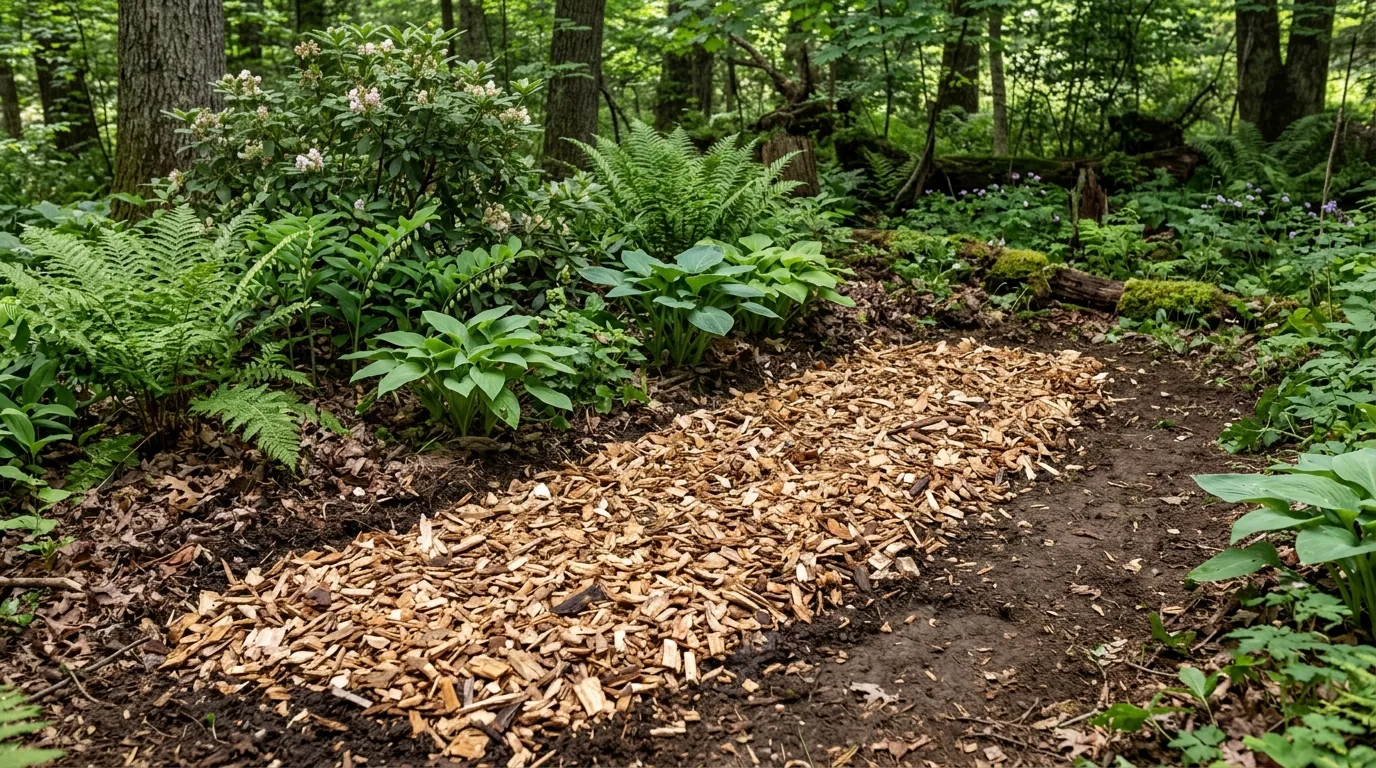
Indoor cultivation dominates how-to guides, but outdoor growing offers advantages that indoor methods can't replicate: scale, naturalness, lower maintenance, and the ability to cultivate species that don't fruit well indoors. A wood chip bed inoculated with Psilocybe cyanescens or P. azurescens can produce for years with minimal intervention.
This guide focuses on outdoor cultivation of wood-loving Psilocybe species using established patch methods.
Why Grow Outdoors?
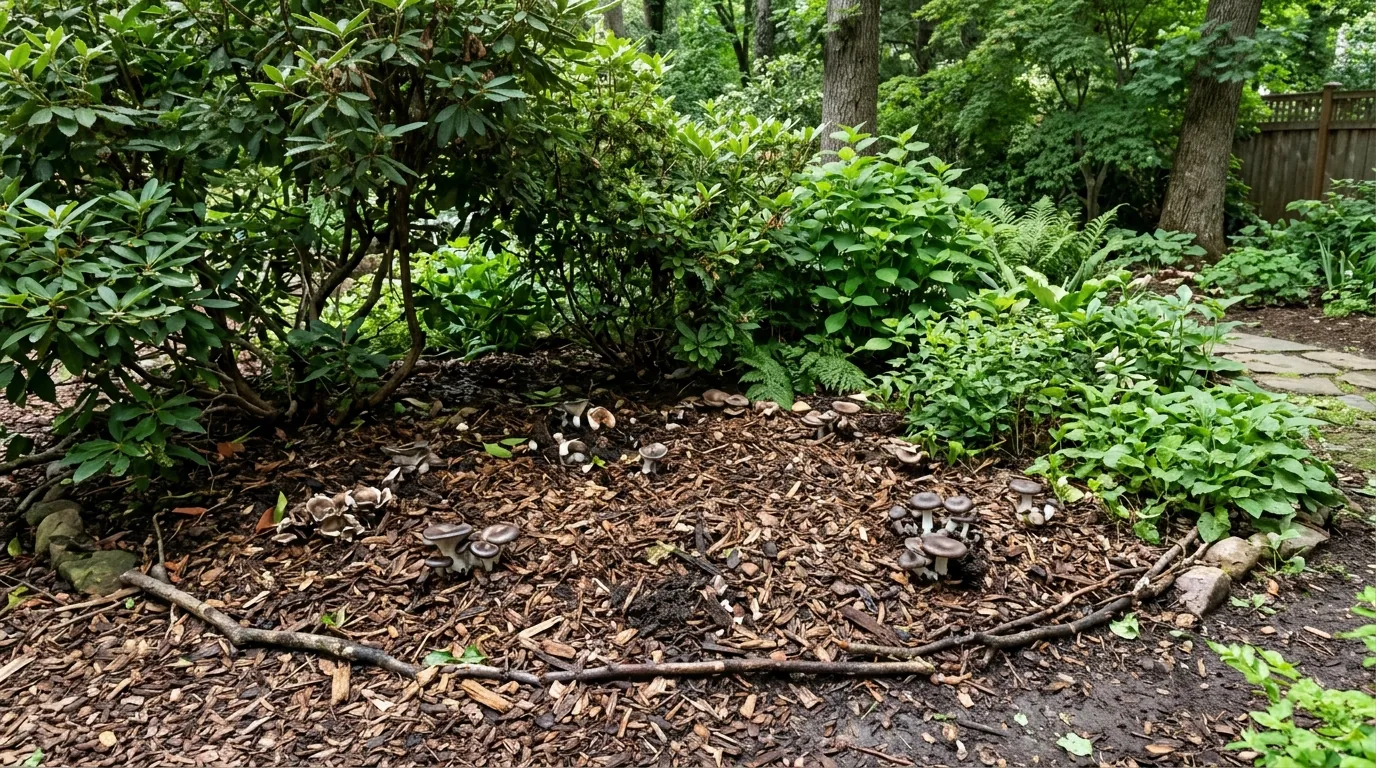
Scale: A single outdoor bed can occupy square meters rather than liters. A well-established bed can produce tens to hundreds of mushrooms per flush.
Perennial production: Unlike indoor grows that exhaust after a few flushes, outdoor beds can fruit annually for 3-10 years before the substrate is depleted.
Species access: Psilocybe azurescens, P. cyanescens, and related wood-loving species perform poorly indoors. Outdoor cultivation is the primary method for these highly potent species.
Low maintenance: After establishment, outdoor beds require minimal intervention. Nature provides humidity, temperature cycling, and air exchange.
Natural setting: Many cultivators find outdoor grows more rewarding — watching mycelium spread through wood chips over months, then fruiting unpredictably with the autumn rain.
Suitable Species for Outdoor Wood Chip Cultivation
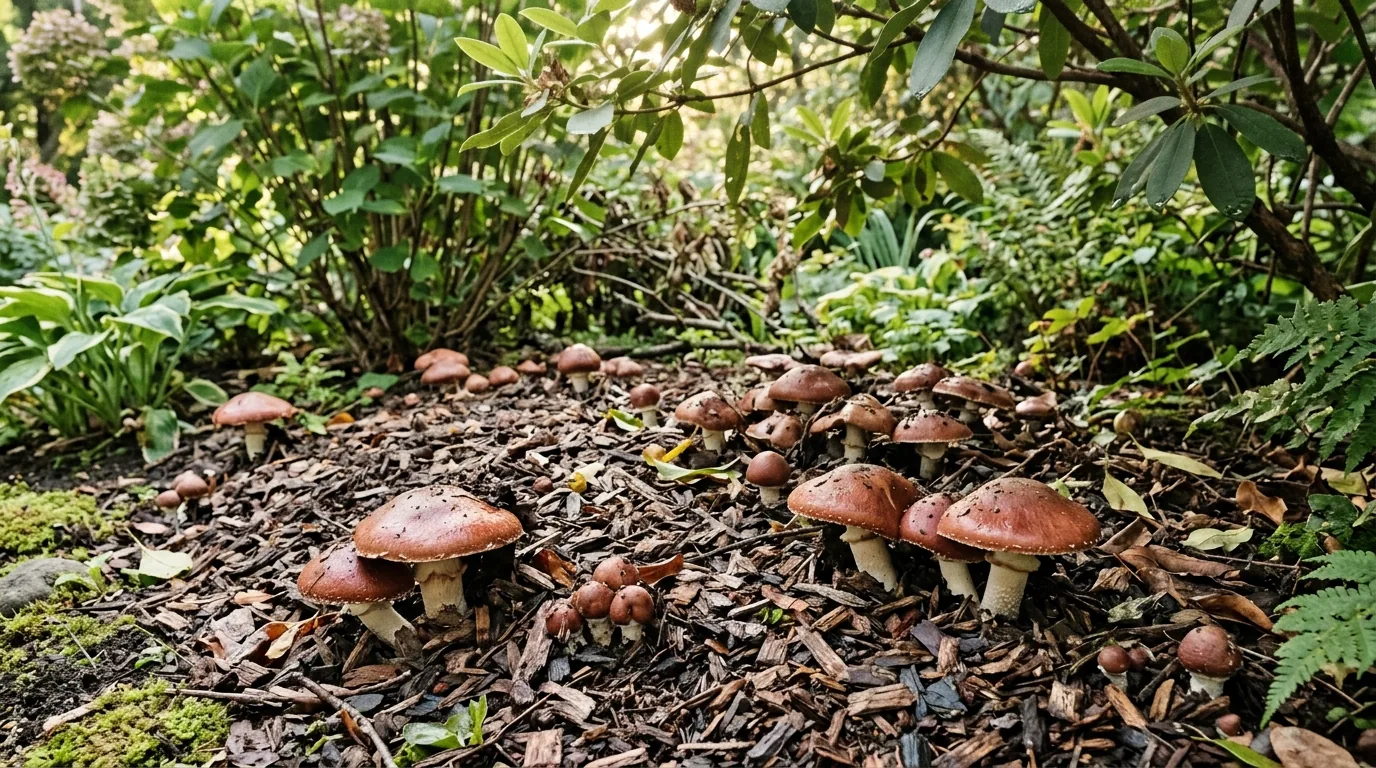
Psilocybe azurescens
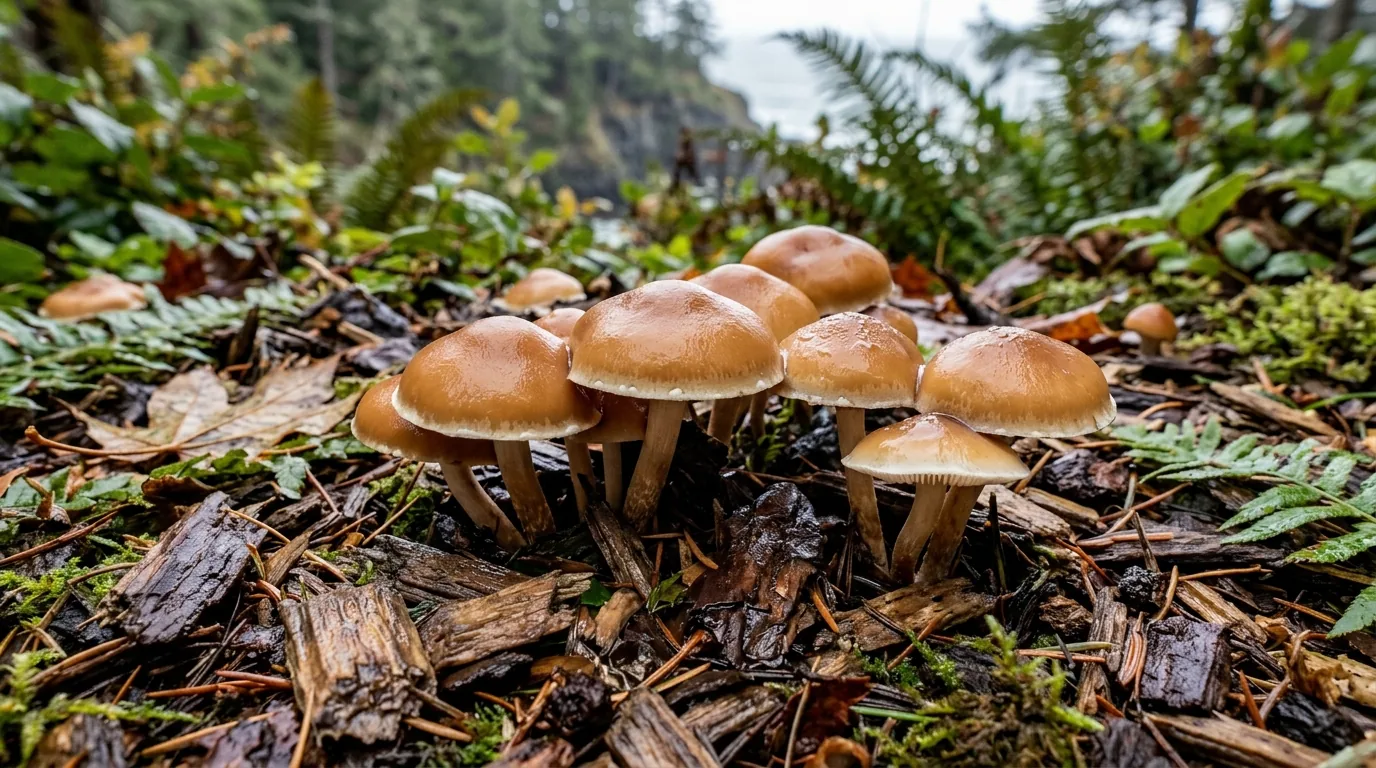
Best potency outdoors. Among the most potent psilocybin mushrooms known. Native to the Pacific Northwest (Oregon coast), but successfully cultivated in cooler temperate climates worldwide.
Requirements:
- Fruiting temperature: 40-55°F (4-12°C)
- Substrate: Alder, cottonwood, beech, or mixed hardwood chips
- Climate: Cool, moist winters with low chance of deep freeze
Limitation: Very slow to establish; may take 1-2 years before significant fruiting. Requires cold winters to fruit.
Psilocybe cyanescens
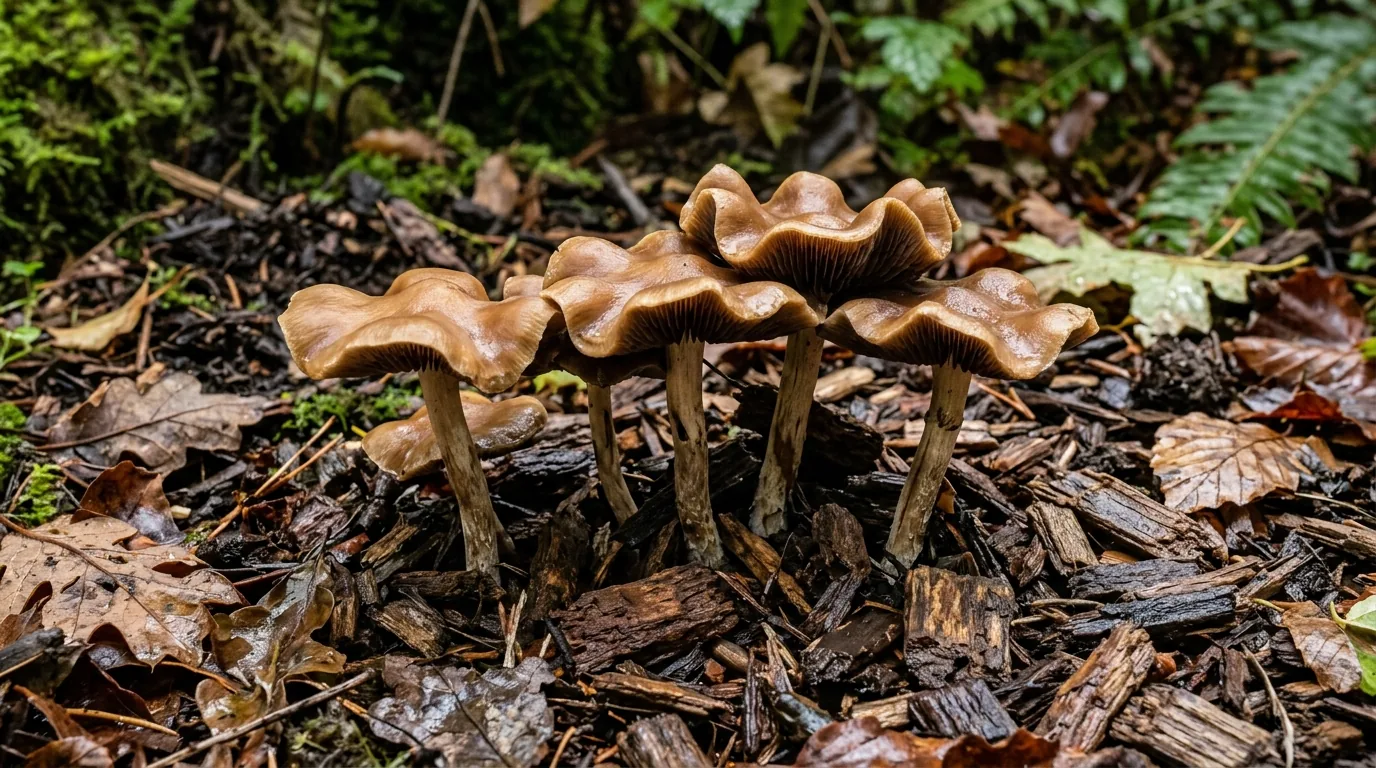
Best for temperate gardens. Wavy caps are vigorous colonizers and prolific fruiters in suitable wood chip beds.
Requirements:
- Fruiting temperature: 50-65°F (10-18°C)
- Substrate: Hardwood chips (not conifer), garden mulch
- Climate: Cool, moist autumn conditions
Advantage: Faster to establish than azurescens; can fruit significantly in year 1 with sufficient substrate.
Psilocybe allenii / P. cyanofibrillosa
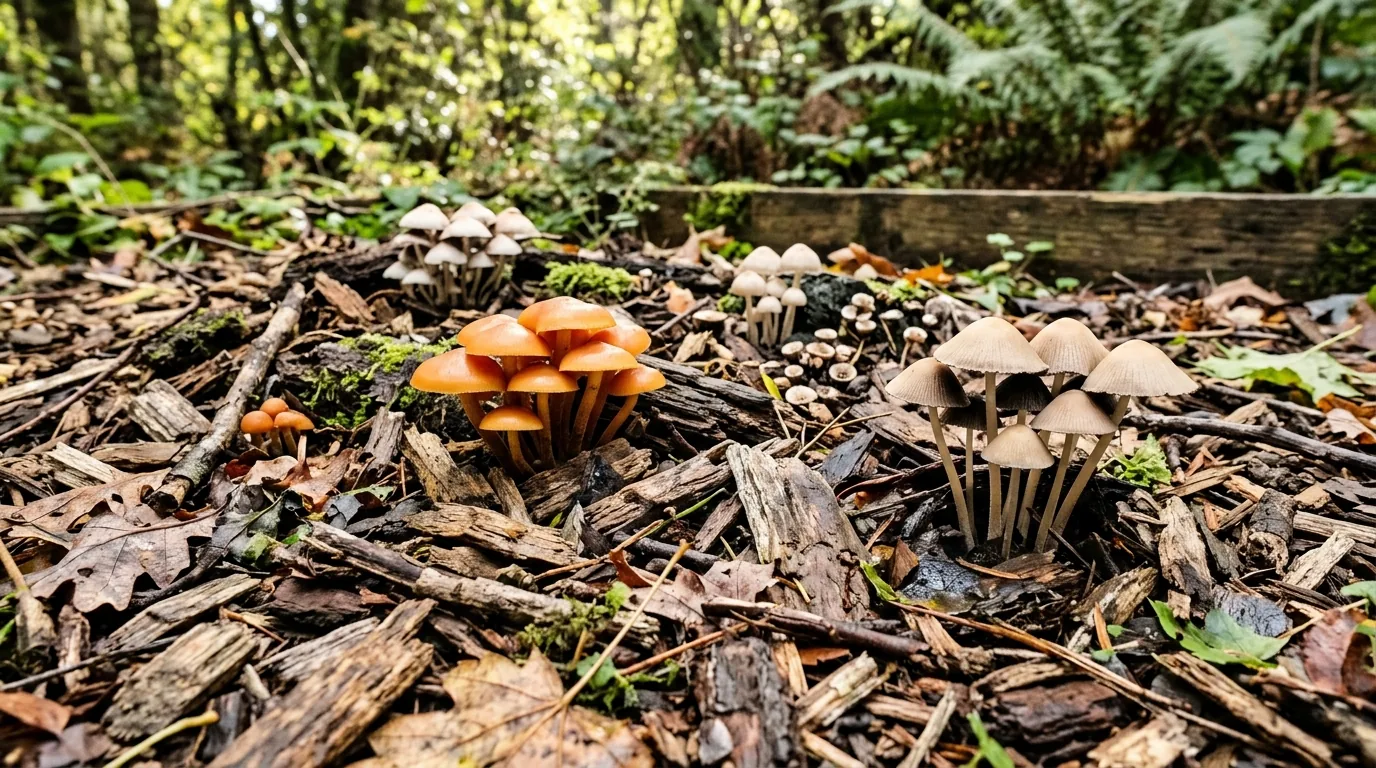
Best for urban gardens. These species thrive in ornamental wood chip mulch common in urban parks and residential gardens.
Requirements:
- Fruiting temperature: 45-65°F (7-18°C)
- Substrate: Broad range of hardwood chips; garden mulch blends
- Climate: Pacific Northwest and similar temperate climates
Site Selection
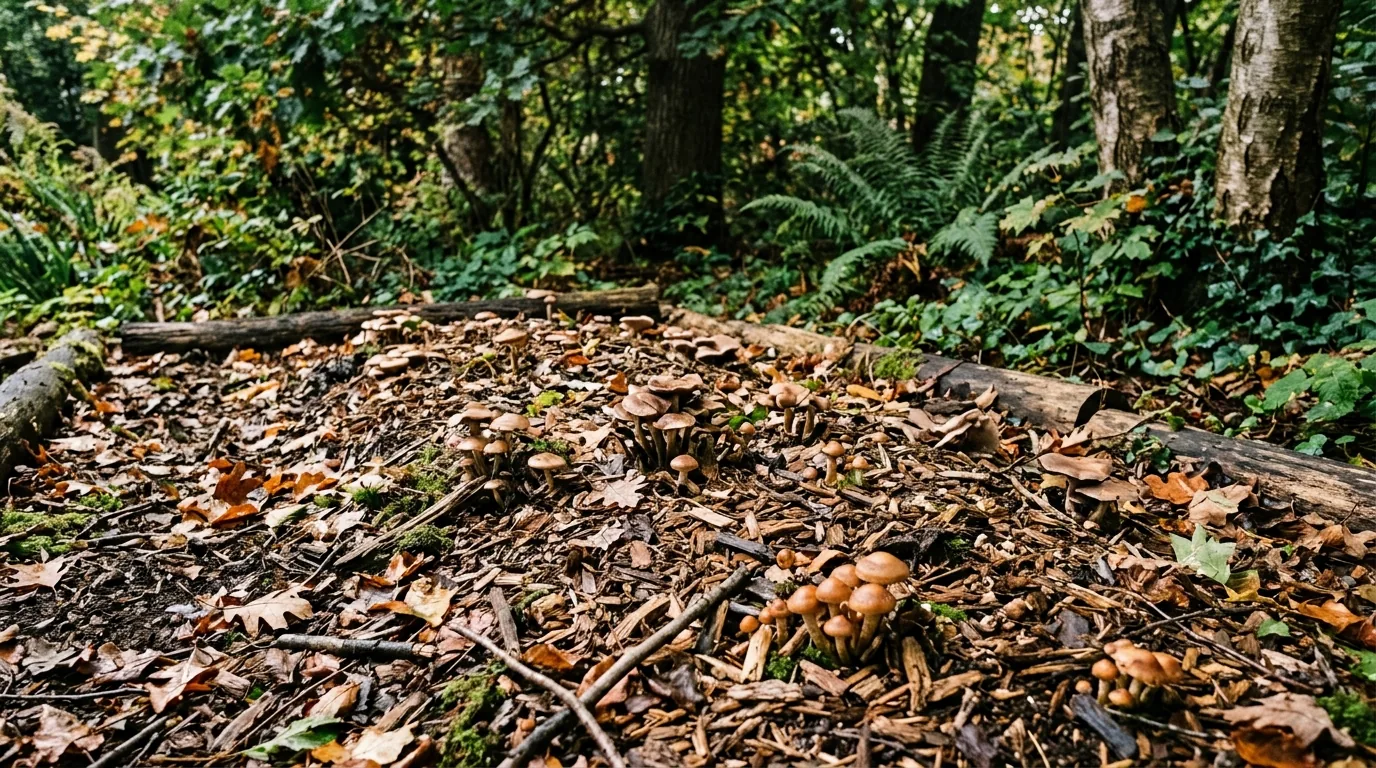
Temperature Requirements
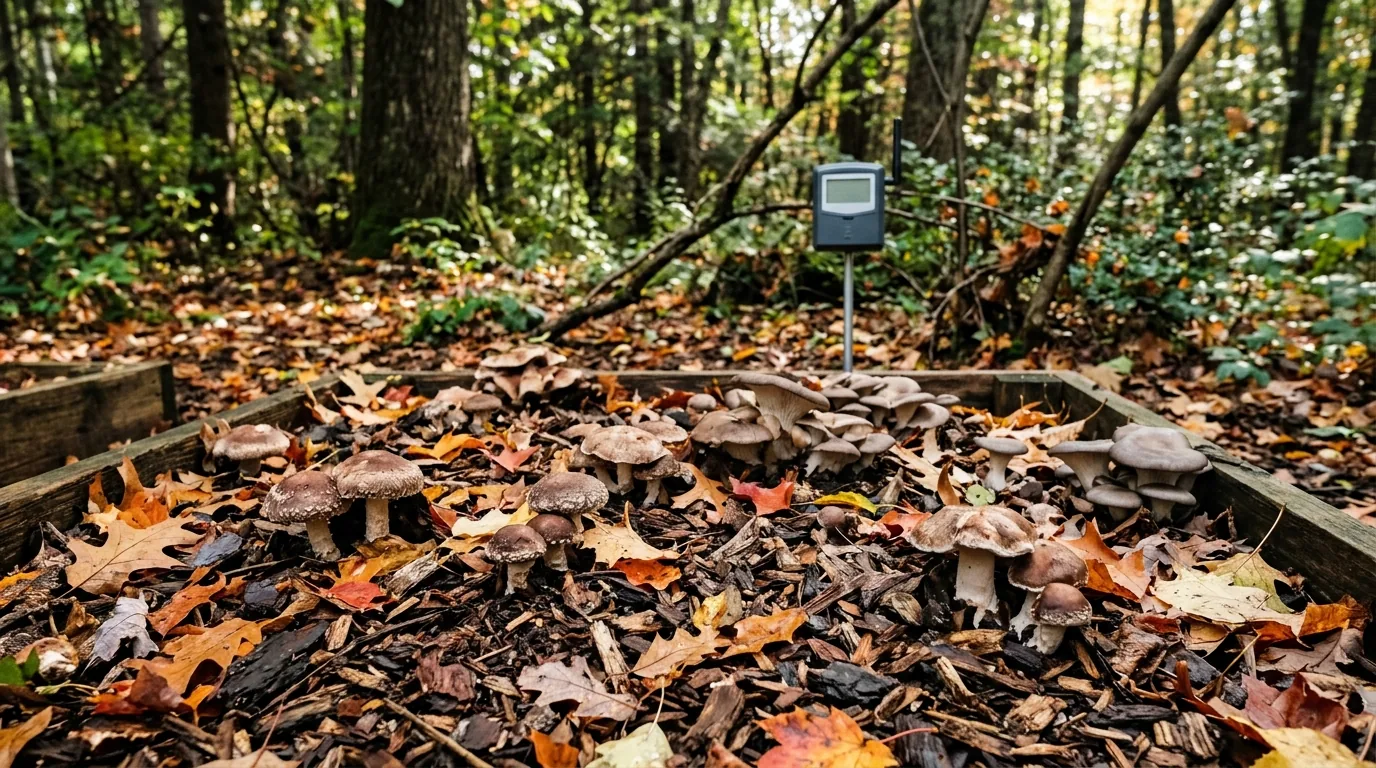
Wood-loving Psilocybe species require cool autumn and winter conditions to fruit. Ideal outdoor locations:
- Northern US and Canada (USDA zones 6-9 for P. cyanescens; zones 7-9 for P. azurescens)
- UK and Western Europe
- Southern Australia and New Zealand (autumn-winter fruiting)
- Cool Pacific Northwest coast
These species will not fruit in warm climates (Florida, Southern California, Texas, tropical regions).
Substrate Placement
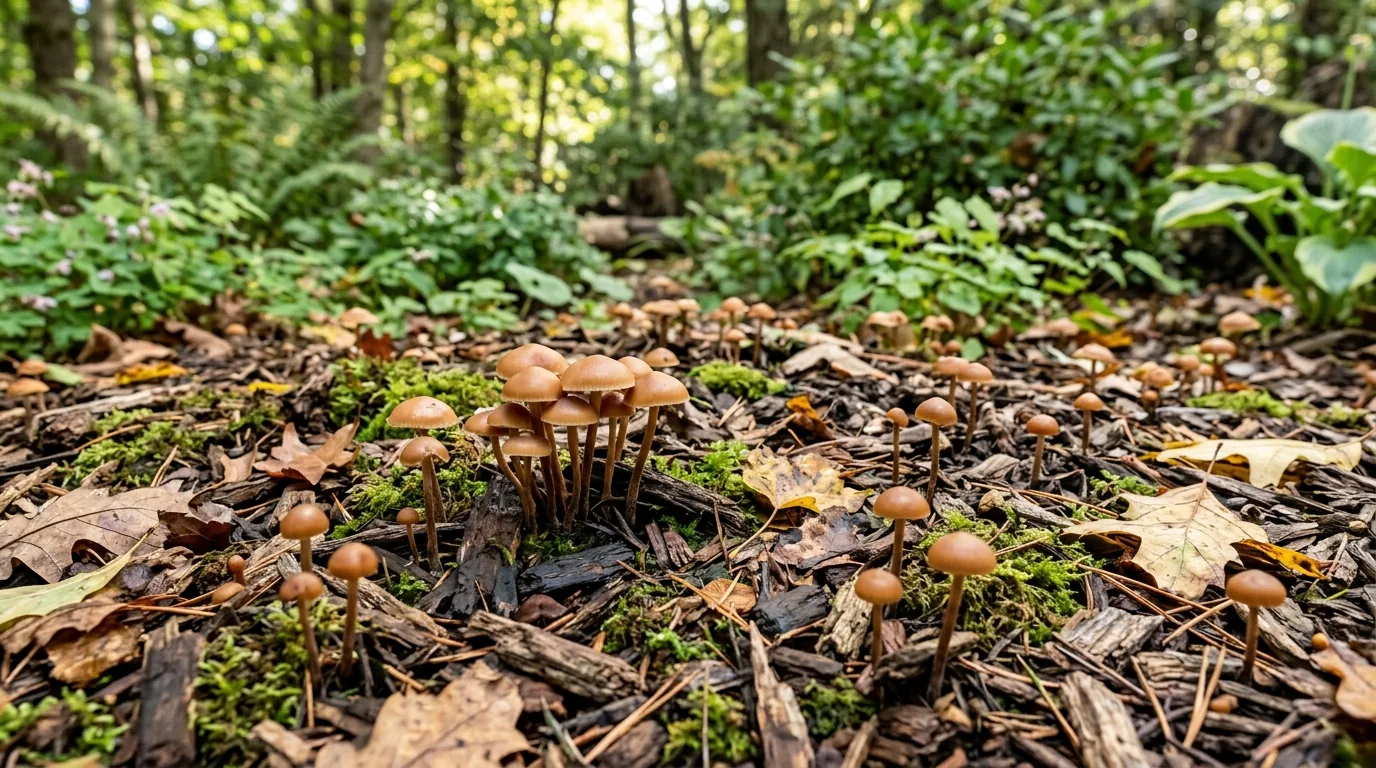
Choose a location with:
- Partial to full shade (reduces drying; avoids direct sun which can overheat substrate)
- Protection from wind (reduces desiccation)
- Good drainage (standing water causes anaerobic conditions and contamination)
- Proximity to trees or shrubs (not strictly necessary, but native fungi often establish more easily near other wood-decomposing fungi)
Ideal placement: under deciduous trees, along fence lines with shade, in garden beds with existing organic mulch.
Substrate Preparation
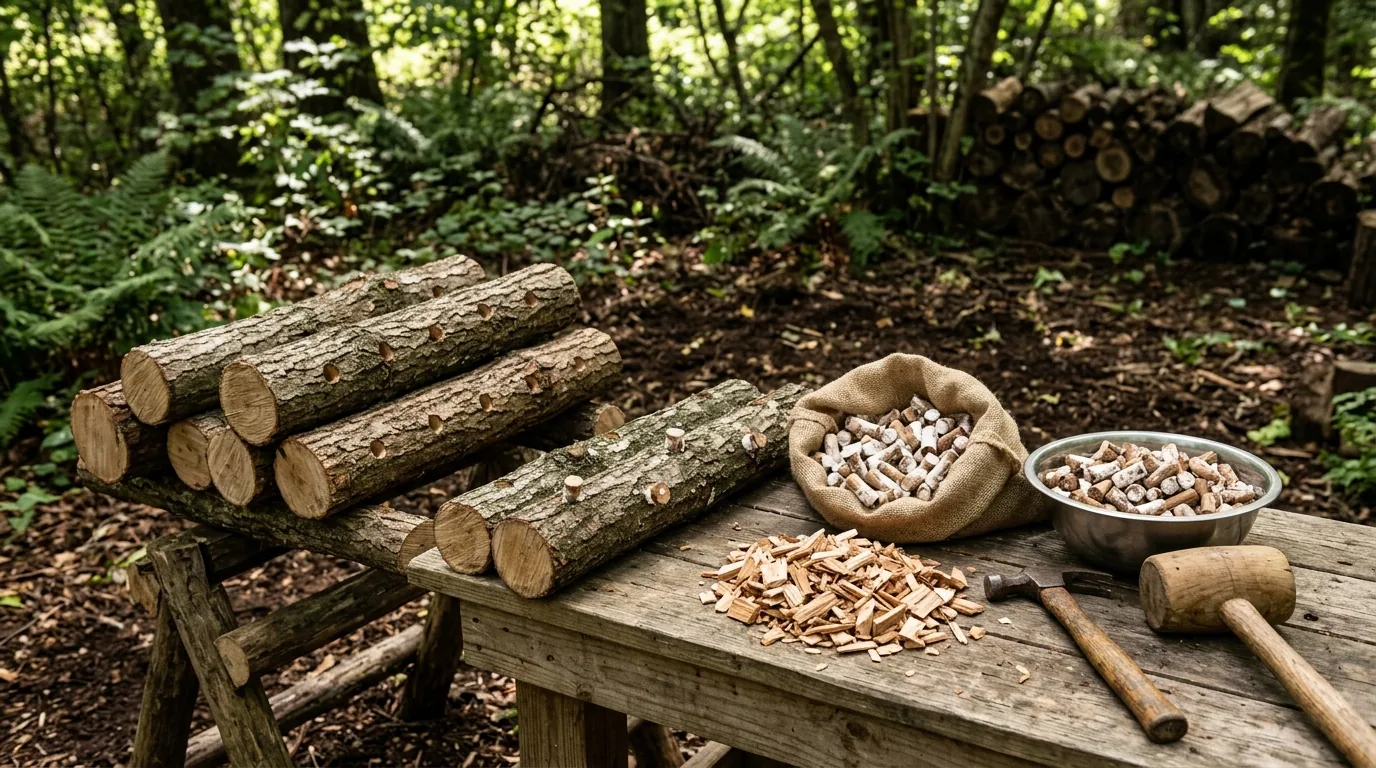
Wood Chip Selection
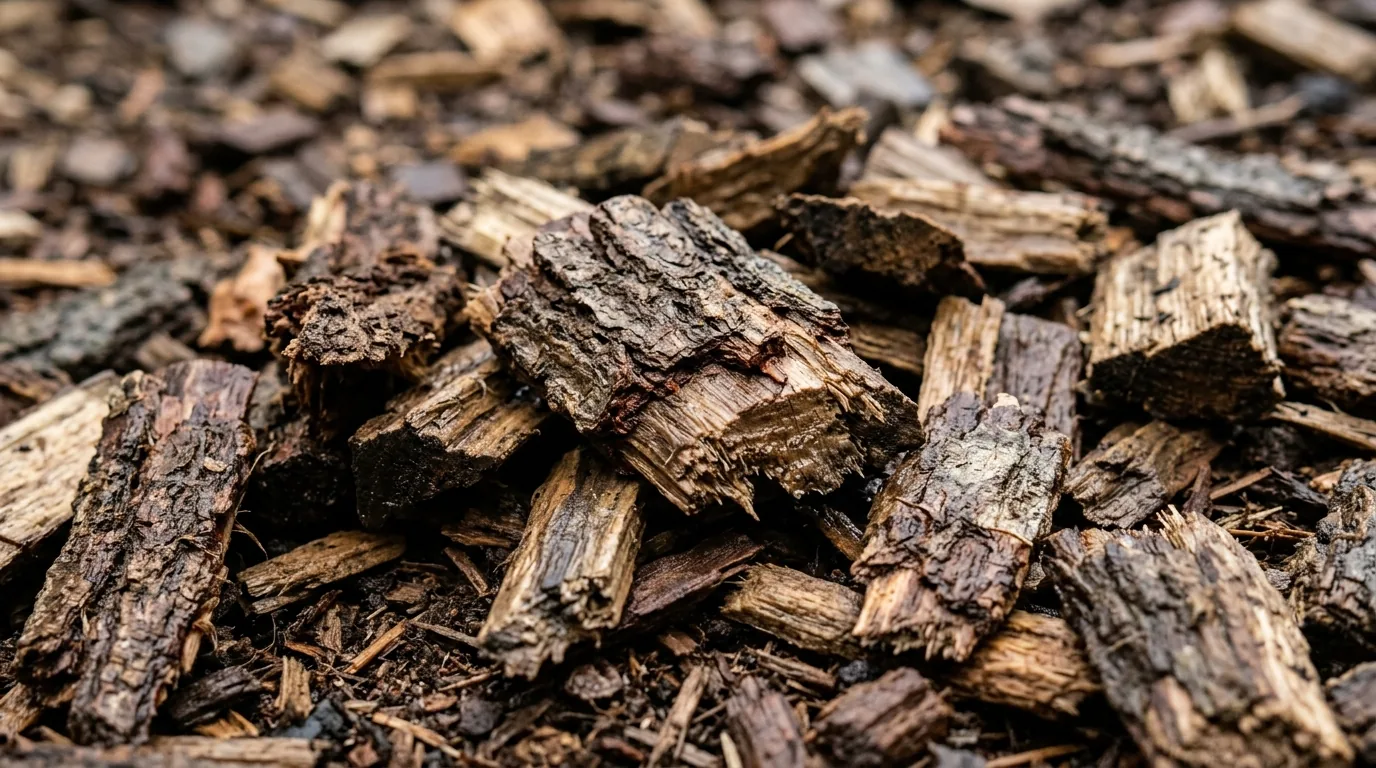
Hardwood chips are required. Softwood (pine, cedar, fir) chips contain resins and compounds that inhibit Psilocybe mycelium.
Best choices:
- Alder: Preferred for P. azurescens; excellent for P. cyanescens
- Cottonwood: Good alternative to alder; similar performance
- Beech: Excellent; produces good results across wood-loving species
- Maple, oak, sweetgum: All suitable
- Mixed ornamental mulch: Often works for P. cyanescens and P. allenii if primarily hardwood
Avoid: Conifer chips, eucalyptus, cedar, black walnut (allelopathic).
Chip size: Medium chips (1-4 inches) work better than fine wood dust or large chunks. Dust dries out too fast; large chunks have too little surface area.
Moisture Preparation
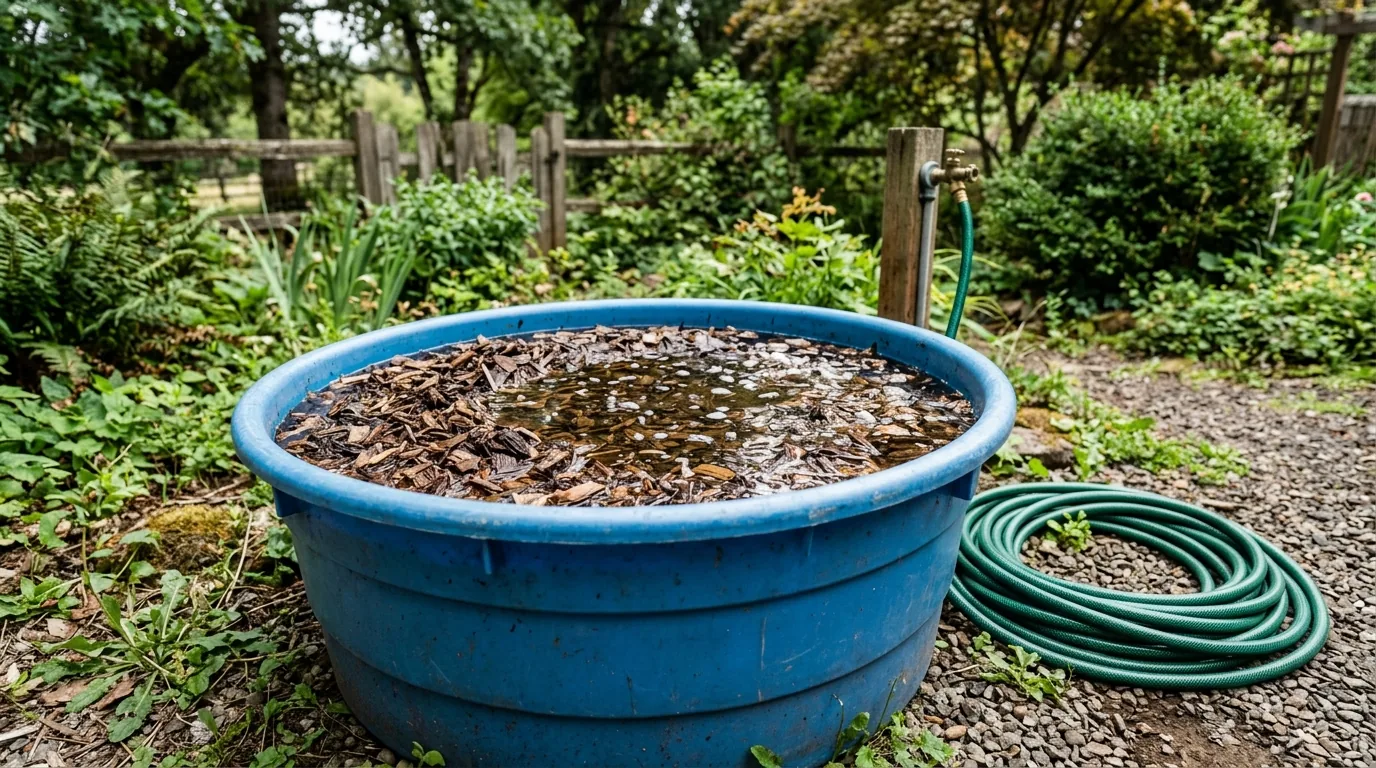
Dry chips must be fully saturated before use. Soak overnight (minimum 12 hours) or water thoroughly until chips are wet through. Squeeze-test: squeezed chips should release a few drops of water.
Inoculation Methods
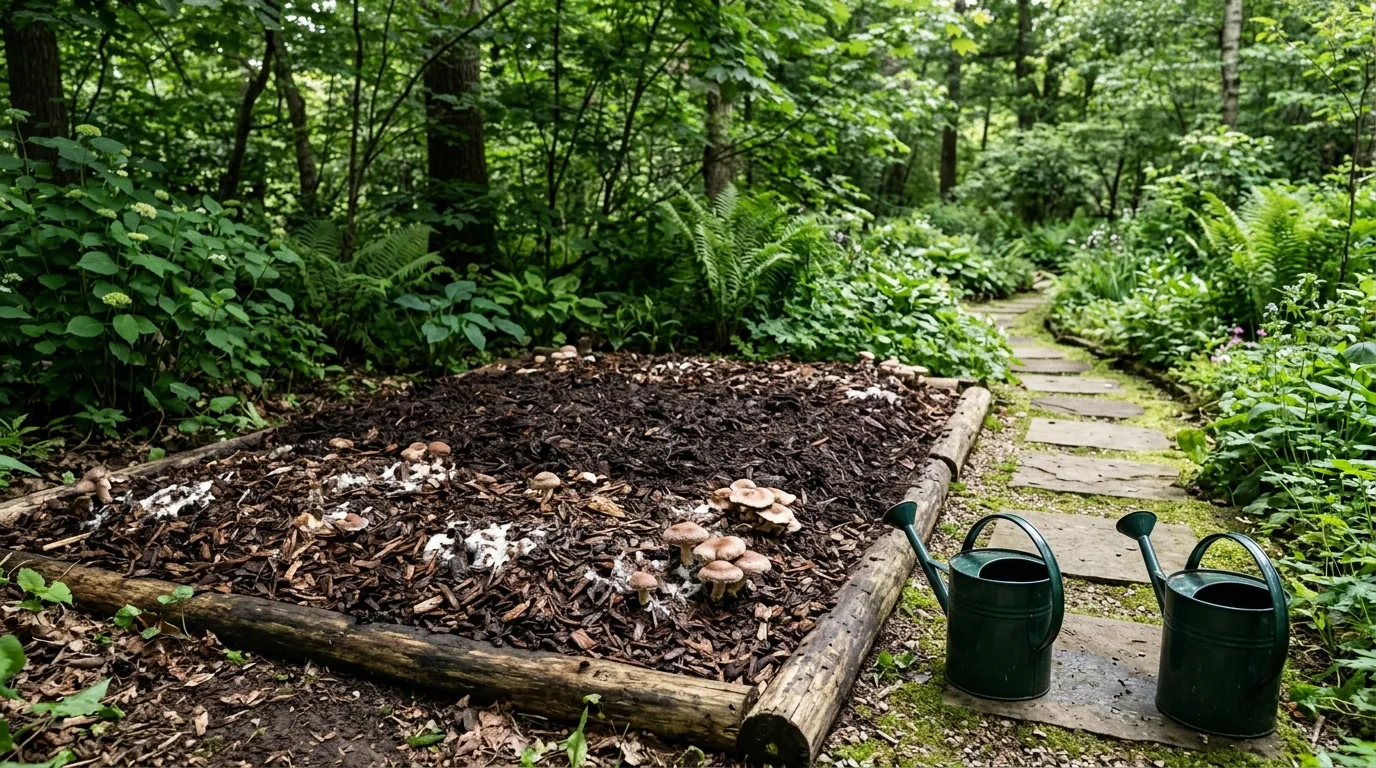
Method 1: Grain Spawn Layering
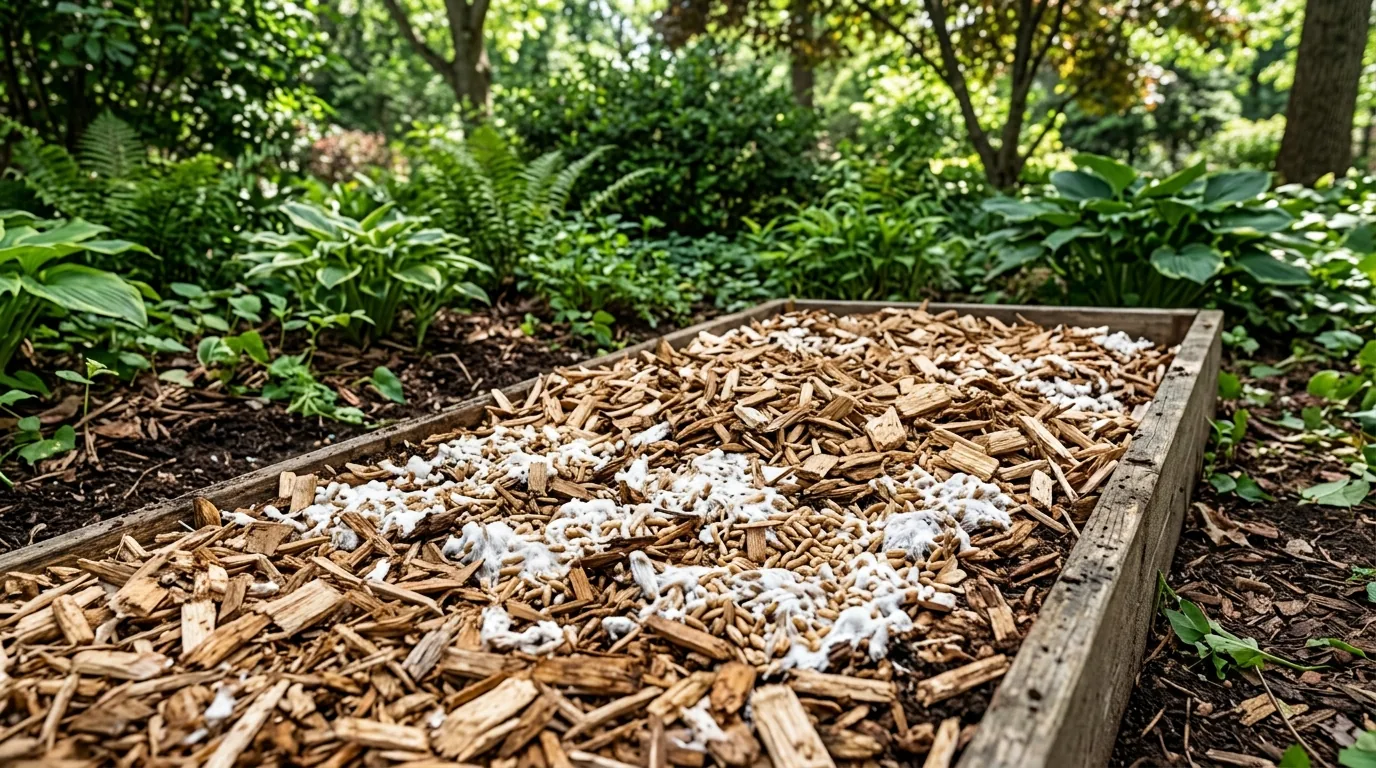
Most common and reliable method.
- Prepare the bed location: remove any existing material down to bare soil, or place in a new area
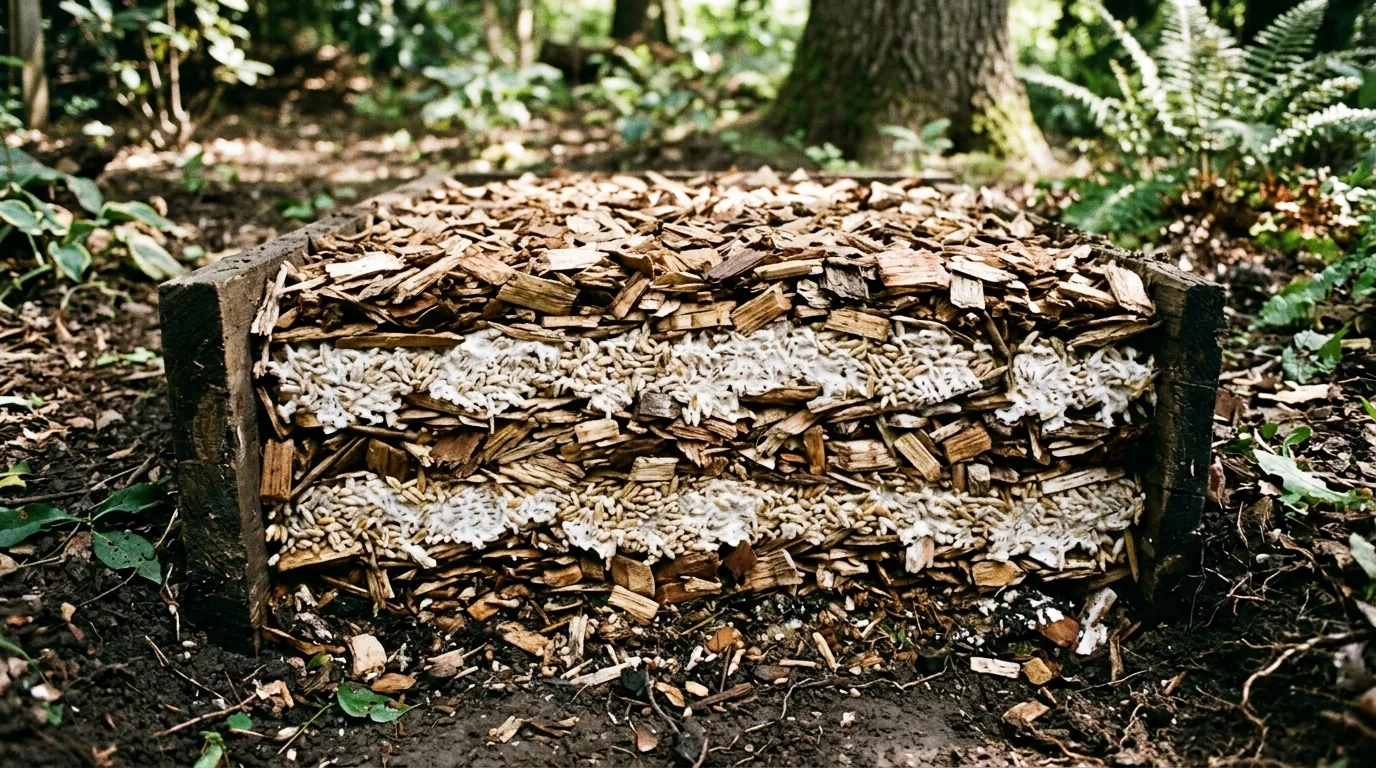
- Lay a 3-4 inch base layer of saturated wood chips
- Spread broken-up colonized grain spawn over the layer (one quart jar per square foot is a typical rate)
- Cover with another 3-4 inches of saturated wood chips
- Optional: add another grain spawn layer and another chip layer
- Top with a thin layer of chips as a protective cap
- Compress gently
Total substrate depth: 6-12 inches. Thicker beds establish better and last longer.
Method 2: Plug Spawn
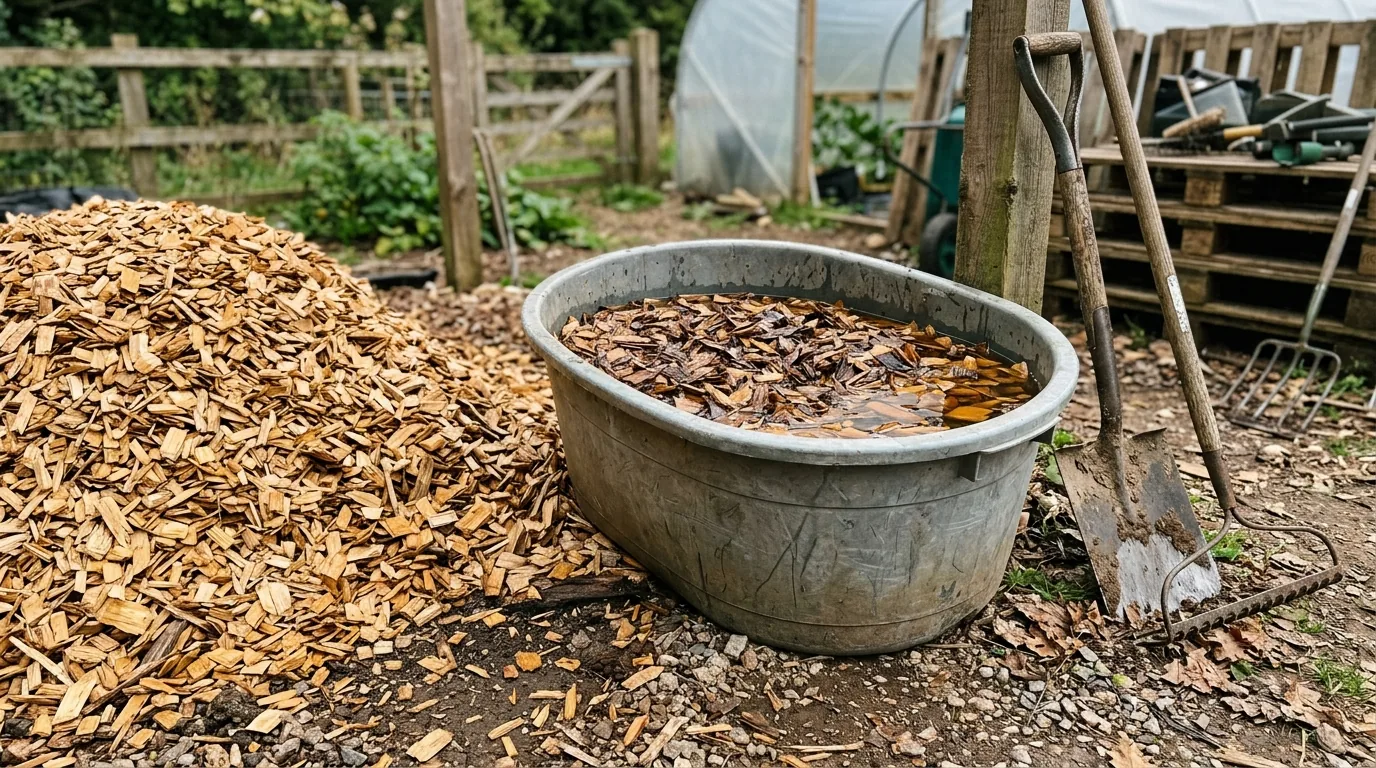
Wooden dowel plugs inoculated with mycelium can be pressed into the chip substrate at intervals. Less efficient than grain spawn but works for species available in plug form.
Method 3: Mixing Spawn Throughout
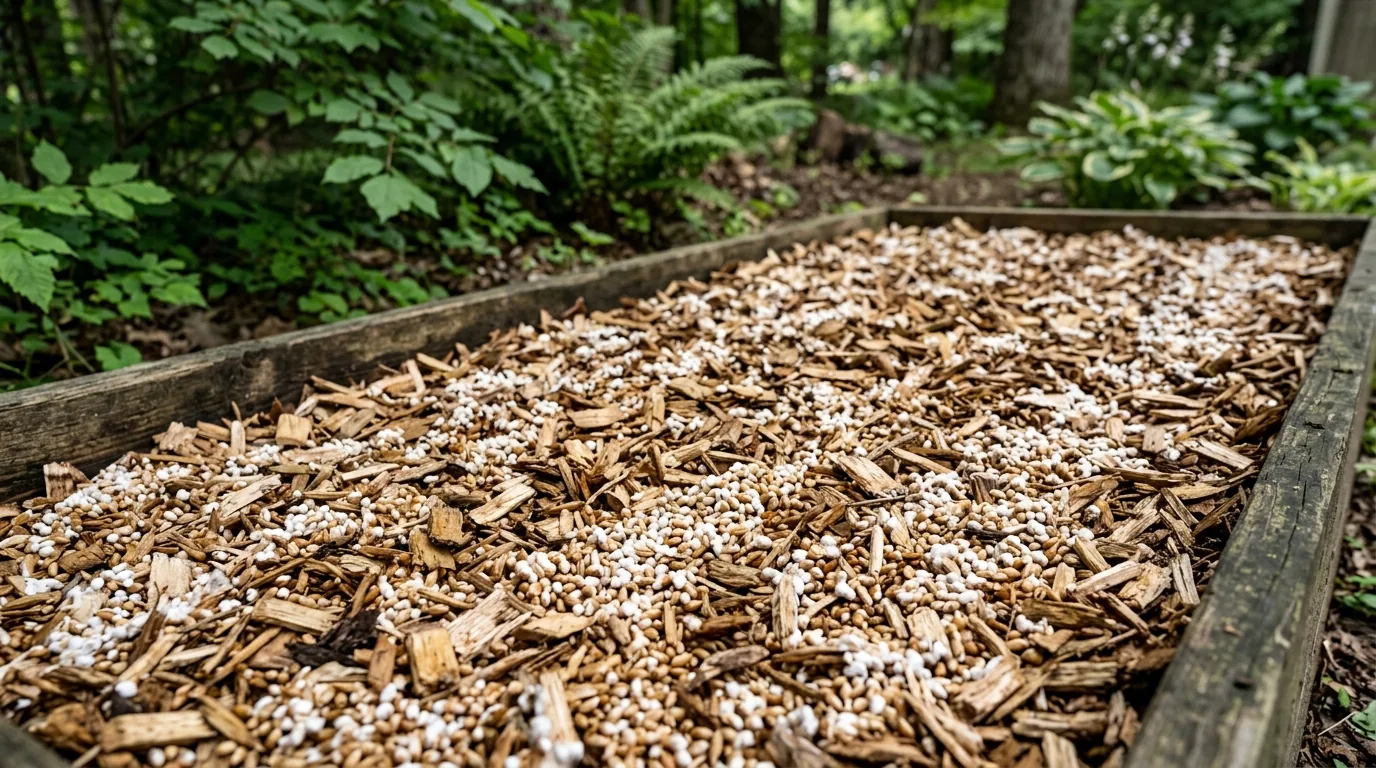
Break colonized grain into the chip substrate and mix thoroughly. Less neat but ensures even distribution.
Colonization and Maintenance
Timeline
After inoculation:
- Weeks 1-4: Mycelium begins spreading through the substrate (not visible externally)
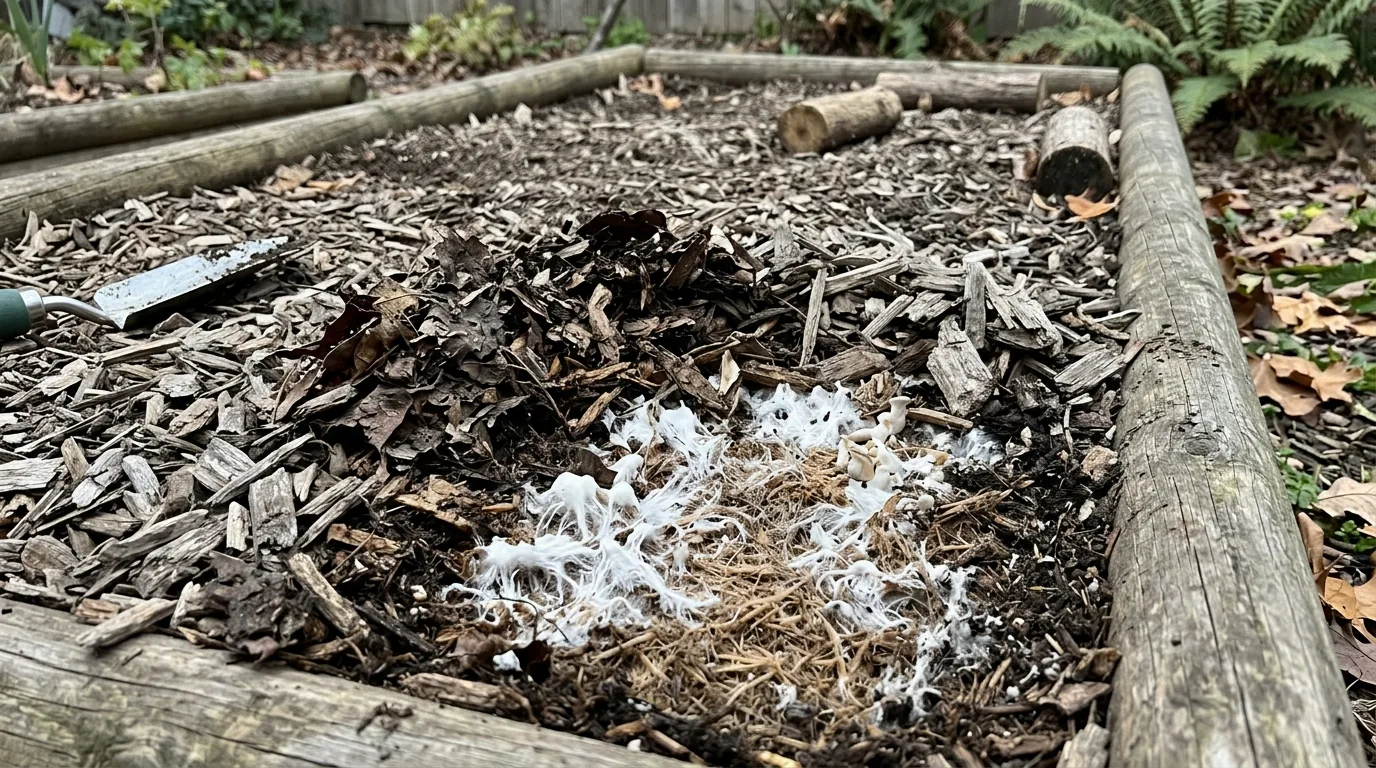
- Months 1-3: Mycelium colonizing the bed; visible as white threads if you dig into the substrate
- First autumn/winter: First potential fruiting after sufficient colonization
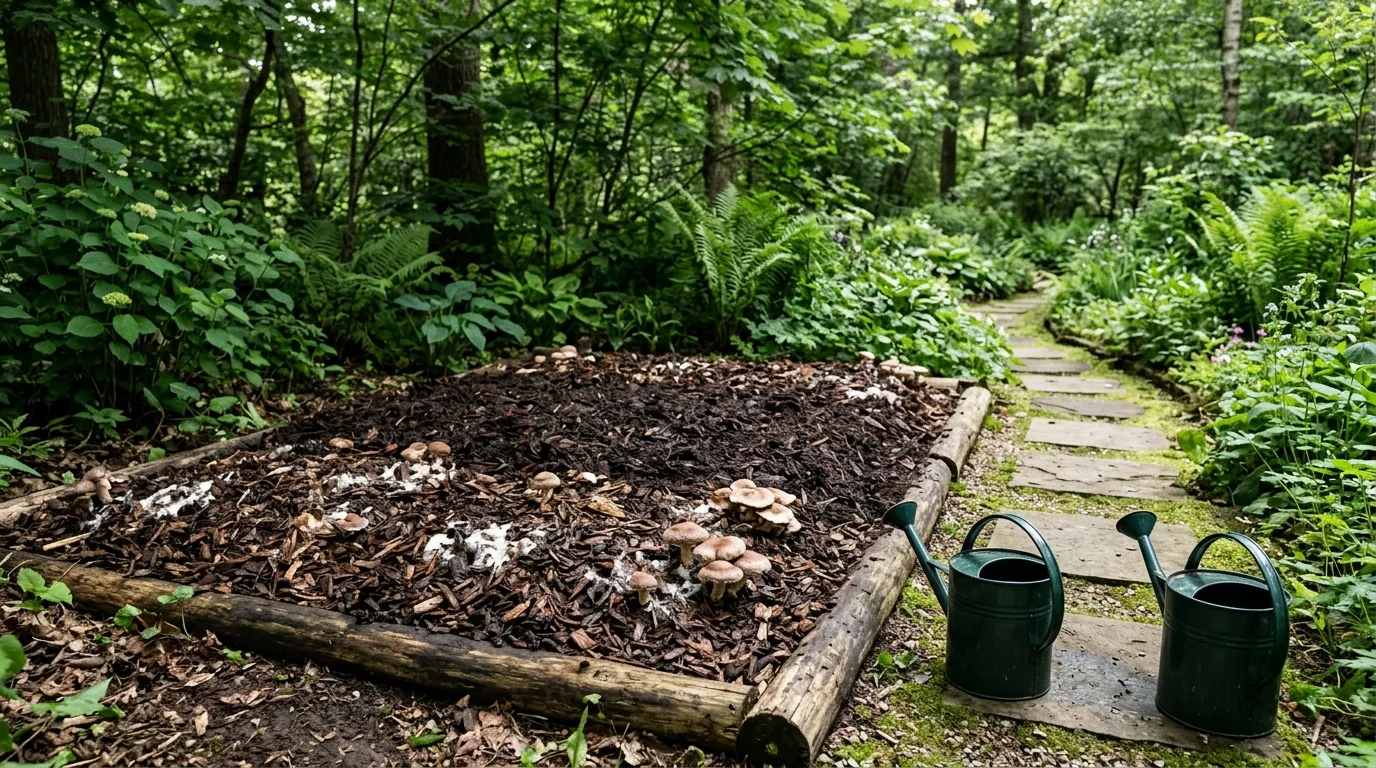
- Subsequent years: Established beds fruit more reliably and abundantly
Maintenance During Colonization
- Keep substrate moist but not waterlogged during warm months
- Add fresh chips to the top layer as needed (every 6-12 months)
- Do not disturb the bed — colonization proceeds undisturbed
- Protect from competing saprophytic fungi if possible (remove other mushrooms you don't recognize)
Fruiting Conditions
Fruiting in established beds is triggered naturally by:
- Temperature drop below 65°F (18°C), ideally below 55°F (13°C)
- Rain or heavy irrigation
- Reduced day length (natural light changes)
In good years, a well-established bed may produce multiple flushes across autumn and early winter.
Expanding and Maintaining Beds
Expanding: Collected spores from harvested mushrooms can be made into spore syringes and injected into new chip areas to expand the bed, or colonized material from the established bed can be transferred.
Topping off: Add 2-4 inches of fresh chips annually to provide new substrate for continued mycelial spread.
Long-term: Beds naturally exhaust after 5-10 years as the wood chip material decomposes. Replenishing with new wood chips can extend productivity.
Harvesting and Safety
Harvest outdoor mushrooms only when you can positively identify them. Outdoor beds can become colonized by other species, including:
- Galerina marginata: Deadly lookalike that grows in wood chips. Contains amatoxins. Consistent features: rusty-brown spore print (vs. purple-brown for Psilocybe), ring on stem may be more pronounced.
- Inocybe species: Many are toxic; some contain muscarine.
Always make a spore print from any mushroom you harvest. Psilocybe species produce dark purple-brown spore prints. Galerina produces rusty-orange-brown spore prints.
When in doubt, do not eat.
Common Problems & Troubleshooting
See the Contamination Guide for common issues.
Tips for Success
Take notes at every stage. Consistency beats perfection.