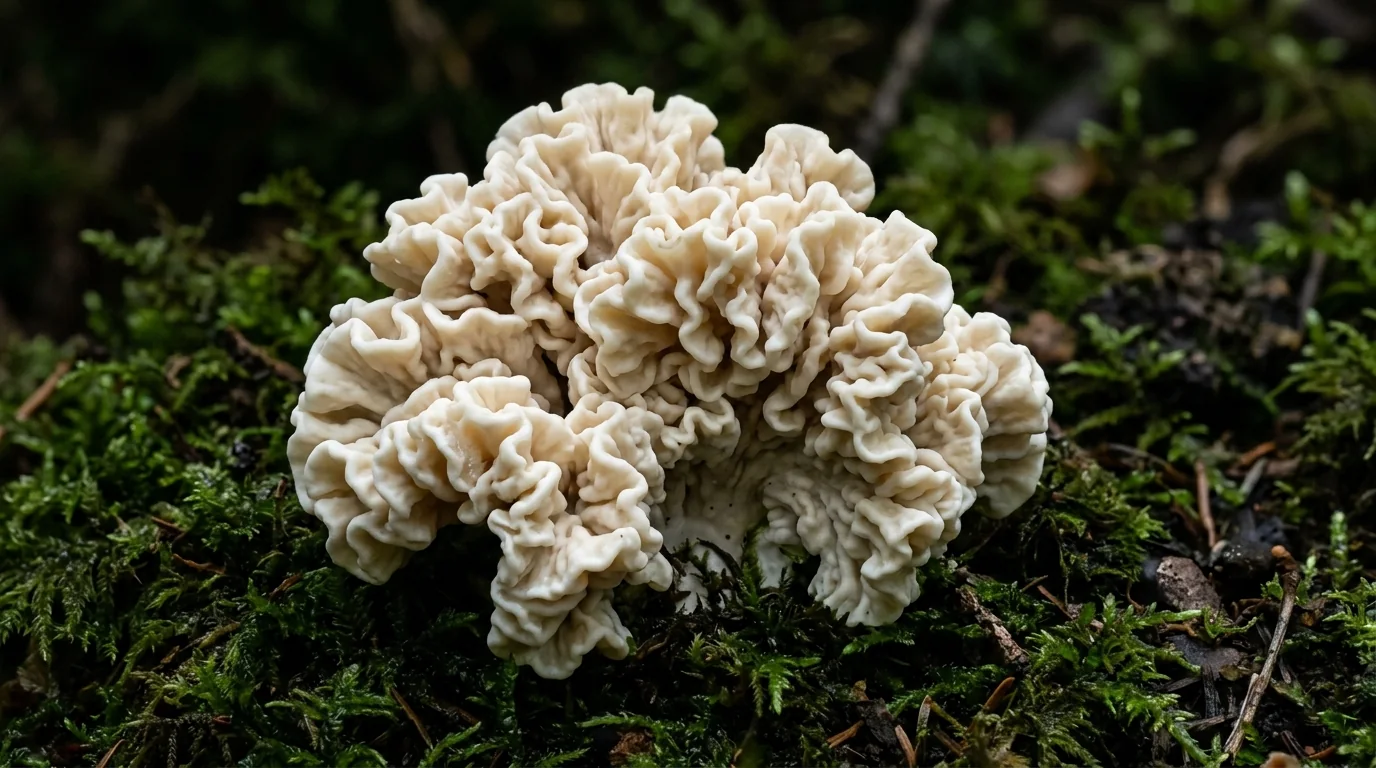
Enigma Mushroom Strain
Overview
Enigma is not a strain in the conventional sense — it is a stable blob mutation that emerged from Tidal Wave genetics and does not produce typical cap-and-stem fruiting bodies at all. Instead, Enigma grows as a dense, irregular, brain-like or cauliflower-shaped mass of tissue that never differentiates into the standard fruiting body form. This means Enigma cannot produce spores and cannot be propagated via spore print or spore syringe — it exists only as a living mycelium culture (agar or liquid culture). Despite — or perhaps because of — this arrested development, Enigma accumulates extraordinary psilocybin content. The blob masses are dense with tryptamines. A specific Enigma sample won the 2022 Oakland Hyphae Cup with the highest potency ever recorded at that competition. The cultivation community's fascination with Enigma is driven by its extreme potency, its bizarre appearance, and the exclusive knowledge required to grow it. It is not a strain for casual growers.
Effects & Experience
Enigma's effects are comparable to — and at maximum potency exceed — other top-tier cubensis variants. The blob morphology concentrates alkaloids in dense, irregular tissue, making even small quantities extremely powerful. Users report overwhelming visual and perceptual effects, deep ego dissolution, and experiences that are difficult to characterize in ordinary language. This is a strain for experienced psychonauts with significant high-dose experience and ideal set and setting.
Potency Profile
Extreme — among the highest potency cubensis variants available. Competition samples have tested above 3% total tryptamines. Average cultivated samples likely range 1.5–2.5% depending on grow conditions and maturity at harvest. Treat as 3–4x standard cubensis potency for dosing purposes.
Cultivation Notes
Enigma cannot be propagated from spores — it produces none. Acquisition requires obtaining a live agar culture or liquid culture from a cultivator who maintains the genetics. Once obtained, Enigma grows slowly and requires higher humidity and more consistent FAE than standard cubensis. The blob masses develop over 3–6 weeks under fruiting conditions and are harvested when their surface begins to show slight bluing or before they liquefy. Substrate preparation and contamination prevention are critical — the slow growth leaves a long window for competing organisms. Recommended only for cultivators with established agar skills and multiple successful monotub grows.

Recommended methods: Agar Work, Monotub Tek