Psilocybin for Social Anxiety: Evidence and Practice
Social anxiety disorder (SAD) — characterized by intense fear of social situations, fear of being observed or judged negatively, and avoidance behavior — affects approximately 13% of the population over a lifetime, making it one of the most common...
Psilocybin for Social Anxiety: Evidence and Practice
Social anxiety disorder (SAD) — characterized by intense fear of social situations, fear of being observed or judged negatively, and avoidance behavior — affects approximately 13% of the population over a lifetime, making it one of the most common psychiatric conditions. Existing treatments help significantly; many people experience substantial relief from CBT and SSRIs. But response rates are incomplete, and treatment-resistant social anxiety remains a major source of disability.
Psilocybin's potential for social anxiety has received limited direct investigation but compelling theoretical support and preliminary evidence.
Why Psilocybin Might Help Social Anxiety
Default Mode Network and Self-Focus
Social anxiety at its core involves excessive self-focused attention in social situations — the spotlight effect, constant self-monitoring, anticipation of negative evaluation. This self-focused processing is mediated substantially by the default mode network.
Psilocybin's powerful suppression of DMN activity during sessions may provide a direct experiential counterpoint to this pattern. Many people with social anxiety describe sessions as the first time they experienced genuine freedom from self-consciousness.
Whether this translates into lasting reduction in social anxiety is an empirical question — but the mechanism is compelling.
Psilocybin and Empathy
Research has documented that psilocybin increases empathy — specifically, the ability to accurately perceive others' emotional states. This is the opposite of social anxiety's characteristic pattern of misinterpreting social cues as threatening.
If psilocybin can recalibrate threat perception in social contexts, this would address one of social anxiety's core dysfunctions.
Fear Extinction and Neural Plasticity
Social anxiety involves learned fear associations — specific situations associated with anticipated humiliation or rejection. SSRI + CBT treatment works partly through extinction of these fear associations.
Psilocybin's promotion of neuroplasticity and its effects on fear extinction circuits (amygdala, prefrontal cortex) suggest it might accelerate fear extinction — allowing feared social associations to be recoded as safe during the integration period.
Reducing Shame
Much social anxiety is underpinned by shame — deep beliefs about being fundamentally defective or unacceptable. Psilocybin sessions frequently produce experiences of self-compassion, acceptance, and belonging that directly counter shame-based beliefs.
The Evidence
UCLA Social Anxiety in Autism Study (Danforth et al., 2016)
The most directly relevant study involved 12 autistic adults with significant social anxiety. Nine of twelve showed clinically significant reduction in social anxiety at 1-month follow-up. Reductions were sustained at 6 months in most participants.
This study involved a specific population (autistic adults) that differs from the general social anxiety population, and it lacked a control condition. But it's the only published controlled data directly examining psilocybin for social anxiety.
General Anxiety Data
Multiple psilocybin trials for various conditions have used anxiety measures as secondary outcomes. Across these, psilocybin consistently reduces anxiety. The Hopkins cancer trial found reductions in both state and trait anxiety. The depression trials found reductions in anxiety alongside depression.
None of these studies enrolled people based on social anxiety specifically.
The General Psychedelic + Social Function Literature
Survey research suggests psychedelic users show increases in perspective-taking and empathy. Population data from psychedelic users shows higher rates of certain prosocial behaviors. These correlations are consistent with the hypothesis that psychedelic experiences improve social functioning but do not establish causation.
Social Anxiety vs. Social Phobia: Subtype Considerations
Social anxiety is not monolithic. Several subtypes may respond differently:
Performance anxiety: Fear of public speaking, performing, presenting. Strong fear extinction mechanism suggests potential benefit.
Generalized social anxiety: Pervasive fear across most social situations. More complex — may require more extensive preparation to address specific feared situations.
Social anxiety from trauma: Social anxiety arising from social trauma (bullying, humiliation, attachment trauma). Overlaps with CPTSD; requires trauma-informed approach.
Selective mutism: Extreme form of social anxiety involving inability to speak in certain social situations. No evidence specifically in adults.
What Integration Looks Like for Social Anxiety
Integration for social anxiety requires specific focus on:
Behavioral exposure: The neuroplasticity window following a session is an opportunity to engage in previously avoided social situations. Doing so during the integration window allows new, non-threatening associations to be formed with feared contexts.
Cognitive work: Identifying and challenging the specific beliefs driving social anxiety ("people are judging me," "I am fundamentally unacceptable") with the perspective gained from the session.
Mindfulness in social situations: Practicing present-moment attention rather than self-monitoring during social interactions.
Compassion cultivation: Practices building self-compassion directly counteract the shame underlying social anxiety.
Practical Notes for Social Anxiety
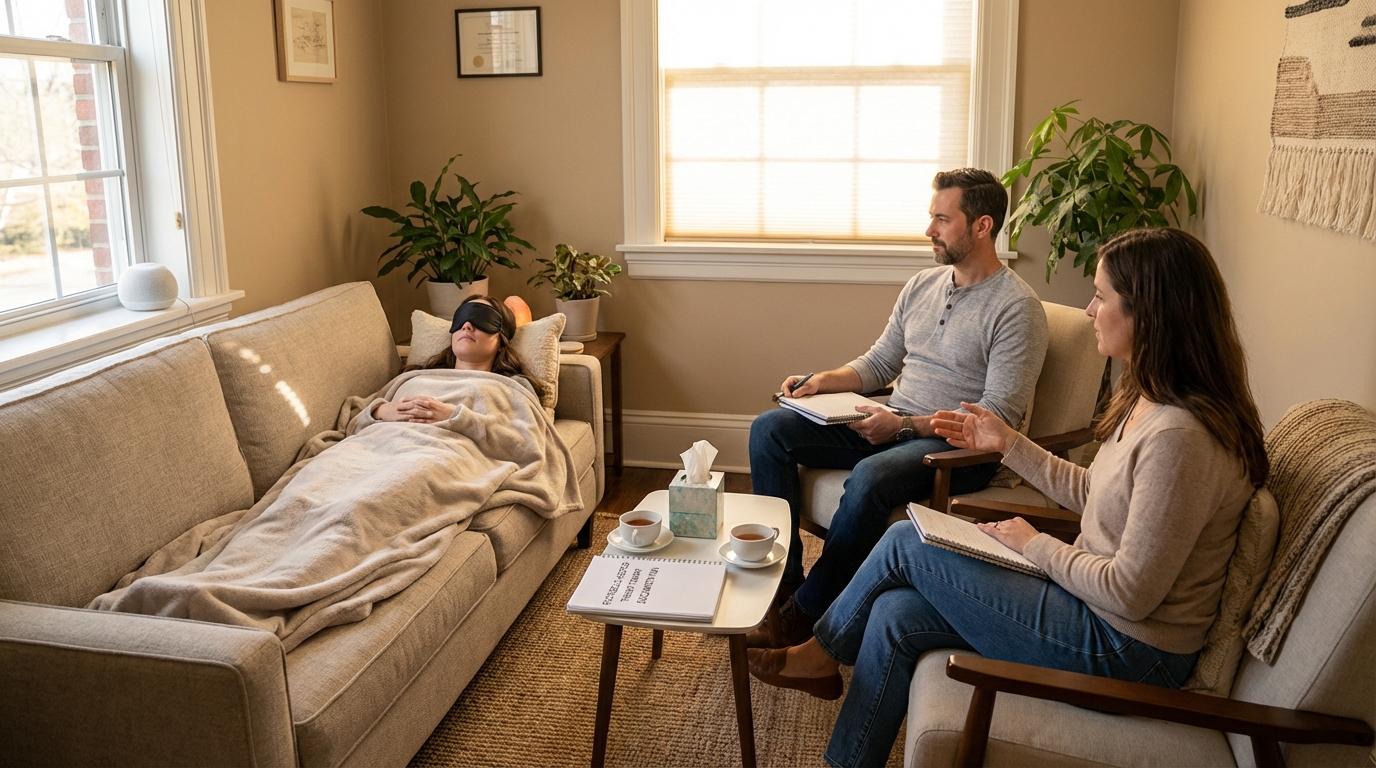
Sessions can amplify social anxiety initially: Being with other people — even a trusted facilitator — while in an altered state can trigger social anxiety-related content. This is actually an opportunity (the core feared material is accessible), but it requires careful preparation.
Facilitation relationship matters more than usual: For someone with social anxiety, the quality of trust and safety in the facilitation relationship is crucial. Invest more time in preparation to ensure this is solid.
Set and setting: Private space, familiar or comfortable environment. Minimal number of people present. Clear permission to be quiet, to not have to "perform" for the facilitator.
Integration exposure timing: Don't rush back into feared social situations before you have adequate integration support. A premature return to high-anxiety situations without psychological preparation could be counterproductive.
Maintenance: Social anxiety may require more than one session. The evidence for durability of effects in other anxiety conditions suggests 6-12 months of maintained benefit from a single session, but social anxiety may have specific rebound patterns related to ongoing avoidance that require multiple sessions or ongoing behavioral exposure.