Psilocybin and Autism Spectrum Disorder: Emerging Research
Psilocybin research for autism spectrum disorder (ASD) is early-stage — more preliminary than any other area of current psychedelic research. But the theoretical rationale is compelling enough that several research groups have begun formal investi...
Psilocybin and Autism Spectrum Disorder: Emerging Research
Psilocybin research for autism spectrum disorder (ASD) is early-stage — more preliminary than any other area of current psychedelic research. But the theoretical rationale is compelling enough that several research groups have begun formal investigation, and early data is beginning to emerge.
This article covers the theoretical basis, existing evidence, methodological challenges, and what the research will need to demonstrate before clinical application.
The Theoretical Case
Serotonin Dysregulation in Autism
A consistent finding in ASD research is that many autistic individuals show altered serotonin system function. Elevated whole-blood serotonin levels are one of the most replicated biological findings in autism research — found in approximately 25-30% of autistic individuals. The mechanisms underlying this remain unclear.
Psilocybin's primary action is 5-HT2A receptor agonism. Some researchers hypothesize that modulating the serotonin system in a way that SSRIs (which elevate serotonin broadly) do not might address different components of the serotonin dysregulation seen in autism.
This is speculative. The serotonin hypothesis of autism itself remains contested.
Default Mode Network and Social Cognition
Psilocybin dramatically reduces default mode network (DMN) activity. The DMN in autistic individuals shows different functional connectivity patterns compared to neurotypical controls — particularly in regions associated with social cognition, mentalizing (understanding others' mental states), and self-referential processing.
The hypothesis: by temporarily altering DMN function, psilocybin might create a window of altered social processing that could, with appropriate therapeutic support, be used to develop new social understandings or reduce anxiety associated with social situations.
This remains theoretical.
Anxiolytic Effects and Social Anxiety
Social anxiety is extremely common in autism — estimated to affect 40-50% of autistic adults. This is often the primary source of functional impairment, distinct from the core features of autism itself.
Psilocybin's evidence base for anxiety disorders is reasonably strong. A subset of the benefit for autistic adults might come not from addressing core autism features at all, but from reducing the anxiety that makes social situations overwhelming.
Existing Evidence
UCLA Pilot Study (Danforth et al., 2016)
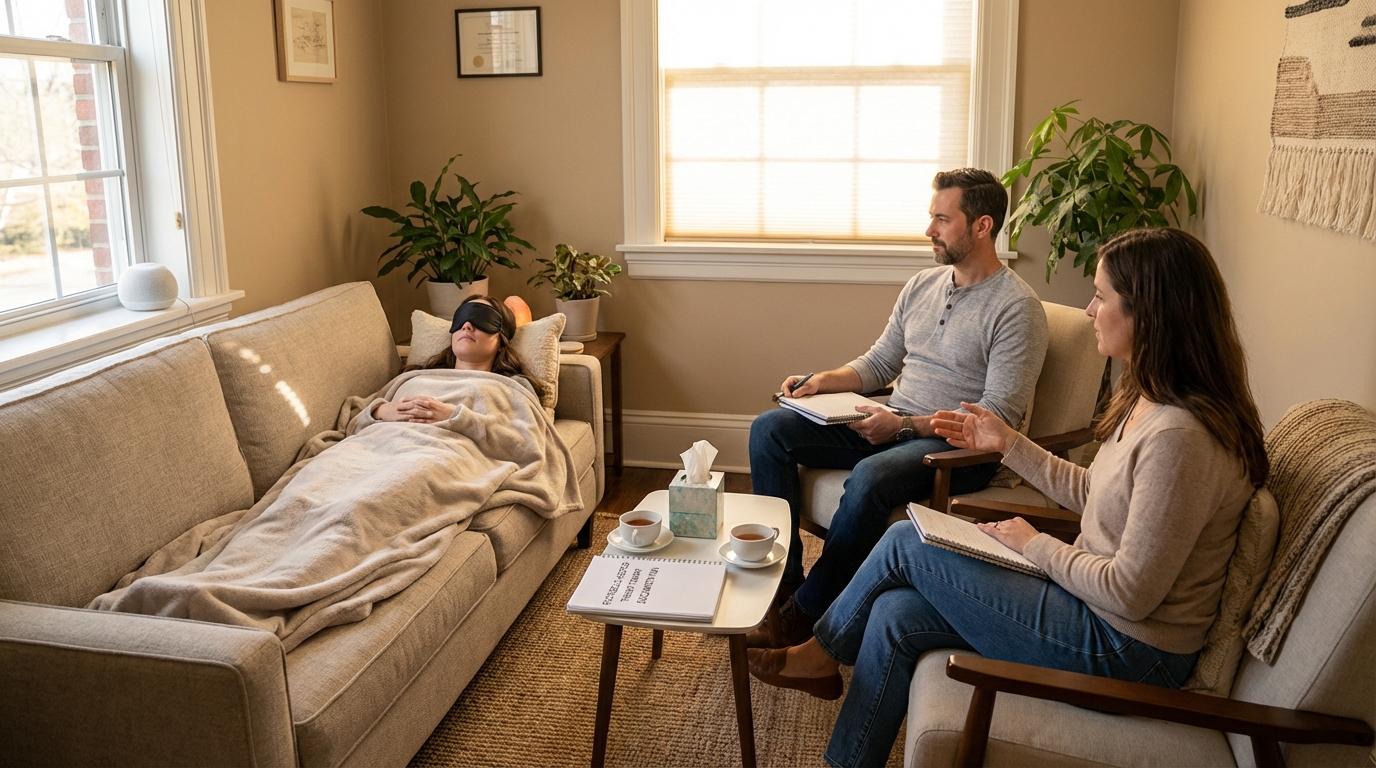
The first systematic study of psilocybin in autistic adults was a small open-label pilot at UCLA, published in 2016 by Alicia Danforth and colleagues. 12 autistic adults with significant social anxiety received psilocybin-assisted therapy.
Results: Statistically significant reductions in social anxiety at follow-up (1 month, 6 months). Seven participants showed clinically significant improvement. The study had no control group, making it impossible to attribute improvements to psilocybin vs. expectancy, attention, or therapeutic support.
The study was important as a safety and feasibility demonstration — autistic adults can participate in psilocybin research without disproportionate adverse events.
Subsequent Studies
Several larger trials have been registered and are underway (as of 2026):
- MAPS and MAPS Canada trials (combined psilocybin and psychotherapy for ASD-related anxiety)
- Imperial College London trial (neuroimaging study in autistic adults)
These studies are expected to produce findings in 2026-2028.
Methodological Challenges
Psilocybin ASD research faces challenges more acute than in other clinical populations.
Heterogeneity
Autism is not a single condition. The autism spectrum encompasses individuals with vastly different cognitive profiles, communication styles, sensory processing differences, and support needs. A finding that psilocybin helps one portion of the spectrum may be irrelevant or harmful for another.
Current trials focus primarily on autistic adults without intellectual disability — a relatively narrow subset of the broader autism population. Generalizing from this group is limited.
Sensory Amplification
Psilocybin dramatically amplifies sensory experience. For autistic individuals who already experience sensory processing differences — often finding ordinary sensory environments overwhelming — this amplification presents both opportunity and risk.
In the UCLA study, some participants found the sensory amplification distressing; others found it revelatory. Set and setting protocols need to account for sensory sensitivity specifically.
Communication and Consent
Some autistic individuals communicate differently. Standard preparation and integration protocols assume verbal communication and abstract self-reflection in ways that may not generalize across the autism spectrum.
Session protocols need adaptation for autistic communication styles — this is an area of ongoing development in the research community.
Diagnostic Complexity
Many autistic adults have co-occurring psychiatric conditions: ADHD, OCD, anxiety, depression. Disentangling effects on autism-specific symptoms from effects on co-occurring conditions is methodologically difficult.
What We Don't Know
The fundamental question — whether psilocybin changes anything about the core features of autism (social communication differences, restricted and repetitive behaviors) — remains entirely unanswered.
Current studies are primarily focused on anxiety in autistic adults, not on "treating autism." This is an important distinction.
It's possible that psilocybin has no meaningful effect on core autism features and any benefit comes entirely from anxiety and mood effects. It's also possible that the neuroplasticity and social-processing changes associated with psilocybin are useful for some autistic individuals specifically. We don't yet know.
Community and Advocacy Perspectives
The autism advocacy community is not uniformly positive about psychedelic research. Several concerns have been raised:
Cure framing: Some in the autistic community strongly object to research that seems oriented toward "curing" autism rather than supporting autistic wellbeing. Researchers in this space generally take care to frame work as addressing anxiety and quality of life, not changing autism itself.
Neurodiversity: The neurodiversity movement emphasizes that autism is a different neurological organization, not a disease requiring treatment. Research that assumes autism as pathology conflicts with this framework.
Consent and autonomy: For research involving autistic adults, genuine informed consent requires communication accommodations and explicit attention to power dynamics between researchers and participants.
What Autistic Adults Considering Psilocybin Should Know
If you are autistic and considering psilocybin (legally, through clinical trials, or otherwise):
- Evidence is very limited: The UCLA pilot is small and uncontrolled. Do not extrapolate from the general psilocybin literature without considering autism-specific factors.
- Sensory effects will be amplified: Prepare specifically for this. Your sensory environment matters even more than for neurotypical individuals.
- Communication needs matter: Your ability to communicate and get support during a session is critical. Ensure your support person or facilitator understands your communication style.
- Existing psychiatric conditions: Many autistic adults have anxiety disorders, OCD, or mood conditions that are contraindications or require special consideration. A careful medical evaluation is essential.
- Clinical trials are the safest option: If you want to explore this, enrolling in a clinical trial provides medical support, appropriate screening, and contributes to the evidence base. Search ClinicalTrials.gov for "psilocybin autism."