Psilocybin for Alcohol Use Disorder: Clinical Trial Evidence
Alcohol use disorder (AUD) affects an estimated 14 million adults in the United States, with annual alcohol-related deaths exceeding 95,000. Existing treatments — behavioral therapies (CBT, 12-step facilitation, motivational interviewing), medicat...
Psilocybin for Alcohol Use Disorder: Clinical Trial Evidence
Alcohol use disorder (AUD) affects an estimated 14 million adults in the United States, with annual alcohol-related deaths exceeding 95,000. Existing treatments — behavioral therapies (CBT, 12-step facilitation, motivational interviewing), medications (naltrexone, acamprosate, disulfiram), and residential treatment programs — have documented efficacy but also substantial limitations: medication adherence is poor, relapse rates are high, and many patients cycle through treatment repeatedly without achieving sustained remission.
Psilocybin for AUD has been studied more rigorously than for most other substance use disorders. Three clinical trials have now published results, and the evidence base — while still early-stage — is consistent enough to represent a meaningful therapeutic signal.
Published Clinical Trials
1. Bogenschutz et al. (2015) — University of New Mexico
Study type: Open-label pilot Sample: 10 adults with AUD Design: 2-4 individual therapy sessions plus 1-2 psilocybin sessions Dose: Moderate (0.3 mg/kg) and high (0.4 mg/kg) synthetic psilocybin
Results:
- Drinks per week decreased from ~47 at baseline to ~11 at 4-week follow-up (77% reduction)
- Days abstinent increased from ~18% at baseline to ~75% during weeks 5-8 post-dosing
- Improvements maintained at 36-week follow-up
- Greater mystical-type experience correlated with better drinking outcomes
This was a small, open-label trial without a control group — not definitive, but the signal was large enough to justify Phase 2 work.
2. Bogenschutz et al. (2022) — NYU Langone
Study type: Phase 2 double-blind randomized controlled trial Sample: 93 adults with AUD Design: 2 psilocybin sessions versus 2 diphenhydramine (antihistamine) placebo sessions; both groups received 12 weeks of behavioral therapy Dose: 25mg/70kg synthetic psilocybin (high dose) Published in: JAMA Psychiatry
Results:
- Psilocybin group: 48% of participants reported no heavy drinking days in the 8 months after the first dosing session
- Placebo group: 24% reported no heavy drinking days (still a significant improvement from baseline, attributable to behavioral therapy)
- Difference between groups (psilocybin vs. placebo): significant, with large effect size (Cohen's d = 0.82)
- Psilocybin participants also showed significant reductions in drinks per drinking day and days abstinent relative to placebo
This is the largest randomized controlled trial of psilocybin for AUD published to date. The 48% no-heavy-drinking rate at 8 months compares favorably to naltrexone outcomes (the most effective existing pharmacotherapy for AUD, associated with ~25-30% abstinence in trials).
3. Sessa et al. (2021) — Bristol, UK (MDMA, not psilocybin — included for context)
A Bristol University trial used MDMA-assisted therapy (not psilocybin) for AUD, finding similar directional results. This is included as context showing psychedelic-assisted approaches to AUD are showing consistent signals across different compounds.
How Psilocybin Compares to Standard AUD Treatments
| Treatment | 12-Month Abstinence (approximate) | Notes | |-----------|----------------------------------|-------| | No treatment | ~20-25% | Natural remission rate | | Brief behavioral intervention | ~30% | | | Naltrexone | ~25-30% | Best-available pharmacotherapy | | Acamprosate | ~20-25% | | | Intensive outpatient + pharmacotherapy | ~35-40% | Combined approach | | Psilocybin (Bogenschutz 2022) | ~48% no heavy drinking at 8 months | Single Phase 2 trial |
The comparison is imperfect — different trials use different outcome metrics, follow-up periods, and patient populations. But the signal from the Bogenschutz 2022 trial is large and consistent with the open-label pilot, making it one of the more compelling data points in the psilocybin therapeutic literature.
Why Psilocybin Might Work for AUD
Motivational transformation: The most consistent finding in psilocybin AUD research is that positive treatment response correlates with the depth of the mystical-type experience — the degree to which participants experience profound ego dissolution, a sense of unity, or spiritual significance. This experiential component appears to shift the motivational relationship to alcohol at a deeper level than cognitive-behavioral or pharmacological interventions. Participants frequently describe no longer identifying as "a drinker" or experiencing alcohol as simply less important relative to other values that became vivid during the session.
Neuroplasticity window: Psilocybin's promotion of BDNF-mediated neuroplasticity in prefrontal cortex could allow reconfiguration of the habitual alcohol-seeking patterns and reward conditioning that maintain addiction.
Emotional processing: Many AUD patients drink to manage negative emotional states (anxiety, depression, trauma). Psilocybin's documented efficacy for emotional processing and trauma work addresses these root causes in a way that pharmacological AUD treatments don't.
Default mode network disruption: The rigid self-narratives maintained by the DMN (including addiction-identity narratives — "I am an alcoholic and always will be") may be disrupted and reconsolidated more adaptively following psilocybin.
The 12-Step and Recovery Community Intersection
AUD treatment in the United States has historically been deeply influenced by 12-step frameworks (Alcoholics Anonymous, SMART Recovery), which treat addiction as a disease requiring complete abstinence and define "sobriety" as the absence of all mood-altering substances.
This creates a meaningful tension with psilocybin use:
- 12-step traditions typically classify psilocybin as a mood-altering substance incompatible with sobriety
- Some participants in psilocybin trials maintain ongoing AA/NA participation; others find the frameworks incompatible
- Recovery community attitudes toward psychedelic-assisted therapy are shifting, driven partly by the published evidence and partly by veteran community advocacy
For individuals in active 12-step programs considering psilocybin-assisted therapy, this is worth discussing explicitly with their sponsor and recovery community rather than assuming either automatic compatibility or incompatibility.
Integration Considerations for AUD
Session spacing and drinking behavior: The days and weeks immediately following a psilocybin session require particular attention in AUD. Alcohol use in the afterglow period directly antagonizes the neuroplasticity benefits — BDNF-mediated synaptogenesis is suppressed by alcohol. Protocols typically recommend abstinence during the integration period following each session.
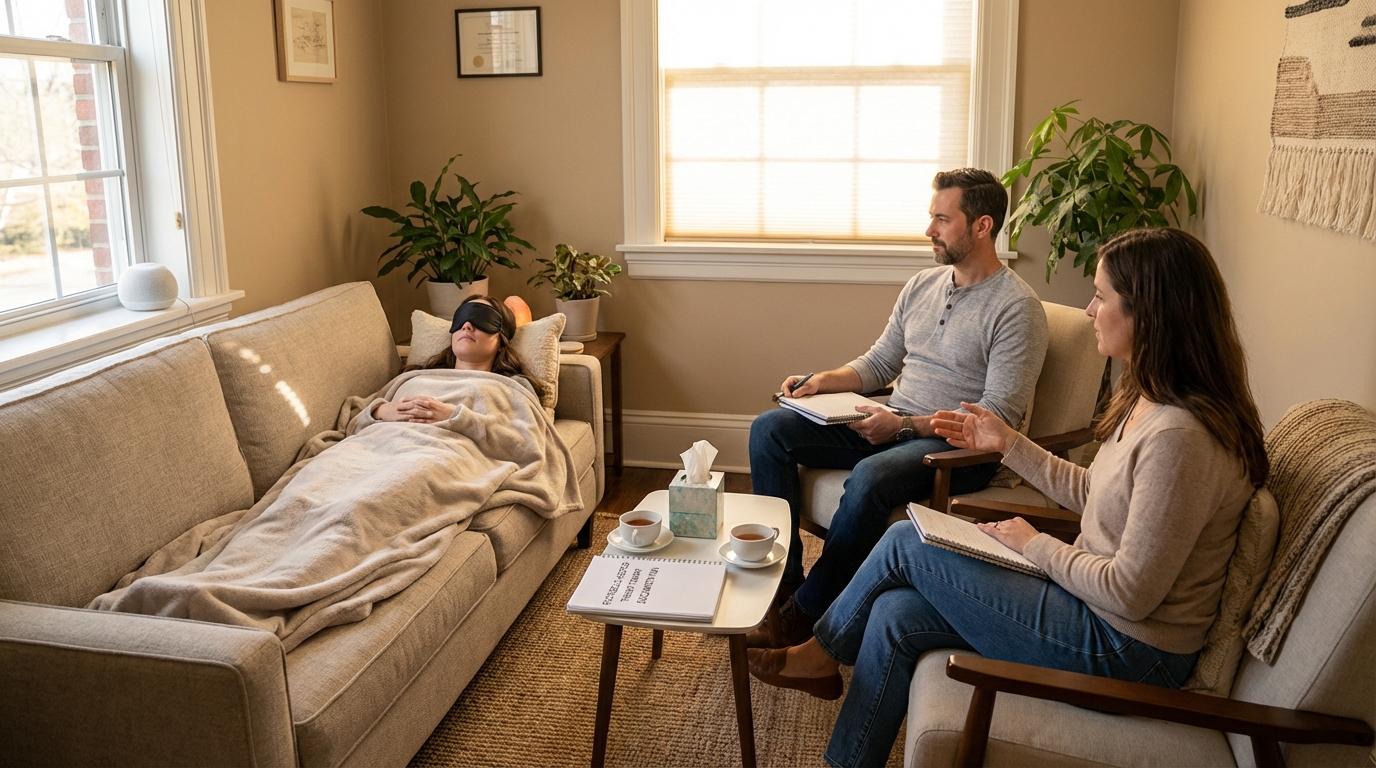
Concurrent behavioral therapy: Both published trials combined psilocybin sessions with structured behavioral therapy (12 weeks of individual therapy in the Bogenschutz 2022 trial). The combination appears essential — psilocybin without behavioral support may not consolidate gains effectively.
Identifying alcohol triggers: Integration work should explicitly map the triggers, emotions, and situations associated with problem drinking, and develop concrete practices for responding to them differently. The insights from the session provide the motivational substrate; the integration work builds the behavioral patterns.
Social and environmental factors: AUD is deeply embedded in social contexts — drinking partners, environments, rituals. Integration needs to address the social restructuring that sustained recovery often requires, which psilocybin doesn't directly address.
Research Outlook
Phase 3 trials of psilocybin for AUD are the critical next step. The Bogenschutz 2022 data provides a strong foundation. Several research groups including NYU, Johns Hopkins, and UK centers are in Phase 3 design or early execution phases. If Phase 3 trials replicate the Phase 2 signal, psilocybin-assisted therapy for AUD could represent a meaningful addition to the treatment landscape within the next 5-7 years — potentially the most effective pharmacologically-assisted approach available for this indication.