How to Enroll in a Psilocybin Clinical Trial
Clinical trials offer the safest, most structured, and legally unambiguous pathway to psilocybin therapy. They provide medical supervision, trained facilitators, preparation and integration support, and — importantly — the knowledge that your part...
How to Enroll in a Psilocybin Clinical Trial
Clinical trials offer the safest, most structured, and legally unambiguous pathway to psilocybin therapy. They provide medical supervision, trained facilitators, preparation and integration support, and — importantly — the knowledge that your participation contributes to the evidence base that will make this therapy available to others.
This guide covers how to find trials, evaluate them, navigate the screening process, and set expectations.
Where to Find Trials
ClinicalTrials.gov
The US government's registry of clinical trials is the primary resource. All trials conducted in the United States must be registered here.
Search approach:
- Go to clinicaltrials.gov
- Search for "psilocybin" in the condition/intervention field
- Filter by:
- Status: Recruiting (most important — only recruiting trials can accept you)
- Location: Your country or state
- Condition: Filter by your specific condition (depression, PTSD, etc.) if relevant
What to look at for each trial:
- Eligibility criteria (are you eligible?)
- Location (can you physically attend?)
- Study design (what will you actually experience?)
- Contact information
EU Clinical Trials Register
For European trials: clinicaltrialsregister.eu
WHO International Clinical Trials Registry
For international trials: who.int/clinical-trials-registry-platform
Research Institution Websites
Hopkins, NYU Langone, UCSF, UCLA, Imperial College London, and MAPS all maintain research program pages with information about open trials.
Evaluating Trials: What to Look For
Not all trials are equal. When evaluating a trial:
Institutional Affiliation
Trials run through major medical centers (Johns Hopkins, NYU, UCSF, Yale, Duke, Imperial College) have the most oversight and the strongest medical support infrastructure. Independent research organizations and smaller institutions may run legitimate trials but typically have fewer resources for medical emergencies.
Study Design
- Double-blind, randomized, controlled: The gold standard. You may receive placebo, which is important to understand.
- Open-label: Everyone receives active drug. Less rigorous scientifically but no risk of receiving placebo.
- Phase I: Safety focused, usually healthy volunteers, small doses.
- Phase II: Efficacy assessment, patient populations, usually larger doses.
- Phase III: Large-scale efficacy, closest to commercial preparation.
Facilitator Training
Ask what training your facilitators have. At minimum, look for mental health professional licenses plus specific psychedelic training (through Hopkins, MAPS, CIIS, or similar).
Integration Support
What happens after the session? Trials without post-session integration support leave participants without help processing what arose. Good trials include at least 2-3 post-session integration sessions.
Compensation
Trials often compensate participants for time. This is not a payment for receiving the drug — it compensates for your time and any inconvenience. The compensation should not be so large as to create undue inducement.
Common Eligibility Issues
Most psilocybin trials exclude participants with:
Psychiatric conditions:
- Personal or first-degree family history of psychosis or schizophrenia spectrum disorders
- Bipolar disorder (especially bipolar I with psychotic features)
- Active suicidal ideation with intent or plan
- Active substance use disorders (except in addiction trials specifically)
- Severe personality disorders (borderline, antisocial)
Medical conditions:
- Uncontrolled cardiovascular disease
- Epilepsy (increased seizure risk theoretical)
- Liver disease (affects drug metabolism)
- Pregnancy or breastfeeding
Medications:
- SSRIs and SNRIs (may blunt psilocybin effects; some trials require washout)
- Lithium (seizure risk with serotonergic compounds — significant concern)
- MAOIs (serious interaction risk)
- Some other psychiatric medications
If you have one of these exclusion criteria, read the protocol carefully — some trials exclude only specific severities, and criteria vary.
The Screening Process
When you contact a trial about enrollment, expect:
Phone/email screening: Initial questions about basic eligibility. Usually takes 15-30 minutes.
Medical history review: Detailed questions about psychiatric history, medical history, medications, and substances. Be honest — screening exists for your safety.
Clinical interviews: One or more structured interviews (often using SCID — Structured Clinical Interview for DSM Disorders) to assess psychiatric history. Usually 1-2 hours.
Medical screening: Physical examination, blood work, ECG, urinalysis. Varies by trial.
Pregnancy testing: Required for people who could become pregnant in most trials.
This process typically takes several weeks to months. Expect to be rejected if any exclusion criteria apply — this is not a judgment about you personally but a medical decision about safety.
Healthy Volunteer Studies
If you don't have a specific condition being studied, healthy volunteer trials offer another pathway. These are trials studying psilocybin's effects on consciousness, neural activity, personality, or other outcomes in people without the target condition.
Healthy volunteer trials often:
- Accept a wider range of participants
- May use lower doses (safety studies)
- Contribute to basic science understanding
- May have less therapeutic focus
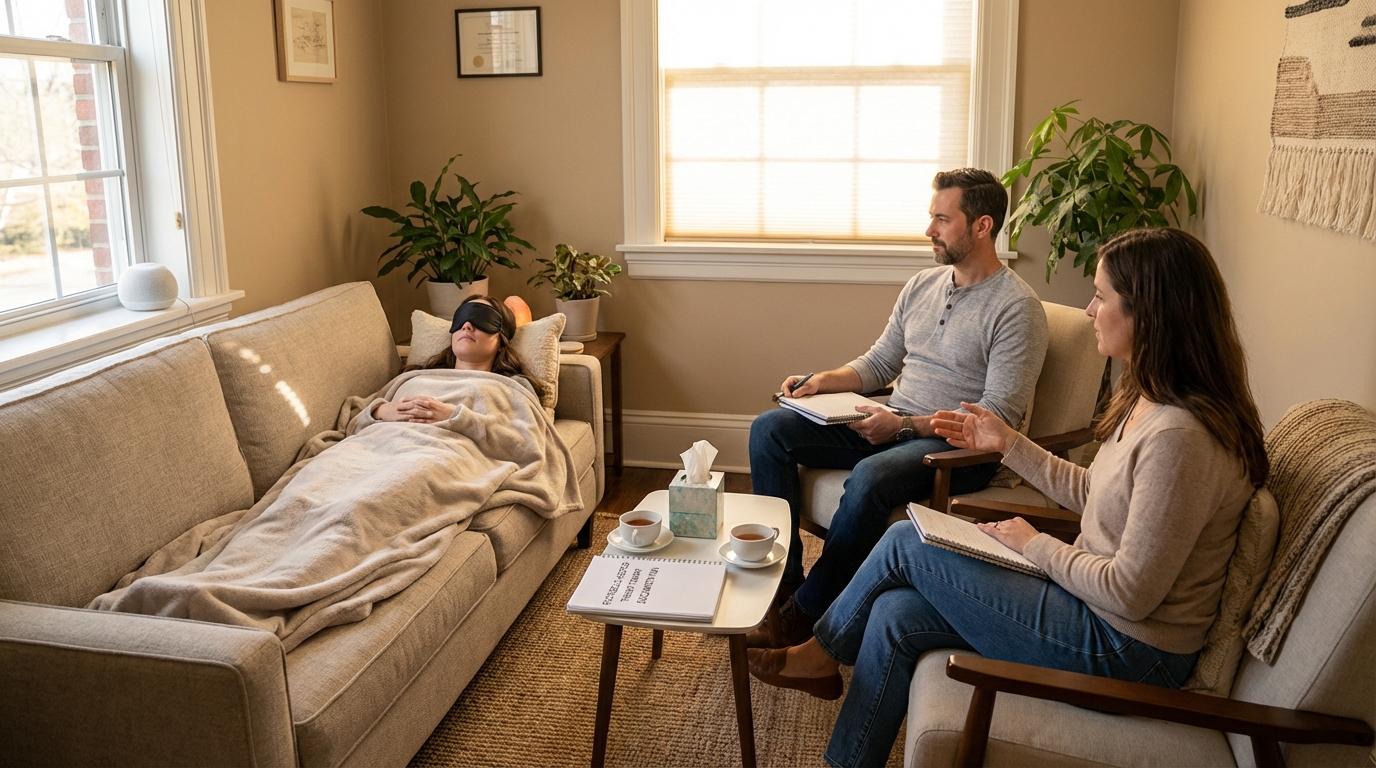
What to Expect in a Trial Session
Trial sessions are carefully structured:
Preparation sessions (typically 2-3, over 2-4 weeks): Meeting your facilitators, psychological preparation, setting intentions, discussing what to expect.
Session day:
- Duration: 6-8 hours typically
- Setting: Dedicated session room with comfortable furniture, music system, eye shades
- Support: Typically two trained facilitators present throughout
- Monitoring: Vital signs checked at intervals; medical staff available
- No obligation to speak: You can move through the experience without conversation
Integration sessions (typically 2-3): Processing what arose, developing actionable insights, monitoring wellbeing.
Paying Attention to Red Flags
In clinical trial screening, red flags include:
- Pressure to downplay symptoms to qualify
- Facilitators who discuss their own drug experiences inappropriately
- No clear integration support plan
- Vague answers to questions about adverse event protocols
- Financial arrangements that seem unusual
Good trials welcome questions and prioritize your safety over enrollment numbers.
If You're Waitlisted or Ineligible
Being excluded from a trial or placed on a waitlist is common — trials have strict inclusion criteria and limited capacity.
Options if you don't qualify for trials:
- Oregon and Colorado licensed service centers (legal, no diagnosis required)
- International retreats (Jamaica, Netherlands, Mexico)
- Continue monitoring ClinicalTrials.gov — trials open regularly as funding and regulatory approvals occur
- Consider whether your exclusion criterion can be addressed (e.g., SSRIs can sometimes be tapered with medical supervision)