Planning a Psilocybin Ceremony: A Complete Guide
A ceremony is not simply a session with candles. It is a structured, intentional container — shaped by preparation, setting, ritual, and integration — that holds the psilocybin experience within a framework of meaning and purpose. Ceremonial appro...
Planning a Psilocybin Ceremony: A Complete Guide
A ceremony is not simply a session with candles. It is a structured, intentional container — shaped by preparation, setting, ritual, and integration — that holds the psilocybin experience within a framework of meaning and purpose. Ceremonial approaches to psilocybin have a long history in indigenous traditions and are experiencing renewed interest as Western practitioners seek approaches that go beyond the purely medical model. This guide covers the elements of a well-designed ceremony.
What "Ceremonial" Means
In indigenous contexts (Mazatec velada, Huichol hikuri ceremony, Shipibo ayahuasca ceremony), psilocybin and other plant medicines are embedded in cosmological frameworks developed over centuries. The ceremony is inseparable from the worldview that gives it meaning.
In contemporary Western practice, "ceremonial" typically means:
- Deliberate container: Specific time, space, and structure set apart from ordinary life
- Intention: A clear purpose or question brought to the experience
- Ritual elements: Opening and closing practices that mark the ceremony as distinct
- Reverence: An attitude that treats the substance and the experience with respect
- Integration: A structured return to ordinary life that honors what was encountered
This is distinct from recreational use (which may lack structure and intention) and clinical use (which operates within a medical model that may not use ceremonial language at all). A ceremony can be conducted with psilocybin in any legal jurisdiction where that's possible, by people without professional clinical credentials, within an intentional community or circle.
Preparation: The Ceremony Begins Before the Ceremony
Physical preparation (1–2 weeks before):
- No alcohol 48–72 hours before; ideally 1 week
- Reduce or eliminate cannabis
- Eat clean — reduce processed foods and heavy animal products
- Prioritize sleep
- No fasting is required, but a light meal 3–4 hours before dosing prevents nausea
- Some traditions recommend a more extended dietary "dieta" (particularly associated with ayahuasca traditions)
Psychological preparation:
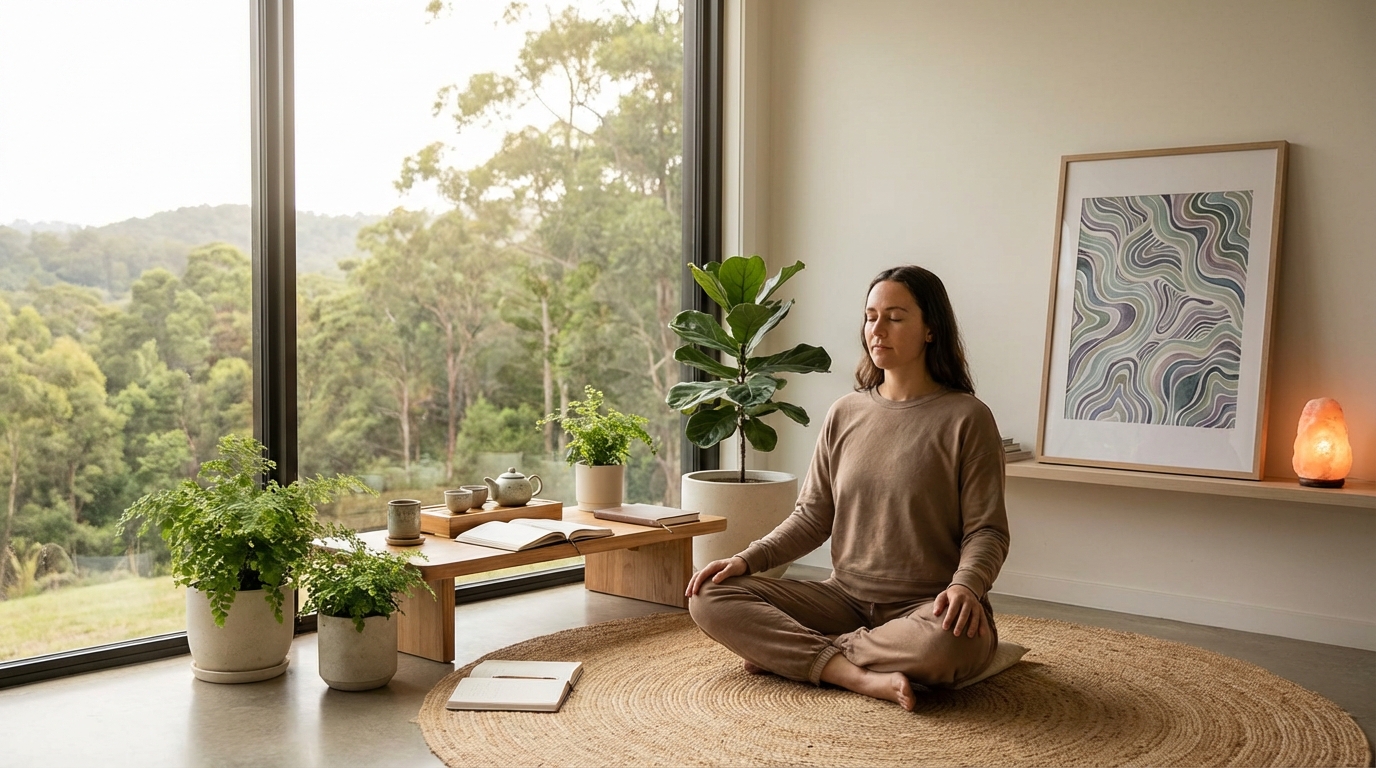
- Meditation, journaling, or contemplative practice to settle the mind
- Identifying your intention: What are you bringing to this ceremony? What do you want to explore, release, understand, or receive?
- Addressing practical life logistics so you can be fully present
- Discussing the experience with your sitter or ceremony holder
Setting your intention: Your intention is not a directive to the medicine — you cannot control where psilocybin takes you. It is more like a question: "Help me understand my grief." "Show me what I'm avoiding." "I want to meet myself with more compassion." Write it down. You may want to read it aloud at the opening of the ceremony.
The Space
Environmental elements:
- A clean, uncluttered space you have control over for the full day
- Natural elements where possible: plants, flowers, a bowl of water, natural textures
- Comfortable floor setup — yoga mat, blankets, bolsters — so you can lie down
- Soft, controllable lighting (candles are traditional; dimmable lamps work)
- Temperature regulation: ceremonies can produce temperature sensitivity
Altar or focal point: Many traditions use a central focal point — objects that hold personal or symbolic significance, arranged intentionally. This is not required, but having a physical anchor for intention and meaning is psychologically useful. Objects might include: photos of significant people, meaningful objects from nature, items connected to your intention, incense or aromatherapy.
Sound: Music is one of the most powerful variables in a psilocybin experience. For ceremonial contexts, consider:
- A prepared playlist following the session's expected arc (quiet/contemplative → building → peak → descent → grounding)
- Live instrument playing, if the sitter plays
- Silence as an intentional element in specific phases (but total silence throughout the entire session is typically not recommended)
- Indigenous or traditional music from traditions associated with psilocybin use, received with appropriate cultural awareness
Opening the Ceremony
The opening marks the transition from ordinary to ceremonial time. Common elements:
Smudging or clearing: Burning sage, palo santo, copal, or other incense to clear the space. Whether or not you believe in the energetic properties of smudging, the sensory act of scent and smoke creates a clear sensory boundary.
Intention sharing: Speaking your intention aloud, either to your sitter or to the space. This externalizes the intention and invites accountability to it.
Connection: A moment of felt connection — to the place, to the people present, to whatever larger context holds meaning for you (ancestors, teachers, the earth, spirit, the researchers who made the knowledge available).
Acknowledgment: Some facilitators begin by acknowledging the indigenous traditions from which ceremonial psilocybin knowledge originates — particularly Mazatec traditions and figures like Maria Sabina. This is both ethically important and sets a tone of humility.
Dosing as ceremony: Rather than simply swallowing a capsule, some practitioners treat the dosing moment itself as a ritual gesture — receiving the medicine with both hands, taking a moment of stillness before swallowing, speaking the intention once more.
During the Ceremony
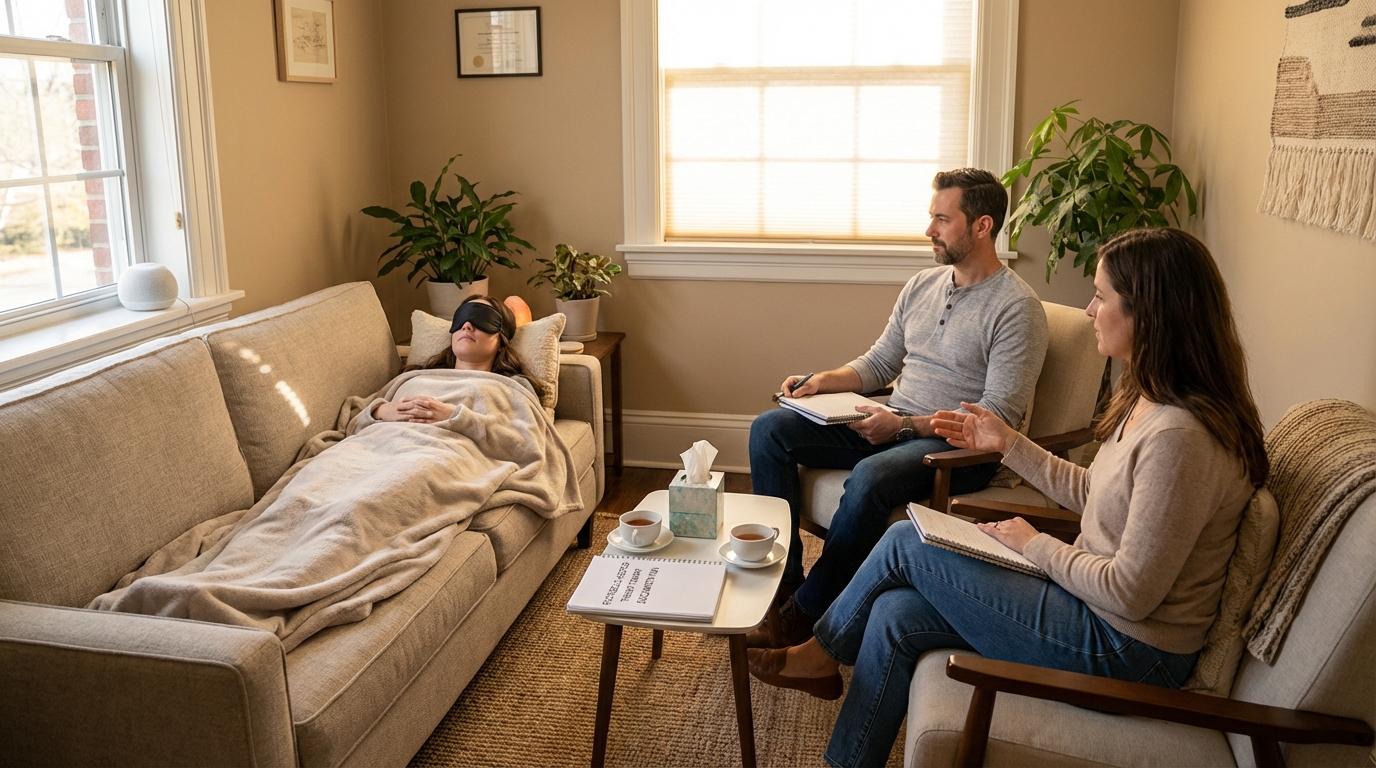
The sitter's role in ceremonial context: A sitter in a ceremonial model is present as a "holder" — someone who maintains the safety and integrity of the container without directing the experience. Key practices:
- Minimize verbal intervention during the peak; physical presence is primary
- Respond to what is needed (water, physical repositioning, a hand to hold) rather than initiating
- Keep their own nervous system regulated — the person in the experience is attuned to the room's emotional tone
Allowing the experience: The primary practice during the ceremony is surrender — allowing what arises to arise without forcing or resisting. If difficult material appears, move toward it rather than away. If beautiful material appears, allow it without grasping. "This too shall pass" applies to both.
Music and silence: Follow the playlist. If it doesn't feel right at any moment, the sitter can adjust — but large changes during the session can redirect the experience in ways that complicate integration.
Closing the Ceremony
The closing marks the return to ordinary time, just as the opening marked the departure from it. Common elements:
Expression: Creating something — writing, drawing, speaking — immediately after the experience and before full ordinary consciousness returns. This captures experience in a form that will be accessible during integration.
Grounding: Eating something simple, touching the earth, feeling physical sensation. The ceremony is not complete until you are clearly back in your body and in ordinary time.
Gratitude: An acknowledgment of what was encountered — not necessarily gratitude that it was pleasant, but acknowledgment that something happened that is worth respecting.
Closing the space: The inverse of opening — extinguishing candles or incense, a moment of presence with the space that held the experience, a simple closing gesture or words.
Integration: The Ceremony's Long Tail
A ceremony without integration is an experience without roots. Integration begins immediately and continues for weeks or months:
First 24 hours: Rest, hydration, minimal demands. Protect sleep.
First week: Journal daily. Note what continues to surface — dreams, unexpected emotions, moments of clarity. Don't rush analysis.
Weeks 2–4: Bring the ceremony into dialogue with your ordinary life. How do your insights about your intention apply to actual choices? What needs to change? What new practices support what you encountered?
Integration support: Therapy, integration circles, peer support groups, and simple practice (meditation, yoga, time in nature) all serve the integration of ceremonial psilocybin experiences.
The ceremony itself is a beginning — not an answer, but a new relationship with the question you brought.
Cultural Considerations
Western ceremonial approaches to psilocybin draw from indigenous traditions — primarily Mesoamerican Mazatec practice. This origin deserves acknowledgment:
- Approach these forms with respect and humility, not ownership
- Do not perform specific indigenous ceremonies you have not been taught by those traditions
- Support indigenous-led organizations working to maintain access to their own traditional practices
- The knowledge that these plants hold and that indigenous traditions have cultivated deserves gratitude, not appropriation