Preparing for a Psilocybin Experience: A Complete Guide
Preparation is not a formality — it is part of the treatment. Research consistently shows that what you bring into a psilocybin session (your mindset, intentions, physical state, and relational support) shapes the experience as much as the dose. T...
Preparing for a Psilocybin Experience: A Complete Guide
Preparation is not a formality — it is part of the treatment. Research consistently shows that what you bring into a psilocybin session (your mindset, intentions, physical state, and relational support) shapes the experience as much as the dose. This guide covers the practical, psychological, and logistical dimensions of preparation.
Why Preparation Matters
Psilocybin is a non-specific amplifier: it intensifies whatever psychological state is present. An unexamined, anxious, or ungrounded mindset going into a session gets amplified. A thoughtful, prepared, intentional mindset gets amplified in a different way — one that is more likely to produce therapeutic benefit.
Clinical psilocybin protocols invest 2–5 sessions of preparation per psilocybin session for this reason. The preparation is not bureaucratic overhead — it builds the psychological container that makes the experience safe and productive.
Physical Preparation
In the Week Before
Sleep: Prioritize 7–9 hours per night. Sleep deprivation amplifies anxiety and reduces psychological resilience.
Alcohol: Reduce or eliminate. Alcohol disrupts sleep quality and emotional regulation. A full week without alcohol before a session is ideal.
Medications: Discuss your medications with a knowledgeable practitioner. SSRIs require discussion (they blunt psilocybin effects). MAOIs are a contraindication. Cannabis should be paused for 24+ hours before the session.
Nutrition: Eat well in the week before. Your physical state is your psychological foundation.
The Day Before
Light diet: Eat simply. A heavy, rich dinner the night before can contribute to nausea during onset.
No alcohol.
Journal: Write your intentions for the session. Not a list of what you want to accomplish — a genuine exploration of why you are doing this and what you're bringing with you.
Sleep: Prioritize a good night's sleep.
The Session Day
Fasting: 4–6 hours of fasting before dosing reduces nausea and accelerates onset. Water is fine. Coffee can increase anxiety in some people — consider eliminating it on the session day.
Morning: Quiet time. Avoid news, social media, and emotionally activating content.
Clothing: Comfortable, loose, familiar. You may get cold during the experience — have layers or blankets available.
Psychological Preparation
Intention Setting
An intention is not a goal. A goal implies a specific outcome you want to achieve. An intention is more like an orientation: a direction or quality of attention you want to bring to the experience.
Examples of intentions:
- "I want to understand why I've been unable to let this grief move"
- "I want to explore my relationship with fear"
- "I want to meet whatever is here with openness"
Write your intentions and speak them aloud before the session. This simple act of naming what you're bringing into the room matters.
Working with Fear and Anxiety
Virtually everyone experiences some pre-session anxiety, particularly for higher doses. This is appropriate — you are about to do something significant. The question is not whether you feel anxious but whether the anxiety is manageable.
If anxiety is very high in the days before: journal about it specifically. What are you afraid of? Often the fear is specific — losing control, confronting something painful, not coming back to baseline. Naming the fear specifically reduces its power.
The surrender practice: Begin practicing acceptance before the session. In meditation or simple reflection, practice meeting anxiety with "this is here; I can be with this." The in-session surrender — the shift from fighting what arises to witnessing it — is easier when you've already been practicing it in ordinary life.
Relationship and Support
Identify your integration person: Who in your life can hold this seriously? A therapist, a trusted friend, a partner. Tell them you're doing this. Have a plan for contact in the days after.
Clear your calendar: The day before, the session day, and the day after. A psilocybin session is not something to schedule between obligations.
Setting Up the Environment
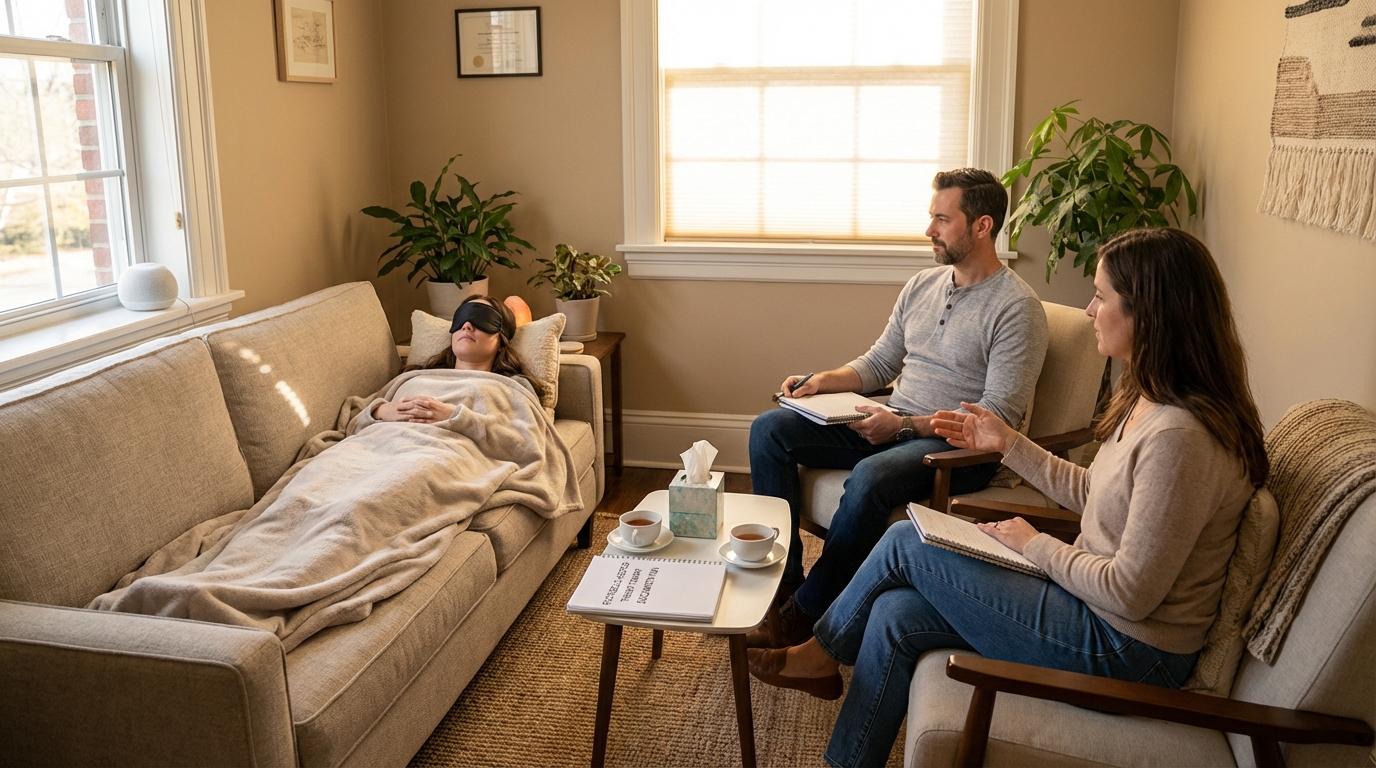
Whether you're using a service center, a clinical setting, or an at-home context, the physical environment matters.
Comfort: A comfortable couch or bed where you can lie fully without constraint. Blankets. Temperature control.
Aesthetics: Soft or natural lighting, not harsh overhead fluorescent. Natural elements if possible — plants, wood, stone. A small personal altar (photos, meaningful objects) can provide an anchor.
Music: Prepare your playlist in advance. The Johns Hopkins psilocybin playlist is the most researched — available on Spotify. Have it ready so you're not making music decisions during the experience.
Phone and electronics: Put them away. Designate your sitter as the contact point for any necessary communication. Screen use during a psilocybin session is disruptive and rarely ends well.
Clean space: Clutter creates subconscious psychological noise. Tidy your space before the session.
The Role of the Sitter
If you are working with a sitter (strongly recommended for doses above 2–3g), brief them clearly:
- Show them the space; show them where the music is
- Tell them what you're hoping to work on
- Discuss what "support" means: not talking constantly, not interpreting your experience, not asking "are you okay" every 10 minutes
- Discuss what a true emergency looks like (they should call 911 if you lose consciousness or seem to be having a medical event — not a difficult experience)
- Discuss benzodiazepine availability if you choose to have an abort option (lorazepam or diazepam will significantly reduce psilocybin effects)
Contraindications to Check Before Proceeding
Before any psilocybin experience, confirm:
- No personal or family history of schizophrenia or psychosis
- No current manic episode (bipolar I mania)
- Not currently on lithium (seizure risk)
- Not currently on MAOIs
- Not in active acute suicidal crisis (differentiate from passive ideation — discuss with a clinician)
- Not in an acute medical crisis
If any of these apply, consult with a knowledgeable clinician before proceeding.
Resources
- Fireside Project: 62-FIRESIDE — peer support during or after difficult experiences
- Zendo Project: zendoproject.org — harm reduction support and preparation resources
- MAPS MDMA Therapist Training Manual: Freely available online — the preparation principles overlap significantly with psilocybin preparation
- Françoise Bourzat, Consciousness Medicine: Comprehensive preparation and integration framework