The Mystical Experience in Psilocybin Therapy
One of the most surprising and repeatable findings in the psilocybin literature: the intensity of the mystical experience during a session is the strongest predictor of therapeutic outcome across nearly every indication studied. Not dose. Not ther...
The Mystical Experience in Psilocybin Therapy
One of the most surprising and repeatable findings in the psilocybin literature: the intensity of the mystical experience during a session is the strongest predictor of therapeutic outcome across nearly every indication studied. Not dose. Not therapist quality alone. Not prior mental health history. The mystical experience itself — measured by a validated questionnaire developed in the 1960s — consistently predicts whether the treatment worked.
This page explains what the mystical experience is, how it's measured, what the correlation means, and why it matters for how we think about psilocybin as medicine.
What Is a Mystical Experience?
The mystical experience is a well-documented category of human experience described across cultures, centuries, and contexts — religious, secular, pharmaceutical, and spontaneous. It doesn't require belief in anything supernatural, and it's not the same as feeling very high.
The defining features (from the Mystical Experience Questionnaire):
- Unity: A sense that all things are one, or that the usual boundary between self and world has dissolved
- Noetic quality: A feeling that something genuinely true or important was perceived — not just felt, but known
- Sacredness: A sense of deep reverence or holiness, regardless of prior religious orientation
- Deeply felt positive mood: Oceanic feelings, joy, love, awe
- Transcendence of time and space: Time stops having its usual structure; the usual sense of being in a specific place relaxes
- Ineffability: The experience is genuinely beyond language — the most common framing is "there are no words for this"
- Paradoxicality: Understanding something that feels contradictory or beyond normal logic — "I was nothing and everything"
William James, in his 1902 Varieties of Religious Experience, identified transience, noetic quality, passivity, and ineffability as the cardinal features of mystical experience. The modern MEQ30 (Mystical Experience Questionnaire, 30 items) operationalizes this into a scored measure that has been validated across many populations.
The Measurement
MEQ30 was developed by Johns Hopkins researchers and is now standard in psilocybin research. It's administered after the session and asks 30 questions rated on a 6-point scale about the character of the experience.
Scores are broken into subscales (unity, noetic quality, sacredness, deeply felt positive mood, transcendence, ineffability/paradoxicality) and summed into a total mystical experience score. A total score above a threshold (typically 60% of maximum) is classified as a "complete mystical experience."
The Clinical Correlation
The correlation between MEQ30 scores and therapeutic outcomes has been found across:
Depression: In the Hopkins Phase 2 MDD study, MEQ30 scores predicted treatment response at 4 weeks and 12 months. Participants who had complete mystical experiences had significantly better outcomes.
Smoking cessation: In the Hopkins smoking study, MEQ30 scores from the psilocybin session predicted 12-month abstinence rates. The mystical experience score was a stronger predictor than dose level.
Alcohol use disorder: In the NYU alcohol study, mystical experience intensity during the psilocybin session predicted percentage of heavy drinking days in the subsequent year.
Cancer anxiety: In both the Hopkins and NYU cancer anxiety studies, MEQ30 scores were the strongest predictor of anxiety and depression reduction at 6-month follow-up — more strongly predictive than baseline symptom severity.
This pattern — consistent across addiction, mood, and existential applications — suggests the mystical experience is not incidental to the therapy. It appears to be the active ingredient.
Why This Is Scientifically Surprising (and What It Might Mean)
Mainstream psychiatry's model of treatment is pharmacological: a drug acts on a receptor, produces a chemical change, changes symptom severity. This model doesn't comfortably accommodate the finding that the quality of a subjective conscious experience predicts whether a drug will work.
Several interpretive frameworks are being explored:
The REBUS account: The mystical experience is the neurological correlate of maximum hierarchical relaxation — the deepest disruption of the default mode network's grip on self-referential processing. The intensity of the experience predicts the depth of the neural disruption. Deeper disruption → more room for new patterns to form.
The existential shift account: Mystical-type experiences reliably produce certain cognitive and existential shifts — increased sense of connectedness, increased sense of meaning, reduced death anxiety, reduced self-importance, increased compassion. These shifts are themselves therapeutic for depression, addiction, and existential distress — regardless of mechanism.
The meaning-making account: A session experienced as deeply meaningful produces lasting change in the same way other profoundly meaningful life experiences do (grief, near-death experience, childbirth, intense creative achievement). The mystical experience is psychologically transformative in a way that ordinary pharmacological treatments are not.
These accounts are not mutually exclusive. The most intellectually honest position: something about the quality of the experience matters for the outcome, and we don't yet have complete mechanistic clarity about why.
Practical Implications for Protocol
If the mystical experience predicts outcomes, then everything that affects the likelihood and quality of the mystical experience matters therapeutically:
Dose: Lower doses reduce the probability of complete mystical experience. This is why clinical trials use full psychedelic doses (25mg+ synthetic psilocybin, or ~2.5–3.5g dried mushroom equivalent) rather than sub-perceptual doses. The dose needs to be sufficient to support the experience.
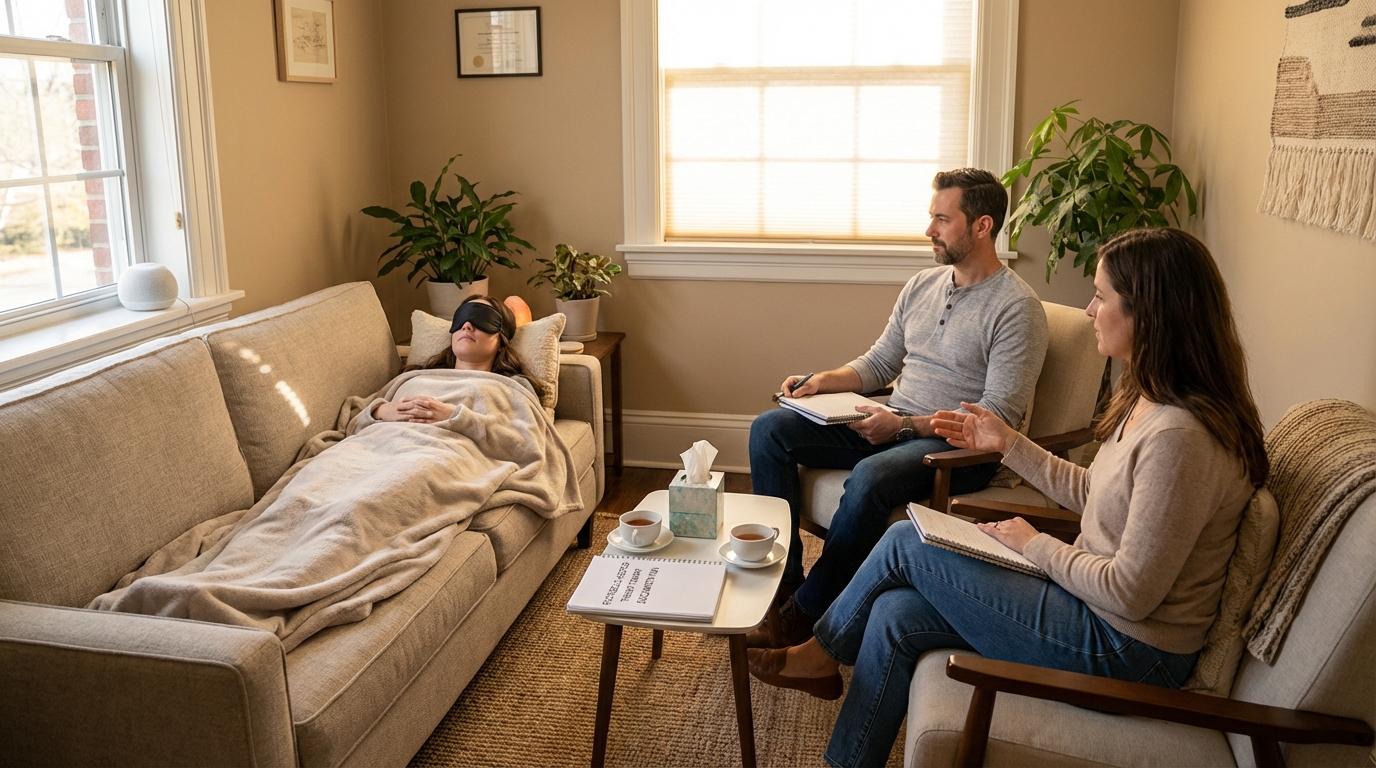
Set and setting: The Hopkins manual is clear that preparation, facilitator relationship, music selection, and safe space design are all in service of creating conditions where the mystical experience can unfold. These are not comfort-only considerations — they are part of the active therapeutic mechanism.
Surrender: Clinical protocols consistently teach that attempting to control or manage the experience — to stay cognitively engaged and analyze rather than allowing the experience to happen — tends to reduce mystical experience intensity and, consequently, therapeutic benefit. Trusting and surrendering to the experience is taught as a skill.
Therapist role during the session: The Hopkins and NYU protocols train facilitators to be minimal and present — holding space, reducing anxiety if needed, not redirecting the experience. The inner experience of the participant is the primary therapeutic field. Excessive therapist activity during the session may actually interfere with the process.
The Spiritual Dimension and Non-Religious Populations
Many participants in psilocybin trials who have no religious orientation or prior interest in spirituality describe their sessions using language they have never used before — sacred, holy, transcendent, the most important experience of my life. This pattern appears to be a characteristic of the experience itself, not of pre-existing belief.
The consistent finding that MEQ30 scores predict outcomes regardless of religious background suggests that the mystical experience is a feature of human consciousness that can be accessed by most people under the right conditions — not a property of particular beliefs.
For researchers, this raises genuinely interesting questions about the neuroscience of consciousness, spiritual experience, and meaning-making. For clinicians, it suggests that explicitly supporting the conditions for mystical experience — regardless of client religious orientation — may be therapeutically important.
Resources
- Barrett, F.S., et al. (2015). Validation of the revised Mystical Experience Questionnaire in experimental sessions with psilocybin. Journal of Psychopharmacology.
- Griffiths, R.R., et al. (2016). Psilocybin produces substantial and sustained decreases in depression and anxiety in patients with life-threatening cancer. Journal of Psychopharmacology.
- Garcia-Romeu, A., & Richards, W.A. (2018). Current perspectives on psychedelic therapy. International Review of Psychiatry.
- Hopkins Psychedelic Research Unit: hopkinspsychedelic.org — primary source for protocol manuals