Music in Psilocybin Therapy: Why the Playlist Matters
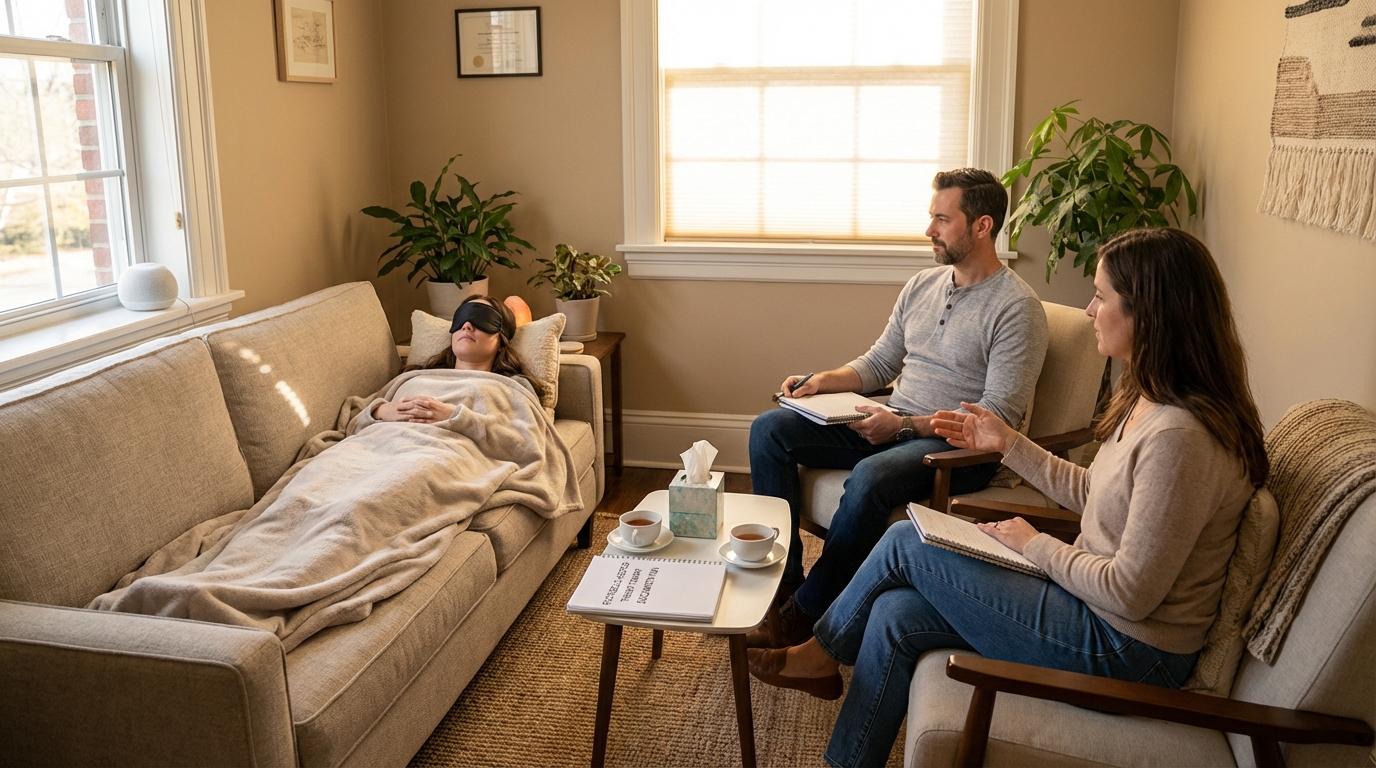
Music is not background to psilocybin-assisted therapy. In clinical protocols, it is a co-therapist — actively shaping the arc of the session, providing emotional scaffolding, and guiding the journey through distinct phases of the experience. This...
Music in Psilocybin Therapy: Why the Playlist Matters
Music is not background to psilocybin-assisted therapy. In clinical protocols, it is a co-therapist — actively shaping the arc of the session, providing emotional scaffolding, and guiding the journey through distinct phases of the experience. This guide covers the science of music in psilocybin therapy, the research behind the Hopkins playlist, and how to select music for your own experience.
Why Music Matters in Psilocybin Sessions
Psilocybin makes music more emotionally potent. The combination produces changes in how the brain processes auditory information — music under psilocybin is reported to feel more personally meaningful, more emotionally resonant, and more capable of guiding inner imagery than in normal consciousness.
Research has consistently found that the emotional and visual imagery music induces during a psilocybin session correlates directly with therapeutic outcomes:
- Participants who are emotionally moved by the music have stronger mystical experiences
- Mystical experience strength is the best predictor of therapeutic benefit across all conditions studied (depression, addiction, anxiety, PTSD)
- Music that generates emotional release — particularly cathartic sadness — is associated with more complete processing of difficult psychological material
Put simply: music that makes you feel something during a psilocybin session appears to help you heal.
The Johns Hopkins Psilocybin Playlist
The most extensively studied music protocol in psilocybin research. Developed by the Hopkins research team and refined over two decades of trial work. It is available on Spotify as "Music for Psilocybin (Johns Hopkins)" and has been used in dozens of clinical trials.
Structural Design
The playlist follows the pharmacological arc of psilocybin:
Onset (0–1 hour): Gentle, supportive instrumental music — primarily classical, some ambient. Minimal lyrics. Designed to ease the transition into the altered state without creating distraction or narrative content from song lyrics.
Rising (1–2 hours): More emotionally complex orchestral music. The experience is deepening. Music provides emotional support and gentle guidance inward. This phase often includes pieces that build in emotional intensity.
Peak (2–4 hours): The most intense musical selections — music designed to support surrender and release. Sacred, choir, or world music appears frequently here. Pieces that many participants describe as transcendent or sacred.
Plateau / Integration Descent (4–5 hours): Music begins to lighten. More ambient and calming. Supports the return toward ordinary consciousness.
Return (5–6 hours): Gentle, simple, grounding music — acoustic guitar, piano, or simple orchestral pieces. Supports return to baseline.
What Makes Good Session Music
Research and clinical experience point to several characteristics of effective psilocybin session music:
Instrumental or limited vocals: Lyrics create narrative and meaning that may compete with or redirect emerging internal content. Wordless music or music with minimal intelligible lyrics is preferred, particularly at the peak.
Slow to moderate tempo: Fast rhythmic music can create agitation at high doses. Most clinical music ranges from 60–80 BPM.
Dynamic arc: The best session playlists build and release tension in ways that mirror and support emotional processing — not flat ambient background, but music with movement and emotional shape.
No jarring transitions: Abrupt changes in style, tempo, or volume can break the interior experience and bring the participant out of productive inner work. Smooth transitions between pieces matter.
Cultural safety: Music from non-Western traditions (Indian classical, African drumming, Sufi devotional) can be deeply effective but should be introduced gradually — unfamiliar music can be disorienting for participants without prior exposure. Know your participant.
Music Categories Used in Clinical Research
Orchestral / Classical
The most common category in clinical protocols. Ravel's Bolero, Beethoven symphonies, Bach's Cello Suites, and Arvo Pärt's minimalist compositions appear frequently.
Sacred / Choral
Gregorian chant, kirtan, devotional music from multiple traditions. Particularly associated with peak-phase mystical experience reports.
World Music
Sufi devotional (qawwali), Indian classical (sitar, sarod), gamelan, and indigenous ceremonial music have all been used in clinical research.
Ambient / Electronic
Brian Eno, Harold Budd, Marconi Union's "Weightless" — gentle ambient works function well in the opening and closing phases.
Film Score
Hans Zimmer, Ennio Morricone, and other cinematic composers provide emotionally complex instrumental material appropriate for middle phases.
Preparing Your Own Playlist
If you are preparing for an experience outside a clinical setting, a well-designed playlist is one of the most important elements of preparation.
Length: Plan for 6–7 hours. Most experiences from dosing to full return last 5–6 hours; having extra music avoids the anxiety of silence if the experience runs longer.
Test it sober first: Listen to your playlist in the day before the session. You want no surprises — no jarring transitions, no songs with painful associations, no music that pulls you out of an interior state.
No shuffle: The arc of the playlist is intentional. Do not play on shuffle. Prepare it in order.
The Hopkins playlist as a base: For a first or early experience, consider the Hopkins playlist as is, available on Spotify. It has been tested extensively and works. Build from it after you have experience.
Avoid: Music with lyrics you know well (they will distract), very fast rhythmic music at the peak, music with strong negative associations, anything that might induce anxiety in ordinary consciousness.
The Experience of Music Under Psilocybin
Participants consistently describe music as more immersive, more emotionally present, and more visually rich during psilocybin sessions:
- Music can generate visual imagery — colors, scenes, abstract forms — that participants follow like a journey
- Familiar pieces can sound completely new, heard in a different dimension
- Music can feel like it is communicating directly — bypassing the analytical mind and landing in the emotional body
- Sacred music, particularly, often precipitates the mystical experience that predicts therapeutic benefit
These effects are most pronounced at doses of 20–30mg (clinical synthetic) or approximately 3–4g dried mushroom.
Resources
- Johns Hopkins Psilocybin Playlist: Available on Spotify under the research team's name
- Mendel Kaelen (2017), Thesis: The most rigorous academic work on music in psychedelic therapy — Kaelen spent his PhD at Imperial College researching exactly this
- Wavepaths: The platform Kaelen founded for composing and delivering AI-adaptive therapeutic music for psychedelic sessions
- Françoise Bourzat, Consciousness Medicine: Contains a chapter on music selection for ceremonial contexts