Two to Four Weeks Before: Preparation
The most important work happens before any mushrooms are consumed. Preparation is not ritual for its own sake — it measurably affects outcomes.
Your First Psilocybin Session: A Complete Step-by-Step Guide
A first psilocybin experience is unlike most other things you have done. With thoughtful preparation, a safe setting, and reasonable expectations, it can be profoundly positive. With poor preparation or the wrong circumstances, even a modest dose can be overwhelming. This guide covers the practical steps from several weeks before through the days after — because what happens before and after the session matters as much as the session itself.
Two to Four Weeks Before: Preparation
The most important work happens before any mushrooms are consumed. Preparation is not ritual for its own sake — it measurably affects outcomes.
Clarify your intention. What are you hoping to explore, address, or understand? An intention does not need to be complex. "I want to feel less stuck" or "I want to understand my anxiety better" is sufficient. Write it down. You do not need to hold it rigidly during the session, but starting with direction improves focus.
Review your physical and psychological health. Psilocybin is contraindicated for people with personal or family history of schizophrenia, bipolar I disorder, or other psychotic conditions. People currently taking lithium or MAOIs face serious risk of interaction. SSRIs may blunt effects but are not dangerous. If you have any significant mental or physical health concerns, consult a healthcare provider before proceeding.
Reduce or pause substances. Minimizing alcohol and cannabis for one to two weeks before allows you to enter the experience with a clearer baseline. Caffeine and processed food are lower priority, but overall physical health matters.
Begin some contemplative practice. Even 10 minutes of daily breath-awareness meditation helps. It gives you a tool to use if anxiety arises during the session.
Choosing a Dose for a First Session
For a first experience, 1 to 1.5 grams of dried Psilocybe cubensis is a widely recommended starting range. This produces noticeable perceptual effects — altered colors, mild visuals, emotional shifts — without the overwhelming intensity of higher doses. It allows you to become familiar with how psilocybin affects your particular nervous system.
Do not start at 3.5 grams (the common "heroic dose" range) for a first session. The experiences at that level require more preparation, more experience, and a very solid foundation of trust in your sitter and your own psychological stability.
Weigh your mushrooms with a digital scale. Eyeballing is not reliable.
Choosing a Sitter or Guide
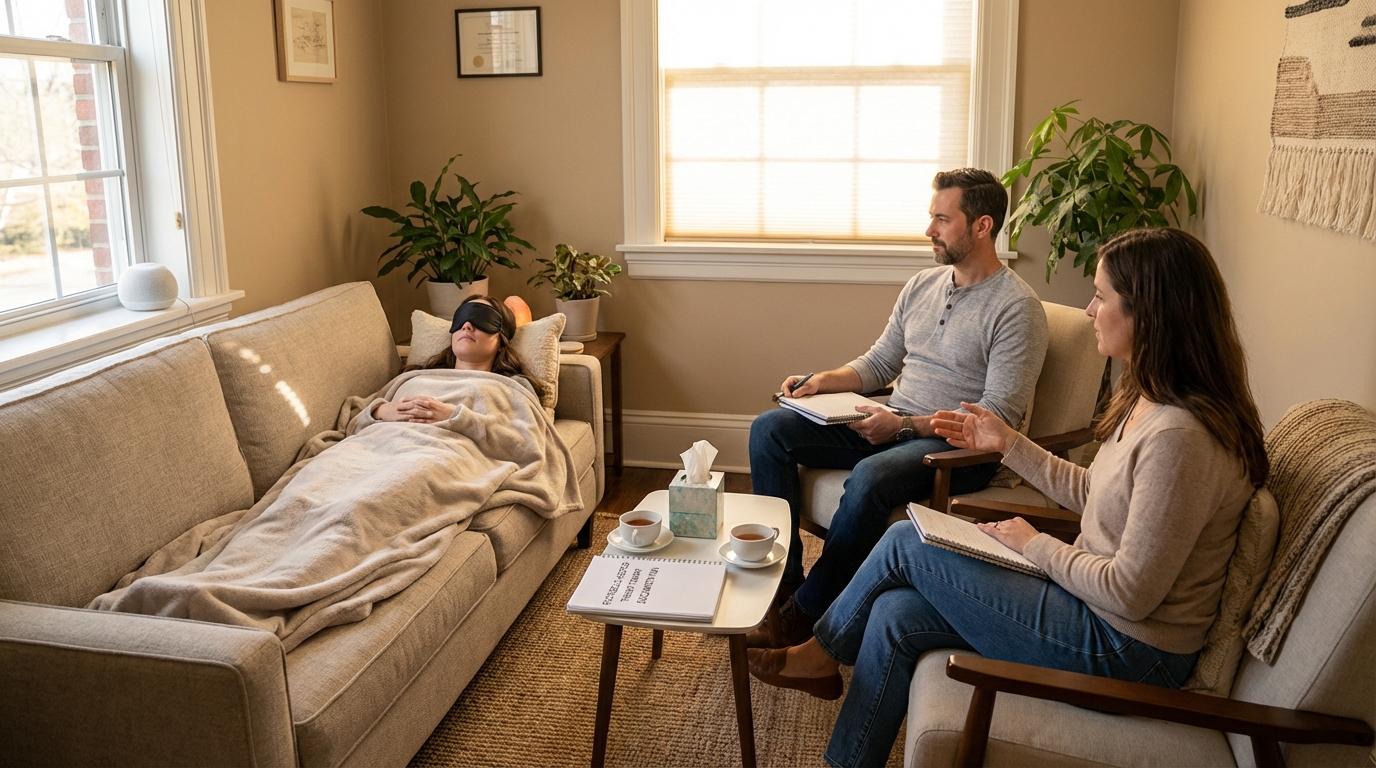
Having another person present is strongly recommended for any first session. A sitter is not a therapist — they are a trusted person whose role is to stay sober, remain calm, keep the environment safe, and provide reassurance if needed. They should not try to direct your experience, interpret it, or offer advice during the peak.
Qualities of a good sitter: calm disposition, genuine care for your wellbeing, no agenda about what you "should" experience, and willingness to simply be present. Brief them in advance: what you took, when to expect effects, what you want from them (quiet presence, or active check-ins), and under what circumstances to call for emergency help (rare, but know the plan).
Setting Up the Space
Set and setting — your internal state and physical environment — are the primary determinants of session quality.
Choose a space where you feel completely safe and will not be interrupted for six to eight hours. Your home is usually best. Inform anyone else in the space. Lock external doors if you live with others.
Prepare before dosing: water and light snacks within reach, a comfortable place to lie down with blankets, a bucket in case of nausea, and a playlist ready to go. Music has a significant impact on psychedelic sessions — calm, instrumental music without vocals is a common starting recommendation. Dim the lights or use natural light. Have an eye mask available if you want to turn inward during the peak.
Remove anything that might cause confusion or distress: chaotic visual environments, screens showing news or social media, anything that might be disturbing if your perception is altered.
The Session Arc
Onset (30–90 minutes after ingestion): Effects begin subtly — altered light quality, shifts in mood, mild physical sensations. Nausea is common and usually passes within 30 minutes. Lie down, close your eyes, breathe.
Ascending phase (1–2 hours): Effects intensify. This is when anxiety is most likely if it appears. Remind yourself that the intensity will have a peak and then recede. You can use breath awareness to anchor yourself.
Peak (2–3 hours): The most intense period, typically lasting 60–90 minutes. Visuals (with eyes closed or open), emotional intensity, sense of time distortion, profound insights, or difficult emotional material may all surface. The most useful orientation here is surrender — attempting to control or suppress the experience often increases anxiety. Breath, music, and the sitter's calm presence are your anchors.
Gradual return (3–5 hours): Effects soften progressively. Thinking becomes more linear. The afterglow — a soft, emotionally open period — is valuable for quiet reflection.
Resolution (5–6 hours): Most people feel fairly coherent but emotionally and physically tired. Do not drive. Do not make major decisions.
Common Challenges and How to Navigate Them
Anxiety at onset: Almost universal in beginners. It helps to remember this is temporary and that the body is not in danger. Focus on the breath. Ask the sitter to sit close or hold your hand if that helps.
Difficult emotional content: Old grief, shame, or fear may surface. This is not a malfunction — it is often the point. The orientation that works for many people: turn toward it rather than away, breathe into it, allow it to complete itself.
Confusion about what is real: Reassure yourself that you took psilocybin and that the session will end. Grounding through physical sensation — feet on the floor, hands on a familiar object — helps.
After the Session: Integration Begins Here
In the hours after, journal while details are fresh. Do not overanalyze — just record what came up. Rest is more important than processing.
The following week, avoid major decisions or dramatic life changes. The post-session state is one of unusual openness, which is valuable for reflection but is not the best state for finalizing major actions.
Integration — making meaning of the experience and applying insights — is an ongoing practice. It may involve journaling, working with a therapist or integration coach, or simply taking time to notice how your perspective has shifted. The session opens a window; integration determines how much changes as a result.
This guide is for educational purposes. Psilocybin remains illegal in most jurisdictions. Ensure you understand your local legal context before proceeding.