Psilocybin Therapy FAQ
Answers to the 20 most common questions about psilocybin therapy — safety, legality, cost, and what to expect.
Psilocybin Therapy FAQ
Answers to the 20 most common questions about psilocybin therapy — safety, legality, cost, what to expect, and who it's appropriate for.
1. Is psilocybin therapy legal?
It depends on where you are and what you mean by "therapy."
Legally accessible in licensed programs:
- Oregon — licensed psilocybin service centers for adults 21+, no diagnosis required, operating since 2023
- Colorado — state-level personal-use protections for adults 21+, with regulated facilitator and business licensing active from the 2025 implementation period onward
- New Mexico — Medical Psilocybin Act signed in April 2025; the Department of Health says program development is underway with a goal of first patient enrollment by the end of December 2026
Clinical trials: Psilocybin is accessible through FDA-regulated clinical trials at universities and research institutions across the US — no state program required. Visit ClinicalTrials.gov to find enrolling studies.
Everywhere else: Psilocybin remains a Schedule I controlled substance under federal law and in most states. Personal use carries legal risk in states without decriminalization or programs.
See the legal map for your state's specific status.
2. Is psilocybin safe?
Psilocybin has a strong safety profile relative to most substances in common use, including alcohol. Key facts:
- No documented lethal dose — a lethal overdose from psilocybin alone has never been recorded in the medical literature
- Not physically addictive — psilocybin does not produce physical dependence; tolerance builds rapidly with repeated use, which is self-limiting
- Physiological effects — transient increase in blood pressure and heart rate; nausea during onset is common
- Psychological risks are real — difficult psychological experiences, lasting distress from unprepared or unsupported sessions, and triggering of psychosis in vulnerable individuals are documented risks
The most significant safety risks involve people with underlying psychiatric vulnerability (personal or family history of psychosis or bipolar I disorder) and dangerous drug interactions (lithium, MAOIs). See Contraindications and Drug Interactions.
3. Will I "lose my mind" or go permanently crazy?
No — this is the most common fear and is not supported by evidence.
Psilocybin does not cause permanent psychosis in people without underlying vulnerability. The experience can be disorienting and intense, but it is time-limited: effects resolve within 4–8 hours. There are no documented cases of permanent psychosis caused by psilocybin in people without pre-existing risk factors.
The exception: people with personal or family history of schizophrenia or psychosis are at elevated risk of adverse psychological reactions. For this population, psilocybin carries real risk and should not be used without medical supervision.
4. How long does a session last?
A psilocybin session typically lasts 4–8 hours from ingestion to resolution of acute effects. Most sessions involve:
- Onset: 20–60 minutes
- Peak effects: 2–4 hours
- Descent and resolution: 2–3 hours
Plan the full day. You should have nothing scheduled and nowhere to be for at least 10–12 hours from ingestion. Do not drive until the following day.
5. What does it feel like?
Experiences vary enormously by dose, individual, preparation, and setting. Common elements at moderate to high doses:
- Visual changes (geometric patterns, color intensification, tracers)
- Altered sense of time
- Emotional intensity — grief, joy, love, and fear can all surface
- Surfacing of significant memories
- Insights about patterns, relationships, or life circumstances
- At higher doses: ego softening or dissolution, mystical states, unity experiences
At low doses: subtle mood shift, mild perceptual brightening, slightly enhanced emotional openness.
See What to Expect for a session-by-session walkthrough.
6. How much does it cost?
Licensed service centers (Oregon and Colorado): Typically $800–$3,500+ for a full session package including preparation and integration. Premium retreat-style experiences run higher.
Integration therapy (all states): Standard therapy rates — $100–$300/hour depending on location and provider.
Clinical trials: Free for qualifying participants.
Personal cultivation in Colorado: The cost of growing supplies — typically $50–$200 to get started.
Financial assistance is available through Heroic Hearts Project (veterans/first responders), Give Back Foundation, and sliding-scale pricing at many service centers.
7. Do I need a diagnosis to access legal psilocybin?
In Oregon and Colorado: No. Both states use a non-diagnostic model — adults 21+ can access services without a medical diagnosis or psychiatric referral. You do not need depression, PTSD, or any other diagnosis.
In clinical trials: Yes — trials enroll participants with specific diagnoses meeting defined criteria.
8. Can I use psilocybin if I'm on antidepressants?
This is complicated and important.
SSRIs and SNRIs significantly blunt psilocybin's effects by downregulating 5-HT2A receptors. Many people on SSRIs report little or no effect from standard doses.
Do not abruptly stop your antidepressants to use psilocybin — discontinuation syndrome is real and potentially dangerous. If you want to pursue psilocybin therapy and are on antidepressants, discuss tapering with your prescribing physician.
Lithium: Hard contraindication — do not combine with psilocybin (seizure risk). MAOIs: Hard contraindication — dangerous potentiation and serotonin toxicity risk.
See Drug Interactions for the complete list.
9. How many sessions will I need?
Most clinical protocols involve 1–3 sessions over 4–12 weeks, with preparation and integration surrounding each session. Many people find significant benefit from a single well-prepared session.
Psilocybin therapy is not meant to be ongoing indefinitely. Frequent use reduces effectiveness (tolerance builds), and the integration work between sessions is where lasting change happens.
10. Will it show up on a drug test?
Standard 5-panel drug tests (the most common workplace test) do not screen for psilocybin or psilocin. Specialized tests can detect psilocin but are rarely used outside of research settings.
Psilocin clears the system relatively quickly — typically within 24–48 hours. Microdosing at sub-perceptual doses is extremely unlikely to produce a positive result on standard drug testing. This is not a guarantee.
11. Is it addictive?
No. Psilocybin is not physically addictive and does not produce compulsive use patterns in humans or animals. Tolerance builds rapidly with repeated use — within 3–4 days of daily dosing, the same dose produces progressively less effect — which is naturally self-limiting.
Psychological dependence (using psilocybin as an avoidance strategy rather than for genuine therapeutic purpose) is theoretically possible but is not documented as a significant clinical problem in the research literature.
12. Can I drive after a session?
No. Do not drive until the day after a session. Residual perceptual effects, altered time perception, and emotional openness can persist for 12+ hours after ingestion. Arrange transportation home in advance.
13. What if I have a difficult experience?
Difficult experiences are common and are not failures. In clinical research, sessions rated as very difficult are often among the most therapeutically productive when assessed at follow-up.
During the session: breathe, surrender, trust that it is temporary. Tell your sitter or facilitator what you're experiencing. Do not try to fight or escape the experience — resistance amplifies difficulty.
After a difficult session: contact Fireside Project (firesideproject.org, call/text 62-FIRESIDE) for free peer support. Work with an integration therapist to process what arose.
See Harm Reduction for the STOP protocol and detailed guidance.
14. Do I need a sitter?
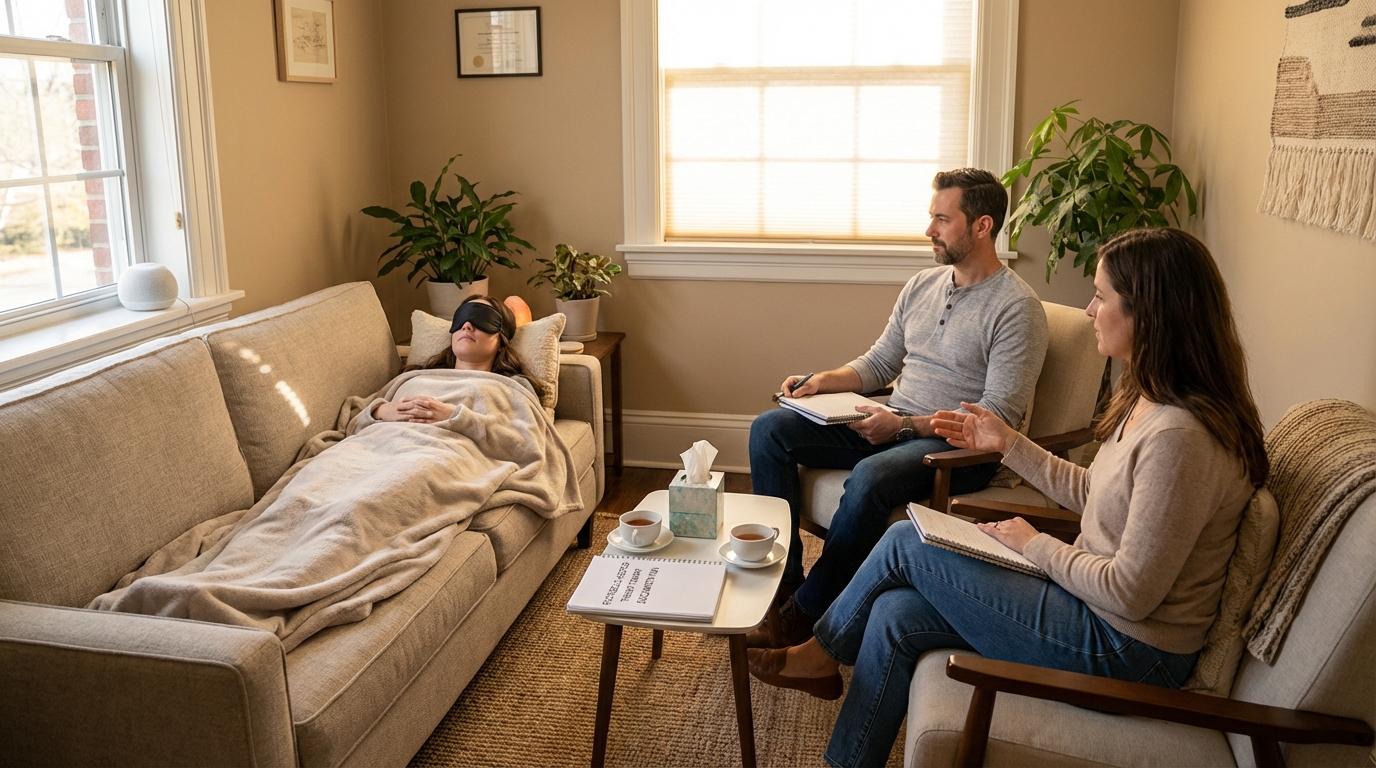
For doses above 2g (dried mushrooms) or 20mg synthetic psilocybin: yes, strongly recommended. A sober, trusted person who remains present for the full session significantly reduces risk and improves outcomes.
For lower doses in familiar environments with experienced individuals, the calculus is different — but a sitter is never a bad idea.
In licensed Oregon and Colorado facilities, the facilitator serves this function.
15. Can psilocybin help with addiction?
Yes — some of the strongest psilocybin research is in addiction:
- Smoking cessation: Johns Hopkins pilot study showed 80% abstinence at 6 months (vs. ~35% for the most effective approved medication)
- Alcohol use disorder: Multiple trials show significant reductions in drinking days and heavy drinking
- Opioid use disorder: Earlier-stage research; ibogaine has stronger evidence for opioids specifically
The proposed mechanism involves disrupting the psychological rigidity that maintains addictive patterns — creating a window in which identity can shift from "I am an addict" to "I used to use."
16. What is microdosing and does it work?
Microdosing is taking sub-perceptual doses (typically 0.05–0.3g dried mushrooms) on a regular schedule — too small to produce any perceptual alteration but potentially enough to affect mood and cognition.
The research is promising but complicated by strong expectancy effects. Blinded studies find smaller effects than open-label studies. A 2023 Imperial College London randomized controlled trial found real improvements in anxiety and psychological well-being that survived blinding.
See Microdosing for protocols, dosing guidance, and honest assessment of the evidence.
17. Is psilocybin therapy the same as recreational use?
No — though the substance is the same, the context is fundamentally different.
Psilocybin therapy involves careful preparation, a structured therapeutic relationship, a controlled environment, and structured integration afterward. The clinical evidence comes specifically from this therapeutic model. Taking mushrooms recreationally without preparation or support is not the same as psilocybin therapy and should not be expected to produce the same outcomes.
That said, many people have profound and lasting experiences outside of formal therapeutic contexts. Preparation and integration matter regardless of the formal setting.
18. What happens if I need to stop the session early?
In a licensed facility, you can tell your facilitator you want to end the session. They cannot pharmacologically abort the experience on demand, but they can provide grounding support, change the environment, and help you navigate.
Benzodiazepines (Valium, Ativan) will significantly reduce intensity within 20–30 minutes and can effectively end an experience. Having a benzodiazepine available as a genuine emergency option — only for people with a valid prescription — is a legitimate harm reduction measure.
The experience will naturally resolve within 4–8 hours regardless.
19. Can I combine psilocybin with cannabis?
This is strongly discouraged, especially for inexperienced users. Cannabis (particularly high-THC products) dramatically intensifies psilocybin effects and significantly increases the risk of anxiety, paranoia, and psychological overwhelm.
Many of the most difficult psychedelic experiences reported in harm reduction contexts involve cannabis combined with psilocybin. Avoid cannabis for at least 24 hours before a session and during the session itself.
20. Where can I learn more?
Research and clinical information:
- Johns Hopkins Center for Psychedelic and Consciousness Research: hopkinspsychedelic.org
- NYU Langone Center for Psychedelic Medicine: med.nyu.edu/centers-programs/psychedelic-medicine
- MAPS: maps.org
- COMPASS Pathways: compasspathways.com
Legal information:
- Our state law pages cover all 50 states, DC, and federal law
- Oregon Health Authority psilocybin program: oregon.gov/oha/psilocybin
- Colorado DORA natural medicine: dora.colorado.gov/natural-medicine
Finding a provider:
- Our directory of vetted Oregon and Colorado service centers
- How to Find a Psilocybin Therapist
Crisis and peer support:
- Fireside Project: firesideproject.org (call/text 62-FIRESIDE)
- Veterans Crisis Line: 988, press 1
- MAPS crisis support: maps.org/crisis-support