Psilocybin Ceremony Planning
How to create a ceremonial container for intentional psilocybin use — intention-setting, space preparation, music, and what to do after.
Psilocybin Ceremony Planning: A Practical Guide
A ceremony is not a costume. The word describes a structured container for intentional experience — a set of agreements, practices, and environmental conditions that increase the likelihood of a meaningful, safe psilocybin journey. Ceremony can be entirely secular. It does not require belief in anything supernatural. What it requires is intention.
This guide covers the practical elements of creating a ceremony: before, during, and after.
Why Ceremony Matters
Research consistently shows that set (mindset) and setting (environment) are the two strongest predictors of psilocybin outcome. A ceremony addresses both. By creating deliberate conditions before the medicine is taken, you establish:
- A clear intention (what you're bringing to this experience)
- A safe physical space
- A trusted support structure (solo, guide, or group)
- A framework for working with difficult material rather than fighting it
- A container for the integration that follows
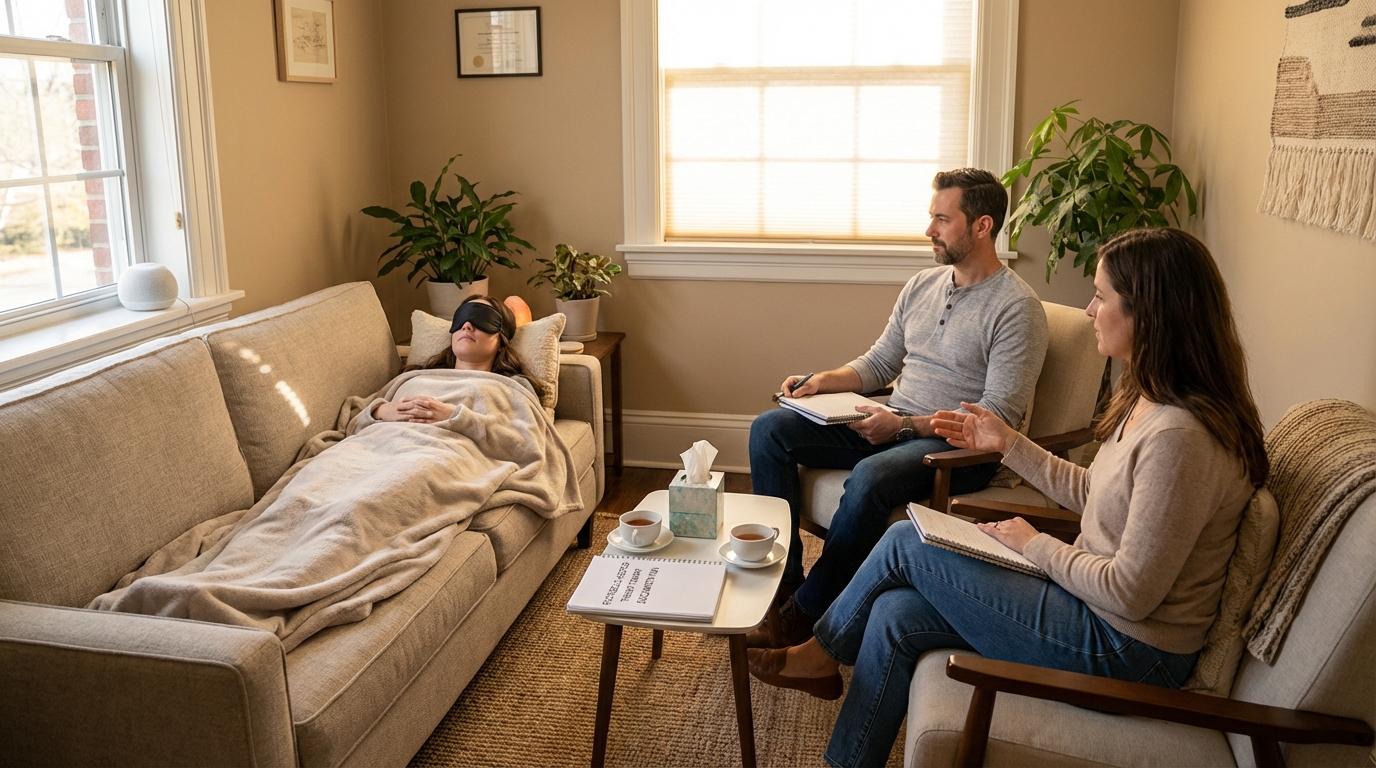
The Johns Hopkins and Imperial College protocols — which produced the strongest antidepressant results in any clinical trial — are essentially structured ceremonies: curated music, prepared set, low-light spaces, eye shades, trained sitters. The "medicine" is not just the psilocybin; it's the full protocol.
Before: Preparation (1–2 Weeks)
Set Your Intention
An intention is not a goal. A goal is outcome-focused ("I want to resolve my anxiety"). An intention is orientation-focused ("I'm bringing openness to whatever wants to surface").
Good intentions are:
- Open rather than demanding
- Honest about what you're carrying
- Stated clearly, in writing
Write your intention in a journal. Read it aloud before the session. This is not ritual for its own sake — the act of articulating what you're bringing creates conscious awareness of it, which research suggests improves outcomes.
Physical Preparation
- Eat lightly on session day. A heavy meal slows absorption and can increase nausea.
- Avoid cannabis for at least 48 hours before (it interacts unpredictably with psilocybin)
- Avoid alcohol for 48 hours
- SSRIs blunt psilocybin effects. If you're on SSRIs, this requires a taper with your prescriber — minimum 2 weeks washout, 5+ weeks for fluoxetine. Do not stop abruptly.
- Sleep well the night before. Fatigue destabilizes the experience.
Psychological Preparation
- Read or journal about what you're bringing in. Unexamined material surfaces anyway — better to meet it consciously.
- Discuss your intention with your sitter if you have one.
- Some people practice a short fasting period (12–24 hours) for clarity of mind. This is optional.
The Space: Setting Up
Location
Indoor is almost always preferable for full-dose ceremonies. Outdoor settings carry unpredictable variables (weather, strangers, uneven terrain) that can activate anxiety during difficult moments.
The space should be:
- Private — interruptions shatter the experience
- Temperature-controlled (you will likely feel cold during the peak)
- Free of sharp-edge clutter or physical hazards you might encounter moving around
- Able to go dark (eye shades work, but full blackout curtains are better)
What to Prepare
- A nest: Comfortable bed or floor cushions with blankets. You may spend most of the experience lying down.
- A bucket: Nausea is common in the first 60–90 minutes. Be prepared.
- Water within reach: You will need it at peak.
- Music: Pre-curated playlist. Do not improvise during the session. Johns Hopkins uses classical/orchestral. Many people use psychedelic-specific playlists (MAPS protocol, Wavepaths, curated Spotify lists). The music does a lot of the work.
- A sitter space: If someone is sitting with you, a comfortable chair near enough to be present but not intrusive.
- Your intention: Written, somewhere you can see it at the beginning.
Altar (Optional)
An altar is simply a small surface with objects that hold meaning — photos, stones, plants, a candle. This practice comes from indigenous traditions but functions psychologically: it makes the space intentional and reminds you of what matters. Entirely optional; some people find it grounding.
During: Working With the Experience
Dosage for Ceremony
A ceremonial dose is typically 3–3.5g dried cubensis or 20–25mg synthetic psilocybin for a moderate-intensity session. Some practitioners work with higher doses (4–5g). Lower doses (1–2g) are not wrong but rarely produce the depth associated with transformative ceremonial experiences.
Lemon tekking (soaking in citric acid before consuming) accelerates onset and increases intensity. Use with lower doses if experimenting.
The First Hour
Onset begins 20–60 minutes after ingestion. You may feel:
- Warmth, tingling, yawning
- Visual brightening and peripheral movement
- Emotional swells (sometimes anxiety, sometimes joy)
- Nausea
What to do: Lie down. Put on eye shades. Let the music carry you. Your job is not to direct — it is to allow.
If anxiety arises in the first hour, try: slow abdominal breathing (4 counts in, hold 4, 8 out). Reminding yourself: "I'm safe. This will pass. I trust the process."
The Peak (Hours 2–4)
The peak is where the most significant material surfaces. It may include:
- Dissolution of ordinary self-narrative
- Visual and auditory phenomena
- Emotional intensity (grief, joy, fear, awe — often in rapid succession)
- Encounter with difficult personal material
The core principle: Move toward, not away. Resistance amplifies difficulty. The MDMA/psilocybin research consensus is clear: surrendering to difficult material (rather than fighting it) is associated with breakthrough and resolution. "Let it in" is not advice for danger — it is the fundamental mechanics of how psilocybin therapy works.
Your Sitter's Role
A sitter is not a therapist. A sitter:
- Holds calm, grounded presence
- Does not intervene unless asked
- Is available to hand you water, hold your hand if offered, redirect you gently if you're unsafe
- Does not talk unless you initiate
- Does not leave
After the Peak
The experience softens over hours 4–6. Many people feel:
- Emotional clarity
- Exhaustion
- Deep calm
- Hunger
This is the time for quiet reflection — short journal notes, gentle outdoor time if safe, conversation with your sitter if you want. Not the time for major decisions or difficult conversations with others.
After: Integration
The ceremony isn't over when the medicine wears off. The weeks that follow are when meaning is made.
Immediate (Days 1–3)
- Write in a journal before the memory consolidates. Don't interpret — just document.
- Rest. Cognitive resources are temporarily depleted.
- Avoid alcohol, cannabis, stimulants.
- The Fireside Project (62-FIRESIDE / 623-473-7433) is available if difficult material is persisting.
Integration (Weeks 1–8)
- Meet with an integration therapist or counselor if you have one.
- Return to your intention: what did you bring in? What arose?
- Notice changes in behavior, perspective, and reactivity in daily life. These changes are data.
- For depression/anxiety applications: research shows neuroplasticity is elevated for 2–4 weeks post-psilocybin. This is the window when new patterns are most easily established. Therapeutic work in this window is especially productive.
What Not to Do
- Don't redose within 2 weeks. Tolerance resets fully in about 2 weeks, but chasing a peak experience too quickly produces diminishing returns and avoidance of integration work.
- Don't make major life decisions in the immediate aftermath. Wait until the integration stabilizes.
- Don't dismiss what arose as "just a drug experience." The data says the content of psilocybin experiences correlates strongly with meaningful long-term change.
Solo vs. Guided Ceremony
Solo
Appropriate for experienced practitioners who know their response to psilocybin and have a stable environment. Higher-dose solo work carries real risk — difficult experiences without support can spiral. The Fireside Project exists precisely for this scenario.
With a Sitter
The minimum safe container for most people. A trusted friend or partner with calm temperament, no agenda, and a willingness to sit quietly for 6+ hours.
With a Facilitator or Guide
A trained guide brings knowledge of navigating difficult material, crisis de-escalation, and integration support. In licensed settings (Oregon, Colorado), facilitators are state-certified and operating under a legal framework. Underground guides vary enormously in training and ethics. Ask specifically about their training, supervision, and crisis protocol.
Group Ceremony
Group settings are common in retreat contexts (Jamaica, Netherlands, retreat centers). Group energy can amplify experience — both beneficial (shared meaning, collective support) and challenging (loss of privacy, social anxiety). Best suited for people who have prior solo or dyadic experience.
Red Lines
These situations call for postponing or canceling a planned ceremony:
- Active psychiatric crisis — psilocybin is not a crisis intervention tool
- Active suicidal ideation — contraindicated
- Recent significant trauma (< 6 weeks) — the material will surface; make sure integration support is in place first
- First-generation antipsychotics or lithium — do not combine
- Unknown heart condition — psilocybin elevates heart rate and blood pressure at peak
- Pregnancy
Resources
- Fireside Project: 623-473-7433 (62-FIRESIDE) — support during or after
- Zendo Project: zendoproject.org — harm reduction model and training
- MAPS Integration Workbook — free PDF for post-session integration
- Oregon Health Authority: psilocybinservices.oregon.gov — list of licensed service centers
- Integration therapist directory: psychedelicsupport.com