Psilocybin for Alcohol Use Disorder: The Clinical Evidence
Alcohol use disorder (AUD) kills approximately 95,000 Americans annually and is undertreated globally. Existing pharmacological treatments (naltrexone, acamprosate, disulfiram) have modest effectiveness. Psilocybin-assisted therapy has emerged as ...
Psilocybin for Alcohol Use Disorder: The Clinical Evidence
Alcohol use disorder (AUD) kills approximately 95,000 Americans annually and is undertreated globally. Existing pharmacological treatments (naltrexone, acamprosate, disulfiram) have modest effectiveness. Psilocybin-assisted therapy has emerged as one of the most promising addiction interventions in decades, with trial data that substantially outperforms standard approaches.
The Clinical Trial Data
NYU Study (2022 — Bogenschutz et al.): The largest and most definitive trial published through 2022. 93 participants with AUD received either psilocybin-assisted therapy or diphenhydramine (active placebo) in a double-blind design. Results: the psilocybin group showed 83% reduction in heavy drinking days compared to 51% in the placebo group at 8 months post-treatment. In the psilocybin group, 48% were abstinent at 8 months vs. 24% in the placebo group.
Hopkins Pilot (2015 — Bogenschutz et al.): Earlier open-label pilot showing significant reductions in drinking, with mystical experience intensity predicting better outcomes.
Comparison to standard treatments: The abstinence rates achieved with psilocybin-assisted therapy (48% at 8 months) substantially exceed what naltrexone or acamprosate achieve in comparable populations (approximately 20-30% at 12 months).
How It Works: Proposed Mechanisms
Mystical experience and identity change: The NYU trial found that the intensity of mystical experience during the session predicted magnitude of drinking reduction. The mechanism appears to involve a shift in self-concept — how the person sees themselves in relation to alcohol. Many participants describe the experience as showing them a version of themselves that is not defined by alcohol use, which persists as a motivational reference.
Neuroplasticity window: Psilocybin increases neuroplasticity for 24-48 hours post-session. Combined with therapy targeting alcohol use patterns, this window allows new associations and behavioral patterns to be established more readily.
Reduced craving: Clinical trial participants consistently report reduced alcohol cravings after psilocybin sessions. The mechanism may involve psilocybin's effects on dopaminergic circuits and reward salience — alcohol becomes less motivationally compelling.
Psychological flexibility: AUD often involves rigid, habitual response patterns to stress, anxiety, and social situations. Psilocybin increases psychological flexibility — the ability to respond differently to familiar triggers.
The Treatment Model
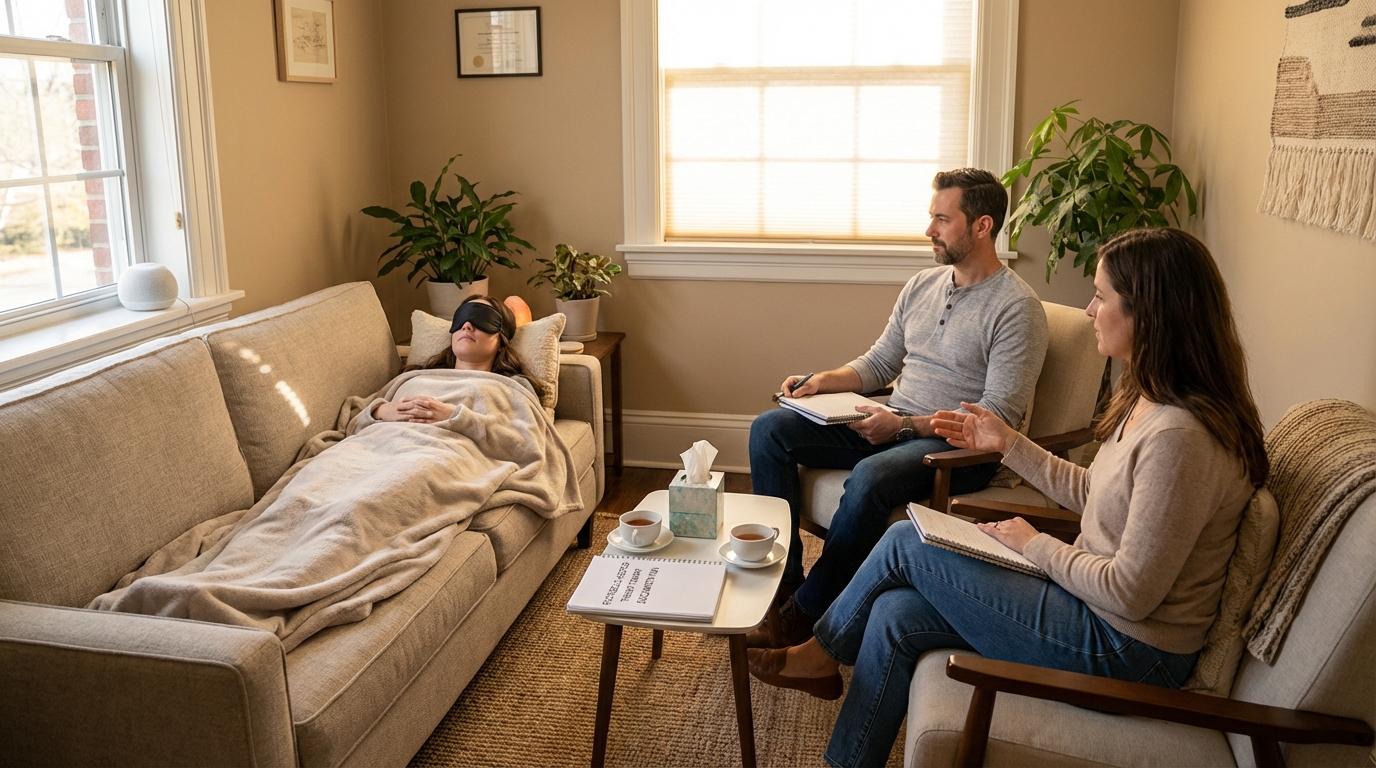
Psilocybin-assisted therapy for AUD is not just psilocybin — the therapeutic context is essential:
- Preparation (2-4 sessions): Exploration of relationship with alcohol, intention-setting, safety preparation
- Psilocybin session(s): Typically 1-2 high-dose sessions (25-30mg standardized, or 3-4g dried mushrooms equivalent) in a supported clinical setting
- Integration (4+ sessions): Processing the experience and translating insights into behavioral change
The psilocybin session without this context is likely less effective than with it. This is not a medication you take and it fixes addiction — the session provides the impetus; therapy and integration provide the vehicle for lasting change.
Who It May Help Most
AUD encompasses a spectrum from mild to severe. Psilocybin-assisted therapy appears most relevant for:
- Moderate to severe AUD where standard treatments have not worked
- People who want to address psychological roots of alcohol use, not just reduce drinking
- People who are medically able to participate (cardiovascular screening required)
- People who can engage with the preparation and integration work
It is not a replacement for medical detox in severe physical dependence — alcohol withdrawal can be medically dangerous and requires clinical management.
Access and Next Steps
Psilocybin-assisted therapy for AUD is not yet FDA-approved or generally available outside of clinical trials. To access it:
- Clinical trials: Check ClinicalTrials.gov for recruiting psilocybin and alcohol studies
- Oregon Measure 109: Oregon's licensed service centers can provide psilocybin sessions, though without alcohol-specific protocols unless your facilitator has that specialization
- International options: Netherlands, Jamaica, and other legal jurisdictions offer psilocybin retreats, some of which have therapeutic focus
If you have severe AUD, involve a physician in any psilocybin plans — alcohol dependence and withdrawal carry medical risks that require clinical management alongside any psychedelic intervention.