Tasmanian Mushroom Strain
Overview
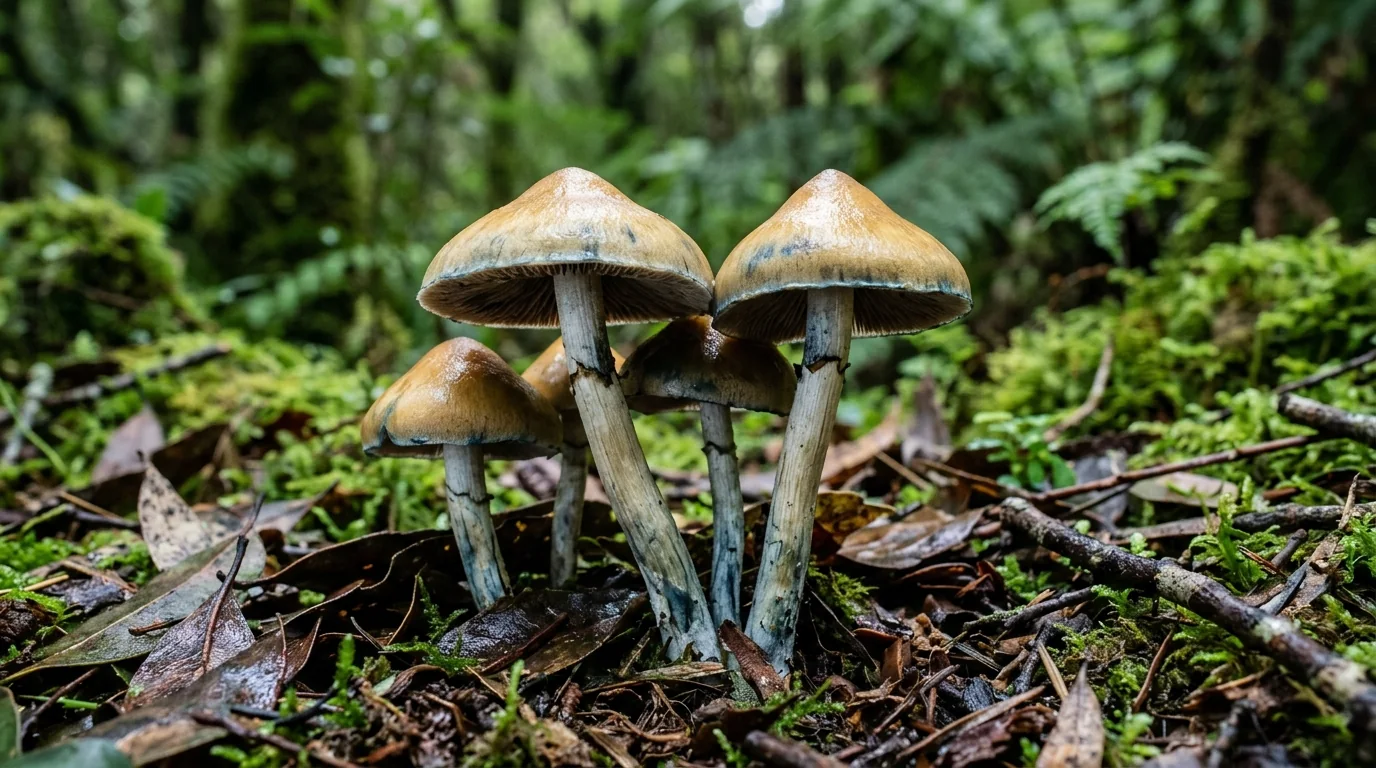
Tasmanian is a Psilocybe cubensis strain collected from wild populations in Tasmania — the island state of Australia situated in the temperate Southern Ocean. Its origin in a cooler, wetter climate than most cubensis habitats gives the strain notable characteristics: it colonizes steadily in cooler conditions, tolerates temperature variation well, and produces substantial, meaty fruiting bodies with broad brown caps and thick, firm stems. Tasmanian gained attention in the cultivation community in the 2010s as growers in temperate climates discovered it performed better in their environments than tropical strains like Koh Samui or Burma. Lab testing has confirmed above-average potency, placing Tasmanian among the more rewarding beginner-accessible strains for those who want elevated effects without the cultivation complexity of PE-family strains. The Australian prohibition on psilocybin mushroom cultivation makes documented in-situ study impossible, but genetics have been distributed through the international cultivation community.
Effects & Experience
Tasmanian is reported to produce strong, visually rich experiences with a grounded, clear-headed quality despite its above-average potency. Users describe prominent geometric visuals, emotional warmth, and a contemplative headspace that combines the introspective quality of Golden Teacher with noticeably greater intensity. The experience is generally described as manageable and well-structured — not chaotic or anxious — which makes Tasmanian a popular choice for intentional or therapeutic-context mushroom work at higher doses.
Potency Profile
Above average — typically 0.9–1.2% total tryptamines by dry weight. Noticeably stronger than Golden Teacher, B+, or Ecuador, but below the extreme potency of PE lineage strains.
Cultivation Notes
Tasmanian is beginner-accessible despite its above-average potency — a rare combination. It colonizes steadily and fruits reliably on standard substrates including coco coir/vermiculite and pasteurized grain. It tolerates cooler fruiting temperatures (down to 65°F) better than most cubensis strains, making it an excellent choice for growers in temperate climates without precise temperature control. Flushes are productive and consistent across multiple rounds. An excellent choice for growers who want above-average effects without sacrificing grow reliability.


Recommended methods: Pf Tek, Monotub Tek